
From the Desk
March 6, 2015
For Further Study, See: A Healthy Church: Principles for True Ministry (Pt. 1)

For Further Study, See: A Healthy Church: Principles for True Ministry (Pt. 1)
There were a lot of great kings and rulers in our world’s history. Many of you who paid attention in history class know this well. Alexander the Great had conquered lands as far as the eye could see by age 30. He had very brutal and intelligent military tactics that he conquered much of the world by himself and sometimes made entire nations surrender to him without killing a single man. Some of his great military tactics are still practiced today in militaries across the world. Genghis Khan. He made an army by himself by uniting some nomadic tribes and trained them. He conquered a large number of dynasties within years. His invasions over countries includes massacres of many civilians. He was successful in conquering almost all parts of Central Asia and China. He was considered an unbeatable military man. Napoleon Bonaparte. He was a young military leader who conquered much of Europe—through his military strength he crowned himself Emperor of France, and he eventually conquered the Egyptian armies—all within a short time frame.
But you know what all these rulers have in common? They all died. Alexander the Great in 323 BC. Genghis Khan in 1227 AD. Napoleon Bonaparte in 1821. They were all human. They could not reign forever (it began at some point and ended at some point). They were not stronger than their chief opponent—death.
But there is a King who is mightier. There is a King who reigns forever because His reign is eternal. There is a King who has immeasurable strength. There is a King who is mighty! There is a King who reigns as a glorious, powerful, triumphant, truthful and holy King, and His name is the LORD according to our text today.
I don’t know what your idea of God is today. Regardless, you’ve got one. Whatever it is, I hope you don’t suffer from small thoughts about God. Many people suffer from small thoughts about God. In an effort to see Him as their friend, they have lost His immensity. In their desire to understand Him, they have sought to contain Him. But He cannot be contained. If you are suffering from small thoughts about God, then you probably haven’t seen God as a reigning King. If not, I hope that through this exposition of Psalm 93, the truths of God’s word would widen and deepen your understanding of this reigning King God.
Our psalmist today powerfully proclaims and portrays God as a majestic King who rules over His kingdom. And we’re going to unpack the implications of God being a King. That is, if God is a King, what else is true because of that? We’re going to see how God is a reigning King.
“1 The LORD reigns; he is robed in majesty;
the LORD is robed; he has put on strength as his belt.
Yes, the world is established; it shall never be moved.
2 Your throne is established from of old;
you are from everlasting.
3 The floods have lifted up, O LORD,
the floods have lifted up their voice;
the floods lift up their roaring.
4 Mightier than the thunders of many waters,
mightier than the waves of the sea,
the LORD on high is mighty!
5 Your decrees are very trustworthy;
holiness befits your house,
O LORD, forevermore.”
First, the psalmist writes, “The LORD reigns; he is robed in majesty.” The psalmist begins with a phrase that both summarizes the theme of this Psalm, and indicates what it is all about: The LORD reigns. From the outset, I want to ask: Do you hear doubt in the psalmist’s tone? I didn’t. God reigns. There is no question about it. The psalmist declares with forceful boldness: The Lord reigns! The original Hebrew meaning for “reigns” here is a verb that means to rule as a king. So here, God is depicted as a reigning King from the beginning of this psalm—and that is the word picture that the psalmist uses in this entire psalm (as we will see).
The same word is used when Israel rejected God from ruling over them during the time of Samuel:
“And the LORD said to Samuel, “Obey the voice of the people in all that they say to you, for they have not rejected you, but they have rejected me from being king over them” (1 Sam. 8:7).
The people of Israel demanded an earthly king (v. 6), and God said, “Okay, give them what they want, but just remember that they are rejecting me as their King.” Supporting the truth that God reigns, the psalmist begins to describe God in word picture depicting a great, powerful, majestic, conquering king. Without taking another breath, the psalmist says, “He is robed in majesty.” Kings are robed—so is God, but He is robed in glorious majesty. One day we will see Him as He is.
Some other psalmists describe this same thing:
“O LORD, our Lord,
how majestic is your name in all the earth!
You have set your glory above the heavens” (Psalm 8:9)“Bless the LORD, O my soul! O LORD my God, you are very great! You are clothed with splendor and majesty, covering yourself with light as with a garment, stretching out the heavens like a tent” (Psalm 104:1-2).
“Who is like you, O LORD, among the gods? Who is like you, majestic in holiness, awesome in glorious deeds, doing wonders?” (Moses’ Song in Ex. 15:11).
God is a majestic King.
If God reigns gloriously, as a majestic King—then like a King, He deserves praise and service (v. 1a). Let all the people of His kingdom be praising and serving this King. He deserves praise because He is a King. Even if He did nothing for you, He would still deserve praise because He is God. But often times we only praise God for what He has done, without praising Him for who He is. Therefore, praise Him because of who He is (Psalm 150:2). It’s important, vital, and biblical to praise God for what He has done; but you are also commanded to praise God for who He is. How can you know who He is? How can you know what He is like? Pick up His self-revelation (the Bible) and start reading. This King is majestic—He is glorious, and He deserves praise.
Are you giving Him praise because He is a great King? You probably praise Him for what He’s done in your life, but when was the last time you reflected on who HE is? Did you praise Him for that too? Well, you can if you haven’t started already.
God reigns gloriously, but the psalmist also writes that God reigns powerfully. Second, the psalmist writes, “the LORD is robed; he has put on strength as his belt. Yes, the world is established; it shall never be moved.” The psalmist describes God as having great strength and says something about the creation of the world. Not only is God clothed in majesty, but he is clothed in strength. Think about it: What good is any king without strength? A king can have riches—he can have a dominion from coast to coast; he can have royal robes—but a king with no army, and no strength is powerless. But you don’t have to worry about that with God—He has “put on strength as his belt!” God is a strong, reigning King! It’s a simple, yet immensely powerful truth: God is strong. But not only that, He established the world—He created it and sustains it; “it shall never be moved.” This is how God can be King over this universe—He created it.
God is omnipotent—He’s all-powerful. He’s more powerful than you are, He’s more powerful than your sin, He’s more powerful than your greatest fears, and your worst trials. If God reigns with great strength—that only He possesses, then nothing can thwart Him because of His great strength (v. 1a). That truth hits real life when you know that God is your Father also. He’s a great reigning King, with great strength, but He’s also your heavenly Father who cares for you. Nothing is too hard for Him (Jer. 32:17)—He is a King who will take care of the people of His kingdom (Psalm 91:1).
So what do you do when you fight battles? Battles of temptation to sin, battles of persecution for your faith, battles of sorrow and pain, battles of guilt? Do you try to fight them in your own strength, or in the strength of your King?
Now the psalmist has been describing God as a great King. So far, he has established the fact that God reigns (v. 1a), that He is robed (v. 1a-b), and that He has great strength. But there is something about King God that sets Him apart from other earthly kings—He has reigned forever! Third, the psalmist writes, “Your throne is established from of old; you are from everlasting.”
God has been enthroned forever. Three psalms backward, the psalmist says, “Before the mountains were brought forth, or ever you had formed the earth and the world, from everlasting to everlasting you are God” (Psalm 90:2). I love what Job has written about this: “Behold, God is great, and we know him not; the number of his years is unsearchable” (Job 36:26). If God reigns eternally—then He will continue to reign; He will always reign (v. 2); No one gave Him that throne, He gets that throne because this is His created world.
So however messed up this world gets, God will keep on reigning. There’s just something comforting about that thought. Maybe you’re deep in sin—God is still reigning. Maybe you’re doing good as a Christian—God is still reigning. Maybe you’re in a hard place in your life—God is still reigning. No matter how messed up your world gets, God is still reigning—and He is a compassionate King—He will listen to your cries.
Not only does God reign gloriously, powerfully, and eternally, but God reigns triumphantly. Fourth, the psalmist writes, “The floods have lifted up, O LORD, the floods have lifted up their voice; the floods lift up their roaring. Mightier than the thunders of many waters, mightier than the waves of the sea, the LORD on high is mighty” (vv. 3-4). The psalmist uses a lot of watery language here. The floods are seen as threatening to God—they have “lifted up, the floods have lifted up their voice; the floods lift up their roaring.”
I think the psalmist’s point here is that anything that threatens God—God is greater. The psalmist pictures the world in a chaotic way. But, still mightier is God on high. The psalmist is making a comparison here: God is greater than the roar of many floods. God is mightier than anything that stands against Him. Before Christ, we were against Him—the flesh is against Him—the world is against Him. Satan is against Him.
God overcame our resistance to Him and became our King; When our flesh roars against God—He remains greater; When the world’s value system is against God—He remains greater (He will one day wipe it out). Satan will one day be cast into the lake of fire forever and ever (Rev. 20:10). If God reigns triumphantly—then He will always be victorious (vv. 3-4). The battles God fights, He always comes out as the victor. If God always wins, wouldn’t it make sense, then, in times of temptation and testing to use His strength? He promises to give it if you will ask. Fight with God’s strength to be victorious.
Finally, not only does God reign gloriously, powerfully, eternally, and triumphantly, but He reigns in truth and holiness. Fifth, and finally, the psalmist writes, “Your decrees are very trustworthy; holiness befits your house, O LORD, forevermore.” The Hebrew word for “decrees” here is a noun that means a testimony, or witness. It comes from a word that denotes permanence. So God’s decrees are permanent.
What are God’s decrees? They are the commands by which God governs the world. God is keeping this world together. God doesn’t act violently to subdue the roaring waves—He simply issues a decree. Science may try to tell you that the world is governed by natural laws and there is no need for God—but they couldn’t be more wrong. God established those natural laws—and if it wasn’t for God’s sustenance of this universe, it would be chaos. The Bible says that God holds the universe together by His word: “and he upholds the universe by the word of his power” (Heb. 1:3).
But besides just stating that God’s decrees are trustworthy, the psalmist backs up that claim by saying that God’s very dwelling is in holiness. He says that “holiness [suits] your house, O LORD, forevermore.” Another psalmist describes it this way, “The Lord is in his holy temple; the Lord’s throne is in heaven; his eyes see, his eyelids test the children of man” (Psalm 11:4). Also, “For all the gods of the peoples are worthless idols, but the Lord made the heavens. Splendor and majesty are before him; strength and beauty are in his sanctuary” (Psalm 96:5-6).
If God reigns truthfully, and His decrees are always trustworthy—then anything God decrees is right and good. You may not understand God’s ways all the time, but when you cannot understand God’s ways, you can trust His heart.
If God is King over this universe, then we are His servants—undoubtedly. We should serve Him as the King who reigns. If we serve Him or not, that will not change His kingship; He will remain Lord and Savior whether you make Him your Lord and Savior. I would like to read an excerpt from a great sermon titled, “That’s My King,” by S. M. Lockeridge:
“I wish I could describe Him to you:
He’s indescribable,
He’s incomprehensible,
He’s invincible,
He’s irresistible,
I’m trying to tell you
The heaven of heavens cannot contain Him,
Let alone a man explain Him.
You can’t get Him out of your mind,
You can’t get Him off of your hands.
You can’t outlive Him,
And you can’t live without Him.
The Pharisees couldn’t stand Him,
but they found out they couldn’t stop Him,
Pilate couldn’t find any fault in Him.
The witnesses couldn’t get their testimonies to agree,
And Herod couldn’t kill Him,
Death couldn’t handle Him,
And the grave couldn’t hold Him.
That’s my King!
He always has been,
And He always will be.
I’m talking about
He had no predecessor,
and He’ll have no successor,
There was nobody before Him,
and there’ll be nobody after Him,
You can’t impeach Him,
and He’s not going to resign.
That’s my King!
Praise the Lord,
That’s my King! ¹
Is He your King today? He will be King whether or not you make Him your King—make Him King of your relationship, your job/occupation, your school life, your alone time, your entire life. If He is a sovereign King, then you can trust Him with anything. But are you trusting Him?
The following message was delivered at Ohio Valley Baptist Church the 27th day of July, 2014:
We are familiar with many commands in the Bible that tell us to love. We know all too well the passage where Jesus is questioned by the Pharisees about the greatest commandment: “Teacher, which is the great commandment in the Law?” And he said to him, “You shall love the Lord your God with all your heart and with all your soul and with all your mind. This is the great and first commandment. And a second is like it: You shall love your neighbor as yourself” (Matt. 22:36-39). We know 1 Corinthians 16:14, “Let all that you do be done in love.” And there are many other commands in the Bible to love others, to love God, to love the things of God . . . But have you ever considered that there may be a command in the Bible not to love? Well, there is, and we find it in John’s first epistle, the second chapter. We are very familiar with the biblical commands to love, but not as much with the biblical command not to love. It is a fatal spiritual tragedy if we ignore the biblical command not to love and as soon as we start obeying the command not to love, we will be loving God more, and loving others.
15 Do not love the world or the things in the world. If anyone loves the world, the love of the Father is not in him. 16 For all that is in the world—the desires of the flesh and the desires of the eyes and pride of life—is not from the Father but is from the world. 17 And the world is passing away along with its desires, but whoever does the will of God abides forever.
The first thing John tells his readers is “Do not love the world or the things in the world.” That is the only command in this text. The rest of the passage is John’s argument for why they shouldn’t love the world. So what does John mean by “do not love the world or the things in the world?” First of all, John isn’t talking about not loving the people of the world. To understand what he means, it’s important to define what the word “love” here means.
If you’ve studied the Bible for long, you know that the New Testament was not originally written in English. It was written in Greek. This presents some difficulty for readers today because the same English word may not be the same Greek word. There are actually many terms used for the word “love” in our English Bibles, and they don’t all mean the same thing. The word for “love” here is agapate. It means “to delight in.” Often times in the New Testament, it carries a negative sense to it. Let me show you.
This same Greek word is used by Jesus when He describes the hypocritical behavior of the Pharisees, listen for it: “Woe to you Pharisees! For you (agapate) love the best seat in the synagogues and greetings in the marketplaces” (Luke 11:43). They loved the adoration and pride of place, seen by the people as the religious rulers of that day. This was not a love for God, but loving to be worshipped by the people. John himself also uses this Greek word in his own gospel: “And this is the judgment: the light has come into the world, and people (agapate) loved the darkness rather than the light because their works were evil” (John 3:19). The people of the world, John writes, loved and delighted in the world because their works were evil.
So here in our text, the word “love” is negative. It is not the same word for love that John has been talking about when he says that we ought to “love our brothers” (2:10). This love that John is saying his readers ought not to have is a love that is focused on self-pleasure and self-gratification. He is talking about the sinful attractions of the world, and John says, “Do not love the world or the things in the world.” By him saying, “Do not love the things of the world,” he gives us more insight into what he means here. Do not love worldly pleasures, do not love the attitudes and values and attractions that are opposed to God!
What John means by “things in the world” is described in v. 16, which we will look at. People will do crazy things for what they love. Love for the world is to be avoided by the Christian.
So John commands against loving the world. But why? Why would it be a problem to love the world? John gives four reasons. The first reason John says not to love the world is because love for the world is incompatible with love for God (v. 15). Do not love the world because you cannot love God at the same time. He presents a possibility here and says, “If anyone loves the world, the love of the Father is not in him.” If it is true that there is anyone among you who does love the world, the love of the Father is not in him. If that’s a possibility to happen, who would be the one John is describing as the one who could love the world? It’s the person who doesn’t have the love of the Father in him.
What does John mean by “the love of the Father?” It does not mean God’s love for the believer—God is going to love you whether you love the world or not—He’s going to love you no matter what you’ve done or haven’t done: His love endures forever. What John does mean here is “your love for God.” He must mean that because he isn’t talking about God’s love for the world at all in this passage. He is talking to believers (like you and me) who were susceptible to falling in-love with the world, when they should be falling in love with God. If Christians could not love the world, then John wouldn’t have written this letter. He was writing to people just like us—they loved their brothers and sisters—they loved fellowship with one another, and fellowship with God. But they, just like anyone, can easily fall into the death trap of loving the world that promises us nothing!
Love for God is incompatible with love for the world; James writes an interesting statement about that truth: “You adulterous people! Do you not know that friendship with the world is enmity with God? Therefore whoever wishes to be a friend of the world makes himself an enemy of God” (James 4:4). James says that if you love the world, you put yourself over here in the category of the God-haters who are His enemies. Loving God and loving the world is like fire and water—they don’t mix. Either you’ve allowed the world to water down you love for God, or you love for God is so fiery hot that it has evaporated the love for the world. Don’t you be deceived into thinking that you can fully love God and love the world at the same time, but that is not true according to v. 15: “If anyone loves the world, the love of the Father is not in him.” Love for the world will push out love for God, or love for God will push out love for the world.
If your love for God has grown cold, then you have allowed other temporary things to creep in and choke your love for God. You have been allowing yourself to eat the crums at the floor of the world instead of feasting at the table of our God who gives spiritual satisfaction to all who seek Him.
John has commanded the believers against loving the world and says that the first reason they should not love the world is because love for the world and love for God is incompatible. The second reason, John writes, why we should not love the world is because all that is in the world is not from God, but is from the world (v. 16). John is explaining here why love for God and love for the world is incompatible. So what’s to be said about the good we see in the world? The trees, rocks, lakes, family, children and relationships? Is that what John is talking about? No, John defines what he means by “all that is in the world” in v. 16. He names three things that build on each other:
A. “the desires of the flesh”
First, John says that the “desires of the flesh” are of the world and not from God. Let’s talk about that word “desire” for a moment. The Greek word for “desire” here is epithymia. It is used 38 times in the New Testament and only three times is it used in a positive way. This word, like love that we talked about, is used mainly in a negative way. Here are some Scriptures that demonstrate its usage:
“Put to death therefore what is earthly in you: sexual immorality, impurity, passion, evil (epithymia) desire, and covetousness, which is idolatry” (Col. 3:5).
“But each person is tempted when he is lured and enticed by his own (epithymia) desire. Then (epithymia) desire when it has conceived gives birth to sin, and sin when it is fully grown brings forth death” (James 1:14-15).
“By which he has granted to us his precious and very great promises, so that through them you may become partakers of the divine nature, having escaped from the corruption that is in the world because of sinful (epithymia) desire” (2 Peter 1:4).
John doesn’t say that there is anything wrong with desire, but the “desires of the flesh,” that is from the world! He literally means that desires that come from the flesh. It is the whole of sinful man; in his rebellion. The flesh is our enemy! We have been born with a sin nature that is naturally rebellious against God—that gives us no excuse for running from God and having desires for other things besides God . . . But more so as a believer, we have no excuse for giving in to the sinful cravings of our flesh! We’ve been made new, we’ve got the Holy Spirit of Almighty God to give us the strength to resist sin and be obedient to the Lord, we need to heed the Bible when it says to “Crucify the flesh with its passions and desires” as in Galatians 5:24.
Your desires rule you. Did you know that you cannot even make a choice without a desire? You must first have a desire before you can ever even make a choice for something. And when it comes to the moment of decision, whatever you desire most is what you are going to choose. I’ve been trying to eat healthy for a few weeks now, and so when I go to town for lunch, I desire to eat a good salad. Well, when I get to the restaurant and I glance at the menu and see a bacon cheeseburger staring at me, begging me to eat it, my desires change. I have a conflict in me: I desire to eat healthy, but I also desire to eat the cheeseburger. If I choose a salad, ultimately my desire to eat healthy was stronger than my desire to eat a bacon cheeseburger. If I choose a bacon cheeseburger, then my desire to indulge was stronger than my desire to eat healthy. If I choose not to eat at all, my desire to not eat salad or the cheeseburger was stronger than my desire to eat.
We are desiring people by nature. That’s why it is so important to have a stronger desire for God than for the world! Because if you are desiring God, then the things you do will be influenced by that desire for God. The problem is, when we were born with our sin nature, we naturally desire sin and evil over God: “Claiming to be wise, they became fools, and exchanged the glory of the immortal God for images resembling mortal man and birds and animals and creeping things” (Rom. 1:22-23). I don’t know about you, but I’ve got the Lord, and that’s enough! I don’t need that sin that promises me nothing but sorrow, pain, and hurt. We need to fight sin and our evil desires of the flesh and replace those desires with desires for wholehearted worship and adoration and white-hot passion for God.
B. “the desires of the eyes”
It is important that John names this next in his list. Why? Because what you desire with your eyes is what you will desire with your flesh. The sinful cravings of the flesh are activated by what people see. The eyes are often the source of desire. And John tells his readers that the “desires of the eyes” are from the world, they do not originate with God. Jesus has much to say about the eyes:
“And if your eye causes you to sin, tear it out and throw it away. It is better for you to enter life with one eye than with two eyes to be thrown into the hell of fire” (Matt. 18:9).
What Jesus means here is not to be taken literal—please there was an early church theologian named Origen who castrated himself because of this verse. Jesus means here that we need to take whatever measure necessary to eradicate the sinful desires in our lives.
Another penetrating statement about this from Jesus is found in Jesus’ Sermon on the Mount:
“The eye is the lamp of the body. So, if your eye is healthy, your whole body will be full of light, but if your eye is bad, your whole body will be full of darkness. If then the light in you is darkness, how great is the darkness!” (Matt. 6:22-23).
We need to get filled with the power of the Holy Spirit, and keep ourselves under control when it comes to our eyes. We need to identify with the Psalmist David when he says, “I will not set before my eyes anything that is worthless. I hate the work of those who fall away; it shall not cling to me” (Psalm 101:3). The “desires of the eyes” are from the world.
C. “pride of life”
Pride is the chief sin—Pride lifts you up far above others and makes you think that you are even above God. John means here that the “pride of life” is boasting and arrogance. It is being puffed up in pride because of what you have on the earth. It expresses a sense of human self-sufficiency and independence from God. When you look at all that you have, Pride says, “Look what I did! I did this!” Against this, Paul writes, “What do you have that you did not receive? If then you received it, why do you boast as if you did not receive it?” (1 Cor. 3:7) So to boasting Paul says, “Let the one who boasts, boast in the Lord.” (1 Cor. 1:31). Pride is rooted in every sin that we commit. Pride is saying to God’s face when we sin, “I do not need You to be satisfied; I do not need You at all! I will find meaning and satisfaction in things of the world.” Proverbs 16:5 says, “Everyone who is arrogant in heart is an abomination to the Lord; be assured, he will not go unpunished.”
John has named three things that make up “all that is in the world.” The desires of the flesh, the desires of the eyes, and the pride of life. Are you desiring God or desiring the world? Surrender your sinful desires to God, give Him all the room He needs to work—but be willing to get rid of those sinful desires. “Let not sin therefore reign in your mortal body, to make you obey its passions” (Romans 6:12).
John has exhorted the believers against loving the world and has given two reasons why not to love the world. Don’t love the world because love for God and love for the world is incompatible. Don’t love the world because all that is in the world is not from the Father, but is from the world: the desires of the flesh, the desires of the eyes, the pride of life. But further, the third reason why we should not love the world is because the world is passing away along with those desires which entice us: “And the world is passing away along with its desires” (v. 17a). John writes to his readers that it would be foolish to love the world, because it doesn’t last—it is passing away. Not only that, it is passing away along with its desires. The world is passing away and its days are numbered. All that is against God and His grace is passing away. There is no future in worldliness. There are two ways in which the world is passing away:
A. Temporary by Nature: What it offers is temporary—it is not eternal; it does not last. Solomon has some wisdom from Ecclesiastes concerning this: “He who loves money will not be satisfied with money, nor he who loves wealth with his income; this also is vanity” (Eccl. 5:10). Solomon is establishing a very important truth: Sin never satisfies. Sin will always tell you need more and more of it to be satisfied, that you will not be satisfied until you have it. But that is a lie! The author of Hebrews writes that the pleasures of sin are fleeting (11:25). Sin will never be enough—only God is enough. Further, Peter writes, “They have eyes full of adultery, insatiable (impossible to be satisfied) for sin. They entice unsteady souls. They have hearts trained in greed. Accursed children!” (2 Pet. 2:14, emphasis mine).
B. Consummation: It will one day be gone, but made new. The Bible says that we are awaiting a new heavens and new earth. Again from Ecclesiastes, “All go to one place. All are from the dust, and to dust all return” (Eccl. 3:20). Everything in this world that is material and contrary to God, will one day waste away. Back in 1987, Kansas released a song titled, “Dust in the Wind.” Kansas guitarist Kerry Livgren wrote this after reading a book of Native American poetry. The line that caught his attention was “For All We Are Is Dust In The Wind.” This got him thinking about the true value of material things and the meaning of success. The band was doing well and making money, but Kerry realized that in the end, he would eventually die just like everyone else. No matter our possessions or accomplishments, we all end up back in the ground.
Do not be fooled into living for the moment. “Do not conform to the ways of this world” says Paul in Romans 12. Let us work and think and plan and desire all to exalt God and to make Him known—let us do those things which really matter: worshipping God and making His name known where it is not exalted. This world will one day pass away with everything in it.
John has given three reasons so far as to why we ought not love the world. The fourth reason is found in the latter part of v. 17: ” . . . but whoever does the will of God abides forever.” In contrast to the person who loves the world, the Christian who does God’s will shall abide forever. This is the climax of John’s argument for why not to love the world. I don’t know about you, but this is who I want to be: “whoever does the will of God abides forever.” Who is the one who would do the “will of God?” Well, in this context, John is talking about salvation because he says that whoever does God’s will “abides forever.”
John writes much about abiding forever in his gospel:
“I am the living bread that came down from heaven. If anyone eats of this bread, he will live forever. And the bread that I will give for the life of the world is my flesh” (John 6:51).
“I will give them eternal life, and they will never perish, and no one will snatch them out of my hand” (John 10:28).
“And everyone who lives and believes in me shall never die” (John 11:26).
So who is it that will overcome the world? Who will be able to overcome the sinful desires of the flesh? Who will be able to overcoming loving the world? John asks the same question in 1 John 5:5, “Who is it that overcomes the world except the one who believes that Jesus is the Son of God?” Friends, if you a believer in the Lord Jesus Christ—if He has made you a new person, you will abide forever. You have the power accessible to you to overcome loving the world and loving the desires of the world. You know what the difference is between you loving the world and someone who doesn’t know Christ as their Savior? John answers that question: “We know that we are from God, and the whole world lies in the power of the evil one” (5:19).
John gives the biblical command not to love. If you are loving the things of the world, God can change your desires. Confess it to Him, repent, allow Him to work in you—fall inlove with Him by getting to know Him through the Bible. John tells us that everything in the world is not from God, but from the world. If you have problems with these desires that John named, get things right with God, and through the power of the gospel of Jesus Christ, you will overcome them. Overcoming our desires is not just something we ought to do, or something we need to do—it’s something we can do through Christ who strengthens us. John reminds us that this world is passing away, but whoever does God’s will abides forever. What John presents for us in this text, my friends, is the biblical command not to love.
In Jesus’ Sermon on the Mount, the beginning section is what is known as the Beatitudes (Matt. 5:1-12) and they are a description of true Christian characteristics. In the fourth Beatitude, Jesus says “Blessed are those who hunger and thirst for righteousness for they shall be satisfied” (Matt. 5:6).
Jesus is talking in a way that we can relate. “Hunger” and “thirst” represent the necessities of physical life. In the physical realm, we hunger because we lack nutrients and food that our bodies know they need to survive. Food contains the vitamins and minerals necessary for our survival and functioning. So our stomach aches with hunger pains to notify us that we need food. It’s a natural desire. We hunger because we desire; we desire because we lack; we lack because we have not that which we need. It works the same way with thirst. But does Jesus say, “Blessed are those who hunger and thirst for food and water”? No, He says “Blessed are those who hunger and thirst for righteousness.” So Jesus’ analogy demonstrates that just as a hunger for food and water are necessary for physical life, so hungering for righteousness is necessary for true spiritual life. Without the righteousness of Christ, you cannot be saved (2 Cor. 5:21). It’s a strong desire, a passionate force inside the soul. It’s not something that just comes and goes—it means a hungering that keeps on until it is satisfied. Unlike Israel’s love for God in Hosea that was just coming and going: “What shall I do with you, O Ephraim? What shall I do with you, O Judah? Your love is like a morning cloud, like the dew that goes early away” (Hosea 6:4). What do morning clouds do? They go away. What happens to dew? It goes away. It doesn’t remain. Our hungering and thirsting for righteousness will not just come and go, and the way to true happiness, the way to being truly “blessed,” is the way of spiritual hunger and thirst.
Jesus says that we are to hunger and thirst “for righteousness,” and righteousness is twofold here. The goal of hungering and thirsting for righteousness is both hungering and thirsting for salvation, and for sanctification.
For Salvation. First of all, without a hunger/desire for salvation, you cannot be saved. The Scriptures say, “No one understands; no one seeks for God” (Rom. 3:11). Without Christ, we are in a state of spiritual depravity and dead-ness (Eph. 2:1-3). And as sinners, we are naturally bent towards sin and evil. We will always choose evil over good; sin over obedience. It’s not that we are as sinful as we could be, but every faculty of our being is corrupted by sin. So when it comes to the choices we make, we are always going to choose evil. It’s not that sinful man doesn’t do some good, but even that good he does is with wrongful intentions. In any moment of decision, your greatest desire (in that moment) will determine the decision you make.
Let’s imagine that you walk in to McDonald’s for lunch. You realize that you haven’t been eating very healthy lately, so when you look at the menu, you have a desire to get a salad. But you also notice how delicious looking that McDouble is. Your desire to eat that McDouble is now greater than your desire to eat salad, so you order a McDouble. Even if you choose not to eat at all, still your strongest desire in that given moment determines the choice you make (your desire to not eat at all is stronger than choosing a McDouble or a salad). Everything that sinful, unregenerate man does in his rebellion against God, is sin. “For whatever does not proceed from faith is sin” (Rom. 14:23). Since we are so depraved, God in His grace must give us a spiritual appetite for Jesus Christ, the bread of life. No one has ever got up one morning out of bed and said, “Today, I think I am going to become a Christian!” Since man is prone to sin, God must give man spiritual hunger for the salvation that comes from the Lord. That hunger will lead to an acting on that hunger: repentance and faith, which is also by the grace of God. If you have a sincere desire to know God, you need to act on that desire; God gave it to you.
For Sanctification. Not only should we hunger for salvation, but also sanctification. Sanctification is the process by which we become more and more like Jesus Christ. It’s the goal of our Christian lives. We should desire to know God more, to love God more, to be more for God. Peter writes, “But grow in the grace and knowledge of our Lord and Savior Jesus Christ. To him be the glory both now and to the day of eternity” (2 Peter 3:18). Similarly, Paul says “Rather, speaking the truth in love, we are to grow up in every way into him who is the head, into Christ” (Eph. 4:15). Do you hunger to be more for Christ?
For further reading, please consult: Sermon on the Mount: Those Who Hunger and Thirst
“Many Christians expect the world to respect the book they neglect.”— E. C. McKenzie
Theology matters. It’s the study of God. It’s been said before that, “What you believe about God is the most important thing about you.” Every Christian in the world is a theologian. That sounds overboard, I know—but think about it for a moment: every believer has an idea of what God is like. Every believer has an idea of the nature of God and what He requires of us. And that is the essence of theology: it is the study of God.
It seems today, however, that if you mention the words theology or doctrine that you get quite a few negative reactions. Few, it seems, want to be seen as “theologians.” Aren’t theologians, after all, just impractical people given over to fussing over Bible trivia, and engaging in doctrinal hair-splitting? If you have harbored such thoughts like that, then what I am saying may be a surprise to you. But as children of God, it only makes sense that we should strive to know all we can about our heavenly Father, His ways and His will for our lives. Taking a casual approach to our beliefs nearly guarantees frustration and misunderstanding in our relationship with God. That’s why theology is important. “If you do not listen to theology, that will not mean that you have no ideas about God. It will mean that you have a lot of wrong ones—bad, muddled, out-of-date ideas.”—C. S. Lewis (1)
With that being said, why is studying theology absolutely necessary? (2)
Theology cannot “improve” on the Bible by doing a better job of organizing its teachings or explaining them more clearly than the Bible itself has done. We get our theology from the sufficient Word of God. Still, Jesus commanded His disciples and now commands us also to teach believers to observe all that He commanded. He said, “Therefore go and make disciples of all nations, baptizing them in the name of the Father and of the Son and of the Holy Spirit, and teaching them to obey everything I have commanded you. And surely I am with you always, to the very end of the age” (Matt. 28:19-20).
In order to teach all that Jesus commanded, is simply to teach the content of the teaching of Jesus as recorded in the gospels (Matthew-John). But in a broader sense, “all that Jesus commanded” includes the interpretation and application of His life and teachings, because in the book of Acts it is implied that it contains a narrative of what Jesus continued to do and teach through the apostles after His resurrection: “I [Luke] have dealt with all that Jesus began to do and teach” (Acts 1:1). “All that Jesus commanded” also includes the Epistles of the New Testament, since they were written under the inspiration and supervision of the Holy Spirit and were also considered to be a “command of the Lord” (1 Cor. 14:37; John 14:26; 16:13; 1 Thess. 4:15; 2 Peter 3:2; Rev. 1:1-3). So in a larger sense, “all that Jesus commanded” includes all of the New Testament.
Additionally, when we consider that the New Testament writings entirely endorse the absolute confidence Jesus had in the authority and reliability of the Old Testament Scriptures as God’s words, and when we realize that the New Testament epistles also endorse this view of the Old Testament, then it becomes evident that we cannot teach “all that Jesus commanded” without including all of the Old Testament (rightly understood, that is) as well.
The task of fulfilling the Great Commission includes not only evangelism, but also teaching. And the task of teaching all that Jesus commanded us is, in a broad sense, the task of teaching what the whole Bible says to us today. Therefore, for us to learn what the Bible says, it is necessary to employ theology (the study of God). The basic reason for studying theology, then, is that it enables us to teach ourselves and others what the whole Bible says and teaches, thus fulfilling the second part of the Great Commission (which cannot be divorced from the first part).
Of course, the basic reason for studying theology is that it is a means of obedience to our Lord’s command. But there are some additional specific benefits that come from such study:
1. First, studying theology helps us overcome our wrong ideas. If there were no sin in our hearts, we could read the Bible from cover to cover and, although we would not immediately learn everything in the Bible, we would most likely learn only true things about God and His creation. But with sin in our hearts we retain some rebelliousness against God. At various points there are, for all of us, biblical teachings which for one reason or another we do not want to accept. The study of theology helps us overcome those rebellious ideas. It is helpful for us to be confronted with the total weight of the teaching of Scripture on a particular subject, so that we will more readily be persuaded even against our initial wrongful inclinations. So studying theology helps us overcome our wrong ideas.
2. Second, studying theology helps us to be able to make better decisions later on new questions of doctrine that may arise. We will not know what new doctrinal controversies will arise in the churches in which we will live and minister ten or twenty years from now. But they will arise, and when they do, Christians will be asking, “What does the whole Bible say about this?” Whatever the new doctrinal controversies are in future years, those who have learned theology well will be much better able to answer the new questions that arise. For example, if you read the older books on systematic theology, there is no addressing of the sinfulness of same-sex marriage. There would be a defining of what the Bible teaches about right marriage, but for the days of older theologians writing these books, same-sex marriage was just not an issue. Today however, you cannot avoid the obvious problem of same-sex marriage. There are denominations even today who have shaky, wrong theologies, and thus approve of same-sex marriage. Who knows what doctrinal controversies will arise in the coming decades/years? Because the Bible is related to every area of life, those who have studied theology well will know what the whole Bible teaches on these controversies.
3. Thirdly, studying theology will help us grow as Christians. The more we know about God, about His Word, about His relationships to the world and mankind, the better we will trust Him, the more fully we will praise Him, and the more readily we will obey Him. Studying theology rightly will make us more mature Christians. If it doesn’t, then we aren’t studying theology rightly. In fact, the Bible often connects sound doctrine with maturity in Christian living: Paul speaks of “the sound words of our Lord Jesus Christ and the teaching that accords with godliness” (1 Tim. 6:3), and says that his work as an apostle was “for the sake of the faith of God’s elect and their knowledge of the truth, which accords with godliness” (Titus 1:1).
The greatest commandment, Jesus said, is to “love the Lord your God with all your heart and with all your soul and with all your mind” (Matthew 22:37). He did not give options, as if we could love God with heart or soul or mind; the command requires all of the above. Loving Him with our minds will naturally entail finding out as much as possible about Him. Just as in any relationship, love compels us to know and understand what He is like, how He works in the world and in us, what He loves, what He desires, what offends Him, and what delights Him. Doing so requires our full attention and our diligent study of theology.
It’s the most significant question of all time: Is there a God, or isn’t there? How can we believe in Christianity if we don’t even know whether God exists? There are many arguments for the existence of God and these arguments attempt to analyze the evidence, especially the evidence from nature, in extremely careful and logically precise ways, in order to persuade people that it is irrational to reject the idea of God’s existence. It is “the fool” who says in his heart, “There is no God” (Psalm 14:1). Belief in God’s existence is not based on some blind hope apart from any evidence, but it is based on an overwhelming amount of evidence from both the Bible and Creation. These evidences can be seen as valid proofs for the existence of God, even though some still reject them. Why should you believe in God?
Proving God’s existence by observing the world around us begins with affirming what is most obvious in all reality: things exist. There is no rational argument that can deny that things exist. Also, there is no rational argument that can deny that the universe exists. If the universe exists, then it must have had a beginning. The universe had a beginning; therefore, the universe had a cause. This is the Law of Cause and Effect, every effect must have a cause. In other words, everything that happens has a catalyst; everything that came into being has something that caused it. Things don’t just happen by themselves. So, when you consider the fact that every known thing in the universe has a cause, you are left asking, “Who or what caused the universe?”

That cause, being outside the whole universe, is God. Many argue that some things are caused by other things, but this does not solve the problem. This is because those other things had to have causes, too, and this cannot go on forever. For example, all trees began to exist at some point (for they have not always existed). Each tree had its beginning in a seed (the “cause” of the tree). But every seed had its beginning (“cause”) in another tree. There cannot be an infinite series of tree-seed-tree-seed, because no series is infinite—it cannot go on forever. All series have two endings at the end and at the beginning. So in relation to the cause of the universe, something that does not need to be given existence must exist to give everything else existence. This something would have to always exist, have no cause, have no beginning, have no limit, be outside of time, and be infinite. That something is God. This affirms the foundational verse for the entire Bible, “In the beginning, God created the heavens and the earth” (Genesis 1:1).
We already know that the universe requires a Creator, but what about the design, harmony, and order of the universe? The orderly world in which we live clearly demonstrates that a great mind was behind its arrangement. The Bible identifies God as that great intelligence. So, the existence of God is also proven by the order and useful arrangement in the universe. When we are walking on a beach and find a wristwatch, we do not assume that time and random chance produced the watch from blowing sand. Why? Because it has the clear marks of design—it has a purpose, it conveys information, it is specifically complex. No scientific field considers design to be spontaneous; it always implies a designer. With all the design evident in our universe, it’s no wonder Job says, “But ask the beasts, and they will teach you; the birds of the heavens, and they will tell you; or the bushes of the earth, and they will teach you; and the fish of the sea will declare to you. Who among all these does not know that the hand of the LORD has done this? In his hand is the life of every living thing and the breath of all mankind” (Job 12:7-10 ESV).

We know that every life form in Earth’s history has been highly complex. For example, the amount of information in the 3 billion base pairs in the DNA of every human cell is equivalent to that in 1,000 books of encyclopedia size. Similarly, the human brain has approximately 10 billion gigabytes of capacity. Besides living things here on Earth, the whole universe seems designed for life. There are literally hundreds of conditions necessary for life on Earth—everything from the mass density of the universe down to earthquake activity must be fine-tuned in order for life to survive. The random chance of all of these things occurring is literally beyond imagination. Wayne Grudem writes, “Since the universe appears to be designed with purpose, there must be an intelligent and purposeful God who created it to function this way.” (1)
Human beings are unique among God’s creation in that we are moral creatures. That’s one of the many things that separate us from the animals—we have a distinctive knowledge of right and wrong, and so for example, we set up court systems with punishment for wrongdoing. So, we need to face the fact that all people recognize some moral code—that some things are right, and some things are wrong. In fact, every time we argue over right and wrong, we appeal to a higher law that we assume everyone is aware of, holds to, and is not free to arbitrarily change. If right and wrong imply a higher standard or law, then that law requires a lawgiver. There must be a God who is the source of right and wrong and who will someday mete our justice to all people. We see that even the most remote tribes who have been cut off from the rest of civilization observe a moral code similar to everyone else’s.
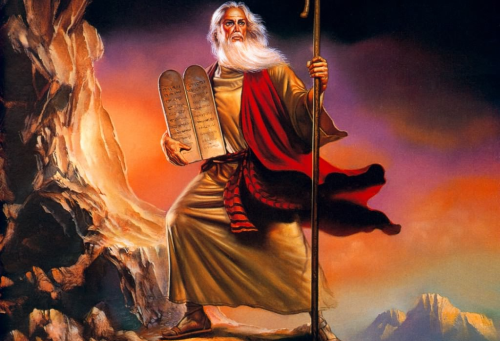
Differences certainly exist in civil matters, but things bravery and loyalty, greed and cowardice, are universal. If man were responsible for inventing this code of morality, then it would differ as much as every other thing that man has invented. Romans 2:14-15 says, “For when Gentiles, who do not have the law, by nature do what the law requires, they are a law to themselves, even though they do not have the law. They show that the work of the law is written on their hearts, while their conscience also bears witness. . .” (emphasis mine). Paul is saying here that the Gentiles’ consciences attest to what is right and what is wrong in their behavior. Paul isn’t saying that the testimony of human conscience is always a perfect moral guide, but the very existence of this testimony is sufficient to render people accountable to God. Without God there would be no objective basis for morality, no life, and no reason to live it. Yet all these things do exist, and so does God.
A common argument from atheists and skeptics is that if all things need a cause, then God must also need a cause. The conclusion is that if God needed a cause, then God is not God (and if God is not God, then of course there is no God). Everyone knows that something does not come from nothing. So, if God is a “something,” then He must have a cause, right? The question is tricky because it sneaks in the false assumption that God came from somewhere and then asks where that might be. The answer is that the question does not even make sense. It is like asking, “What does blue smell like?” Blue is not in the category of things that have a smell, so the question itself is flawed. In the same way, God is not in the category of things that are created or caused. God is uncaused and uncreated—He simply exists. Scripture attests, “Before the mountains were brought forth, or ever you had formed the earth and the world, from everlasting to everlasting you are God” (Psalm 90:2).
In addition, we know that from nothing, nothing comes. So, if there were ever a time when there was absolutely nothing in existence, then nothing would have ever come into existence. But things do exist. Therefore, since there could never have been absolutely nothing, something had to have always been in existence. That ever-existing thing is a Being that the Scripture calls God. God is the uncaused Being that caused everything else to come into existence. God is the uncreated Creator who created the universe and everything in it.
There is a popular saying about the Bible: “God said it. I believe it. That settles it.” That’s one of my favorite sayings, but if God “wrote” the Bible, why does Paul say in his letter to Philemon, “I, Paul, write this with my own hand” (Philem. 19)? Or, at the end of the gospel of John, we read, “This is the disciple who testifies to these things and who wrote them down” (John 21:24 NIV)? So who did write the Bible—humans or God?
To answer the questions about the authorship of the Bible, we must look at the doctrine of the inspiration of Scripture. Everyone who claims the name “Christian” must believe that the Scriptures are inspired by God. Yet, a wide variety of meanings are attached to the word “inspired.” There are four main views on the inspiration of the Bible:
Neo-Orthodoxy does have a high view of God. However, the Bible claims to be more than simply a witness to the Word of God. It testifies that it is God’s Word (2 Tim. 3:16-17). The Bible also claims that as God revealed Himself, people inspired by the Holy Spirit recorded His message (2 Peter 1:20-21). They could do so because God accommodated Himself to their limited understanding. Neo-Orthodoxy, thus fails to provide an adequate explanation for all the biblical evidence, and should be rejected entirely.
2. Dictation Theory. This view, as the term implies, suggests God simply dictated the Bible to human scribes. God chose certain individuals to record His Word and gave them the exact words He wanted. The writers wrote only what God dictated to them. This view is generally rejected by most, but has been suggested by segments of conservative Christianity.
Scripture does suggest that sometimes God may have communicated a precise, word-for-word message to human authors (Jer. 26:2; Rev. 2:1, 8). At other times, He allowed writers to express their own personalities as they wrote (Gal. 1:6; 3:1; Phil. 1:3, 4, 8). Still, the Holy Spirit ensured the finished work accurately communicated God’s intention. Thus, the dictation theory does not account for all the biblical evidence and is therefore inadequate as a theory of inspiration and should thus, be rejected entirely.
3. Limited Inspiration Theory. This view holds that God inspired the thoughts of the biblical writers, but not necessarily the words they chose. God guided the writers, but He gave them the freedom to express His thoughts in their own ways. Because the writers had this freedom, the historical details they wrote may contain errors. However, the Holy Spirit protected the doctrinal portions of Scripture from any error to safeguard God’s message of salvation.
The Bible is used for doctrine (2 Tim. 3:16), but the historical records of the Bible are absolutely vital for the doctrinal parts of the Bible to be confirmed. An actual historical Adam is central to Paul’s argument in Romans 5:12-21. Jesus’ words in Matthew 12:41 imply that the book of Jonah is not merely a parable; rather, a real historical prophet named Jonah who actually preached to the Ninevites. Now, most Bible students recognize that there are statements in Scripture that are hard to reconcile. But is the best solution to admit error? If God allowed for error in His Word in Genesis 1, why would I consider believing that John 3:16 is true also? This view is therefore inadequate as a theory of inspiration, and should be rejected.
4. Verbal Plenary Theory. Like the other views, verbal plenary inspiration asserts the Holy Spirit interacted with human writers to produce the Bible. Verbal refers to the words of Scripture. Verbal inspiration means God’s inspiration extends to the very words the writers chose, but it is not the same as the dictation theory. The writers could have chosen other words, and God often allowed them the freedom to express their own personalities as they wrote. But the Holy Spirit so guided the process that the words they chose accurately conveyed the meaning God intended. Plenary means “full” or “complete.” Plenary inspiration asserts that God’s inspiration extends to all of Scripture, from Genesis to Revelation. God guided the writers no less when they recorded the historical details than when they discussed doctrinal matters.
The verbal plenary inspiration view seems to deal best with all the biblical evidence. It recognizes the human element in Scripture, and allows that different writers wrote in different ways. But it also affirms the Holy Spirit as the Bible’s ultimate Author. The Spirit of God prompted human authors to communicate God’s message of love and salvation to a world that desperately needed it.
If the Word of God is indeed, dually authored as the verbal plenary inspiration view asserts, a few implications are true for the way we approach the Bible:
Recommended Resources: Encountering the Old Testament and 40 Questions About Interpreting the Bible



 Brandon's Desk