
Tag Archives: omniscience

His Eyes Are Upon You | Bible Gleanings – March 23-24, 2024

The latest developments in facial recognition technology has caused many to wear frowns on their faces. This high-tech programme works by measuring facial features in images and videos in order to identify people. Facial recognition software is embedded into your smartphone, employed by workplace security systems to identify employees, and utilized by law enforcement to track down wanted persons using CCTV footage. But this doesn’t put a smile on everyone’s faces, including some legislators in Massachusetts who passed laws in 2020 regulating its use on the grounds that it invaded personal privacy. One political activist, writing for the New York Times, expressed their reservations by saying, “One of my concerns was that we would wake up one day in a world resembling that depicted in the Philip K. Dick novel The Minority Report, where everywhere you go, your body is tracked; your physical movements, habits, activities, and locations are secretly compiled and tracked in a searchable database available to god knows who.” Evidently, many people don’t want the whole world to know all about them—including their faces.

However, the fact we all must face is that there is a God who knows everything about us—whether we like it or not. The omniscient Lord knows and sees everything that you do, think, and feel (1 John 3:20). Indeed, His knowledge of you is so complete and comprehensive that He cannot learn anything new (Isaiah 40:13-14). He knows your past, present, and even your future before it happens (Psalm 139:16). The God who named all the stars knows your name, and yes, even your face as well (Psalm 147:4).

Those who have transgressed His law should find this terrifying. No sin or sinner is hidden from His studious sight (Heb. 4:13). All of our evils are committed under the watchful eye of His just judgment. He knows all of our deepest (and darkest) secrets (Psalm 44:21). Because of His unsearchable and inscrutable ways, we cannot escape His all-encompassing knowledge of our many iniquities: “The eyes of the LORD are in every place, keeping watch on the evil and the good” (Prov. 15:3).

But those who are heart-broken should find this heart-comforting. The Lord understands what you are going through more than anybody, and He knows what you need before you even ask Him (Matt. 6:8). Even the number of hairs on your head are known to Him, if you are His child (Luke 12:7). He also carefully records your many sorrows in a detailed record book: “You have kept count of my tossings; put my tears in your bottle. Are they not in your book?” (Psalm 56:8). His eye is on the sparrow, and His eye is upon you (Matt. 10:29-31).

Knowing that God knows you ought to produce a humbling cry which says, “What is man, that thou art mindful of him?” (Psalm 8:4a, KJV).

Bible Gleanings is a widely-read weekend devotional column, written for the Murray Ledger & Times in Calloway County, Kentucky. 
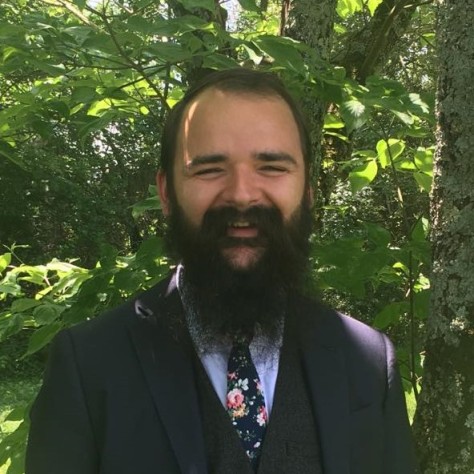
Brandon is the founder and main contributor to Brandon’s Desk, the blog with biblical resources from his ministry. He pastored the family of believers at Locust Grove Baptist Church in Murray, Kentucky for six years. He and his wife Dakota live there with their three dogs, Susie (Jack Russell), Aries (English Shepherd), and Dot (Bluetick Beagle).

For more devotional entries like this, check out Brandon’s latest book, Bible Gleanings Volume II, which features 100 daily devotionals gleaned from God’s word:

He Knows | Bible Gleanings – July 9-10, 2022

He glanced at the x-ray and said, “It’s not good, Mr. Bramlett, but we can fix it.” According to the verdict of my dentist, I had significantly more dental issues than I had suspected. I visited the dentist because of pain in my upper left jaw, but I quickly discovered that I was in for a lot more pain. Extensive examinations and x-rays revealed problems I could not identify or detect, such as cavities, tooth decay, and two wisdom teeth stacked upon each other (a rare occurrence). The truth was truly a kick in the teeth.

But thank goodness I trusted the professionals. Orthodontists possess the experience, expertise, and equipment that I do not. What I know about teeth is as scarce as hen’s teeth! Placing myself under their care was certainly daunting because I feared that they would find and expose problems I was oblivious to, but it was the right decision because only they had the tools to fix them. Knowing that they knew more than I knew was simultaneously frightening and comforting.

Now, sink your teeth in this: God knows you better than you know yourself. He is the all-knowing Creator whose “understanding is beyond measure” (Psalm 147:5). He needs no counsel, instruction, or schooling (Isaiah 40:13-14). Your knowledge is limited; His is limitless. And His understanding of your sins and struggles is greater than yours. 

The omniscience of God is terrifying. His vision is more precise than an x-ray, because His eyes “are in every place, keeping watch on the evil and the good” (Proverbs 15:3). Nothing is a secret to Him, and He knows exactly who you are behind closed doors. His penetrating sight burns through all masks of pretense and falsehood (Revelation 1:14). As God Himself once asked, “Can a man hide himself in secret places so that I cannot see him? declares the LORD. Do I not fill heaven and earth? declares the LORD” (Jeremiah 23:24). 

But His all-knowingness is also greatly encouraging, for no one knows what you need better than He does. As Jesus promised, “For your Father knows what you need before you ask him” (Matthew 6:8b). You may think you need more money, and God may grant you more contentment. You may believe that God should take your pain away, but He may instead give you more grace to endure it. You might pray that God would cleanse your tongue of cursing, and He might instead cool the burning rage in your heart.

When you entrust yourself to the Lord, He will reveal problems you were previously unaware of. But you can be certain that He has all the grace and power required to repair them. Expect Him to convict you of sin and tell you, “This is not good.” But don’t be discouraged; He will always say, “But I can fix it.”

Bible Gleanings is a widely-read weekend devotional column, written for the Murray Ledger & Times in Calloway County, Kentucky. 

Brandon is the founder and main contributor to Brandon’s Desk, the blog with biblical resources from his ministry. He pastored the family of believers at Locust Grove Baptist Church in Murray, Kentucky for six years. He and his wife Dakota live there with their three dogs, Susie (Jack Russell), Aries (English Shepherd), and Dot (Bluetick Beagle).

Theological Reflections: Is Open Theism Biblical?

There are certain essential attributes that theology ascribes to God. These attributes are drawn from what is clearly revealed in the Bible about God’s nature. Among these essential attributes are: omnipotence (God is all-powerful), omnipresence (God is all-present), and omniscience (God is all-knowing). All of these are equally important, and require careful study and attention. For God to be God, these attributes must be His nature. He must be all powerful, able to do anything—He must be always present with His creation, and He must be all-knowing, not restricted by any means.

God’s omniscience, however, presents a struggle in matters of God’s power to know all things, and how that relates to human freedom. Omniscience refers to God’s perfect knowledge about the past, present, and the future. Biblical Christians have always affirmed that God is omniscient, but recently certain thinkers have denied God’s perfect knowledge about the future. These “certain thinkers” are proponents of what is known as open theism. Their denial of God’s complete omniscience is due mainly to their system of theology that seeks to answer a problem in relation to God’s omniscience and human freedom.

Since God is all-knowing, this implies that He must know the future. If He knows the future, this poses difficulties for the freedom of human choices and ability. If God knows what humans will do in the future, do humans have the ability to do anything other than what God knows they will do? If humans had the power to do something other than what God foreknows, then God would be mistaken—His knowledge would be false, thus He would not know the future. Ronald H. Nash writes, “God’s foreknowledge would have actually been fore-ignorance.”¹ So the nature of the problem is reconciling God’s divine foreknowledge of the future, with human freedom in regards to their choices and abilities.

The system of theology known as open theism has attempted to provide an adequate answer to this difficulty. Defined by Nash, the basic tenet of open theism is this: “[Proponents of open theism] believe it is necessary to eliminate God’s knowledge of future human actions in order to preserve a sphere of human free will.”² In order to “protect” human freedom and reconcile this problem of divine-foreknowledge-human-freedom, God cannot have knowledge of any future human decisions, or those decisions would lose their significance. As open theists propose, God can have no knowledge about future human possibilities. Those who hold to this view say that God cannot know these things because there is nothing to know—the decisions, choices, and actions have not been made by humans yet because they are future contingents, and not done in the past. The past is fixed, but the future is not, and since those actions have not yet been done, God could not possibly know them.

It is important to point out that, though open theist deny God’s knowledge of the future, they are not necessarily saying that God doesn’t know about everything in the future. According to their view, God knows that “the multiplication tables will be true in the future, just as he knows that the law of gravity will continue to obtain.”³ God doesn’t know the specifics about future contingents—He just knows the fundamentals, if you will, those things which can be accurately predicted because they do not change. Things like natural laws and obvious consequences. But if God can know one contingent like these, how can He not know more? Who or what is the authority in determining how many future contingents God can or cannot know?

Open theism, then, creates more problems than it attempts to resolve. The theological implications of a limitation on God’s foreknowledge are possibly something the proponents of open theism have not considered. One implication is that God would have no knowledge of which human beings will come into existence in the future. God had no knowledge of anyone’s future existence, and He couldn’t have (if they did not yet exist). How then, would the atonement of Christ accomplish anything at all? This would mean that God sent Christ to die with the possibility of dying for no one—for He had no way of knowing if even one human being would come to faith. Nash writes, “Just as the God of open theism cannot know which future human beings will exist, neither can he know which future humans will become Christian believers, will receive his salvation, and will be blessed with eternal life.”

This theory of open theism also does serious damage to the teaching of the knowledge of God revealed in the Scriptures. God “knows everything” (1 John 3:20), and even says of Himself, “[I declare] the end from the beginning and from ancient times things not yet done, saying, ‘My counsel shall stand, and I will accomplish all my purpose’” (Isaiah 46:10). The psalmist writes, “Even before a word is on my tongue, behold, O LORD, you know it altogether” (Psalm 139:4). Open theism, therefore, cannot provide an adequate reconciliation for the struggle between God’s foreknowledge and human freedom. The Bible affirms that God knows all things, and that He knows the future perfectly. God has true foreknowledge of what human beings will do in the future, and those actions are determined, while at the same time, not violating human free will. All human choices and future contingents will therefore be what God already knows they will be.


1. Ronald H. Nash, Life’s Ultimate Questions: An Introduction to Philosophy (Grand Rapids, MI: Zondervan, 1999), 316.
2. Nash, 317.
3. Nash, 320.
4. Nash, 323.