Introduction
Often times when we read an account like this, we tend to run over it, believing that it is not relevant for us today and we read on to the next passage. But the Bible says different: “All Scripture is breathed out by God and profitable for teaching, for reproof, for correction, and for training in righteousness, 17 that the man of God may be complete, equipped for every good work” (2 Tim. 3:16-17). This means that every portion is relevant for our lives. I don’t have to make the Word of God relevant; it is already relevant.
The Text
“For this reason I, Paul, a prisoner for Christ Jesus on behalf of you Gentiles— 2 assuming that you have heard of the stewardship of God’s grace that was given to me for you, 3 how the mystery was made known to me by revelation, as I have written briefly. 4 When you read this, you can perceive my insight into the mystery of Christ, 5 which was not made known to the sons of men in other generations as it has now been revealed to his holy apostles and prophets by the Spirit. 6 This mystery is that the Gentiles are fellow heirs, members of the same body, and partakers of the promise in Christ Jesus through the gospel. 7 Of this gospel I was made a minister according to the gift of God’s grace, which was given me by the working of his power. 8 To me, though I am the very least of all the saints, this grace was given, to preach to the Gentiles the unsearchable riches of Christ, 9 and to bring to light for everyone what is the plan of the mystery hidden for ages in God who created all things,10 so that through the church the manifold wisdom of God might now be made known to the rulers and authorities in the heavenly places. 11 This was according to the eternal purpose that he has realized in Christ Jesus our Lord, 12 in whom we have boldness and access with confidence through our faith in him. 13 So I ask you not to lose heart over what I am suffering for you, which is your glory.”
Paul, the Prisoner for Christ
First Paul writes, “For this reason I, Paul, a prisoner for Christ Jesus on behalf of you Gentiles. . .” (3:1)
For what reason? Well, look at Ephesians chapter 2. What is that chapter all about? The gospel that gives life and includes the Gentiles. This is the guiding purpose in all Paul does. So he writes, “For this reason [for the reason of this great gospel] I, Paul, a prisoner for Christ Jesus on behalf of you Gentiles.” Paul was a prisoner at the time of writing this letter (You can read about that in Acts 28). Paul was a prisoner in Rome because he had been preaching the gospel. And Paul writes that he is a “prisoner for Christ Jesus” here in this passage. That is interesting to note, because he could have said “a prisoner, held captive by these filthy Romans.” It’s interesting because he doesn’t once place blame on anyone for his being held captive. Paul views his imprisonment positively. His imprisonment was definitely a hardship. His imprisonment was an embarrassment. But to our surprise, he gives little focus to his difficulty. He doesn’t blame the Romans, he doesn’t blame God, but you can almost hear a tone of honor in his voice as he says, “I am a prisoner for Christ Jesus.”
Paul’s theology of hardship never focuses on the hardship itself, but on the Christ, His gospel, and His people. We know this all too well from the pen of Paul to the Philippians: “12 I want you to know, brothers, that what has happened to me has really served to advance the gospel, 13 so that it has become known throughout the whole imperial guard and to all the rest that my imprisonment is for Christ. 14 And most of the brothers, having become confident in the Lord by my imprisonment, are much more bold to speak the word without fear” (1:12-14). Yes, Paul is aware of something much larger than his own circumstances. He is aware of something of infinite worth. Something on which no value can be placed. Something worth giving up everything for. Something that is worth losing everything for—and that something is Someone, and He is Jesus. Was Paul’s imprisonment life-threatening? Of course. But Paul’s imprisonment did not define who he was. Only the gospel of Jesus Christ defined who he was.
The Gospel is What Defines
Let me clarify: Paul wasn’t talking about suffering as a result of sin and evil in this world. There are different types of suffering—death, sickness, and disease, but the kind of suffering he was talking about was suffering for Christ. And so we unearth a foundational truth of the Christian life: The gospel will cost you something. The gospel always costs you something. What matters is where your heart is when you lose things for the gospel. And when we will lose things for Christ’s gospel, Jesus asks us if our heart is in the right place when we suffer on His behalf. When we lose things for the gospel. And it’s in a very strange passage of Scripture: “If anyone comes to me and does not hate his own father and mother and wife and children and brothers and sisters, yes, and even his own life, he cannot be my disciple” (Luke 14:26). What Jesus is saying here is that following Him will cost you dearly. You know your dad won’t approve. He’ll roll his eyes and mumble something about you getting carried away with your religion. Your brother or sister won’t know what to make of your decision to lose everything for Jesus. Your friends may distance themselves from you. There’s a good chance your husband or wife will criticize you for losing everything for Jesus. And Jesus is saying, “Yep, that may be part of it. And if you’re not willing to choose me over your family (and over everything, knowing that you may lose it in this life), then you are not ready to follow, and maybe it’s time for you to go on home.”
If you lost everything for the gospel would it still be worth it?
Ephesians says yes. Because when you lose things for the gospel you are not really losing anything—but you are gaining that which is of infinite worth and that is God. Nothing on this earth can compare to God—not the greatest amount of wealth and possessions, not the most power, not popularity from anyone and everyone, not conquest, not great achievement—nothing ever will and ever can compare with the infinite worth of God. “To whom then will you compare me, that I should be like him? says the Holy One. 26 Lift up your eyes on high and see: who created these? He who brings out their host by number, calling them all by name, by the greatness of his might, and because he is strong in power not one is missing” (Isaiah 40:25-26).
And nothing can ever take Him away from you. No force, no power, no nothing can every take you away from God if you belong to Him through faith in Christ Jesus (Romans 8:38-39). So what if you lose something for the sake of Christ and the spread of His gospel? That’s the attitude that Paul had here. Paul rejoiced in his suffering and counted it as an honor to be called a “prisoner for Christ Jesus.” And so asked his readers: “So I ask you not to lose heart over what I am suffering for you, which is your glory” (v. 13).
Value the Treasure
Paul didn’t allow his circumstances to define who he was. He let the gospel do that. He was a prisoner for Christ Jesus. And we need to remember that the gospel defines who we are. Folks, the gospel is all we have. It’s all we need—but it’s all we have. This gospel is the good news that even though we are born haters of God (Rom. 1:30), sinners by nature (Eph. 2:3), enemies of God (Rom. 5:10), not seeking Him(Rom. 3:11)—that God had a plan from eternity to save us (Eph. 1:4) and that salvation was accomplished through Jesus Christ on the cross (Rom. 5:8) and is available to all who would turn away from sin and have faith in Him as Lord and Savior of their lives.
If you are a believer, no sin defines who you are, no past shame defines who you are, no difficulty in life defines who you are, not even death defines who you are—but only the gospel of Jesus Christ defines who you are and that gospel says that you are God’s forever, to enjoy Him forever and make Him your infinite delight.
Paul’s Apostleship
“Assuming that you have heard of the stewardship of God’s grace that was given to me for you, 3 how the mystery was made known to me by revelation, as I have written briefly” (vv. 2-3). Paul stops his prayer here and doesn’t come back to it until 3:14. He stops here to explain the nature of his apostleship and his ministry. Paul’s readers would have heard of God’s entrusting of His grace to Paul if they had only read the above chapters. That’s all it would take. In fact he states in the next verse: “when you read this, you can perceive my insight into the mystery of Christ” (v. 4). He says that he was steward of God’s grace. And he tells his readers that the mystery of the gospel was made known to him by revelation and he was written about it briefly. Paul viewed himself as a manager of grace. Why? Well he had a specific task given to him. In Acts 22, Paul says that Jesus commanded him: ‘Go, for I will send you far away to the Gentiles’” (Acts 22:21, emphasis mine). Paul’s ministry to the Gentiles was unique, and God used Paul to write Holy Spirit inspired letters—and while we can never duplicate Paul in exactly every way, Paul’s theology of grace here really teaches us something that I think we often forget.
Grace Enlists
Grace enlists. Grace commissions. Grace always brings responsibility. Christianity is not a religion of works, but it is a religion of action. If we think that God’s grace is limited to the gift of salvation, and it stops there—then we are deceiving ourselves. This text forces us to reflect on the fact that grace enlists. We are all managers of grace. If we have received the grace of God, we are told to extend it to others: “As each has received a gift, use it to serve one another, as good stewards of God’s varied grace” (1 Peter 4:10). In fact, you may disagree, but I would go as far as to say that if grace is not being worked out in your life, then you never had grace to begin with and are not saved. Grace always brings responsibility and forces us to take action folks. If we are not taking action in our Christian lives today, then did we have grace to begin with? Paul even says later in this passage, “Of this gospel I was made a minister according to the gift of God’s grace, which was given me by the working of his power” (v. 7).
But let me clarify two things:
1) Grace doesn’t just enlist clergy. Grace doesn’t just enlist pastors, Sunday school teachers, and crazy youth pastors. All believers are called to extend God’s grace to others and to live in a way that draws people’s attention to Him. We are all ministers folks. In fact if you want the Bible’s specific definition of how we are all ministers, here you go: “All this is from God, who through Christ reconciled us to himself and gave us the ministry of reconciliation” (2 Cor. 5:18).
2) Ministry is God’s gift to you. It’s not your gift to Him. Often times we think we are doing God a favor when we engage in some spiritual project. But what is really happening is this: God is inviting you through obedience to glorify Him. God delights in that, but really it is a gift to us because we are enjoying God as we are glorifying Him. That’s the cool thing about our relationship to God. Our full joy in Him does not compromise His being glorified and uplifted. Those two things go hand in hand. For example, in the Westminster Catechism the first question asks: “What is the chief aim of man?” The answer there is: “Man’s chief end is to glorify God and to enjoy Him forever.” It doesn’t say ends. We glorify God by enjoying Him. And we will enjoy Him as we extend His grace to others by doing things that will draw people’s attention to Him.
The Mystery Revealed
“When you read this, you can perceive my insight into the mystery of Christ which was not made known to the sons of men in other generations as it has now been revealed to his holy apostles and prophets by the Spirit” (vv. 4-5) Paul says that when his readers read this, they can perceive into his insight into the mystery of Christ. This is a conditional statement. They will not understand the mystery without reading his letter. And Paul says that this mystery was not made known to the sons of men in other generations as it has now been revealed to his holy apostles and prophets. And it wasn’t. This “mystery of Christ” was not known to human beings in earlier generations. However, he insists that the Law and the Prophets (who in past generations attested to the gospel): “But now the righteousness of God has been manifested apart from the law, although the Law and the Prophets bear witness to it” (Rom. 3:21). Moses and the prophets had written of Christ and his coming salvation, and God even promised Abraham that all the nations would be blessed through him (Gen. 12:3), but the full realization of who Christ was and the great extent of His salvation that would come to the Gentiles was not clear until the giving of the Spirit. That’s how Paul says that this mystery was revealed: “by the Spirit.” The Bible attests elsewhere: “For no prophecy was ever produced by the will of man, but men spoke from God as they were carried along by the Holy Spirit” (2 Peter 2:21, emphasis mine).
What is the ‘Mystery of Christ?’
Paul has made mention of this mystery a few times already and now he explains what that mystery is: “This mystery is that the Gentiles are fellow heirs, members of the same body, and partakers of the promise in Christ Jesus through the gospel” (v. 6). Here’s the mystery Paul says: These people who were separated from Israel and her God, (like we’ve seen before in Eph. 2) are fellow heirs, members of the same body, and partakers of the promise in Christ Jesus. How are they made into these things? “Through the gospel” (v. 6 b). What Paul is demonstrating here is a theology of unity. Paul has fought so strenuously for establishing the doctrine of unity between Jew and Gentile. In fact, that has been an aspect of our study in Ephesians since we started. Paul has a real concern for the inclusion of the Gentiles into the body of Christ. Paul is expounding the mystery of Christ and says that the Gentiles belong, and they are on the same footing as Jewish Christians and receive the same benefits. Their unity is not grounded in the similarity of skin color, their unity is not grounded in following the law, their unity is not grounded in anything else but the Lord Jesus Christ.
If being in Christ unites Jews and Gentiles into one body (members of the same body), does it not do the same for us with all other believers who are in Christ? That’s the theme we draw from Paul’s usage of language of reconciliation between Jew and Gentile that we have observed so much.
Unity: Are We Living It?
We are unified in Christ. Regardless of our differences. Regardless of our past. Regardless of any barrier that may make us different from any other person. If we are in Christ, we are unified in one body—Christ’s body. The question is not, Are we unified? The question is, are we living unified? We are not asked to like other Christians, we are not asked to be like them, agree with them, but we are to recognize and to put into action that we are one with them in the Lord, and we share the same benefits. When we realize that we are all “fellow heirs,” “members of the same body,” and “partakers of the promise in Christ Jesus,” we will view our brothers and sisters in Christ in a biblical way. We will see each other on the same level. We will encourage one another because we know that we all struggle with one ultimate problem: sin. We will worship as a family. And all sorts of other benefits.
Here’s where disunity starts to get damnable: if we do not live in unity, then we proclaim a false message to the world. The message of the gospel is a message of unity and a message of peace. And if our church life is characterized by divisions, strivings, and arguments, then we are putting our light under a basket, when we should be “letting [our] light shine before men that they may see our good works and glorify our Father who is in heaven” (Matt. 5:16).
Unity is a lifestyle that we need to put time and effort into folks. We live in a day when people come to church to see what they can get. Some people come to church to fit their preferences and if they don’t get what they want, often times they leave. Or someone will have a petty disagreement with somebody or a wrestling with someone and they leave the fellowship. There are right reasons to leave certain fellowships and there are wrong reasons to leave certain fellowships. And if you’re someone who breaks from a fellowship because you didn’t get your way—that is a wrong, unscriptural reason to leave the fellowship.
Folks, when we meet together as a body—a great protest takes place. That’s right, a protest. When we fellowship together as a family, worship as fellow heirs, see each other as members of the same body, our presence together is a bold protest against division. We meet together as a body to protest divisions and to hold up our picket signs against divisions—and those picket signs have painted on them, “We are one in Christ!”
I Am the Very Least
After Paul describes what this mystery is, he goes on to say, “Of this gospel I was made a minister according to the gift of God’s grace, which was given me by the working of his power” (v. 7). Again, Paul talks about the “grace-enlisting” that we discussed earlier. He tells his readers that he was made a minister of this great, triumphant gospel. How was he made a minister? “according to God’s gift of grace, which was given me by the working of his power.” Again, grace enlists. Grace enlists.
Verse 8 reads, “To me, though I am the very least of all the saints, this grace was given, to preach to the Gentiles the unsearchable riches of Christ. .” Paul maintains such humility here and says basically, “I of all people, was given this grace to preach to the Gentiles the unsearchable riches of Christ.” But what else was he given this grace for? “. . . and to bring to light for everyone what is the plan of the mystery hidden for ages in God who created all things, 10 so that through the church the manifold wisdom of God might now be made known to the rulers and authorities in the heavenly places” (vv. 9-10).
Paul has said that this plan of the mystery was not revealed to “the sons of men in other generations” (v. 5), and the plan of this mystery (as he says here) was hidden for ages in God who created all things. Paul attests to God creating all things to imply that God doesn’t need a creator. That is the only rational explanation for the existence of the universe. Something (we know Someone) outside our realm of existence would have to supernaturally create the universe as we know it. And this something would have to have never had a beginning. Something that doesn’t depend on something else for its existence. This something is Someone and that’s God.
And Paul says that this plan of the mystery was hidden in this eternal God. If God is eternal, then He didn’t need a creator and this plan of the mystery was hidden “for ages” in the limitless, eternal God. Which is why Paul says in the next verse, “This was according to the eternal purpose that he has realized in Christ Jesus our Lord” (v. 11). Paul also says that God gave him grace to bring to light for everyone this mystery for a special kind of testimony: “so that through the church the manifold wisdom of God might now be made known to the rulers and authorities in the heavenly places” (v. 10). Didn’t see that coming. Have you ever read that in the Bible? This means that our testimony provides evil angelic powers with a reminder that their authority has been decisively broken and that all things are subject to Christ.
Thus you have a triumphant testimony of the gospel’s power: No power of hell, no scheme of the devil, and no influence of a demon can hinder the advance of the gospel to Gentiles or their inclusion into the church. And that goes for everyone who would trust in Jesus Christ. The living, breathing Church of God testifies to even demonic powers that we have been unified by Christ and are in subject to Christ.
Boldness and Access With Confidence
Paul says of this Christ, “in whom we have boldness and access with confidence through our faith in him” (v. 12). Paul says that through Christ we have these things.You know, it’s strange that Paul was not frequently discouraged with the failures of his churches. He did criticize the sexual immorality of the church in Corinth, he did exhort the believers in Galatia to stop getting away from the true gospel, but he was convinced that things would work out. So Paul was eager for his readers to share his confidence rather than be discouraged—and once again the gospel is what sustains that: Paul says that in Christ he has “boldness and access with confidence,” through his faith in him.
We have something that the rest of the world doesn’t: access to God. Not only that, we have access to God with confidence. However, “boldness and access with confidence” (v. 12) does not mean that:
1) We have freedom to do whatever we want boldly before God. He sees anyway so I will do sin all the more.
2) We should feel superior to others because we have access to God; Boldness and humility go hand in hand.
3) It also doesn’t mean that we should be passive. It doesn’t mean that confidence in God should result in not taking action.
We know that life is difficult, we have suffering, evil and death all around us. Often times we can make a mistake and deny that these suffering are really impacting us. Listen to me, denial of the struggles in your life is not the solution. Paul knew the difficulties and was still confident. He looked his struggles straight in the eye but said, “I have access with confidence to God.” When we are aware of the fact that we do not go through hardships alone, when we are aware of the fact that we have a Savior who was “in every respect . . tempted as we are” (Heb. 4:15), then we have a great comfort. We as believers even have confidence over death as part of belonging to God.
Conclusion
So Paul concludes by asking his readers, “not to lose heart over what I am suffering for you.” Why? “it is their glory.” Paul’s suffering was worth it because he knew that he wasn’t really losing anything—but gaining that which is of immeasurable worth: God.
May God develop within all of us an attitude like Paul’s here.




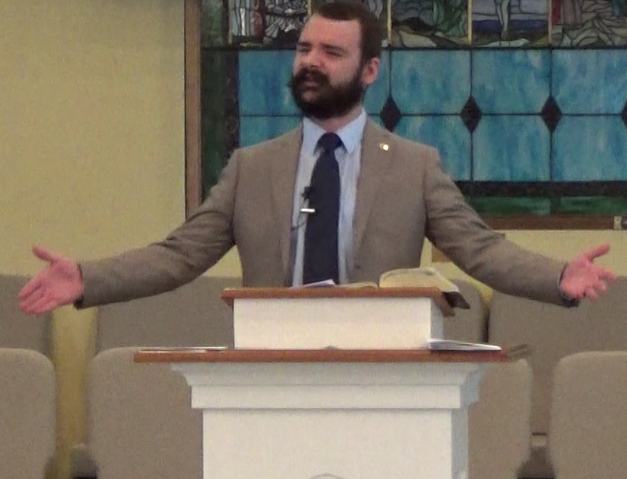 Brandon is the founder and main contributor to Brandon’s Desk, the blog with biblical resources from his ministry. He is proud to be the pastor of the family of believers at Locust Grove Baptist Church in Murray, Kentucky. He and his wife Dakota live there with their two dogs, Susie and Aries.
 Brandon's Desk