
All posts by Brandon G. B.

The Just Judge | Bible Gleanings – March 16-17, 2024

An Oklahoma judge was recently judged to be unfit to judge because of poor judgment. According to the Associated Press, the former district judge sent over five-hundred text messages to friends during a murder trial, “including messages that mocked prosecutors and were sprinkled with emojis.” Obviously, judges should oversee cases with serious solemnity and meticulous attention to detail since lives are at stake and justice must be served. Justice is not a joke, and this ex-judge is currently on trial for “gross neglect of duty, oppression in office, lack of proper temperament and failure to supervise her office.” If she hadn’t been caught on CCTV cameras, she may have issued an unfair verdict that reduced the criminal’s charges.

Guilty sinners like you and I might wish that the Judge of all the universe is just as careless and neglectful of our spiritual crimes. We may hope that He is too preoccupied with controlling the cosmos to remember the multitude of our trespasses and sins. But the verdict of the Bible is that God keeps a perfect ledger of all our evils (Rev. 20:12-15). Every last sin—from the time of our birth to our death—will be recorded in the books that shall be opened on the Day of Judgment. God sees all of our iniquities (Heb. 4:13), and He could even see them with His eyes closed (cf. Psalm 11:4).

The good news is that the same Judge fully and finally forgives those who are in Christ. Those whose names are written in the Book of Life do not need to worry about any books containing a record of their sins because they have been erased and forgotten (Jer. 31:34; cf. Psalm 103:12). Jesus traded places with guilty sinners, and He cancels the gargantuan sin debt of anyone who trusts in Him (Col. 2:14). That is why Paul said in 2 Corinthians 5:21, “For our sake he made him to be sin who knew no sin, so that in him we might become the righteousness of God.” The one who has faith in Jesus is justified by the Judge Himself and declared innocent because of the substitutionary atonement of Christ (Rom. 3:21-26).

Jesus bore your punishment, paid your penalty, and died the death you deserve (Rom. 6:23). As Isaiah the prophet declared, “But he was pierced for our transgressions; he was crushed for our iniquities; upon him was the chastisement that brought us peace, and with his wounds we are healed. All we like sheep have gone astray; we have turned—every one—to his own way; and the LORD has laid on him the iniquity of us all” (Isa. 53:5-6). Have you trusted in the Christ who was judged in your place or are you hoping that God is too busy to keep up with your sins?

Bible Gleanings is a widely-read weekend devotional column, written for the Murray Ledger & Times in Calloway County, Kentucky. 

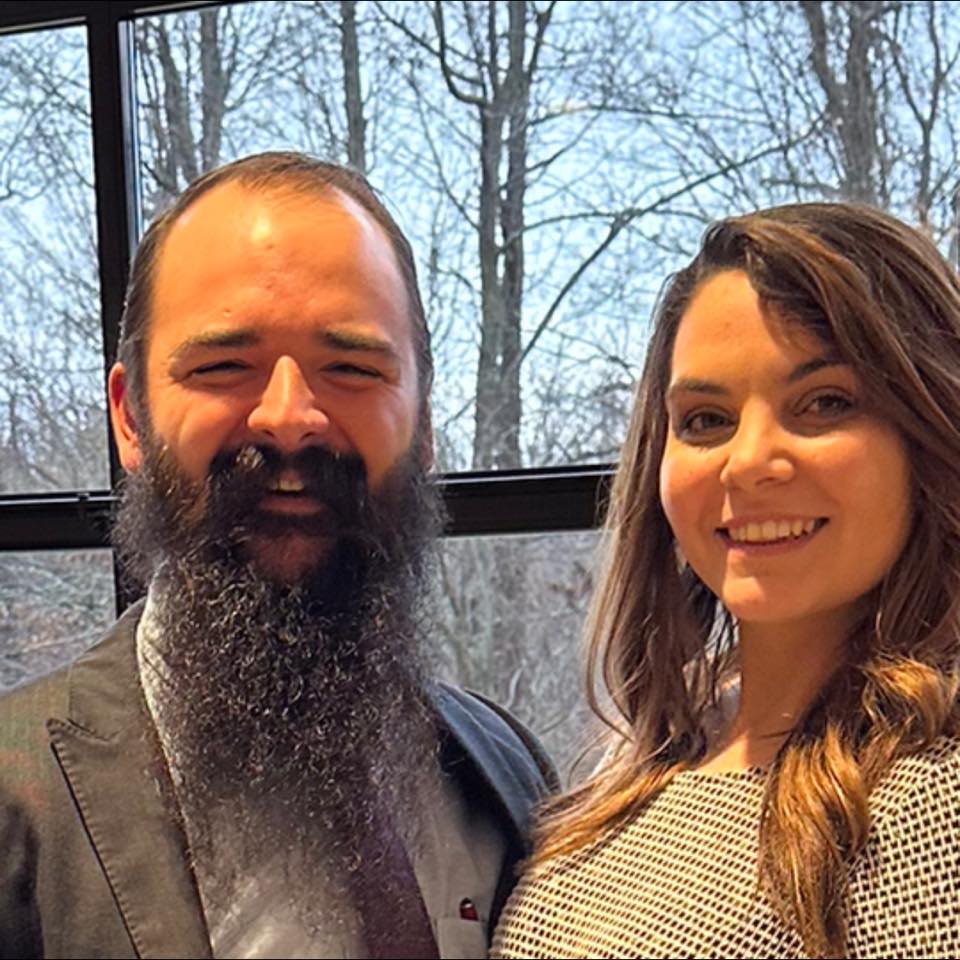
Brandon is the founder and main contributor to Brandon’s Desk, the blog with biblical resources from his ministry. He pastored the family of believers at Locust Grove Baptist Church in Murray, Kentucky for six years. He and his wife Dakota live there with their three dogs, Susie (Jack Russell), Aries (English Shepherd), and Dot (Bluetick Beagle).

For more devotional entries like this, check out Brandon’s latest book, Bible Gleanings Volume II, which features 100 daily devotionals gleaned from God’s word:

The Failure of False Gods | Bible Gleanings – March 9-10, 2024

A toy power drill is stashed away in a box at our house that we keep to occupy the multitude of my wife’s nieces and nephews. It is plastic, devoid of electricity, and always produces entertainment (and sometimes a pounding headache). In my closet is a Black and Decker cordless drill—it is the real deal, and the tool I always use when there is a job to do. I’m not a genius, but I know better than to grab the Fisher Price toy drill when I need to drive a screw through a wood plank or door hinge. I know that the fake drill is incapable of getting the job done because I’ve seen the power of the real drill and the powerlessness of the phony one. 

Likewise, the God of the Bible is the real deal—the true and living God—not only because He has displayed His power in creation and salvation, but because all counterfeit gods are powerless. The Lord is God not only because of what He can do, but also because of what false gods cannot do. Idols cannot speak, love, or answer prayer—and the Lord God does all three (Psalm 115:4-8). False gods only bring disappointment, dissatisfaction, destruction, depression, and—apart from repentance—damnation from God. The only One who can provide lasting joy, enduring satisfaction, abiding contentment, and everlasting life is the God whose name is the Lord. 

Idols cannot be faithful to you. All they can do is fool you and fail you. The false gods of possessions, pleasure, prestige, power, and position will never give you unconditional love, unceasing care, and eternal soul-satisfaction. Besides, idols are only so-called “gods,” as Paul said: “For although there may be so-called gods in heaven or on earth—as indeed there are many “gods” and many “lords”—  yet for us there is one God, the Father, from whom are all things and for whom we exist, and one Lord, Jesus Christ, through whom are all things and through whom we exist” (1 Cor. 8:5-6).

Therefore, only the Lord God is worthy of your service, trust, and worship. He never disappoints, deceives, or dismays. He will satisfy you with good things (Psalm 103:5). He will love you relentlessly (Romans 8:38-39). Do you serve and love Him or the false gods of this world? The choice is as obvious as choosing between a real drill and a toy.

Bible Gleanings is a widely-read weekend devotional column, written for the Murray Ledger & Times in Calloway County, Kentucky. 

Brandon is the founder and main contributor to Brandon’s Desk, the blog with biblical resources from his ministry. He pastored the family of believers at Locust Grove Baptist Church in Murray, Kentucky for six years. He and his wife Dakota live there with their three dogs, Susie (Jack Russell), Aries (English Shepherd), and Dot (Bluetick Beagle).

For more devotional entries like this, check out Brandon’s latest book, Bible Gleanings Volume II, which features 100 daily devotionals gleaned from God’s word:

The Right Thing After the Wrong Things | Bible Gleanings – March 2-3, 2024

The best thing to do is always the right thing to do—especially after doing the wrong thing. And that was the experience of an intoxicated driver in North Yorkshire, England. Earlier this month, English police received a call from a man who turned himself in over the phone, confessing that he had been driving drunk. He made the reckless decision to get behind the wheel after a long weekend of heavy drinking, but fortunately, he realized his mistake and reported himself to the authorities. According to the Associated Press, “When officers arrived, the 52-year-old man was in a van on the side of the road. A breath test revealed he was three times over the legal limit.”

He made the best decision after making a bad decision. He did the right thing after doing the wrong thing. And that’s what the Lord commands us to do when we’ve done the wrong thing. When we sin against God, we cannot go back in time to undo our actions. But, we can set things right by “turning ourselves in” to the Lord through confession of our sins.

Unconfessed sin yields nothing but destruction, demise, and dismay. “Whoever conceals his transgressions will not prosper,” warned Solomon, “but he who confesses and forsakes them will obtain mercy” (Prov. 28:13). Achan of old learned the hard way that failure to confess one’s sins results in wreckage and woe (Josh. 7:1-15). And David reminds us that sin will consume us until we confess it: “For when I kept silent, my bones wasted away through my groaning all day long. For day and night your hand was heavy upon me; my strength was dried up as by the heat of summer” (Psalm 32:3-4).

Thankfully, cleansing and forgiveness is available when we contritely confess our sins to the Lord: “If we confess our sins, he is faithful and just to forgive us our sins and to cleanse us from all unrighteousness” (1 John 1:9). When David eventually confessed his sins, God forgave him as well: “I acknowledged my sin to you, and I did not cover my iniquity; I said, “I will confess my transgressions to the LORD,” and you forgave the iniquity of my sin. Selah” (Psalm 32:5).

Therefore, when you commit sin, immediately confess it to the Lord in the place of prayer. Refrain from self-punishment, and do not dwell on your guilt. Do not engage in other good works to appease your conscience either. Instead, be frank and forthright about your sin, as king David was after he committed adultery with Bathsheba and slew her husband: “For I know my transgressions, and my sin is ever before me. Against you, you only, have I sinned and done what is evil in your sight, so that you may be justified in your words  and blameless in your judgment” (Psalm 51:3-4).

Bible Gleanings is a widely-read weekend devotional column, written for the Murray Ledger & Times in Calloway County, Kentucky. 

Brandon is the founder and main contributor to Brandon’s Desk, the blog with biblical resources from his ministry. He pastored the family of believers at Locust Grove Baptist Church in Murray, Kentucky for six years. He and his wife Dakota live there with their three dogs, Susie (Jack Russell), Aries (English Shepherd), and Dot (Bluetick Beagle).

For more devotional entries like this, check out Brandon’s latest book, Bible Gleanings Volume II, which features 100 daily devotionals gleaned from God’s word:

Run the Race | Bible Gleanings – February 24-25, 2024

It’s a flat-out pancake race. Held in the English town of Olney, the annual Pancake Day Race is a centuries-old street-sprint in which contestants hold a pan containing a pancake while they run. The race is tied to Shrove Tuesday (or Fat Tuesday), the liturgical holiday of “food indulgence” which immediately precedes the day of Lent. According to the Associated Press, the race originated in 1445, when a “harried housewife [heard] the church bells signaling the Shrove Tuesday service and raced off with her skillet.” And you don’t have to be a pancake expert to compete—you just have to “stack up” against the competition. 

Some races like the Pancake Day Race are purely for entertainment, with no tangible reward. Other races are more serious, such as those in the Olympics, which offer mammoth monetary benefits. However, one race is more momentous than any marathon on earth because it offers rewards of everlasting worth, and that is the race of the Christian life. The Bible often describes the believer’s life on earth as a strenuous race that ends at the finish line of heaven. As the writer of Hebrews commanded, “Therefore, since we are surrounded by so great a cloud of witnesses, let us also lay aside every weight, and sin which clings so closely, and let us run with endurance the race that is set before us, looking to Jesus, the founder and perfecter of our faith” (Heb. 12:1-2a).

Like any race, the race of the Christian life is not easy. It requires a great deal of “holy sweat” and disciplined effort (1 Tim. 4:7). The temptation to quit and rest from the run of redemption is always present. The glaring absence of runners in the race (Matt. 7:13-14), or the sight of other Christians who appear to be getting farther than us might be discouraging at times, too. Above all else, the weight of sin often slows our advance as we attempt to run with endurance. 

We may even be tempted to look behind us and become disappointed at how poorly we ran in the past. But, according to Paul, we cannot focus on the failings of yesterday—we must keep running and facing forward. He encouraged, “Brothers, I do not consider that I have made it my own. But one thing I do: forgetting what lies behind and straining forward to what lies ahead, I press on toward the goal for the prize of the upward call of God in Christ Jesus” (Phi. 3:13-14).

We must keep moving, fixing our gaze upon Jesus, who will meet us at the end of the race (2 Tim. 4:7). One day, we will cross the finish line when we cross from death to life in eternity. Until then, we must keep on running: “Do you not know that in a race all the runners run, but only one receives the prize? So run that you may obtain it” (1 Cor. 9:24).

Bible Gleanings is a widely-read weekend devotional column, written for the Murray Ledger & Times in Calloway County, Kentucky. 

Brandon is the founder and main contributor to Brandon’s Desk, the blog with biblical resources from his ministry. He pastored the family of believers at Locust Grove Baptist Church in Murray, Kentucky for six years. He and his wife Dakota live there with their three dogs, Susie (Jack Russell), Aries (English Shepherd), and Dot (Bluetick Beagle).

For more devotional entries like this, check out Brandon’s latest book, Bible Gleanings Volume II, which features 100 daily devotionals gleaned from God’s word:

Evangelistic Exigency | Bible Gleanings – February 17-18, 2024

I didn’t need foreknowledge to know it was going to end badly. Not far from where I was, a motorcyclist lost control and slipped on some soft gravel, sending him and his bike onto the unforgiving asphalt. Time stood still as I saw him plummet, but there was no time to waste in helping him. I immediately pulled over and darted into action to potentially save his life. As soon as I lifted him up, another friendly neighbor ran from his truck to assist. We managed to get his bike standing upright, and aside from a few scrapes and bruises on the man and his Harley, he was thankfully alright.

But I wasn’t. I drove away convicted in the depths of my soul. An unsettling question kept racing through my mind: “I dropped everything I was doing to save a man from physical danger, but do I do the same for those in grave spiritual danger?” I couldn’t help but wonder, “Do I have the same sense of urgency for the souls around me who are driving down the wide road that leads to destruction (Matt. 7:13-14)? Have I done all I can do to get them off of that road and onto the one that leads to everlasting life?” I am glad I helped the man, but I often fail to feel the same concern for those who need the most help—the lost and the unsaved.

Perhaps you can identify with my God-wrought exposure of guilt. Think about it: how zealously are we preaching the gospel to those who are headed to hell in a handbasket? Are we alarmed in our souls for those whose souls may be seconds away from eternal damnation? When was the last time we prayed with tear-soaked eyes for God to save our unbelieving coworkers, family members, and friends? Can we relate to Paul’s yearning for the salvation of his family when he said, “Brothers, my heart’s desire and prayer to God for them is that they may be saved” (Rom. 10:9)?

And what produces this much-needed zeal and urgency? It’s simple: understanding the dire spiritual condition of the unsaved and their eternal danger. The motorcyclist’s dangerous predicament drove me to action—I didn’t want to see him suffer or possibly die. Likewise, understanding the spiritual peril of unbelievers and their desperate need of salvation will ignite in us the “heartburn” required for zealous preaching of the gospel. Unbelievers are lost, dead, enslaved, and in everlasting danger (Isaiah 53:6; Eph. 2:1-3; John 8:34; Matt. 25:41-46; Rev. 20:15), and we need not forget it. 

Jesus didn’t forget either. He understood man’s spiritual condition (Matt. 9:36; John 2:24-25), and did everything He could to change it. Do you have a heart for the lost like Christ? Do you yearn for their salvation like Paul? Do you zealously proclaim the gospel to the unsaved souls that you know?

Bible Gleanings is a widely-read weekend devotional column, written for the Murray Ledger & Times in Calloway County, Kentucky. 

Brandon is the founder and main contributor to Brandon’s Desk, the blog with biblical resources from his ministry. He pastored the family of believers at Locust Grove Baptist Church in Murray, Kentucky for six years. He and his wife Dakota live there with their three dogs, Susie (Jack Russell), Aries (English Shepherd), and Dot (Bluetick Beagle).

For more devotional entries like this, check out Brandon’s latest book, Bible Gleanings Volume II, which features 100 daily devotionals gleaned from God’s word:

Curing Callousness | Bible Gleanings – February 10-11, 2024

I became accustomed to the twinging pain after a while. At first, my sensitive fingertips were sore and screaming for relief when I began picking on the guitar over thirteen years ago. Pressing down on the nickel strings, bending them for that twang sound, and sliding from fret to fret to look like Stevie Ray Vaughn made my cushy fingertips calloused. When it was all new, it stung so badly that playing the air guitar seemed preferable. But over time, calluses formed on my fingers, melting away all sensitivity to fingertip pain for good.

A callus on the fingertip may be helpful, but a callus growing on the heart and mind is eternally hazardous. For this reason, the word of God sounds the alarm on the destructiveness of callousness, which refers to a deadened sensitivity to sin. According to Paul, the minds of unbelievers are callous—insensitive to iniquity, torpid to transgression, and unresponsive to ungodliness (Eph. 4:19). In fact, the conscience of an unsaved person can even be cauterized or “seared” so that it is numb to evil and its everlasting repercussions (1 Tim. 4:2). And it is possible for even Christians to become calloused to crookedness, indifferent to impiety, lethargic toward lawlessness, and “dull of hearing” (Matt. 13:15; Heb. 5:11).

Calluses form gradually, too. Mine did not grow overnight, but through practicing and playing the guitar for over a decade—and likewise, our sensitivity to evil gradually lessens the more we play with it. We begin by accepting our sin, and telling ourselves, “Just sinning this once won’t hurt.” Then we progress to advocating our sin, thinking, “Well, my sin isn’t as bad as everyone else’s!” And soon enough, we move on to approval of our sin, saying, “This sin isn’t too bad after all.” And once we get to the point where sin no longer makes us blush (Jer. 6:15), we have become callous. 

How can you know if you have become callous? Think about your reactions to sin in your life and in the world. Do you gasp when you hear about the infanticide of abortion taking place in our country? Do profanities and graphic scenes on television make you sick to your spiritual stomach to the point where you turn it off? And when you fall into temptation, are you overcome with godly sorrow, or do you make excuses for it?

Thankfully, spiritual callousness can be cured by the salve of Christ’s healing grace and through repentance and renunciation of sins that cause calluses (Rev. 3:19). If calluses have formed on your heart and mind, let Jesus apply His balm to make you sensitive to sin again, and instead of repeating the evils that make you indifferent, repent of them. Moreover, deepen your knowledge of what is right from the Scripture. Knowing the word of God is the only way to know our wretchedness (Romans 7:13, 24). Have you become calloused?

Bible Gleanings is a widely-read weekend devotional column, written for the Murray Ledger & Times in Calloway County, Kentucky. 

Brandon is the founder and main contributor to Brandon’s Desk, the blog with biblical resources from his ministry. He pastored the family of believers at Locust Grove Baptist Church in Murray, Kentucky for six years. He and his wife Dakota live there with their three dogs, Susie (Jack Russell), Aries (English Shepherd), and Dot (Bluetick Beagle).

For more devotional entries like this, check out Brandon’s latest book, Bible Gleanings Volume II, which features 100 daily devotionals gleaned from God’s word:

Sermon: Shall We Gather at the River? (Revelation 22:1-5)

Brandon is the founder and main contributor to Brandon’s Desk, the blog with biblical resources from his ministry. He is proud to be the pastor of the family of believers at Locust Grove Baptist Church in Murray, Kentucky. He and his wife Dakota live there with their three dogs, Susie (Jack Russell), Aries (English shepherd), and Dot (beagle).

Sermon: Trustworthy and True (Revelation 22:6-9)

Brandon is the founder and main contributor to Brandon’s Desk, the blog with biblical resources from his ministry. He is proud to be the pastor of the family of believers at Locust Grove Baptist Church in Murray, Kentucky. He and his wife Dakota live there with their three dogs, Susie (Jack Russell), Aries (English shepherd), and Dot (beagle).

Sermon: The Faithful Few (1 Kings 18:1-18)

Brandon is the founder and main contributor to Brandon’s Desk, the blog with biblical resources from his ministry. He is proud to be the pastor of the family of believers at Locust Grove Baptist Church in Murray, Kentucky. He and his wife Dakota live there with their three dogs, Susie (Jack Russell), Aries (English shepherd), and Dot (beagle).

Sermon: The Final Judgment (Revelation 20:11-15)

Brandon is the founder and main contributor to Brandon’s Desk, the blog with biblical resources from his ministry. He is proud to be the pastor of the family of believers at Locust Grove Baptist Church in Murray, Kentucky. He and his wife Dakota live there with their three dogs, Susie (Jack Russell), Aries (English shepherd), and Dot (beagle).