Tag Archives: church history

Book Review: Shapers of Christianity by Nick Needham

Christians need to study church history. Present-day believers can find soul-encouragement from the perseverance of yesteryear’s saints. Nothing will fuel your faithfulness today like reading about towering Christians who faced ridicule, persecution, and even death for the “crime” of following Jesus. Modern disciples can also learn to be more wary of false doctrine from studying the array of heresies which have arisen over the years, and how theologians in past centuries combatted such lies as beacons of biblical truth. There are a dozen more reasons to savor good books on church history, and today’s believers are blessed to have such a book from Nick Needham, Shapers of Christianity.

Excellent content + skillful writing = a book you cannot put down. I cannot recommend this short volume enough. Nick Needham is a modern-day expert on church history and the gold-nugget details that leave you saying, “Wow. I never knew that.” I burned through this book in four days. Needham paints brief sketches of the church fathers, reformers, and American theologians like B. B. Warfield and J. Gresham Machen.

To whet your appetite, here are a few little-known facts I gleaned from the book:

  • Irenaeus of Lyons (who wrote his best works during AD 175-195) was directly discipled by Polycarp, who was directly discipled by John the apostle.
  • Most arguments for the deity of Christ, the divine personhood of the Holy Spirit, and the Trinity were first facilitated by Gregory of Nazianzus (AD 330-390). He helped think through the Bible’s teaching on the Triune Godhead, shaping our Trinitarian doctrines into what they are today.
  • Anselm of Canterbury (1033-1109) wrote the first-ever systematic theology on substitutionary atonement.
  • John Calvin and other reformers cherished the commentaries written by a little-known Eastern Orthodox theologian, Theophylact of Ochrid (1050-1109). And that is saying something, considering the schism between the two theologies.
  • John Wycliffe (1330-1384), who led the way in giving us the English Bible we have today, was so detested by the Roman Catholic Church that they dug up his bones after his death and burned them. And, the Bible societies he founded were still active when the Reformation eventually made its way to England.
  • A lesser-known Russian monk named Tikhon of Zadonsk (1724-1783) transformed the world of devotional writing. He loved Western Christian literature, and Western Christians loved him back.
  • Jonathan Edwards (1703-1758), though known for “Sinners in the Hands of an Angry God,” preached much more on grace than wrath; and his neighborhood experienced such revival that they found it bizarre to engage in small-talk—unless it was biblical.
  • Without the organizational genius of John Wesley (1703-1791), Christianity in America would not be what it is today. Wesley also disliked open-air preaching, but did it anyway, explaining, “I love a commodious room, a soft cushion, a handsome pulpit. But where is my zeal, if I do not trample all these under foot in order to save one more soul?” (65).
  • Francis Turretin (1623-1687), an older Italian reformed theologian, was perhaps the chief reason why Princeton was once a champion of biblical truth. His “Institutes of Elenctic Theology,” was devoured by then-president Charles Hodge (Hodge persuaded one of his friends to translate the work into English, without which, we would not be able to read it today). And Hodge was a major influence on B. B. Warfield and J. Gresham Machen, whose writings were desperately needed in the age of modernism and liberalism.

Get your copy of Shapers of Christianity by Nick Needham in paperback from Banner of Truth.


Brandon is the pastor of Bandana Baptist Church in Bandana, Kentucky, where he lives with his wife, Dakota, and their three dogs, Susie, Aries, and Dot. Brandon and Dakota are also foster parents through Sunrise Children’s Services of Kentucky. Brandon is also a published author and a religious columnist for the Advance Yeoman newspaper in Ballard County, Kentucky. He is also a devotional contributor for Kentucky Today, a news publication of the Kentucky Baptist Convention. His columns are also featured in the Times-Argus newspaper of Central City, Kentucky, West Kentucky News of western Kentucky, and the online blog, Reforming the Heart.

3 Important Reasons to Study Church History

“If you don’t know history, then you don’t know anything. You are a leaf that doesn’t know it is part of a tree.”—Michael Crichton.

Studying the history of any field or subject is important. For Christians, there is perhaps no historical study more important than the study of our Christian heritage and history. For several reasons, studying church history is important, and I would argue necessary to truly appreciating and understanding the Christian faith. What then, are the reasons for studying church history?

1. Christianity is a historical religion. As I said above, knowing the history of any field is important – especially the history of Christianity. It can be confidently said that Christianity has made many positive contributions to the world we now live in. More in fact, than any other movement, religion, or individual in the history of the world. Further, the waves made by the towering individuals of church history have rippled into our own theologies and practices, and they deserve a hearing. That’s where church history comes in. In this field of study, we can sit with individuals such as Irenaeus who combated early heresies, Tertullian who contributed to the doctrine of the Trinity, and Basil of Casearea who strengthened peoples understanding of the Spirit. We can be discipled by the greatest theologians who ever lived like St. Patrick, Thomas Aquinas, Augustine, Martin Luther, John Calvin, and many others. Christianity didn’t begin yesterday. It has a history, like everything else, and it deserves to be studied, or what it is today will not be appreciated to the full extent that it could be.

2. To correct mistaken views about what has happened in history. This is, perhaps, one of the most vital reasons for studying church history. There are many concepts in theology and many practices in churches of different denominations that have not always existed. Many seem to have the understanding that our denominations, beliefs and practices have always been what they are today. However, Baptist churches have not always existed. Neither have Pentecostals been around for centuries, along with Methodists, Presbyterians, and other mainline denominations. Also, Roman Catholicism was not the first form of Christianity; it has not always been what it is today. It was, by no means, the dominant form of Christianity since the time of the apostles. These are only a few examples, and if church history is actually studied, these mistaken views can be corrected.

3. Spiritual Nourishment. This is a very practical reason for studying church history. God spoke throughout church history, just as He does today. God has never been silent. God revealed many things to individuals of church history, and it would be foolish to think that we are more intelligent than they were. For the most part, they read the same Bible that we have today. Charles Spurgeon remarks about the ignorance of not studying what God has revealed to them: “It seems odd, that certain men who talk so much of what the Holy Spirit reveals to themselves, should think so little of what he has revealed to others.“¹ The theologians of church history will serve spiritual nourishment to us today through their defenses of Christian doctrine against the earliest heresies, their rich interpretation of Scripture, and their brilliant philosophies.

Church history deserves our careful consideration and study. There are several other important reasons for studying church history, but these three cast the net widely, and I think rightfully so. Would you agree? What would you add to the list? What would you change or take away?


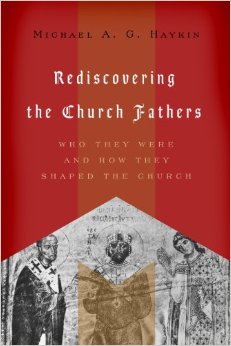
1. Cited in Rediscovering the Church Fathersby Michael A. G. Haykin (Wheaton, IL: Crossway, 2011), 14.

A Review: Rediscovering the Church Fathers by Michael A. G. Haykin

The significance of studying the church fathers cannot be measured. Their defenses of Christian doctrine against the earliest heresies, their rich interpretation of Scripture, and their brilliant philosophies are definitely worth careful consideration. Rediscovering the Church Fathers is a great place to start. As Michael A. G. Haykin walks you through the lives of the most important key figures in church history, you will find yourself captivated by the godly lives of these men who devoted their time and effort to edifying the body of Christ. This book is for anyone desiring to have a beginner’s understanding of the lives and writings of the early church fathers.

Haykin begins this book by stating its purpose in the first chapter: the need for studying the fathers among evangelicals. Haykin states that we should study the church fathers for such reasons as freedom and wisdom, understanding the New Testament, correcting mistaken views about the fathers, apologetic reasons, and for spiritual nourishment. The second chapter considers the life and thought of Ignatius of Antioch. He was known mainly for his martyrdom, and some even call him insane for the way he viewed his sure death. As Haykin brings out, Ignatius was willing to die by martyrdom because he “is certain that his martyrdom will please God” (p. 42). The argument of this chapter is that the Christian message was “so central [to] Christian orthodoxy, that it was worth dying for” (p. 48).

Chapter 3 is an examination of the apologetic writing, The Letter to Diognetus. Haykin walks you through the significant points of this letter and demonstrates how apologetically minded the author of this letter was and how this letter contributed to the shape of the early church in that it “permeated the ancient church’s witness to a sin-shaped culture” (p. 67). Chapter 4 is a study of the life and thought of the great exegete, Origen. Haykin gives a detailed biography of Origen’s early life and his contribution to the life of the early church by writing commentaries, books, and pioneering interpretation of biblical texts. This is one of the best balanced treatments of Origen that I have ever read. Chapter 5 is a look at the lives of two men who helped thrust religious piety towards the Lord’s Supper: Cyprian and Ambrose. Haykin shows the ways in which they both contributed to a biblical understanding of the Eucharist. Cyprian’s contribution was that he viewed the Eucharist as “a place where the believer knows afresh the forgiveness of the Lord and as a result is suffused with joy” (p. 97). This, of course, is the more reformed view of the Lord’s Supper. Ambrose’s contribution however, was that he identified “Christ’s words of institution as the means by which a change is effected in the elements of bread and wine” (p. 100). Ambrose’s thought would lead to a confusion of symbol and meaning, but nevertheless, both Cyprian and Ambrose are good representatives of the shifts in thought about the Lord’s Supper during that time. Haykin brings this out very well.

Then chapter 6 is a lengthy examination of the life and thought of Basil of Caesarea. This chapter is full of great quotes and rich writings from the pen of Basil, and Haykin shows what a great monastic reformer he was. Haykin mentions Basil’s defense of the Holy Spirit’s deity, during a time of controversy by noting the greatest work from the pen of Basil, namely On the Holy Spirit. This too, like the treatment of Origen, is one of the greatest readings on Basil of Caesarea. Chapter 7 is the last of the church fathers that are studied in this book, and it consists of a brief biography of Saint Patrick. Haykin tells us what the economic and social setting of that time was, and then proceeds to talk about Patrick’s career and his conversion. This is one of the most beautiful conversion stories in the history of the early church. What Haykin writes about Patrick’s conversion is worth getting this book. Haykin also notes what Patrick is most known for: his great missionary efforts. And Haykin concludes this chapter with a brief look at the impact he had on the Celtic church.

In chapter 8, Haykin gives a personal testimony to his encounter with studying the fathers. He talks about his honored mentors who introduced him to Patristics (the study of the church fathers), and encouraged him to further study. Then Haykin describes his doctoral studies on the life and thought of Basil and Athanasius. The appendixes of this book are also helpful. Haykin asks the question, “Where does one begin reading the fathers?” (p. 157). He then lists a number of helpful books that would aid anyone in their understanding of Patristics. Haykin concludes this book with an examination of one of his mentors, Jaroslav Pelikan, and his thought in Patristics. This part of the book is very touching because you get to see the personal life of Dr. Haykin.

What Haykin attempts to accomplish throughout this book is to give an outlook of how these early Christian figures have shaped our understanding of theology. They have contributed through their preaching, their many books, and in some cases their deaths. Haykin gives a new perspective on these great Christian thinkers by showing the different ways in which they have shaped contemporary Christianity.

Get Rediscovering the Church Fathers $9.39 for Kindle, or $13.82 Paperback.