The following sermon was delivered at Locust Grove Baptist Church in Murray, KY in September 2017:
4 I give thanks to my God always for you because of the grace of God that was given you in Christ Jesus, 5 that in every way you were enriched in him in all speech and all knowledge— 6 even as the testimony about Christ was confirmed among you” (1 Corinthians 1:4-6, ESV)
Riches Beneath Our Feet
There is a large gold mine over in Queensland, Australia known as the Mount Morgan gold mine. Mount Morgan was a copper, gold and silver mine in Australia and it was the largest gold mine in the entire world at one time. To give you some perspective, they mined for copper, gold, and silver from 1882 until 1981—and during that time the mine yielded about 262 tons of gold, 37 tons of silver, and 387,000 tons of copper.
Before discovery of the gold mine, there were people who lived on the mountain’s barren surface. They were the original land owners, and they lived very poor lives. If you look at pictures of Mount Morgan you can clearly observe that, and see that whoever lived there obviously had a hard life of poverty—there isn’t a lot of good farm land, vegetation, or trees. And so for many years, the original land owners lived in deep poverty there. Even though the vast wealth of the gold mine was completely out of sight to them, it was beneath their feet the whole time.
If they had only discovered the wealth they already owned, they wouldn’t have lived impoverished and poor lives—instead they would have been wealthy, enriched, and supplied throughout the rest of their lives and the generations which would follow them. The only thing that separated them from living a rich life was their failure to discover the riches they already had in their possession.
And you know, I find that many of us as believers are in a similar situation. We are not living spiritually wealthy lives because we have failed to understand that God has made us spiritually rich in Christ. He who has ears to hear, let him hear that it is a serious mistake when we as believers fail to understand that we have been made spiritually rich.
Scripture teaches that God has given us a wealth and abundance of spiritual riches and resources to enable us to live the Christian life—to live lives which are spiritually wealthy to His glory. But often times, we are either completely unaware that God has done this for us, or we don’t believe it because it is so unheard of. When was the last time you heard a sermon on this? When was the last time you heard someone preach on how we have been given great spiritual riches to live a spiritually rich life?
Most of the time, we are struggling along in our Christian lives. Our devotional life, evangelism, discipleship, and church involvement would be more appropriately called poor than rich. But the truth is—God has made believers spiritually rich at conversion. He has given us everything we need to live a spiritually wealthy life. He has given us everything we need to be rich in pleasing Him, rich in glorifying Him, wealthy in magnifying His name. Christ did say, “How hard it is for the wealthy to enter the kingdom of God” (Matt. 19:23), but it is just as true that those who are in the kingdom of God are very wealthy spiritually. The only problem is, we often fail to discover the spiritual riches which are beneath our feet—spiritual riches which God has given to us that we therefore have in our possession.
Spiritual riches, if you don’t know, are good things which God has given to us through Christ which either affect who we are or how we live. There are spiritual riches pertaining to who we are—our identity; and there our spiritual riches pertaining to how we live—things which God gives us to obey Him in this life. There are spiritual riches or blessings concerning who we are (Ephesians 1:3-13), and there are spiritual riches or blessings concerning how we live (2 Peter 1:3).
Paul speaks of the spiritual riches which concern our identity in Ephesians 1 saying, “Blessed be the God and Father of our Lord Jesus Christ, who has blessed us in Christ with every spiritual blessing in the heavenly places” (v. 3, emphasis mine). Paul goes on to mention several of these spiritual blessings as they relate to who we are. Believers are chosen by God, adopted, blessed, redeemed, forgiven, recipients of His grace, and sealed for eternity (vv. 4-14).
The apostle Peter best captures the idea of spiritual riches which concern our living in 2 Peter 1 saying, “His divine power has granted to us all things that pertain to life and godliness, through the knowledge of him who called us to his own glory and excellence” (v. 3). The power of God has given us everything which pertain to our lives and our godliness. We have all spiritual riches we need to live obediently for the Lord. And those riches—those good things which God has given to believers to enable them to live the Christian life—these are precisely Paul’s concern in this passage. It is clear that Paul wants the Corinthians to understand that God has made them spiritually rich at conversion. After describing the fundamental truths to which they needed to return (1:1-3), he now calls them to understand yet another fundamental truth—namely, that they are made spiritually rich.
The Corinthians certainly thought themselves to be rich—but in the wrong sense of the word. They considered themselves self-sufficient, rich in worldly things—and certainly they were. They were wealthy, no doubt—wealthy in sin, disorganization, division, strife, and disunity—they were wealthy in sin and poor in obedience. And so in this passage, Paul calls them to understand and comprehend once again how God has made them spiritually rich. They needed to understand this and we need to understand today that we have been made spiritually rich at conversion. We will spend all of our time together here discovering, believing, defending, and applying that truth. And we will see in this passage:
I. The Source of Spiritual Riches (v. 4)
II. The Content of Spiritual Riches (v. 5)
III. The Proof of Spiritual Riches (v. 6)
Let us discover this morning how exactly God has made us spiritually rich.
I. The Source of Spiritual Riches (v. 4)
If the Bible states clearly that we have been spiritually enriched, then how have we been spiritually enriched? Where do spiritual riches come from and how do they come to us? Clearly, everything has an origin. If the Bible is true in saying that we have been “blessed [in] Christ with every spiritual blessing in the heavenly places” (Eph. 1:3), and here that we have been “enriched in him,” then where does “every spiritual blessing” come from? How have we been made so rich in spiritual things? According to Paul, the answer is the grace of God. This is the first thing we need to comprehend—we need to understand the source of spiritual riches—the grace of God. Every spiritual blessing we have, and every spiritual possession we own is owing completely to the grace and kindness of God which comes to us through Jesus Christ. That’s the first thing Paul says in the passage—it’s clear that he first wants the Corinthians to understand that the grace of God is the source of all their spiritual riches and blessings, and also that this very grace has been given to them as well.
The grace of God is where it begins—the grace of God is the fountain from which every other gift of God to us flows. The grace of God to us is like a waterfall where a great amount of valuable treasures were dropped. Like a man in a forest who follows the upward path of a stream in the morning, finding valuable gold and silver, as he walks for miles towards the source of the stream, filling up his pockets as he goes. The stream carries the treasures downward, as they get caught on the bank where the man can pick them up—but they are all coming from the waterfall where all the treasures were dropped. If the man is wise, he will not only collect all he can possibly contain in his pockets, but he will travel onward until he finds the source of the treasures floating downstream. So it is with spiritual blessings and riches. We too will be wise to discover where they are coming from, while at the same time appreciating the ones we have picked up along the way. So where do spiritual riches and blessings come from? Paul says, “the grace of God in Christ,” which itself has also been given to believers. Let’s see how this idea is developed in this verse—let’s read it one more time: “I give thanks to my God always for you because of the grace of God that was given you in Christ Jesus” (v. 4).
First, observe here that Paul gives continual thanks to God for the Corinthians. Paul begins this passage by expressing thanksgiving to God, and this is his usual pattern—he does this in just about every letter. It’s really a matter of perspective—before Paul deals with problems in the churches to whom he is writing, and before he gives them instructions, he thanks God for them. They are believers just like he is, no matter their problems or issues, and so Paul gives thanks for at least that reason. And he says here, “I give thanks to my God always for you.” Also, gratitude is not just an attitude here—thanks is actually something which Paul gives. He says, “I give thanks.” Thankfulness and gratitude is something that he gives to someone—who is that someone? He says, “to my God.” Paul gives thanks to God—not to the Corinthians. His thanksgiving is directed towards his God, not towards the Corinthians or anyone else. And notice also the frequency of Paul’s giving of thanks towards God. He gives thanks, “always for you.” He is continually thankful to God for them.
But how can Paul possibly be thankful for such a twisted church? I mean, the whole letter itself is a correctional epistle written to a church that was in urgent and dire need of correction. They were divided over leaders, sexually immoral, misunderstanding marriage, mistreating the Lord’s Supper, failing to comprehend the fullness of Christ’s resurrection, and a whole host of other problems! What reason could there possibly be in Paul’s mind to give thanks to God for this Corinthian church? Because “of the grace of God that was given [them] in Christ Jesus.” That’s the reason why Paul gives thanks, found in the last part of v. 4 here. Paul gives thanks to God for the Corinthians, not because they are living right or because of anything they have done, but because of what God has done. And what God has done is give them His grace in Christ. He states here that the grace of God has been given to them in Christ Jesus—that is, the saving and sustaining grace of God. This grace has been given to them—they have received it. Also note that it is the grace of God in Christ Jesus, that which is because of Jesus, for Jesus, and through Jesus. This grace is in Christ. And since there is nothing but time separating us from the Corinthians, we can be sure that this grace of God in Christ has also been given to us. We too have received the grace of God in Christ, because He has made it accessible to us. The Spirit enables us to receive grace daily to obey God, and it is because of Jesus, and for the purpose of serving Jesus.
That which we and the Corinthians have received is the grace of God. That’s the reason Paul is thankful—because the “grace of God” has been given to believers. The word “grace,” here in the Greek means the favor and kindness of God. It is the undeserved kindness of God toward us. It is the outpouring of the mercy of God through Christ toward the undeserving. This grace is of God—it is related to God in every way conceivable. It is of God He alone is the only possessor of it, and it is of God because it comes from Him. Probably the best way for us to understand the grace of God is to look for a second at how Paul describes the grace of God in this passage as a whole. In this passage, he describes the grace of God not as an abstract object which sits by itself, but something which does. For Paul, the grace of God does things in the lives of believers. This grace of God saves, sustains, and secures.
The grace of God saves. Clearly, this is the emphasis in the passage we are considering (vv. 4-6). All of these things in the passage are past tense, implying that Paul is talking about a past act of God’s grace—which would be salvation. Notice, the grace of God has been “given,” it is through that grace that the Corinthians “were” enriched, and proof of that enrichment is that they received the gospel—the testimony about Christ was “confirmed among them.” When you are saved from the penalty of sin, and regenerated to new life, it is because God saves you by His grace (Eph. 2:8-9).
The grace of God sustains. It is also by this same grace that you continue to be saved. God saves you daily from the presence and power of sin by His grace—it is the kind act of God to give you His Spirit to be obedient to Him and overcome sin. This is what the Bible calls sanctification. The grace of God ensures and enables your obedience as you continue to live as a Christian. The grace of God supplies you with everything you need to continue being saved. You have everything you need through His grace, as you are waiting on the next big event in redemptive history: “you are not lacking in any gift, as you wait for the revealing of our Lord Jesus Christ” (v. 7).
The grace of God secures. The grace of God secures you for eternity. It is by this same grace that you are saved, sustained, and secured for an eternity with God. Paul says that Jesus “will sustain you to the end, guiltless in the day of our Lord Jesus Christ” (v. 8). He will keep you to the end—you will persevere because of the grace of God.
Knowing that the grace of God exists is enough reason to get excited and praise God, but even more, Paul says that we have been given this grace. “I [thank my God] because of the grace of God that was given you.” Even though the grace of God itself is the source of all spiritual riches and blessings, even this grace itself has been given to believers. Again, we are certain that Paul is referring to salvation here, considering the past-tense language here. This grace was given. “Was,” used as a reference to a time in the past, and “given,” the past-tense rendering of the verb “give,” or “to give.” Paul is recalling the Corinthians’ conversion and regeneration—when they came to faith in Jesus Christ. Even more to that point, how this grace was given to believers is explained in the last part of this verse.
This grace was given in Christ Jesus. The way in which God’s grace is both expressed and received is in Jesus Christ. God expresses and shows His kindness towards us “in that while we were yet sinners Christ died for us” (Rom. 5:8), but we also receive God’s grace in Jesus because He made it available to us, and secured it to us as well. In God’s giving of His Son Jesus as the atonement for our sins, He gives us His grace. By giving us Jesus, He has given us His grace.
Paul wanted the Corinthians to understand that they have been given the very source of all spiritual riches and blessings—and we need to understand this as well. We have not only collected treasures along the stream, but we have been given the waterfall from where all treasures flow. This means that we have everything we need to be pleasing to God. Do you believe that today? Do you understand that you have everything you need in the Christian life because of God’s grace? Are you rejoicing in that truth this day? Every time you do something good for God, remember that it’s because you have been given the source of everything good—God’s grace. It is all owing to His grace. It is splendidly explained in 2 Corinthians 9:8, “And God is able to make all grace abound to you, so that having all sufficiency in all things at all times, you may abound in every good work.”
We need to understand the source of spiritual riches, the grace of God—which we have been given in Christ.
II. The Content of Spiritual Riches (v. 5)
If the grace of God is how we have obtained spiritual riches, then what spiritual riches have we actually obtained? If we have found and claimed great treasures at the waterfall of God’s grace, then what are they? In what ways have we been spiritually enriched?
In v. 5, Paul explains this. We have been spiritually enriched both generally and specifically. He says that we have been spiritually enriched in every way, but specifically in our speech and knowledge. There are ways that God has enriched and supplied all of us, and there are ways that God has enriched and supplied some of us. This too is something we need to contemplate—we need to understand the content of spiritual riches. In this verse, Paul deals with what we’ve been spiritually enriched with.
He unfolds exactly what ways the grace of God has been manifested among the Corinthian believers. This is fitting, because the grace of God does more than save, it supplies. This is what the grace of God does when it is given to believers. You are not just saved, regenerated, and given new life at conversion. You are also supplied with spiritual riches to live the Christian life—God gifts you in various ways to bring Him glory in your Christian life. Paul says, “I give thanks to my God always for you because of the grace of God that was given you in Christ Jesus, [in] that in every way you were enriched in him in all speech and knowledge” (vv. 4-5). The Corinthians were made rich in general ways and specific ways to be obedient to God, and so it is true of us as well.
First, they were made rich generally. The first way that we and the Corinthians have been made spiritually rich – generally. Paul says, “in every way you were enriched in him,” denoting a general enrichment. And in the last half of the verse he spells out some specific ways, “in all speech and in all knowledge.” In the first part of v. 5, he says that believers have been enriched in every way. In everything believers are enriched. There isn’t one area of our lives that God has left in spiritual poverty. God has made us spiritually rich exhaustively—He has given us everything we need to be spiritually wealthy in everything. And again, this has already occurred – “you were” enriched in him. In every way and in everything, we were at one time in the past enriched. The word enriched here means “to be made rich.” There are only three occurrences of it in the NT, this being one of them—it was not a term Paul used often. One example is in 2 Corinthians 9, “You will be enriched in every way to be generous in every way” (2 Cor. 9:11). Paul speaking there of how God will enable the church to give financially to God’s work (see also 2 Cor. 6:10).
So generally speaking, every believer has everything he needs to be obedient to God—all believers everywhere have been made rich in Christ. We have all we need in Him. But also, there are some ways that God has specifically made believers rich—ways in which God has enriched believers as individuals—ways we may or may not have in common. The second way that we and the Corinthians have been made spiritually rich is specifically. This is definitely something the Corinthians misunderstood—for Paul deals with specific spiritual gifts at length in this letter. And here he notes two ways that the Corinthians have been specifically enriched. Paul likely chose to point out these two precise gifts because these were precisely the cause of some of the issues they had in the church. They misunderstood and misapplied these gifts, resulting in problems, and Paul is calling them back to understand the true purpose of them.
First, in their speaking they were enriched. They were able to prophesy, speak in tongues, and do many other miraculous things through their words. Again, they clearly abused this gift or Paul wouldn’t have dealt so much with clarifying its use and nature in chapter 14. Second, in their understanding they were enriched. They were a wise people, discerning, able to understand great truths. They were able to tell forth the truth (in all speech) and to grasp/understand the truth (knowledge). We too have been made spiritually rich in ways applicable to all, and in ways applicable to some. Paul speaks of those specific ways in chapter 12,
“Now there are varieties of gifts, but the same Spirit; and there are varieties of service, but the same Lord; and there are varieties of activities, but it is the same God who empowers them all in everyone” (1 Cor. 12:4-6).
I read a story a few years back that may help us understand this truth further. It’s told by Dr. John MacArthur about a wealthy London businessman who lost his son. This man was your typical London business man—drinking hot tea, making deals, carrying around a suitcase, and making lots of money. But one day his son left him for a fuller life—and he had been searching for many years after his runaway son. One afternoon this father was preparing to board a train to London when he spotted a man in ragged, dirty clothing begging for money from passengers along the station platform. His first impulse was to avoid the beggar, but there was something strangely familiar about him.
When the beggar approached and asked if the man could spare a few shillings, the businessman realized he had found his long-lost son. With tears in his eyes and joy in his voice he embraced his son, crying, “A few shillings? You are my son—everything I have is yours!”
How foolish this son was to live like he was poor—he had a wealthy father who wanted to give him everything he had. And how foolish we are to live lives which are spiritually poor, considering that we have a heavenly Father who has said the same to us! There is no fuller life than a life of spiritual wealth—where our life’s greatest pursuit is being rich in obedience to God. We need to understand that we are like this runaway son at times, starving what could be a well-fed spiritual life, but often living as though we have nothing, when we possess everything that matters!
And that is the center of this passage—this is the key thing Paul wants us to understand. You have been made spiritually rich in Christ, given everything you need to glorify God—you should therefore have no excuse for living in spiritual poverty! If we have everything we need, but we live as though we are still in need—what’s the problem? Most of the time it is because we are not accessing it or acknowledging it. We need to access the spiritual resources and riches God has already given us, and we need to know that they exist! And how else do you know you have been made rich in Christ, other than by discovering it in the Bible? Find out from Scripture what kind of riches you have! Ignoring what Scripture says about how you’ve been made spiritually wealthy is like having five million dollars in the bank account, but not knowing it because you never went there to see if you had it! You have everything you need for obedience to God and joy in Christ, but you may not know it because you’ve never went to the Bible to see if you have it! Rest in this promise—you don’t come up with what it takes to be obedient to God, you just use what God has already given you and find out more from Scripture.
We need to understand the content of spiritual riches—that we have been made rich generally and specifically.
III. The Proof of Spiritual Riches (v. 6)
We have seen the source of spiritual riches (v. 4), and the content of spiritual riches (v. 5), now I want you to notice in v. 6, the proof of spiritual riches. I’ll be honest with you—I have really struggled in preparing this message, and I’ll tell you why. First of all, the idea of being spiritually rich, having everything we need to live an obedient life—that is not something we speak of very often, is it? I was questioning whether or not I was in the right in preaching such a matter—considering that it is not something we talk about very often. And secondly, look at the majority of our Christian lives. Does it look like we are living rich spiritual lives? Our devotional lives—are they rich and wealthy? Our evangelism and discipleship—is it rich, fruitful, and wealthy? Our churches—are they spiritually rich and abounding with spiritual growth and maturity? The answer is more often no than yes.
With all of these things in mind, it makes a little difficult to believe that we have actually been spiritually enriched at all. With an observant look at how little this idea is taught and preached, and how spiritual poverty seems to be more prevalent than spiritual prosperity—have we really been made spiritually rich? It would seem not. Is there any way we can be sure that we enriched? Can we be assured without even the lightest breeze of doubt blowing upon our hearts that we have been enriched in Christ? Is there any concrete evidence or proof that we have obtained spiritual riches?
Certainly the Corinthians would have had trouble believing they were made rich in Christ. They lived wealthy lives, make no mistake—but not spiritually wealthy lives. They were rich in sin and poor in obedience. So is there any proof that we have been spiritually enriched? There is, and it’s what Paul explains in v. 6. To eradicate any doubt that might be in their mind or ours, Paul presents the impenetrable, solid, and concrete evidence that we and the Corinthians have been spiritually enriched. So to what does Paul direct our attention as the absolute proof that we have been enriched? The fact that we have believed and received the gospel! The way we can be absolutely sure we have been made rich for obedience to God is to reach back into our past and see if we believed the gospel and see if from His precious hand we received salvation. If we have believed the gospel, then we have been given spiritual riches. That is how we know we have been spiritually enriched. Paul says, “[I give thanks to God for His grace given to you in Christ, namely in that you were enriched both generally and specifically] even as the testimony about Christ was confirmed among you.” Paul points to their reception of the gospel as the proof that they have been enriched for spiritual living. If they are saved, they are spiritually rich—it’s as simple as that.
This word testimony in the Greek is similar to the word martyr—someone who dies because they have testified about Jesus, because they have proclaimed Him. This word testimony means witness, this is the witness about Christ—the gospel of Christ—the witness and testimony about Him. The eyewitness account of who He is and what He has done—it is the gospel, the message about Christ. That is what is meant by the phrase testimony about Christ. When you believed the gospel and were saved, you believed the testimony or witness about Christ. So was true of the Corinthians, which is why Paul says secondly that this testimony was “confirmed among [them].” It was confirmed, established, and believed among them. This testimony about Christ wasn’t rejected and it hadn’t hit the surface and moved on—it penetrated their souls, thus enabling them to believe. It was established among them.
When a lawyer wants to prove his point to the jury and to the judge, often times he will call a witness to the stand. You hear and see it all the time: “I’d like to call Johnny Big to the stand, your Honor.” This witness can then testify to the events he saw or the things he experienced, and thus be convincing proof that what the lawyer is saying is true. And Paul in this passage is trying to get the Corinthians and us to understand that we have been made spiritually rich in Christ—and the witness that he calls to the stand is our conversion through the gospel. Paul is saying, “You Corinthians act like spiritual paupers, living like God has withdrawn every spiritual blessing from you, rather than living spiritually rich. Don’t believe me when I say that you have been enriched in Him in every way? Look at what you did when I preached the gospel to you! You believed it and it was confirmed among you—this testimony about Christ was established among you. If you weren’t made spiritually rich, you never would have believed the gospel in the first place! But because you believed the gospel, and God doesn’t leave you like you are, He has enriched you in every way to bring Him glory to the maximum degree in this life!”
If you have believed the gospel, God has made you spiritually rich. Conversely, if God has not made you spiritually rich, perhaps you haven’t believed the gospel. We need to understand the proof of spiritual riches—our receiving of the gospel. If you know at least that much about your Christian life—then that’s all the assurance you need to know that you have been spiritually enriched. Because that’s what God does for Christians—that’s His business.
Conclusion
We are standing on a gold mine folks—let’s dig in. We are basking in a waterfall of treasures—let’s pick them up one by one. We have a wealthy Father who says to us, “Son, everything I have is yours.” The great Scottish Bible expositor Alexander MacLaren once wrote, “We may have as much of God as we will. Christ puts the key to the treasure-chamber into our hand, and bids us take all that we want. If a man is admitted into the bullion vault of a bank and told to help himself, and comes out with one cent, whose fault is it that he is poor?” Let me just ask you today: If God has made us spiritually rich at conversion, then whose fault is it if we live spiritually poor?
The source of all our spiritual riches is the grace of God, and we have also received this grace. Do you understand that you have everything you need in the Christian life because of God’s grace? The content of our spiritual riches consists in being made spiritually rich both generally and specifically. Are you accessing the spiritual riches you already have, such as the Holy Spirit, prayer, and the Scripture? And are you acknowledging the many other spiritual riches yet to be discovered in the Bible? Additionally, we have absolute proof that, at the moment of our conversion, these spiritual riches were secured to us. Do you believe it?
By God’s grace in Christ, may we understand truly that we have been made spiritually rich.








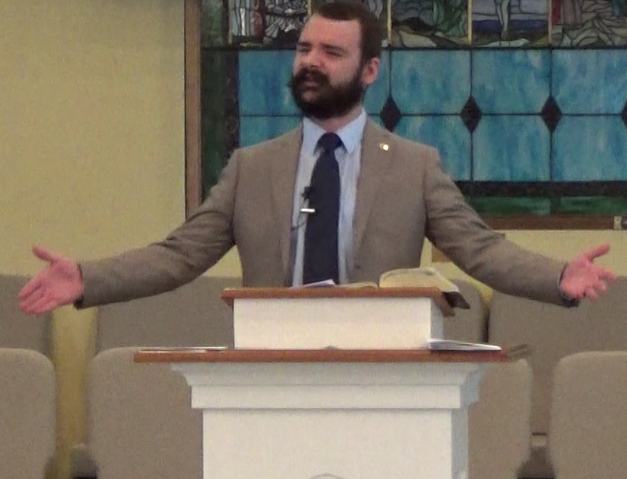 Brandon is the founder and main contributor to Brandon’s Desk, the blog with free Christian resources from his ministry. He is proud to be the pastor of the family of believers at Locust Grove Baptist Church in Murray, Kentucky. He and his wife Dakota live there with their two dogs, Susie and Aries.


 Brandon's Desk