Tag Archives: faith

What the Assassination of Charlie Kirk Means for America and Christianity

I have abstained from commenting on the abominable and anti-American tragedies that have occurred back-to-back recently, as my indignation has tempted me to speak unkindly and unhelpfully. But now that I have had time to allay my anger, pray for wisdom, and contemplate the biblical, historical, and national ramifications of what I believe has changed the United States overnightโ€”for better or worseโ€”here are a few observations:

1. This is not the America I wantโ€”not the America any of us want. The humanity, morality, and decency we possessed following the catastrophe of September 11, 2001 has largely diminished. And I want it back. I yearn for the America of yesteryear when politics was a take-it-or-leave it issue, seldom dividing everyday Americans.

2. Contrary to popular belief, religion has not become increasingly politicalโ€”politics have become more religious. The political realm has invaded and usurped fundamental matters of morality, to our detriment. For decades, the federal government has encroached upon marriage, sexuality, and human life at its most precious stage. And know thisโ€”its futile attempt to redefine, and thereby undermine, these societal cornerstones has brought us to this moment. These tragedies are symptoms of a moral disease.

The United States cannot and will not exist so long as these erosions continue. As John Adams said, โ€œOur constitution was made only for a moral and religious people. It is wholly inadequate to the government of any other.โ€ This is not Christian nationalism. I am not even saying our laws must necessarily follow the Bible. But, a moral society cannot survive when it jettisons basic truthsโ€”truths found most of all in the Scriptureโ€”truths such as:

– God-ordained marriage is between one man and one woman for life.

– You are the gender your chromosomes say you are.

– Children in the womb should not be slaughteredโ€”but protected by the law.

– Those who take human life should be penalized to the highest extent of the law.

– The governmentโ€™s job is to inflict terror upon evildoers which, therefore, allows morality to flourish on its own.

3. You have the right to vehemently disagree with my views on these matters. And I would die for your right to speak freely and dissent. I will stand beside you as an American, regardless of your political affiliation. You are my neighbor, and I love you. But no bullets should be fired because we disagree.

4. Politics has evolved into a god many are willing to die and even kill for. This golden calf must be smashed to smithereens. Vote how you will vote, speak freely about what you believe, but leave it at that.

5. We must devise a way to legislate political terrorism out of existence, while preserving free speech rights. Freely expressing opinions and even rigorously criticizing a politician or party is one thing, but demonizing a demographic simply because of their beliefs, justifying violence against them, even encouraging it, I believe, ought to be classified as hate speech, and therefore, punished. Criticize and critique whom you will, but it is carelessly irresponsible and inhumane to call any politician โ€œHitler,โ€ to classify millions of Americans as โ€œa basket of deplorables,โ€ and it is reprehensible to call for violence against your political opponents such as Rep. Maxine Waters who said years ago,

โ€œAnd if you see anybody from that Cabinet in a restaurant, in a department store, at a gasoline station, you get out and you create a crowd. And you push back on them. And you tell them theyโ€™re not welcome anymore, anywhere.โ€

This is not entirely one-sided. It is not even two-sided because most Americans do not speak this way. But the fringe fanatics doโ€”regardless of their partyโ€”and their extreme rhetoric, which tones down following a tragedy and amps up a week afterwards, may require punishment from the law to curb it. I will admit, I do not know the solution to this, but we have to find a way to eradicate it from public discourse.

6. None of us are invincible. Neither Iryna Zarutska, Charlie Kirk, nor the children who lost their lives in recent shootings anticipated the day they tragically passed. I do not diminish the gravity and severity of their awful deaths, but all of the living should take this to heart: death is inevitable and often sudden. It is inescapable. Therefore, I plead with you: repent and believe in Christ Jesus. Only He can grant everlasting life. And no excuse for not doing so is not worth losing your own soul.

7. We all must do better. We have no other choice. We must engage in healthy and in-person dialogue more often, and learn to agree to disagree and move on. And believers in Christ, we must not retreat into the shadows. More than ever, we must expose the works of darkness and bring Christianity back into the public square.

Frankly, we cannot afford for even one day more to sit on the sidelines and seal our lips about the moral erosion of our culture. We must speak the truth in love much louder. We must love harder than ever before and proclaim the gospel of Christ bolder than ever. And we must elect and support lion-hearted and constitution-following men and women who possess unbreakable moral backbones, and refuse to settle for anything less.


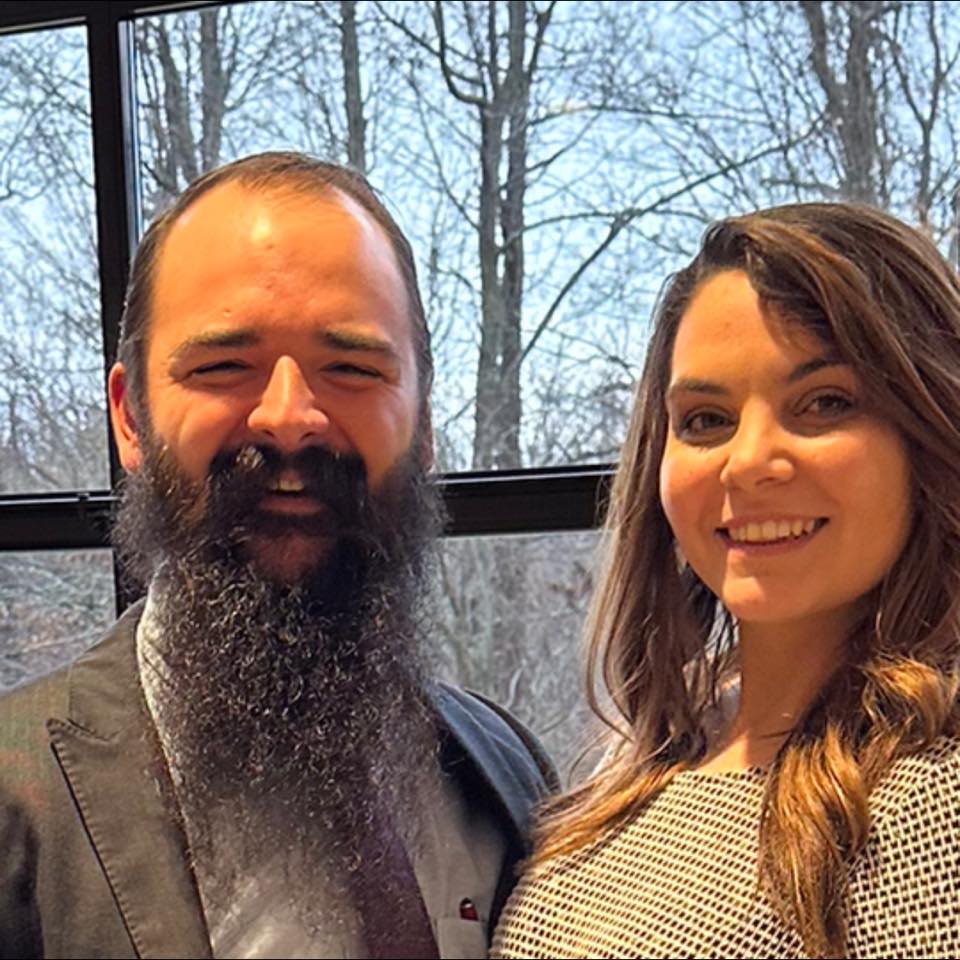
Brandon is the pastor of Bandana Baptist Church in Bandana, Kentucky, where he lives with his wife, Dakota, and their three dogs, Susie, Aries, and Dot. Brandon and Dakota are also foster parents through Sunrise Children’s Services of Kentucky. Brandon is also a published author and a religious columnist for the Advance Yeoman newspaper in Ballard County, Kentucky. He is also a devotional contributor for Kentucky Today, a news publication of the Kentucky Baptist Convention. His columns are also featured in the Times-Argus newspaper of Central City, Kentucky, West Kentucky News of western Kentucky, and the online blog, Reforming the Heart.

Frail Faith | Bible Gleanings | May 24-25, 2025

Twelve long years of suffering and shame. She endured menstrual hemorrhages for over a decade, and all that they entailed: the physical toll of losing blood, the emotional distress of losing friends, and the spiritual anguish of losing faith (Matt. 9:22). And because of her condition, she was unable to have a husband or children. She was even forbidden from entering the Temple because she was deemed ritually unclean (Lev. 15:19-27). She had not asked for this kind of life, and she was running out of options and life itselfโ€”until she heard that a man named Jesus was passing through town (Mark 5:27).

She was determined to get to Him, no matter what (Luke 8:42b-43). The woman knew very little about Jesusโ€”she had no opportunity to do so because of her law-mandated solitary confinement. The only theology she had came from hearsay and town-talk, but she resolved to act in faith on what little knowledge she possessed. โ€œHe doesnโ€™t have to stop for me,โ€ she must have thought, as she waded through the multitude and snuck behind Jesus to grab a tassel of His tunic. โ€œI wonโ€™t get in His way. Perhaps if I come near enough to touch His clothes, that will be enough,โ€ she hoped.

Twelve years of humiliation, blood loss, and spiritual despair vanished in an instant (Luke 8:44). She was right: the Masterโ€™s touchโ€”even if it was only the fringe of His garmentsโ€”was all that she needed. Although her faith in Jesus was inadequate and incomplete, she allowed it to influence her behavior. She took what little she knew about Christ, and by faith, staked everything on the sufficiency of His power. Her faith might have been insufficient and imperfect, but the Object of her faith was sufficient and perfectโ€”and Christ rewarded her feeble faith by curing her and accepting her into His spiritual family (Mark 5:34). 

All that is necessary for one to be made spiritually whole and become a child of God is one saving touch from Jesus Christโ€”one reach of an all-or-nothing faith that takes hold of Christ for salvation. And like this woman, you may not know much about Jesus, but faith is acting on what you do knowโ€”even if your faith is mustard-seed-sized. After all, faith as small as a mustard seed is capable of mountain-moving, not because of the one who has faith, but because of the One who rewards it (Matt. 17:20). Certainly, all believers should strive for stronger faith, but as this healed woman would tell you, the Person in whom your faith resides is greater than the quality of your faith. Jesus deserves unwavering faith, but He can work with faith which is frail and flawedโ€”just ask the woman who touched His garments, although she barely knew Him.

This column is fromย 40 Days with Jesus, my 40-day devotional on Christโ€™s life, teachings, and miracles, available for purchase on Amazon:

Brandon is the pastor of Bandana Baptist Church in Bandana, Kentucky, where he lives with his wife, Dakota, and their three dogs, Susie, Aries, and Dot. Brandon and Dakota are also foster parents through Sunrise Children’s Services of Kentucky. Brandon is also a published author and a religious columnist for the Advance Yeoman newspaper in Ballard County, Kentucky. He is also a devotional contributor for Kentucky Today, a news publication of the Kentucky Baptist Convention. His columns are also featured in the Times-Argus newspaper of Central City, Kentucky, West Kentucky News of western Kentucky, and the online blog, Reforming the Heart.

The Water-Walker | Bible Gleanings | April 5-6, 2025

The golden sun hid behind the hills as dusk descended upon an incredible day of miracles. The disciples were still short of breath after the feeding of the five thousand, exhausted from the massive crowds they helped feed, and from their hearts racing with wonder. Hopes were high. The crowds were ecstatic. Jesus and His disciples were gaining unstoppable momentum.

Then Jesus gave them a perplexing command, undoubtedly producing glances of bewilderment: โ€œGet into the boat and go on without Me. Iโ€™ll meet you on the other sideโ€ (cf. Mark 6:45-46). Jesus had sent them to preach, heal, and cast demons, but He had never sent them away. Strange as it was, they obeyed because they trusted Him, and then they rowed away after one final look at Him. And unbeknownst to them, a storm was brewing nearbyโ€”and they were headed right for it.

The wind whistled. The waves of the deep arose, slamming against their vessel. And it was too late to turn backโ€”they were four miles away from the shore where they last saw their Lord (John 6:19). But to their surprise, they saw Him againโ€”smack-dab in the middle of this tempestโ€”and not rowing after them in a boat, but walking on the raging sea. Terrified, they mistook Him for a ghost, which only amplified their paralyzing fear. And then they heard a voice that calmed their anxious hearts while the storm raged on: โ€œTake heart; it is I. Do not be afraidโ€ (Matt. 14:27b).

That the Creator could walk effortlessly on the water which He fashioned is astounding, but not astonishing. What is staggering is that Jesus sent the disciples to the sea knowing that they would be met by a violent storm. And He did so in order for them to experience His unmatched power and the peace of His presence in the midst of turmoil. Without the life-threatening storm, they would have never known the fear-dissolving authority of His word nor the sustaining comfort of His nearness. Jesus was all they needed, but they only learned that lesson when Jesus was all they had.

The Lord still allows storms to come our way and sometimes sends us directly to them for the same reason: to show us that He is enough. As Charles Spurgeon once said, โ€œI have learned to kiss the wave that slams me against the Rock of Ages.โ€ Thankfully, Jesus is never miles away during lifeโ€™s tempestsโ€”He is in the boat with us. Even more, He walks on the waves which threaten to overwhelm us, bringing with Him the grace and mercy we require to endure. Let the Lordโ€™s reassuring promise of His presence bring you calm in the midst of chaos: โ€œIt is I; do not be afraidโ€ (John 6:20b).

This column is fromย 40 Days with Jesus, my 40-day devotional on Christโ€™s life, teachings, and miracles, available for purchase on Amazon:

Brandon is the pastor of Bandana Baptist Church in Bandana, Kentucky, where he lives with his wife, Dakota, and their three dogs, Susie, Aries, and Dot. Brandon and Dakota are also foster parents through Sunrise Children’s Services of Kentucky. Brandon is also a published author and a religious columnist for the Advance Yeoman newspaper in Ballard County, Kentucky. He is also a devotional contributor for Kentucky Today, a news publication of the Kentucky Baptist Convention. His columns are also featured in the Times-Argus newspaper of Central City, Kentucky, West Kentucky News of western Kentucky, and the online blog, Reforming the Heart.

The Unexpected Blessing of Unanswered Prayer

Unanswered prayer is a razor-sharp instrument of sanctification that the Lord uses to slice open our idolatrous, covetous, unbelieving, and impatient hearts.

That has been my experience, anyway.

When the Lord does not grant us what we want or think we need, our sinful inclination is to desire what we are praying for more than we desire the will of God, which may or may not include the things we have prayed for. The things for which we have yearned for and cried for in prayer may even be good, but our idol-worshipping hearts have a way of turning good things into god-things (Rom. 1:25). A good thing can swiftly become a golden calf and we can easily become fixated upon what we want, allowing everything in our lives to revolve around it, thus, inhibiting contentment with the Lord and His will.

Of course, this is contrary to the kind of God-pleasing obedience which Jesus exemplified in the gloomy garden of Gethsemane (Luke 22:42). He prayed that the cup of God’s righteous indignation would pass from Him, if it were possible. For a brief moment, He prayed for a plan B. Nevertheless, He submitted to God’s sovereign plan of redemption, content with the Lord’s will, which was to “crush Him” (Isa. 53:10). Jesus desired the will of God more than what He prayed for.

Unanswered prayer can also reveal our unholy disposition to question God’s promises and provision, as if His word has failed because we have failed to receive what we have asked for in prayer. When the Lord denies our request(s), we can slip into unbelief and falsely suppose that God is going to give us a serpent or a stone, or worse, that He will withhold the bread and good gifts which He promises to give His children. Walking by sight instead of by faith, we can easily interpret a “No” from God as His displeasure or a failure to keep His word.

Unanswered prayer can also expose our impatience and unwillingness to wait upon the Lord. Perhaps He will give us what we are praying for, but today is not the day. Tomorrow may not be the day, either. Perhaps His denial or delay is because He has something much better in store. Only the Lord knows. But what is certain is that when we do not immediately receive what we are praying for, we have a tendency to grow frustrated and impatient.

To be certain, unanswered prayer can be painful, but it is often painful in the same way that open heart surgery is painful; the heart has to be lacerated and opened in order to get it working right. And the Lord has a way of using unanswered prayers to expose the evil of our hearts and show us that all we truly need is Him. Because of this, unanswered prayer can often be an unexpected blessing.

Brandon is the pastor of Bandana Baptist Church in Bandana, Kentucky, where he lives with his wife, Dakota, and their three dogs, Susie, Aries, and Dot. Brandon and Dakota are also foster parents through Sunrise Children’s Services of Kentucky. Brandon is also a published author and a religious columnist for the Advance Yeoman newspaper in Ballard County, Kentucky. He is also a devotional contributor for Kentucky Today, a news publication of the Kentucky Baptist Convention. His columns are also featured in the Times-Argus newspaper of Central City, Kentucky, West Kentucky News of western Kentucky, and the online blog, Reforming the Heart.

Forgetfulness of Faithfulness | Bible Gleanings | January 11-12, 2025

The last thing you want to forget on a long road trip are snacks. Thankfully for modern travelers, there is a FiveStar or Caseyโ€™s off every exit, stocked with enough candy to make Willy Wonkaโ€™s teeth ache, and enough greasy food to rival a McDonaldโ€™s fryer. For ancient travelers, however, heading out with an empty knapsack wasnโ€™t just inconvenientโ€”it could quickly turn deadly. And the disciples made this mistake when they set sail on the sea (Matt. 16:5, 7-8). They searched for a loaf of bread while they rowed, and when none was found, they panicked and, โ€œthey began discussing with one another the fact that they had no breadโ€ (Mark 8:16).

One could sympathize with their fretting if they were traveling solo, but they werenโ€™t alone. Jesus was on board with them, and He had recently fed over 10,000 people withโ€”you guessed itโ€”bread (cf. Matt. 14:13-21; 15:29-39). The disciples had something better than Panera Bread or Texas Roadhouseโ€”the greatest bread Multiplier who ever lived was right beside them! Why, therefore, were they concerned about their next meal? According to Jesus, the reason for their fear was multifaceted: their memories were short, their faith was faint, and their eyes were closed.

Jesus explained their unfounded worry with a series of questions: โ€œWhy are you discussing the fact that you have no bread? Do you not yet perceive or understand? Are your hearts hardened? Having eyes do you not see, and having ears do you not hear? And do you not remember? When I broke the five loaves for the five thousand, how many baskets full of broken pieces did you take up?โ€ (Mark 8:17b-19a).

We may never find ourselves breadless in a boat, but there is no shortage of situations that blind us from seeing our blessings. The disciples werenโ€™t the only ones forgetful of Christโ€™s miraculous workings of the past. Sometimes, we are forgetful of yesterdayโ€™s provision and yesteryearโ€™s mighty wonders, and our present problems often seem bigger than the Lordโ€™s power and providence. Oftentimes, the sight of our needs eclipses our sight of the Need-Meeter, who is always right beside us. Just like the disciples, we often have short memories and small faith.

Fortunately, Jesus is patient with forgetful and faithless disciples like us. However, when we fret about having no bread, we need to inquire of our souls: โ€œDo you not see or remember?โ€ Allow His past provision to fuel your faith in the present. Keep your eyes of faith open to see His constant providential workings in your life. Look back at Christโ€™s faithfulness in the past and look around at His faithful provision in the present.

The devotional column above is from my newest book, 40 Days with Jesus, which is a forty-day daily devotional focusing on the life, teachings, and miracles of Jesus. This book is available in hardcover on Amazon:

Brandon is the pastor of Bandana Baptist Church in Bandana, Kentucky, where he lives with his wife, Dakota, and their three dogs, Susie, Aries, and Dot. Brandon and Dakota are also foster parents through Sunrise Children’s Services of Kentucky. Brandon is also a published author and a religious columnist for the Advance Yeoman newspaper in Ballard County, Kentucky. He is also a devotional contributor for Kentucky Today, a news publication of the Kentucky Baptist Convention. His columns are also featured in the Times-Argus newspaper of Central City, Kentucky, West Kentucky News of western Kentucky, and the online blog, Reforming the Heart.

A Terrific Tapestry | Bible Gleanings | August 24-25, 2024

The rear view is a mess, but the front view is a masterpiece. That is what youโ€™ll see if you glance at both sides of a tapestry. Tapestries are an ancient art form that requires an extraordinary amount of forethought and expertise. And to make one, a weaver will arrange threads vertically on a loom and then interweave threads of different colors horizontally. The end result is a breathtaking portrait which showcases the skill and creativity of the weaver.

However, the most striking feature of a tapestry is its backside, which looks like regurgitated rainbow spaghetti or a ball of yarn that an angry toddler twisted up. The back of tapestries are chaotic and unpleasant, lacking structure and meaning. But, simply turn it over and youโ€™ll find that the weaver knew what he or she was doing. The front side view reveals that each thread, knot, and braid has a role to play and a pivotal purpose. It all depends on how you look at it.

That is how your life is in the grand scheme of Godโ€™s providential plan. He is weaving together every joy and sorrow, every day and every tomorrow, as part of His beautiful plan for your life. By stitching together every triumph you enjoy and every trouble you despise, He is creating a breathtaking tapestry which points to His handiwork. The Lord is the master weaver who knows exactly what He is doing. As Paul famously declared in Romans 8:28, โ€œAnd we know that for those who love God all things work together for good, for those who are called according to his purpose.โ€

Unfortunately, all we can see is the backside of our lifeโ€™s tapestry, which is rarely resplendent. Perhaps all we see are unanswered prayers and seemingly senseless suffering that looks like a jumbled disaster of threads and knots. But, no matter how much our lives may look like a mess, the Scripture is clear that everything has a place in the glorious masterpiece that the Lord is putting together (Eph. 1:11). And although we cannot see the whole picture, our simple but strenuous role is to trust that God is weaving something wonderful together. As Solomon wisely counseled, โ€œTrust in the LORD with all thine heart; and lean not unto thine own understandingโ€ (Prov. 3:5, KJV). 

There will come a day when we shall see our lifeโ€™s tapestry from the frontside, but it will happen when God finishes it in heaven. One day, we will understand how every vexation and victory was necessary for Godโ€™s perfect plan to come together. As the Puritan Thomas Watson assured us, โ€œYet, in the end, all will be made clear and plain. Here we see but darkly as through a glass, but in heaven, the veil shall be pulled off, and we shall clearly see the love of God in all that befell us.โ€ The terrific tapestry is coming togetherโ€” just trust the process and the One doing the weaving.

Brandon is the pastor of Bandana Baptist Church in Bandana, Kentucky, where he lives with his wife, Dakota, and their three dogs, Susie, Aries, and Dot. Brandon and Dakota are also foster parents through Sunrise Children’s Services of Kentucky. Brandon is also a published author and a religious columnist for the Advance Yeoman newspaper in Ballard County, Kentucky. He is also a devotional contributor for Kentucky Today, a news publication of the Kentucky Baptist Convention. His columns are also featured in the Times-Argus newspaper of Central City, Kentucky, West Kentucky News of western Kentucky, and the online blog, Reforming the Heart.

Pick up a copy of Brandon’s latest book, Fundamentals for the Faithful, which explains the importance of all the basics which every believer should know:

Sermon: Trusting in the Lord During Tragedy (1 Kings 17:17-24)

Brandon is the founder and main contributor to Brandon’s Desk, the blog with biblical resources from his ministry. He is proud to be the pastor of the family of believers at Locust Grove Baptist Church in Murray, Kentucky. He and his wife Dakota live there with their three dogs, Susie (Jack Russell), Aries (English shepherd), and Dot (beagle).

Why Justification Must be By Faith Alone

Far from something we can acquire by meritorious works, justification is the legal act whereby God declares sinners as righteous solely because of the finished work of Christ. In the once-for-all work of justification, the Judge of all the earth (Gen. 18:25) pronounces guilty sinners as โ€œnot guiltyโ€ because of the double imputation which occurred on the cross, where God imputed the believerโ€™s sin to Christ and imputed His perfect righteousness to them. Thus, justification has โ€œtwo sides,โ€ namely, the removal of sinโ€™s punishment (since it was paid by Christ), and the โ€œcreditingโ€ of righteousness to the believerโ€™s account (since Christ lived a perfectly righteous life). Therefore, it can rightly be said that Jesus did not merely die for sinners; He lived for them. The great exchange of justification, then, is the transferal of the sinnerโ€™s guilt to Christ (although He was sinless) and the transferal of Christโ€™s righteousness to the sinner (although he is sinful). As Paul aptly stated in 2 Corinthians 5:21, โ€œFor our sake he made him to be sin who knew no sin, so that in him we might become the righteousness of God.โ€

Moreover, justification via the finished work of Christ is the only legitimate and just way for sinners to become righteous in Godโ€™s sight without jeopardizing Godโ€™s own moral demands or holiness (cf. Romans 3:21-26). The Scripture is clear that God is too just to ignore, forget, or even forgive sin without full payment of its penalty. The โ€œwages of sinโ€ and โ€œthe record of debtโ€ must be paid in order to satisfy Godโ€™s righteous indignation toward sin and sinners (Rom. 6:23; Col. 2:14). Additionally, God is too holy to allow anything less than absolute righteousness and perfection to dwell in His eternal presence (Psalm 15:1-5; Matt. 5:48). And in Christโ€™s work of justification, He meets both demands: Godโ€™s just wrath is propitiated by His atoning sacrifice, and Godโ€™s demand for righteousness is met by the crediting of Christโ€™s righteousness to those who lay hold of justification by faith.

Furthermore, justification is evidently a single decisive event, rather than a continuous process to which we contribute through good works. Because justification is a legal act of acquittal, it fundamentally cannot be a โ€œprocess of reform.โ€ A judgeโ€™s sentence cannot be reversed, revoked, or revised; once the gavel is swung, the case is closed. Likewise, the Lord as Judge has โ€œclosed the caseโ€ for those who are justified by faith, and His word that is โ€œfirmly fixed in the heavensโ€ (Psalm 119:89) is this: โ€œWho shall bring any charge against God’s elect?ย It is God who justifiesโ€ (Rom. 8:33). Additionally, the Scripture attests to the finality of justification in saying that Jesusโ€™ death was, โ€œonce for allโ€ (Rom. 6:10; Heb. 9:26), as even Jesus proclaimed from the cross: โ€œIt is finishedโ€ (John 19:30).

Ultimately, believers are โ€œjustified by his grace as a giftโ€ (Romans 3:24a; cf. Eph. 2:8-9). This is because, by definition, justification cannot be achieved through good works (as stated above). As Paul taught in Galatians, โ€œYet we know that a person is not justified by works of the law but through faith in Jesus Christ, so we also have believed in Christ Jesus, in order to be justified by faith in Christ and not by works of the law, because by works of the law no one will be justifiedโ€ (Galatians 2:16). Paul also taught just as Abraham believed and it was โ€œcounted to him as righteousness,โ€ so God also counts Christโ€™s righteousness to the believer when they believe in Him and receive justification as a gift of His grace (Romans 4:1-12; cf. also Romans 5:1). Moreover, Paul stated that Christ died for no reason if justification is by any other work than His meritorious work: โ€œI do not nullify the grace of God, for if righteousness were through the law, then Christ died for no purposeโ€ (Gal. 2:21).

God would simply be an unjust judge if justification could be received by good works. A corrupt judge is one who reduces a criminalโ€™s sentence or fully pardons him based on the โ€œgoodโ€ he has done in his life. The criminal cannot tip the scales in his favor, as though his good deeds could outweigh his guilt. Justice demands that he be punished for his misdeeds, and a good judge will make certain that he is. And in the work of justification, God not only justly punished sin in punishing Christ, He also bestows Christโ€™s โ€œalien righteousnessโ€ (Phil. 3:8-9) upon sinners who claim it by faith alone. Therefore, the only good work one needs in order to obtain justification is the finished work of Jesus Christ.

Brandon is the founder and main contributor to Brandon’s Desk, the blog with biblical resources from his ministry. He is proud to be the pastor of the family of believers at Locust Grove Baptist Church in Murray, Kentucky. He and his wife Dakota live there with their three dogs, Susie (Jack Russell), Aries (English shepherd), and Dot (beagle).

Worry Kills | Bible Gleanings | April 1-2, 2023

Worry kills. Scientists and researchers across the world unanimously agree that anxiety, worry, and distress can be deadly. A team of Australian researchers at Sydneyโ€™s Garvan Institute even confirmed this notion many years ago. They discovered that in times of high stress and worry, the human body releases a reactionary hormone called neuropeptide (NPY), which seeks to kill the good cells in your immune system. They remarked, โ€œDuring periods of stress, nerves release a lot of neuropeptide, and it gets into the bloodstream where it inhibits the cells in the immune system that look out for and destroy pathogens in the body. That stress makes you sick is no longer a myth; it is a reality, and we need to take it seriously.โ€

However, long before this was confirmed by modern science, the Lord Jesus said the same thing: โ€œAnd which of you by being anxious can add a single hour to his span of life?โ€ (Matt. 6:27). According to Jesus, you cannot prolong your lifespan by worrying. Instead, worry will subtract from your lifespan! Thatโ€™s why the old adage says, โ€œWorry never robs tomorrow of its sorrow, it only saps today of its strength.โ€ Therefore, given the dangerous consequences of worry, it is not surprising that Jesus commands us three times, โ€œDo not worryโ€ (Matt. 6:25, 31, 34).

But how does one win over worry? First, trust Godโ€™s gracious provision for your life. That is why Jesus emphasized over and over that God provides for His children: โ€œLook at the birds of the air: they neither sow nor reap nor gather into barns, and yet your heavenly Father feeds them. Are you not of more value than they?โ€ (Matt. 6:26). Donโ€™t worry about tomorrowโ€”God is there. Donโ€™t worry about your next mealโ€”God will provide.

Second, pray to the Lord about the worries in your life, and cast your cares upon Him. Pray to God about anything that is causing you anxiety. In Philippians, Paul commanded: โ€œThe Lord is at hand; do not be anxious about anything, but in everything by prayer and supplication with thanksgiving let your requests be made known to God. And the peace of God, which surpasses all understanding, will guard your hearts and your minds in Christ Jesusโ€ (4:5b-7). Similarly, Peter encourages you to be, โ€œcasting all your anxieties on him, because he cares for youโ€ (1 Peter 5:7).

โ€œBe not dismayed whateโ€™er betide,

God will take care of you;

Beneath his wings of love abide,

God will take care of you.

God will take care of you,

through evโ€™ry day, oโ€™er all the way;

He will take care of you,

God will take care of you.โ€ โ€” Civilla D. Martin (1866โ€”1948), “God Will Take Care of You.”

Bible Gleanings is a widely-read weekend devotional column, written for the Murray Ledger & Times in Calloway County, Kentucky. 

Brandon is the founder and main contributor to Brandon’s Desk, the blog with biblical resources from his ministry. He pastored the family of believers at Locust Grove Baptist Church in Murray, Kentucky for six years. He and his wife Dakota live there with their three dogs, Susie (Jack Russell), Aries (English Shepherd), and Dot (Bluetick Beagle).

For more devotional entries like this, check out Brandon’s latest book, Bible Gleanings Volume II, which features 100 daily devotionals gleaned from God’s word:

Christ Alone | Bible Gleanings – March 26-27, 2022

We can only be saved by grace alone through faith alone in Jesus Christ alone (Eph. 2:8-9). And here are seven reasons why:

(1) The chasm between man and God is too wide to be crossed by good works: โ€œBut your iniquities have made a separation between you and your God, and your sins have hidden his face from you so that he does not hearโ€ (Isaiah 59:2). The cross of Calvary is the only bridge across the canyon of separation: โ€œFor Christ also suffered once for sins, the righteous for the unrighteous, that he might bring us to Godโ€ (1 Peter 3:18a).

(2) The distance between sinful man and holy God is too long to be climbed by the ladder of law-keeping (Psalm 113:5-6). Only the God-man who can bring man to God: โ€œI am the way, and the truth, and the life. No one comes to the Father except through meโ€ (John 14:6).

(3) The stain on manโ€™s heart is too black to be scrubbed by self-righteousness: โ€œThough you wash yourself with lye and use much soap, the stain of your guilt is still before me, declares the Lord GODโ€ (Jer. 2:22). The blood of Christ is the only fountain that washes off sinโ€™s stain (1 John 1:7).

(4) The contamination of iniquity is too unremitting to be washed off by the waters of baptism: โ€œCan the Ethiopian change his skin or the leopard his spots? Then also you can do good who are accustomed to do evilโ€ (Jer. 13:23). Sinners need a grace-bought spiritual bath administered by Godโ€™s Spirit, โ€œthe washing of regeneration and renewal of the Holy Spiritโ€ (Titus 3:5b).

(5) The weight of sin is too heavy to be outweighed by righteous deeds: โ€œFor my iniquities have gone over my head; like a heavy burden, they are too heavy for meโ€ (Psalm 38:4). The nail-scarred hands are the only hands that can cast your sins into the sea depths: โ€œYou will cast all our sins into the depths of the seaโ€ (Micah 7:19).

(6) The shackles of sin-bondage are too strong to be broken by โ€œtrying harder.โ€ Only the Lord Jesus can โ€œopen the eyes that are blind, [and] bring out the prisoners from the dungeon, from the prison those who sit in darknessโ€ (Isaiah 42:1).

(7) The gargantuan debt of sin is too great to be paid off by an offering: โ€œFor our iniquities have risen higher than our heads, and our guilt has mounted up to the heavensโ€ (Ezra 9:6). Only the offering of Christ Himself is sufficient to pay your sin debt: โ€œ[He canceled] the record of debt that stood against us with its legal demands. This he set aside, nailing it to the crossโ€ (Col. 2:14).

Friend, Christ alone savesโ€”we come to Him empty-handed.

Bible Gleanings is a widely-read weekend devotional column, written for the Murray Ledger & Times in Calloway County, Kentucky. 

Brandon is the founder and main contributor to Brandon’s Desk, the blog with biblical resources from his ministry. He pastored the family of believers at Locust Grove Baptist Church in Murray, Kentucky for six years. He and his wife Dakota live there with their three dogs, Susie (Jack Russell), Aries (English Shepherd), and Dot (Bluetick Beagle).