Introduction: How We Act in God’s Family
I read a story recently about a boy named Roger who had a difficult time getting adjusted to his foster family. His parents had died from a drug overdose, and there was no one to care for Roger. So a kind Christian family decided they would raise him as their own.
At first, it was difficult for Roger to adjust to his new home. Several times a day, you would hear the parents saying to Roger, “No, no. That’s not how we behave in this family,” or “No, no. You don’t have to scream or fight or hurt other people to get what you want,” and “No, no, Roger we expect you to show respect in this family.”
In time, Roger began to change. Did he have to make those changes to become part of the family? No. He was already part of the family by the grace of the foster parents. But did he have to work hard because he was in the family? You bet he did. It was tough for Roger to change, and he had to work at it. But he was motivated by gratitude for the amazing love he had received.
That story captures well what it’s like to live the Christian life.
We have been adopted into God’s family by His redemptive grace. And since it is a new way of life, sometimes we will fail and sin, and the Spirit will say to us, “No, no. That’s now how we act in this family.” And we make those changes in our lives through God’s grace because we are His sons and daughters—not so that we can become a son or daughter—but because we already belong to Him. And this process of learning how to act in God’s family is known as sanctification. Sanctification is “the process of God’s grace by which the believer is separated from sin and becomes dedicated to God’s righteousness.”¹
It’s growing in holiness because God has declared us holy in Christ; it is a holy cleansing; it is daily overcoming the power and presence of sin in our daily lives through the power of the Spirit and the work of the Word. It is becoming adjusted to God’s family.
And it doesn’t happen overnight, and the reason it doesn’t is because you haven’t always been in God’s family – in fact, you were “alienated” from the family of God (Eph. 2:12), you were God’s enemy (Rom. 5:10); you were “children of disobedience” (Eph. 2:2).
But God saved you and now you are a part of God’s family – and learning how to live as God’s child in God’s family will be tough, and it will take time. And overcoming our sinful behaviors and living obediently as His child is what the Bible calls sanctification.
Sanctification is sanctifying ourselves from ungodliness and associating ourselves with God and His word, like the blessed man in the first Psalm:
“Blessed is the man who walks not in the counsel of the wicked, nor stands in the way of sinners, nor sits in the seat of scoffers; but his delight is in the law of the Lord, and on his law he meditates day and night” (Psalm 1:1-2).
Sanctification is being set apart through God’s word, as Jesus prayed to the Father in John 17:17:
“Sanctify them in the truth; your word is truth.”
Sanctification is living as those who have been brought from death to life:
“Let not sin therefore reign in your mortal body, to make you obey its passions. Do not present your members to sin as instruments for unrighteousness, but present yourselves to God as those who have been brought from death to life, and your members to God as instruments for righteousness” (Rom. 6:12-13).
Sanctification is possible only through God, by His grace:
“Now may the God of peace himself sanctify you completely, and may your whole spirit and soul and body be kept blameless at the coming of our Lord Jesus Christ” (1 Thess. 5:23).
And here in our text for this evening, we have a passage of Scripture that spells out sanctification in more detail. It is 1 Peter 2:1-3, and in this passage we have three things that are necessary for us to live lives that are continually being sanctified. Now let me say at this point, just from hearing these passages of Scripture about sanctification, and relying on your current biblical knowledge about sanctification and holiness, you probably understand the importance of sanctification in the Christian life. Every day perhaps you strive to be more holy and walk straighter on the narrow path. It is necessary and crucial to know and understand that we need to be living lives that are consistently being sanctified – but what if you don’t know how? Do you know what sanctification looks like practically? Do you understand how to live sanctified as well as you understand why you are to live sanctified? If someone approached you, seeking to grow in their sanctification, would you know what to say to them? How does one truly live a sanctified life? It’s not enough to know that we need to, but we must know how.
Maybe that’s you today. Maybe you understand that you really need to live sanctified – you really need to live a life that is holy unto the Lord, and you really want to. But maybe you don’t know how. Well, with unwavering confidence I can truly say that this passage of Scripture is for you. Because in this passage, Peter tells us exactly what we need to live continually sanctified lives. This passage is the triad of Christian living; three essential components for obedience to God; the triangle, if you will, of sanctification. We will see that three things are necessary for our sanctification: renouncement of sin, craving the word of God, and a constant examination.
The Text: 1 Peter 2:1-3, ESV
“So put away all malice and all deceit and hypocrisy and envy and all slander. 2 Like newborn infants, long for the pure spiritual milk, that by it you may grow up into salvation— 3 if indeed you have tasted that the Lord is good.
I. The Renouncement for Sanctification (v. 1)
First, we see in this passage that for our sanctification, we must renounce sin. At the most fundamental level, this is exactly what sanctification is—the process of God’s grace by which the believer is separated from sin and becomes dedicated to God’s righteousness. Sanctification involves a daily renouncing of sin.
So Peter writes, “So put away all malice and all deceit and hypocrisy and envy and all slander.” He begins this passage by commanding his readers to put away sin from their lives—that’s what it means to renounce. Renouncing is to abandon something, reject it, and put it away from you.
And as you can see here, he gives a list of five things to put away (and we will look at these in more detail later), but what is most important to notice at the beginning is the reason he gives for putting away and renouncing sin. When Peter says, “So put away,” this command is not alone. By using the word “so,” or as some translations render it “so then,” he is pointing back to what he has just dealt with in the previous passage. So is a conjunction – a connecting word. This means that Peter is giving this command to put away sin, solely on the basis of something previously stated. Here’s a few examples of using this conjunction:
Pokémon Go is the greatest virtual mobile game for phones, so then, download it for free.
Justin Bieber is the girliest, most unmanly excuse for a pop artist, so then, do not buy his albums.
In Peter’s use of the conjunction, he is essentially saying that because of something that has already taken place, his readers are to put away sin from their lives. So what is that something that has already taken place? The believer’s salvation.
Notice in the previous verses that he talks about a salvation that has already taken place in the lives of his readers:
“since you have been born again, not of perishable seed but of imperishable, through the living and abiding word of God; for “All flesh is like grass and all its glory like the flower of grass. The grass withers, and the flower falls, but the word of the Lord remains forever.” And this word is the good news that was preached to you” (1:23-25).
Peter stated there that these believers were born again, and that the gospel had been preached to them – all indicators of their salvation which has already occurred. So because they have been “born again,” Peter says they should put away sin from their lives. In fact, the Greek actually adds more emphasis to it than do most of our English translations. The Greek reads something like, “Having laid aside all malice, and all deceit, and hypocrisy and envy and all slander.” Renouncement of sin, according to Peter, is something that actually should already be taking place because of salvation—but because of the tendency to fall into those sins again, Peter reminds them to put away these sins from themselves because they have been saved.
Several times throughout this letter, Peter describes the Christian life this way—that we should be living obedient and holy lives simply because of the salvation and regeneration that we have experienced and received. Often times in this letter, the only reason he says we should live a godly life is because of salvation—and really, it’s the only reason he needs. Because true salvation will always lead to sanctification and a holy life. True salvation always results in a godly life. When God saves us, inevitably we live saved lives.
In 1:3-12, Peter says that God has “caused us to be born again to a living hope” (v. 3), and then spells out many other blessings of being a believer. Following this immediately, he then commands them: “Therefore, preparing your minds for action, and being sober-minded, set your hope fully on the grace that will be brought to you at the revelation of Jesus Christ” (v. 13). Because they are born again, they should set their hope on God’s grace and it should transform the way they live their lives.
In 2:4-10, he says that believers have “come to [God]” (v. 4), and that they are now a “chosen race, a royal priesthood” (v. 9). Even more, “Once you were not a people, but now you are God’s people; once you had not received mercy, but now you have received mercy” (v. 10). Then he commands them because they are those who have received God’s mercy: “Beloved, I urge you as sojourners and exiles to abstain from the passions of the flesh, which wage war against your soul” (v. 11).²
Indeed, becoming a Christian is no four-step initiation into a social club, but a complete life change from the inside out because we have been “born of the Spirit” (John 3:5). All of that was a brief look at why we should renounce sin—because we are saved and born again. And it was crucial that we spent time looking at it, because if you’re wondering why it is a problem to continue living in sin, it is because it is an eternal issue—you’re not saved if you’re not being sanctified.
So after giving the reason for renouncing sin, what does it actually mean to renounce sin in the first place? Well, Peter says we should “put away” sin. He doesn’t mean the kind of putting away like we would put away leftovers in the refrigerator, or put away dishes that we’re just going to use again. The kind of “putting away” he is referring to is putting something away for good. In the Greek, the command “put away” denotes something like taking off and laying aside old clothes. So Peter is picturing Christians taking these sins off like you would with old clothes, and then casting them far away.
That’s what you do with old clothes that are no longer wearable—you take them off and put them in the garbage. That’s what Peter says to do with these sins. To renounce them, to put them away from us, to stop wearing them, to be rid of them all together.
He has a list of five sins that we should put away from ourselves. And the important thing to notice here is that these sins are sins that affect relationships with people, namely people in the church. Peter isn’t listing these here in random order, or just because he thinks these are worse than adultery or stealing. He lists these here because they are sins that will harm our fellowship with others, especially Christians.
And renouncing these sins are absolutely essential to our sanctification, because sanctification cannot be done alone. Sanctification is meant to be done in the Christian community—the church! If we have these sins present in our lives, we are hindering our own sanctification and the sanctification of others. So when we go through this list, if you happen to notice even slightly that these sins may be present in your life and in the way you view others, then pray as you hear them that God would create in you a clean heart (Psalm 51:10), and renew a right spirit within you.
Malice. Malice is best defined as “the intention or desire to do evil.” It is like premeditated murder—it is planning on committing sin. Malice is a force that can destroy Christian fellowship. This should not even be named among the congregation of believers. Malice is a grave sin because it is the intention and desire to commit sin before we even do (which by the way, is committing sin already). If we intend to gossip about someone, or a church member, or say in our hearts, “Man the next time I see them, I’m gonna . . .” Or if we intend to mistreat someone and disrespect them in the church, then we have a problem with malice. We must put it away and cast it far from us.
Deceit. Deceit is speaking or acting with a motive for deception. It is lying or living in a manner that is deceptive. We cannot live our lives together lying to one another, and we cannot live lives that are deceptive and untruthful. We are to be those who present God’s truth to each other and to the unsaved, both by our words and actions—we are to be lovers of truth, not deceitful. We must renounce and put away deceit far from us.
Hypocrisy. We cannot live double lives. In Greek theater, a hypocrite was one who played different parts in a drama. And it is no mistake that Peter names hypocrisy right after deceit, for they go hand in hand. Deceit and hypocrisy are two branches of the same sinful weed that should never be growing in the life of one who abides in the True Vine (John 15:1-4). We must be honest about our faults and shortcomings, and our behavior in the church and our behavior at home or in the workplace should be consistently the same. We must put away hypocrisy from ourselves.
Envy. Envy is synonymous with jealousy. It is a desire to have a quality, possession, or other desirable attribute which belongs to someone else. It is when we desire what belongs to someone else. It might be a position in the church, nicer clothes, someone’s boyfriend/girlfriend, a nicer home, or a shinier vehicle—but we must put away envy from ourselves.
Slander. And finally, we have slander. It is defined as “making a false statement about someone.” It is lying about another person, gossiping about them, or any type of speaking that is false or unhelpful. Paul says in Ephesians that we should speak only that which “is good for building up” (4:29), and slander is the opposite of this. In fact, it is more satanic than any sin in this list, for the word devil in the NT actually means slanderer or “one who slanders.” So committing this sin is contributing to Satan’s notorious schemes. We should put this sin away from ourselves.
These are all sins that should not be found in our lives, but like old clothes, we should put them away from ourselves. Renouncing sin is something we did at our conversion, and it is something we must continually do throughout our Christian life. The moment you were saved was only the beginning of a lifelong process of sanctification unto God, to be set apart from sin daily for God’s glory.
How can we renounce these sins? Repent when you see it present in your life, and pray for a clean heart. Ask for trusted brothers and sisters in Christ to keep you in check—be accountable to them, a mutually watch your lives and confront each other with grace and correction when these sins are present. For our sanctification, we must renounce sin.
II. The Nourishment for Sanctification (v. 2)
Second, we see in this passage that for our sanctification, we must long for the word of God: “Like newborn infants, long for the pure spiritual milk, that by it you may grow up into salvation” (v. 2).
After exhorting his readers to renounce sin, he says that they should be longing for the word of God, the “pure spiritual milk.” Peter had described in v. 1 what they should not do (commit those sins), and now he turns to the positive and describes what they should be doing. That in itself teaches us that sanctification is twofold in this sense: it is overcoming sin, and doing good things. It is not enough to avoid committing sin and resist temptation, we must also be doing good things.
They should be craving and longing for the word of God. Peter uses a familiar image here of a newborn baby longing for its mother’s milk, to illustrate how the believer should long for the word of God in order to partake of it, and grow by it. He tells them, “Like newborn infants, long for the pure spiritual milk.” He tells his readers that they should do something just like newborn infants do. And by the way, this is the only passage of Scripture in the whole Bible where we are commanded to be like infants. All other places in Scripture exhort us against being an infant and tell us to grow up (Eph. 4:15).
So Peter’s readers, like newborn infants, should long for the pure spiritual milk of the word. The phrase “long for,” carries a deal of weight to it in the Greek. It is epipotheo, which speaks of an intense desire or longing for something. It is the intensified version of the Greek word potheo which speaks of simply longing. It means to long greatly for something.
What is the object of their longing? The pure spiritual milk. And of course, he is referring to the word of God and nothing else. It was the preaching of the word of God that brought about their salvation (1:25b), and now it is the word of God they are to consistently long for.
It is pure, meaning it is stainless, clean, and free of contamination. This confirms the truth that Scripture is perfect and without error because it has been inspired by God (2 Tim. 3:16-17). It is spiritual, meaning it is more than just milk because it deals with our inner being. But it is like milk, because we can take it in and be nourished by it. We can long for it, and we can digest it. So to sum up what Peter is saying in this part of the verse, in the same way that newborn infants long for their mother’s milk to satisfy their hunger and be nourished, so we should long for the word of God in order to be nourished for our sanctification.
We are to be like newborns, craving and starving for the word of God so that we can gain strength and sustenance for our sanctification.
This intense desire for the word of God has been characteristic of God’s people since the time of Job. I love how Job describes his intense longing for the word of God in Job 23:12:
“I have not departed from the commandment of his lips; I have treasured the words of his mouth more than my portion of food” (ESV).
Let me just stop right here and ask: When have we ever longed so much for the word of God that we would rather read His word than eat a meal when we are hungry? Have we ever had a desire like that? When you first wake up in the morning, do you wake up hungry for the word, or are you scrolling through Instagram, checking Facebook, and looking at Snapchat? Let me give you a word of advice, if you want to grow spiritually and hunger for the word of God, you need to be opening your phone and getting into His Book, and chatting with Him daily!
And in Psalm 119, the psalmist speaks often of his desire for the word of God:
“How sweet are your words to my taste, sweeter than honey to my mouth!” (119:103).
“Therefore I love your commandments above gold, above find gold” (119:127).
Peter says that this is the kind of intense longing for the word of God that we should have. And we should crave it because we need it. That’s why a newborn infant does—because they need the nourishment from it. That’s the idea here: the word of God gives Christians sustenance, nourishment, and growth—just like milk gives sustenance, nourishment, and growth to a newborn baby.
But what is the purpose of longing for the word of God? Why is it such a big deal to long for and crave the word of God? According to Peter, “[so] that by it you may grow up into salvation.” Peter says that we should long for the word of God so that we will grow up into salvation. Once again, that’s what sanctification is—growing up into salvation.
And why will longing for the word of God result in growing in our salvation? Because once we long for the word of God, we will partake and be nourished by the word of God. I’m sure you don’t believe that you hunger for no reason. You’re not hungry just because you want to be. I mean sure, Subway is pretty good, but you still don’t hunger for it randomly. You hunger so that you will eat. Your physical hunger is an indicator to your consciousness that you need nourishment. So what do you do when you’re hungry? You go get something to eat.
Same principle here: we must crave and intensely desire the word of God so that we will read it, study it, take it in and digest its precepts for our lives. We are to have a hunger and craving for God’s word, because we need it. Deuteronomy 8:3 illustrates this perfectly:
“And he humbled you and let you hunger and fed you with manna, which you did not know, nor did your fathers know, that he might make you know that man does not live by bread alone, but man lives by every word that comes from the mouth of the LORD.”
And so the expected result of craving for the word of God is “growing up into salvation,” as Peter says here. Of course, we are already saved, but salvation is also ongoing—that’s where sanctification comes into play. We are being saved daily from the power and presence of sin in our lives. And we need to crave and hunger for the word of God like a newborn infant, so that we ill partake of it in order to be nourished and strengthened to live the Christian life!
So how can you crave the word of God? First, understand your utter dependence upon the word of God for sustenance and growth. Understand that you need the word of God for your Christian life and growth. You don’t have anything else in the entire world that can take its place and cause you to grow spiritually. So measure your spiritual strength and growth by your time spent in the word of God. If it doesn’t bother you to go without the Bible for a few days, then something is definitely wrong. You must understand that the transformation effected by God’s word cannot be replaced by anything else. Secondly, understand that craving is directly correlated to tasting. I’ll never forget the first time I tried the arroz con pollo at Los Amigos Mexican Restaurant close to where I live. It’s a beautiful dish of rice topped with chicken and cheese. Well, let me tell ya, I’ve been hungering for it ever since I tried it. But I never had a hunger for it until I tried it. And as you taste the word, as you feast on the Scripture, as you have your breakfast of God’s word every morning, you will notice a deep desire for more of the word of God like you’ve never had before. The more you read the word, the more you want to read the word. The more you study it, the more you want to study it. As you find out just how delicious every verse of Scripture really is, you will keep coming back to it like your favorite meal. If you don’t have a hunger for the word, then perhaps it’s because you haven’t tasted it. For our sanctification, we must long for the word of God.
III. The Examination for Sanctification (v. 3)
“if indeed you have tasted that the Lord is good” (v. 3).
Third and finally, we see in this passage that for our sanctification, we must examine our lives. Once Peter has exhorted the believers to renounce sin, and crave the word of God, he finally calls them to examine themselves. Notice the if (some translations since) in this verse. Most of the time in the Bible, it is the smallest words that make all the difference. Peter is saying that if we have tasted that the Lord is good, we should be renouncing sin and craving the word of God. “Renounce sin and crave the word if you have tasted that the Lord is good.”
This verse functions as an examination for sanctification. In other words, if we are daily being sanctified, we should be seeing evidence of these two things in our lives. Of course, if you know your Old Testament even remotely, you will recognize that the phrase “tasted that the Lord is good,” has its origins in Psalm 34. There, the psalmist gives a loud, open, outstretched and broad invitation to anyone within his hearing to experience the Lord God:
“Oh, taste and see that the LORD is good! Blessed is the man who takes refuge in him!” (v. 8).
That verse in the psalm is an invitation to those who have not experienced the Lord, saying essentially, “Just see for yourself how good the Lord is!” But notice that the way Peter uses the phrase is past tense: “if indeed you have tasted that the Lord is good.” In the Psalm, it is “taste and see.” In Peter it is, “you have tasted.” So if Psalm 34 is the invitation to experience the Lord, then Peter assumes that we and his readers have already responded to that invitation.
So if we have been saved, if we have responded to this invitation in the Psalms, we should be able to see clear evidence of renouncing sin and craving the word in our daily lives. If we have responded to God’s invitation to experience Him, our lives should demonstrate a positive response to that invitation.
A young man once asked me a stunning question. We were having lunch and talking about Scripture and he asked me, Is it a sin to doubt your salvation? He struggled with the assurance of his salvation at the time, and he asked me in this restaurant if it was a sin to doubt your salvation and to have no assurance of salvation. As I pondered this, I answered in this way: “Well, it really depends on what brought about the doubt in the first place.” I went on to explain that the Scripture does command us to seek assurance for our salvation, and to rest in that assurance (there are a plethora of Scriptures that speak to assurance). So in that sense, it would be sinful if you fail to seek out those Scriptures that talk about assurance and then gain assurance by reading and believing them. But if your doubt arises from an inconsistency in your Christian life—then that is a good doubt to have! If you see no evidence of renouncing sin and craving the word in your daily life, then you have great reason to doubt your salvation!
One Scripture came to mind as I was talking with him. It was in 2 Peter 1, where Peter lists off a range of godly qualities that should be present in our lives. He names things such as “self-control, godliness, brotherly affection, love,” and many others. And listen to this—Peter says that the reason we should see these godly qualities in our lives is “to make your calling and election sure: for if ye do these things, ye shall never fall” (v. 10, KJV). And I told him, “The life you’re living should be enough evidence to confirm your salvation. If you see no transformation, you never had salvation.”
But sometimes we backslide don’t we? Of course we do. And God will give us grace to move forward on His path as we seek His strength and power to do just that. But if you don’t see sanctification and transformation in your life, if you see no evidence that you have “tasted and seen that the Lord is good,” then there are basically two options on the table if you’re not living a sanctified life:
Option #1: You are spiritually sick and unhealthy. You are malnourished in your soul if you see no regular transformation. What do you feel like doing when you’re sick? Nothing. Do you act like yourself when you’re sick? No. Do people want to be around you when you’re sick? No. Now, apply all of those questions to your spiritual health. Are you doing anything in the Christian life? If not, you may be unhealthy. Are people positively influenced by you? If not, you may be unhealthy. If you’re not craving the word and renouncing sin daily in your life, I urge you to go the Physician who knows your heart—and get as much of His prescription (the Bible) as you possibly can.
Option #2: You are unsaved. Not only does the unsaved person have no desire for the word of God, he has no desire for God (Rom. 3:11). Obedience cannot proceed from a heart that has not been changed. Perhaps you don’t see evidence of these things in your life either—and I ask you, Can you honestly think of a time in your life when you realized you were a sinner, and surrendered your life to Jesus Christ for salvation
Conclusion
Peter has explained in this passage that these are the necessary requirements for living a life that is continually sanctified. We must renounce sin (v. 1), we must be nourished by Scripture (v. 2), and we must continually examine ourselves for evidence of these things (v. 3). Sanctification is part of the Christian life from beginning to end, and we know what is required in order for sanctification to take place—and just like Roger, there will be times when God says, “No, no. That’s not how we behave in this family.” But it will be said to us because we already belong to Him—and because we are continually being set apart for His purposes and His glory each and every day.
Is God saying that to you tonight? Is God saying to you, “You know you don’t need to be in that relationship,” or “You know you need to get that pornography out of your life,” or “You know you need to apologize to him,” or “You know you need to start getting into the Bible more.” If God is saying things like that to you, He wants you to respond to Him. Confess that sin to Him, and ask Him for His sustaining grace to help you. The good news is that you can change and you can live faithfully because God has already given you everything you need for it.
But perhaps God is saying something different to you – maybe when you look down through the history of your life, you have never renounced the sin in your life; maybe you’ve never craved or desired the word of God; maybe you don’t have a relationship with the Lord. If you’ve never been saved and you know you need to be – let me tell you something: God is telling you right now that you need to be saved and have a relationship with Him. You need to understand that God is holy and requires holiness of you. You need to understand that you have sinned against Him, you have not lived a holy life, and God considers your sins to be as crimes. And like any crime, He will punish them if there is no payment for them. The good news is that He sent Jesus Christ into the world to live a perfect life, and die on the cross to pay for your sins. All you must do is realize you are a sinner, turn away from sin, and trust in Jesus Christ to be your Savior – believe that what He did on the cross is enough for your salvation.
So I read to you again this text: “So put away all malice and all deceit and hypocrisy and envy and all slander. Like newborn infants, long for the pure spiritual milk of the word, that by it you may grow up into salvation—if indeed you have tasted that the Lord is good.”
- Thomas Nelson Publishers. Nelson’s Illustrated Bible Dictionary, (Nashville, TN: Thomas Nelson, Inc., 1986), 948.
- Peter states here that a costly war is taking place in the Christian’s life. You can read more about that in one of our past Bible studies here.
This message was preached on January 17th, 2016 in Sevierville, TN during Winter Retreat 2016 hosted by First Baptist Church, Barlow. This message was also preached on May 22, 2016 at Ohio Valley Baptist Church in Barlow, Kentucky. Recently, this message was also preached on August 14th, 2016 at Locust Grove Baptist Church in Cadiz, KY.




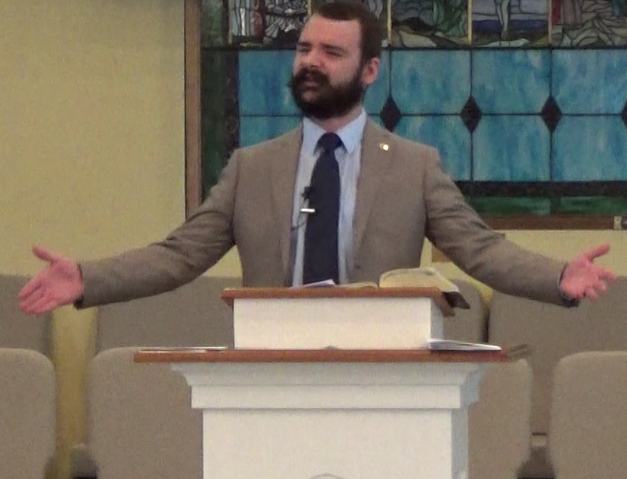 Brandon is the founder and main contributor to Brandon’s Desk, the blog with biblical resources from his ministry. He is proud to be the pastor of the family of believers at Locust Grove Baptist Church in Murray, Kentucky. He and his wife Dakota live there with their two dogs, Susie and Aries.
 Brandon's Desk