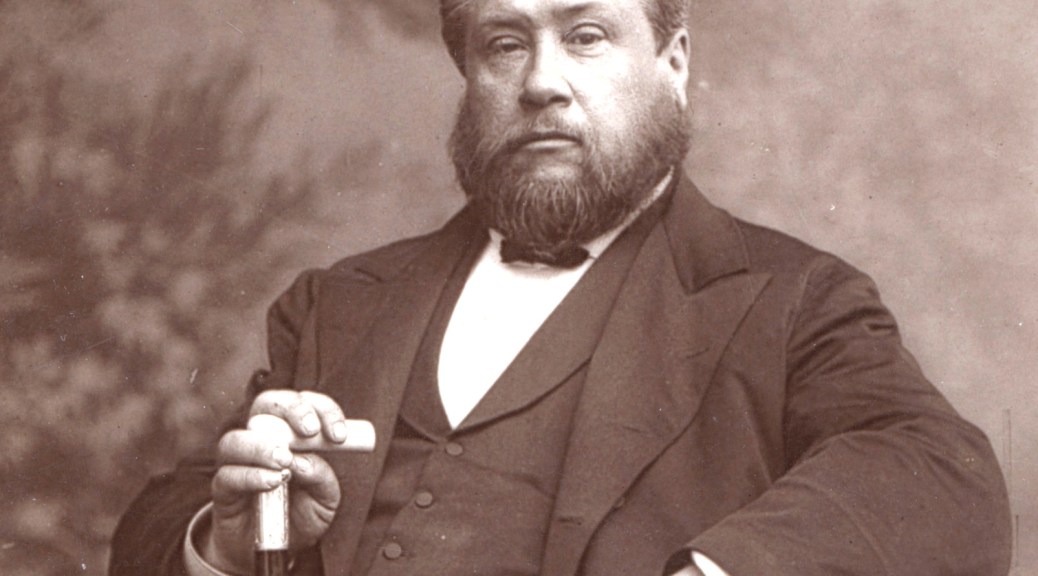
3 Important Reasons to Study Church History

“If you don’t know history, then you don’t know anything. You are a leaf that doesn’t know it is part of a tree.”—Michael Crichton.

Studying the history of any field or subject is important. For Christians, there is perhaps no historical study more important than the study of our Christian heritage and history. For several reasons, studying church history is important, and I would argue necessary to truly appreciating and understanding the Christian faith. What then, are the reasons for studying church history?

1. Christianity is a historical religion. As I said above, knowing the history of any field is important – especially the history of Christianity. It can be confidently said that Christianity has made many positive contributions to the world we now live in. More in fact, than any other movement, religion, or individual in the history of the world. Further, the waves made by the towering individuals of church history have rippled into our own theologies and practices, and they deserve a hearing. That’s where church history comes in. In this field of study, we can sit with individuals such as Irenaeus who combated early heresies, Tertullian who contributed to the doctrine of the Trinity, and Basil of Casearea who strengthened peoples understanding of the Spirit. We can be discipled by the greatest theologians who ever lived like St. Patrick, Thomas Aquinas, Augustine, Martin Luther, John Calvin, and many others. Christianity didn’t begin yesterday. It has a history, like everything else, and it deserves to be studied, or what it is today will not be appreciated to the full extent that it could be.

2. To correct mistaken views about what has happened in history. This is, perhaps, one of the most vital reasons for studying church history. There are many concepts in theology and many practices in churches of different denominations that have not always existed. Many seem to have the understanding that our denominations, beliefs and practices have always been what they are today. However, Baptist churches have not always existed. Neither have Pentecostals been around for centuries, along with Methodists, Presbyterians, and other mainline denominations. Also, Roman Catholicism was not the first form of Christianity; it has not always been what it is today. It was, by no means, the dominant form of Christianity since the time of the apostles. These are only a few examples, and if church history is actually studied, these mistaken views can be corrected.

3. Spiritual Nourishment. This is a very practical reason for studying church history. God spoke throughout church history, just as He does today. God has never been silent. God revealed many things to individuals of church history, and it would be foolish to think that we are more intelligent than they were. For the most part, they read the same Bible that we have today. Charles Spurgeon remarks about the ignorance of not studying what God has revealed to them: “It seems odd, that certain men who talk so much of what the Holy Spirit reveals to themselves, should think so little of what he has revealed to others.“¹ The theologians of church history will serve spiritual nourishment to us today through their defenses of Christian doctrine against the earliest heresies, their rich interpretation of Scripture, and their brilliant philosophies.

Church history deserves our careful consideration and study. There are several other important reasons for studying church history, but these three cast the net widely, and I think rightfully so. Would you agree? What would you add to the list? What would you change or take away?


1. Cited in Rediscovering the Church Fathersby Michael A. G. Haykin (Wheaton, IL: Crossway, 2011), 14.

John D. Hannah on the Centrality of the Gospel in Christian Proclamation

As a Bible-believing Christian, it is my conviction that there should be doctrinal unity among Christians in the local church (Eph. 4:1-6). There are, of course, things we can differ on. There are minor issues that we can hold differing views on, that should not divide us. If we can’t accomplish the mission of the church together because of our differing views on minor issues, something had better change; either our character or conviction(s).

I have been reading Our Legacy: The History of Christian Doctrineby scholar John D. Hannah. It has been a great read thus far. It is an exhaustive read on the history of the development of doctrine. But what makes this book different from any other book on Christian history, is that it contains practical applications about what we can learn from church history and it’s developments. I am finishing up this 395 page book, and read something about doctrinal unity that caught my eye, and I felt it was worth sharing with you. Here is a lengthy portion from John D. Hannah’s brilliant book:

“Doctrines are not all created equal; some are more important than others. Consequently, the Christian theologian finds it useful to talk of gradations of convictions. Think of three concentric circles.

First, in the center ring, there are the essential beliefs of Christianity. These are the core doctrines of Christianity—those beliefs without which there can be no Christianity; those beliefs so central that one should have willingness to die for them. Among these, in my view, are the existence of God, the deity of Christ, the atoning sacrifice of Christ, and salvation by grace without any human merit.

Second, moving outward by ring one, there are beliefs that are reckoned to be important but about which there is legitimate debate among Christians. Examples of these convictions might be particular views of baptism or the Eucharist, church polity, or the chronology of last things. While Christians may hold such convictions with a significant degree of fervency, they are nonetheless subject to a variance of opinion and are not issues that should divide the fellowship of the saints in the broadest sense. Nor should such doctrines hold center stage in our discussions of the Bible. The central things, the topics that should be our most frequent, fervent topics are those in the center circle.

Third, in the outermost of the concentric circles, there are distinctly personal beliefs. They are neither core doctrines of Christianity nor those embraced in a creedal statement by any particular Christian group. They are simply private, personal views that arise from the study of the Bible and the experience of life. Traditionally these have been defined as adiaphora, “things of difference.” They might have to do with certain moral issues that are neither prohibited nor propounded by the Scriptures.

While it is useful to think of concentric circles of beliefs, these three categories are often blended in practice. Sometimes, for example, mere personal beliefs are treated as core truths. My plea is that these distinctions be recognized and that our Christian pastors, teachers, missionaries, and laity make sure that the central truths be foremost in our proclamation of Christianity.

The most important person in all of history is Jesus Christ; he must always be the passionate message of the church. Without Christ, there can be no gospel that is really good news. While there are teachings that are important, greatly adding to the maturity of the church, Christ is the keystone of all.”

Very powerful and practical.

What do you think about doctrinal unity, and the centrality of Christ in our beliefs?


1. John D. Hannah, Our Legacy: The History of Christian Doctrine (Colorado Springs, CO: NavPress, 2001), pp. 342-343.


New Year’s Eve: Reflection and Anticipation

The following message was delivered at Ohio Valley Baptist Church, December 31, 2014:

God is the giver of many wonderful new things.

He gives us a new birth (John 3:3), He gives us a new heart (Ezekiel 36:26), a new life (2 Cor. 5:17), a new hope (Rom. 5:2), and a new task (Matt. 28:19-20). Finally, when our heart has beat its last, He will give us a new body in a new home called heaven. In fact, God says “Behold, I am making all things new” (Rev. 21:5).

And now, for those of us here tonight, God has given us another new year. Tonight contains an opportunity that never comes again until another year has passed us by.

There are two main things that happen tonight that normally do not happen any other time during the whole year: reflection, and anticipation. Reflection occurs as we think about our year’s past; Anticipation occurs as we think about our new year’s future.

I would like us to turn to a text in Scripture where this phenomenon takes place. A passage of Scripture that describes this idea of reflection and anticipation.

There was someone in the Bible who reflected on not just his past year, but his past few years and they were very dark—very full of sorrow. In fact, it was the worst few years he had probably ever seen. This person was Jeremiah, and he pens a 5 chapter book, lamenting and sorrowing over what had happened to the nation of Israel.

Israel was in some deep sin, and God sent Jeremiah the prophet to them to call them back to Him in hopes that they would repent and remain faithful to God again. However, Israel did not heed the warnings of Jeremiah to repent and turn to the Lord, so they were destroyed by Babylon. Jeremiah writes the results of this destruction in the book of Lamentations.

But as he describes Israel’s death, their starvation, and their weeping—he pens something that shines brightly, like a brilliant light in a dark, wet, solitary cave; and tells us something about reflecting on the past, and anticipating, looking forward to the future:

“21 But this I call to mind, and therefore I have hope: 22 The steadfast love of the Lord never ceases; his mercies never come to an end; 23 they are new every morning; great is your faithfulness” (Jeremiah 3:21-23, ESV)

I. Jeremiah Reflects and Anticipates

In v. 21, it is easy to see that two things are taking place: Jeremiah is remembering, and Jeremiah is anticipating.

Notice that he is reflecting/remembering: “But this I call to mind.” He is remembering something—that’s what he means by “this I call to mind.” When something is called to your mind, it is brought to your attention again.

Notice also, that he is anticipating: “and therefore I have hope.” Hope is always for the future—hope is what we need for the future; for the future, unlike the past, is not fixed. Things happen in the future that are unexpected because they are in the future—which we do not know.

II. The Object of Reflection and Anticipation: God’s Faithfulness

So Jeremiah is reflecting on the past, and what he remembers is what gives him hope for the future. But what is it that he is reflecting and remembering? And what is it that gives him hope for the future? Well it isn’t difficult to find the answer if you look at what he says next: “The steadfast love of the LORD never ceases; his mercies never come to an end; they are new every morning; great is your faithfulness” (v. 22-23).

Jeremiah had seen the destruction of Israel—he had seen the families who were killed, the people who had been starved, and their weeping and affliction—but in light of that, Jeremiah had hope for the future: God was a faithful, loving, merciful, covenant God. He writes about four truths that give him hope for the future:

1. Jeremiah says that God’s love never ceases. His love doesn’t end because your love for Him isn’t what it should be—God’s love never quits or gives up—that’s one thing that gave Jeremiah hope for the coming days and years.

2. Jeremiah says that God’s mercies never come to an end. God’s compassion and forgiveness never runs out—God’s mercy is not measured by some amount, in fact, it cannot be measured. Everything else can be measured; you can measure lifespan, temperature, blood cell count, distances, time, etc. It’s not that God’s mercy can’t be measured because it doesn’t exist, but it cannot be measured because it has no beginning and end.

3. Jeremiah says that God’s mercies are new every morning. He makes a comparison—just as each day presents new opportunities, so every day is an opportunity to experience the grace of God—and this grace will always be there, just as the sun rises every day to usher in a new day—so God’s grace will always be there, and you can trust it just as you trust the sun to rise.

4. Jeremiah says that God’s faithfulness is great. This is a summary statement to everything he has said about God’s love and mercies—“great is your faithfulness.” God’s faithfulness and promise-keeping remain intact no matter what happens.

III. Our Reflection and Anticipation

We are now reflecting on our past year—we are thinking about all the troubles we had been through—how we didn’t expect them to happen.

We are reflecting on our failures and sins that we struggled with this past year—and how we wish we could go back in time and rewrite our history. We are reflecting on the past New Year’s Resolutions that faded out within the first two months, and we regret that. But according to the Bible, if we want true hope for the future, and power to fulfill our New Year’s resolutions, we need to be reflecting on the faithfulness of God to us in the past year.

Name one time God failed you this past year—can’t do it; because He never failed. God kept every promise to you this past year—He has sustained you and brought you through all of our failures and all of your difficulties and trials you endured this past year. Something that should boil up praise in every Christian is reflection on the faithfulness of God in the past.

Are you pondering, as Jeremiah did, on God’s faithfulness in the past? In what ways did God prove His faithfulness to you this past year?

Not only are we reflecting on our past year, but we are anticipating the one to come. We are anticipating new goals to be fulfilled. We call those New Year’s resolutions, sometimes we even pray for God’s help in fulfilling those resolutions—I read a prayer once about someone who wanted God’s help in fulfilling their resolutions: “Dear God, my prayer for 2015 is a FAT bank account and a THIN body. Please don’t mix it up like you did this year.”

But we are anticipating new opportunities, new relationships, new ministry opportunities, and so many things. But like Jeremiah, we need to anticipate God’s faithfulness in the future. It is always a challenge to trust God for the future, because we don’t know the future. But that’s the awesome thing about God—He knows the future; and calls us to trust Him as a loving Father with our futures. With a new year comes new problems. New difficulties. New troubles. Things that are going to happen to us that we never could’ve imagined on this night. But we need to put our trust now, daily, and throughout the year, in the One who knows our lives (including our futures) from beginning to end. Are you trusting God for the future now? When you think about the new problems you will face—and when they come your way, say with Jeremiah, “This I call to mind, therefore I have hope.”

Conclusion

The hymnist, Frances Havergal penned these words in 1874:

“Another year is dawning;

Dear Father, let it be,

In working or in waiting,

Another year with Thee;

Another year of progress,

Another year of praise,

Another year of proving Thy presence all the days.”¹

As we celebrate a new year, let us reflect on God’s faithfulness in the past, and anticipate God’s faithfulness for the upcoming year as we trust Him for whatever we may encounter.


1. Adapted from Robert J. Morgan’s, Preacher’s Sourcebook of Creative Sermon Illustrations, Another Year is Dawning (Nashville, TN: Thomas Nelson, 2007), 587.

Charles Spurgeon on the Winter Season

I’m not a big fan of winter. I really enjoy the Christmas season, but I could do without the frosty weather. The snow for example, it’s beautiful and breathtaking, but I’d rather have fall, spring, or summer over winter any day. I know I’m not alone in that conviction. It’s probably safe to say that the majority of people easily prefer other seasons to winter. With that being said, I read an interesting perspective on winter from Charles H. Spurgeon’s Morning and Evening today as winter is beginning to usher in with its sharp winds, frost, freezing rain, and snow. I would like to share with you some of Spurgeon’s thoughts on the winter season:

Scripture: “Thou hast made summer and winter.” (Psalm 74:17)

Spurgeon: “My soul begins this wintry month with thy God. The cold snows and the piercing winds all remind thee that He keeps His covenant with day and night, and tend to assure thee that He will also keep that glorious covenant which He has made with thee in the person of Christ Jesus. He who is true to His Word in the revolutions of the seasons of this poor sin-polluted world, will not prove unfaithful in His dealings with His own well-beloved Son.

Winter in the soul is by no means a comfortable season, and if it be upon thee just now it will be very painful to thee: but there is this comfort, namely, that the Lord makes it. He sends the sharp blasts of adversity to nip the buds of expectation: He scattereth the hoarfrost like ashes over the once verdant meadows of our joy: He casteth forth his ice like morsels freezing the streams of our delight. He does it all, He is the great Winter King, and rules in the realms of frost, and therefore thou canst not murmur. Losses, crosses, heaviness, sickness, poverty, and a thousand other ills, are of the Lord’s sending, and come to us with wise design. Frost kills noxious insects, and put a bound to raging diseases; they break up the clods, and sweeten the soil. O that such good results would always follow our winters of affliction!

How we prize the fire just now! How pleasant is its cheerful glow! Let us in the same manner prize our Lord, who is the constant source of warmth and comfort in every time of trouble. Let us draw night to Him, and in Him find joy and peace in believing. Let us wrap ourselves in the warm garments of His promises, and go forth to labours which befit the season, for it were ill to be as the sluggard who will not plough by reason of the cold; for he shall beg in summer and have nothing.” ¹


1. Charles H. Spurgeon, Morning and Evening(Scotland, UK: Christian Focus Publications, 1994), 702.

Charles Spurgeon on “Walking in the Truth”

Charles H. Spurgeon (1834-1892) was born in Essex, England. He became a Christian in 1850 and a year later he was the pastor of a small Baptist church. In 1854 he was called to the pastorate of New Park Street Baptist Chapel in Southwark, London. His preaching attracted great crowds, so much so that a new building, the Metropolitan Tabernacle, was erected. During his ministry, he built up a congregation which numbered about 6,000. As well as being a popular preacher, Spurgeon was involved in several charitable organizations, including an orphanage at Stockwell. ¹

Spurgeon’s influence is still affecting millions of lives even today, and one of the ways his influence has been spreading is through his classic devotional, Morning and Evening. This is one of the best devotionals you can buy even today (and it’s offered in a variety of formats: leather-bound, paperback, hardback, Kindle and eBook, etc.). In this devotional, you can read Spurgeon’s writings, sermons, and deep reflections on various Scriptures. One for morning, and one for evening. Now there are some excellent classic devotionals out there, like My Utmost for His Highest by Oswald Chambers, but none compare to Morning and Evening by Charles Spurgeon.

I was reading today’s devotion, and I was struck by Spurgeon’s description of “walking in the truth,” and wanted to share it with you. Enjoy:

Scripture: ‘For I rejoiced greatly, when the brethren came and testified of the truth that is in thee, even as thou walkest in the truth’ (3 John 3)

Spurgeon: “The truth was in Gaius, and Gaius walked in the truth. If the first had not been the case, the second could never have occurred; and if the second could not be said of him the first would have been a mere pretence. Truth must enter into the soul, penetrate and saturate it, or else it is of no value. Doctrines held as a matter of creed are like bread in the hand, which ministers no nourishment to the frame; but doctrine accepted by the heart, is as food digested, which, by assimilation, sustains and builds up the body. In us truth must be a living force, an active energy, and indwelling reality, a part of the woof and warp of our being. If it be in us, we cannot henceforth part with it. A man may lose his garments or his limbs, but his inward parts are vital, and cannot be torn away without absolute loss of life. A Christian can die, but he cannot deny the truth.

Now it is a rule of nature that the inward affects the outward, as light shines from the centre of a lantern through the glass: when, therefore, the truth is kindled within, its brightness soon beams forth in the outward life and conversation. It is said that the food of certain worms colours the cocoons of silk which they spin: and just so the nutriment upon which a man’s inward nature lives gives a tinge to every word and deed proceeding from him. To walk in the truth, imports a life of integrity, holiness, faithfulness, and simplicity – the natural product of those principles of truth which the gospel teaches, and which the Spirit of God enables us to receive. We may judge of the secrets of the soul by their manifestation in the man’s conversations.

Be it ours today, O gracious Spirit, to be ruled and governed by Thy divine authority, so that nothing false or sinful may reign in our hearts, lest it extend its malignant influence to our daily walk among men.” ²

Wow. As a student of the Bible, and a Bible college student, I think I have easily recognized the importance of doctrine and truth in the life of a Christian. But up until today, I have never heard such a picturesque description of how it truly affects the Christian life. Get a copy of Morning and Eveningand start growing in your faith.


1. This introduction is adapted from Morning and Evening(Scotland, UK: Christian Focus Publications, 1994).
2. Charles H. Spurgeon, Morning and Evening, (Scotland, UK: Christian Focus Publications, 1994), 694.

Exciting Bible Study Series in 2015

One of my favorite things to do as a minister is to plan future Bible studies and sermon series. The anticipation is more intense than a three-year-old waiting for Christmas morning. I cannot wait to teach the Bible. Jeremiah’s words burn in my heart (no pun intended): “There is in my heart as it were a burning fire shut up in my bones, and I am weary with holding it in, and I cannot” (Jer. 20:9). I am privileged at a local church to teach regularly, and with this privilege I get to plan for upcoming Bible studies. I will share with you some of God’s stirrings in me for upcoming Bible studies in 2015:

1. A Gospel-Shaped Community

10257227_532525680216214_2942853698733972118_n

If the gospel doesn’t shape you, you’ve never experienced the gospel. One of the most unique things about the gospel is that it doesn’t just transform individuals, but it transforms individuals into a community of people shaped by the gospel. That’s what Titus is all about. Often times, people overlook this letter because it is a pastoral letter from Paul to his “true child in the faith,” Titus (1:4). But in reality, it’s not just a personal pastor letter from a concerned Paul to a young Titus. It’s a rich, theological letter, full of implications for what it means to be shaped by the gospel. Paul describes various people that make up this new community, and how they should be shaped by the gospel: Elders (1:5-16); Older men (2:2); Older women and younger women (2:3-5); Young men (2:6); Servants (2:9); and all of God’s people (2:11-14). We will study through Paul’s letter to Titus to see how people shaped by the gospel are called to live. I am excited about the spiritual growth and discussion that this sermon series will bring about.

2. 7 Churches of Revelation

10612701_10203262586539642_4653414882541086142_n

Revelation. Some people study this daunting book of the Bible with unreasonable skepticism, others stay completely away from it because of its unusual literary type. But even amid Revelation’s difficult symbolic language, and despite all the scholarly skepticism that surrounds it, Revelation is highly practical (as all of the Bible is). One of the most practical sections of Revelation is an outstanding section on the 7 Churches of Revelation. Now if you’ve read Revelation before, you easily recognize that there are seven-fold series (seven seals, seven trumpets, seven bowls, etc.), and the first seven-fold series consists of the seven churches. In this section, Jesus Himself gives a diagnosis of each church, with both positive and negative elements. These were churches that were existent at the time when Revelation was written, and we must reflect on what characteristics we should have as Jesus’ church, and what characteristics we shouldn’t have as Jesus’ church. This is going to be an expositional study of Revelation 1:1-3:22.

3. Who Am I?

Who AM I graphic

Who are you? The answer to that question says everything about you. In our culture today, we allow so many things to define who we are. But what about who God says we are? Isn’t that infinitely more important? This study examines Ephesians 1:3-14 and looks at what God says about us as His people. No one can define who you are but God alone through what He’s accomplished through Christ.

4. In The Beginning

graphic

We need to know about our origins. . . period. Everything else in the world is dependent on answering the question, “Where did we come from?” Looking at the first chapters of Genesis, we will learn how to defend the Genesis account of creation, looking at Genesis literally and expositionally. We will learn about the creation of the world, the creation of man, and the origin of sin. Your knowledge of origins will far exceed what it was before. I had tried to do this Bible study earlier this year, but couldn’t find a spot to slot it in, so I am going to aim for it again this year.

You can keep up with these upcoming Bible studies right here on Brandon’s Desk. I look forward to what God is going to do during these expositions of His Word.

A Review: What the Old Testament Authors Really Cared About, by Jason S. DeRouchie

Not Your Ordinary Textbook

Jesus read the Bible. Have you considered this fact before? When you think of the earthly ministry and life of Jesus, you probably think of His teachings and miracles—and you likely haven’t reflected on the fact that Jesus read the Scriptures. We can safely assume that Jesus was faithfully taught the Scriptures by Mary and Joseph as He “increased in wisdom and in stature and in favor with God and man.” (Luke 2:52). Also, it was Jesus’ custom to attend temple worship and read the Scriptures (Luke 4:26). And clearly Jesus read the Bible if He taught His disciples all about it (Luke 24:27). Today, in seminary and Bible college classes, it is not unusual to be assigned a book on the survey of the Old Testament. While there are many great textbooks available for surveying the Old Testament, this book focuses distinctly on Jesus’ version of the Old Testament. Isn’t that the one we should be studying? Of course, Jesus read the same Old Testament that we have today, but it was organized in a different order. Considering that fact, our study of the survey of the Old Testament should conform to the order in which it was originally organized. That’s one of the many things that this textbook accomplishes. This is not your ordinary Bible survey textbook. Not only does it focus on the Bible that Jesus Himself used, but it focuses on what really mattered to the authors of the many books of the Old Testament. What did they really care about? What was near to their hearts? DeRouchie answers these questions and more in his marvelous work, What the Old Testament Authors Really Cared About: A Survey of Jesus’ Bible.

Book Breakdown

Each chapter is broken down into a manageable and easy-to-read way. First, each chapter begins with some introductory information about the Old Testament book(s) that will be discussed within that chapter. In only a few paragraphs, organized neatly on the page, the author answers the basic fundamental questions of purpose, authorship, and date by asking Who? When? Where? , and Why? Second, each chapter of the book begins with a section titled, “Carefully Crafted Verses from (the Book(s) Being Studied).” Found in this section are powerfully packed verses found in the book that is being surveyed. There is also a helpful chart on the first page of every chapter with bullet points that summarize the theological convictions that lay behind the author’s pen of every book in the Old Testament. These theological convictions are then unpacked in detail throughout the rest of the chapter in individual sections.

Also, pasted throughout the chapters of the book, there are striking historical images pertaining to the culture, practices, and history of that particular book being surveyed. Similarly, there are small text boxes scattered throughout the chapters that offer insightful reflections on the concepts being discussed. Additionally there are charts that provide good visual aids to capture the outline of the book(s), the chronology of certain events, and more. The chapters usually end with a summary of the concepts discussed in that chapter. That is followed by a “Key Words and Concepts” section that identifies some of the important terms and ideas discussed in the chapter. Finally, the chapter concludes with a suggested reading section that displays the names of commentaries, scholarly works, and other books that will help with studying the particular book(s) discussed in that chapter.

Strengths and Weaknesses

There are many strengths within this book, and it is safe to say that there are far more strengths to this work than there are weaknesses. First of all, one strength to this book is the range of scholarship employed. This theological survey of the Old Testament was not compiled DeRouchie himself or a few other authors. This book was compiled by seventeen scholars and professors of the Old Testament from some of the world’s leading seminaries and Bible colleges. Another great strength in this book is its visual aids. Everyone can benefit through the visual aids in DeRouchie’s book. The charts and icons that are found throughout this book help the reader to grasp the concepts that are being discussed. While the visual aids are descriptive and informatory, some of the charts could be expounded on a little better. Some of the figures (like on pages 182-183, and 236) are in need of better explanation. This book is intended to be a simple, practical help for students and some further explanation on some charts and figures would serve to that purpose. Also, study or reflection questions at the end of each chapter probably wouldn’t hurt. I understand that this book isn’t written as a normal theological survey of the Old Testament, but regardless a few questions to test your knowledge would aid the student—and that is lacking from DeRouchie’s book.

The Best Survey Textbook on the Old Testament

What the Old Testament Authors Really Cared About is the most manageable, user-friendly survey of the Old Testament that a student or layperson can read. The various authors will cause you to ponder on the greatness of God’s glory revealed in the Old Testament for the good and satisfaction of His people. With the compelling visuals, clearly outlined theological concepts, and the other great resources offered in this book—you will find yourself soaking in the rich theology of the Old Testament. Still, the paramount concept that sets this survey apart from hundreds of others is that it is a survey of Jesus’ Bible—and if this book is read correctly, your mind will be informed and you will be drawn closer to the glorious God of the Old Testament.


You can purchase What the Old Testament Authors Really Cared About on Amazon for $34.78 today.

The Lord Reigns! (Psalm 93)

The following message was delivered at Ohio Valley Baptist Church, November 16, 2014:

Great Rulers in History

There were a lot of great kings and rulers in our world’s history. Many of you who paid attention in history class know this well. Alexander the Great had conquered lands as far as the eye could see by age 30. He had very brutal and intelligent military tactics that he conquered much of the world by himself and sometimes made entire nations surrender to him without killing a single man. Some of his great military tactics are still practiced today in militaries across the world. Genghis Khan. He made an army by himself by uniting some nomadic tribes and trained them. He conquered a large number of dynasties within years. His invasions over countries includes massacres of many civilians. He was successful in conquering almost all parts of Central Asia and China. He was considered an unbeatable military man. Napoleon Bonaparte. He was a young military leader who conquered much of Europe—through his military strength he crowned himself Emperor of France, and he eventually conquered the Egyptian armies—all within a short time frame.

But you know what all these rulers have in common? They all died. Alexander the Great in 323 BC. Genghis Khan in 1227 AD. Napoleon Bonaparte in 1821. They were all human. They could not reign forever (it began at some point and ended at some point). They were not stronger than their chief opponent—death.

But there is a King who is mightier. There is a King who reigns forever because His reign is eternal. There is a King who has immeasurable strength. There is a King who is mighty! There is a King who reigns as a glorious, powerful, triumphant, truthful and holy King, and His name is the LORD according to our text today.

I don’t know what your idea of God is today. Regardless, you’ve got one. Whatever it is, I hope you don’t suffer from small thoughts about God. Many people suffer from small thoughts about God. In an effort to see Him as their friend, they have lost His immensity. In their desire to understand Him, they have sought to contain Him. But He cannot be contained. If you are suffering from small thoughts about God, then you probably haven’t seen God as a reigning King. If not, I hope that through this exposition of Psalm 93, the truths of God’s word would widen and deepen your understanding of this reigning King God.

Our psalmist today powerfully proclaims and portrays God as a majestic King who rules over His kingdom. And we’re going to unpack the implications of God being a King. That is, if God is a King, what else is true because of that? We’re going to see how God is a reigning King.

The Text: Psalm 93:1-5, ESV

“1 The LORD reigns; he is robed in majesty;
the LORD is robed; he has put on strength as his belt.
Yes, the world is established; it shall never be moved.
2 Your throne is established from of old;
you are from everlasting.
3 The floods have lifted up, O LORD,
the floods have lifted up their voice;
the floods lift up their roaring.
4 Mightier than the thunders of many waters,
mightier than the waves of the sea,
the LORD on high is mighty!
5 Your decrees are very trustworthy;
holiness befits your house,
O LORD, forevermore.”

I. The LORD Reigns Gloriously (v. 1a)

First, the psalmist writes, “The LORD reigns; he is robed in majesty.” The psalmist begins with a phrase that both summarizes the theme of this Psalm, and indicates what it is all about: The LORD reigns. From the outset, I want to ask: Do you hear doubt in the psalmist’s tone? I didn’t. God reigns. There is no question about it. The psalmist declares with forceful boldness: The Lord reigns! The original Hebrew meaning for “reigns” here is a verb that means to rule as a king. So here, God is depicted as a reigning King from the beginning of this psalm—and that is the word picture that the psalmist uses in this entire psalm (as we will see).

The same word is used when Israel rejected God from ruling over them during the time of Samuel:

“And the LORD said to Samuel, “Obey the voice of the people in all that they say to you, for they have not rejected you, but they have rejected me from being king over them” (1 Sam. 8:7).

The people of Israel demanded an earthly king (v. 6), and God said, “Okay, give them what they want, but just remember that they are rejecting me as their King.” Supporting the truth that God reigns, the psalmist begins to describe God in word picture depicting a great, powerful, majestic, conquering king. Without taking another breath, the psalmist says, “He is robed in majesty.” Kings are robed—so is God, but He is robed in glorious majesty. One day we will see Him as He is.

Some other psalmists describe this same thing:

“O LORD, our Lord,
how majestic is your name in all the earth!
You have set your glory above the heavens” (Psalm 8:9)

“Bless the LORD, O my soul! O LORD my God, you are very great! You are clothed with splendor and majesty, covering yourself with light as with a garment, stretching out the heavens like a tent” (Psalm 104:1-2).

“Who is like you, O LORD, among the gods? Who is like you, majestic in holiness, awesome in glorious deeds, doing wonders?” (Moses’ Song in Ex. 15:11).

God is a majestic King.

If God reigns gloriously, as a majestic King—then like a King, He deserves praise and service (v. 1a). Let all the people of His kingdom be praising and serving this King. He deserves praise because He is a King. Even if He did nothing for you, He would still deserve praise because He is God. But often times we only praise God for what He has done, without praising Him for who He is. Therefore, praise Him because of who He is (Psalm 150:2). It’s important, vital, and biblical to praise God for what He has done; but you are also commanded to praise God for who He is. How can you know who He is? How can you know what He is like? Pick up His self-revelation (the Bible) and start reading. This King is majestic—He is glorious, and He deserves praise.

Are you giving Him praise because He is a great King? You probably praise Him for what He’s done in your life, but when was the last time you reflected on who HE is? Did you praise Him for that too? Well, you can if you haven’t started already.

II. The LORD Reigns Powerfully (v. 1b)

God reigns gloriously, but the psalmist also writes that God reigns powerfully. Second, the psalmist writes, “the LORD is robed; he has put on strength as his belt. Yes, the world is established; it shall never be moved.” The psalmist describes God as having great strength and says something about the creation of the world. Not only is God clothed in majesty, but he is clothed in strength. Think about it: What good is any king without strength? A king can have riches—he can have a dominion from coast to coast; he can have royal robes—but a king with no army, and no strength is powerless. But you don’t have to worry about that with God—He has “put on strength as his belt!” God is a strong, reigning King! It’s a simple, yet immensely powerful truth: God is strong. But not only that, He established the world—He created it and sustains it; “it shall never be moved.” This is how God can be King over this universe—He created it.

God is omnipotent—He’s all-powerful. He’s more powerful than you are, He’s more powerful than your sin, He’s more powerful than your greatest fears, and your worst trials. If God reigns with great strength—that only He possesses, then nothing can thwart Him because of His great strength (v. 1a). That truth hits real life when you know that God is your Father also. He’s a great reigning King, with great strength, but He’s also your heavenly Father who cares for you. Nothing is too hard for Him (Jer. 32:17)—He is a King who will take care of the people of His kingdom (Psalm 91:1).

So what do you do when you fight battles? Battles of temptation to sin, battles of persecution for your faith, battles of sorrow and pain, battles of guilt? Do you try to fight them in your own strength, or in the strength of your King?

III. The LORD Reigns Eternally (v. 2)

Now the psalmist has been describing God as a great King. So far, he has established the fact that God reigns (v. 1a), that He is robed (v. 1a-b), and that He has great strength. But there is something about King God that sets Him apart from other earthly kings—He has reigned forever! Third, the psalmist writes, “Your throne is established from of old; you are from everlasting.”

God has been enthroned forever. Three psalms backward, the psalmist says, “Before the mountains were brought forth, or ever you had formed the earth and the world, from everlasting to everlasting you are God” (Psalm 90:2). I love what Job has written about this: “Behold, God is great, and we know him not; the number of his years is unsearchable” (Job 36:26). If God reigns eternally—then He will continue to reign; He will always reign (v. 2); No one gave Him that throne, He gets that throne because this is His created world.

So however messed up this world gets, God will keep on reigning. There’s just something comforting about that thought. Maybe you’re deep in sin—God is still reigning. Maybe you’re doing good as a Christian—God is still reigning. Maybe you’re in a hard place in your life—God is still reigning. No matter how messed up your world gets, God is still reigning—and He is a compassionate King—He will listen to your cries.

IV. The LORD Reigns Triumphantly (vv. 3-4)

Not only does God reign gloriously, powerfully, and eternally, but God reigns triumphantly. Fourth, the psalmist writes, “The floods have lifted up, O LORD, the floods have lifted up their voice; the floods lift up their roaring. Mightier than the thunders of many waters, mightier than the waves of the sea, the LORD on high is mighty” (vv. 3-4). The psalmist uses a lot of watery language here. The floods are seen as threatening to God—they have “lifted up, the floods have lifted up their voice; the floods lift up their roaring.”

I think the psalmist’s point here is that anything that threatens God—God is greater. The psalmist pictures the world in a chaotic way. But, still mightier is God on high. The psalmist is making a comparison here: God is greater than the roar of many floods. God is mightier than anything that stands against Him. Before Christ, we were against Him—the flesh is against Him—the world is against Him. Satan is against Him.

God overcame our resistance to Him and became our King; When our flesh roars against God—He remains greater; When the world’s value system is against God—He remains greater (He will one day wipe it out). Satan will one day be cast into the lake of fire forever and ever (Rev. 20:10). If God reigns triumphantly—then He will always be victorious (vv. 3-4). The battles God fights, He always comes out as the victor. If God always wins, wouldn’t it make sense, then, in times of temptation and testing to use His strength? He promises to give it if you will ask. Fight with God’s strength to be victorious.

V. The LORD Reigns in Truth and Holiness (v. 5)

Finally, not only does God reign gloriously, powerfully, eternally, and triumphantly, but He reigns in truth and holiness. Fifth, and finally, the psalmist writes, “Your decrees are very trustworthy; holiness befits your house, O LORD, forevermore.” The Hebrew word for “decrees” here is a noun that means a testimony, or witness. It comes from a word that denotes permanence. So God’s decrees are permanent.

What are God’s decrees? They are the commands by which God governs the world. God is keeping this world together. God doesn’t act violently to subdue the roaring waves—He simply issues a decree. Science may try to tell you that the world is governed by natural laws and there is no need for God—but they couldn’t be more wrong. God established those natural laws—and if it wasn’t for God’s sustenance of this universe, it would be chaos. The Bible says that God holds the universe together by His word: “and he upholds the universe by the word of his power” (Heb. 1:3).

But besides just stating that God’s decrees are trustworthy, the psalmist backs up that claim by saying that God’s very dwelling is in holiness. He says that “holiness [suits] your house, O LORD, forevermore.” Another psalmist describes it this way, “The Lord is in his holy temple; the Lord’s throne is in heaven; his eyes see, his eyelids test the children of man” (Psalm 11:4). Also, “For all the gods of the peoples are worthless idols, but the Lord made the heavens. Splendor and majesty are before him; strength and beauty are in his sanctuary” (Psalm 96:5-6).

If God reigns truthfully, and His decrees are always trustworthy—then anything God decrees is right and good. You may not understand God’s ways all the time, but when you cannot understand God’s ways, you can trust His heart.

Conclusion

If God is King over this universe, then we are His servants—undoubtedly. We should serve Him as the King who reigns. If we serve Him or not, that will not change His kingship; He will remain Lord and Savior whether you make Him your Lord and Savior. I would like to read an excerpt from a great sermon titled, “That’s My King,” by S. M. Lockeridge:

“I wish I could describe Him to you:
He’s indescribable,
He’s incomprehensible,
He’s invincible,
He’s irresistible,
I’m trying to tell you
The heaven of heavens cannot contain Him,
Let alone a man explain Him.
You can’t get Him out of your mind,
You can’t get Him off of your hands.
You can’t outlive Him,
And you can’t live without Him.
The Pharisees couldn’t stand Him,
but they found out they couldn’t stop Him,
Pilate couldn’t find any fault in Him.
The witnesses couldn’t get their testimonies to agree,
And Herod couldn’t kill Him,
Death couldn’t handle Him,
And the grave couldn’t hold Him.
That’s my King!
He always has been,
And He always will be.
I’m talking about
He had no predecessor,
and He’ll have no successor,
There was nobody before Him,
and there’ll be nobody after Him,
You can’t impeach Him,
and He’s not going to resign.
That’s my King!
Praise the Lord,
That’s my King! ¹

Is He your King today? He will be King whether or not you make Him your King—make Him King of your relationship, your job/occupation, your school life, your alone time, your entire life. If He is a sovereign King, then you can trust Him with anything. But are you trusting Him?


1. S. M. Lockeridge, That’s My King. 

Those Jesus Never Knew (Matt. 7:21-23)

The following message was delivered at Ohio Valley Baptist Church on the 12th day of October 2014: 

John Giles, Convict

Alcatraz Island in the San Francisco Bay was home to the former federal prison of Alcatraz. This prison was in operation from the mid-1930s until the mid-1960s as our nation’s leading federal prison. It housed only the most dangerous criminals like Al Capone, George R. “Machine Gun” Kelly, and many others. Alcatraz was considered an inescapable prison—though 6 inmates attempting escape were never located. Prison records recorded them as drowned in the bay. Others dispute that claim saying they made it to freedom.

The US Army used to send laundry to Alcatraz to be washed. John Giles was an inmate who worked at the loading dock where the laundry was delivered. He was sneaky—piece by piece, he was able to steal over time a complete army uniform. Then on July 31, 1945, he merely dressed in the uniform and walked aboard an army boat, pretending to be an army officer. However, the boat was not headed for San Francisco as Giles expected, as he stepped off the boat on Angel Island, where Fort McDowell was, which was a major processing location for troops during WWII. He was arrested immediately.

He may have fooled the officers on the boat for awhile, but he couldn’t pull of the impersonation forever. He may have worn the uniform of an army officer, but on the inside he was still John Giles—criminal, convict.

One of the most sobering truths in all of Scripture is that not everyone who professes to be a Christian is truly a Christian. That there are some people wearing Christian uniforms on the outside, but are in reality unregenerate, unsaved sinners on the inside. They may fool people for a time, but they will not fool the Lord who knows His own. This theme runs throughout all of Scripture, but in Matthew’s gospel (which we are looking at today), there are some very powerful descriptions:

John the Baptist to the face of the Pharisees and Sadducees:

“His winnowing fork is in his hand, and he will clear his threshing floor and gather his wheat into the barn, but the chaff he will burn with unquenchable fire” (Matt. 3:12).

A winnowing fork was a tool used to separate wheat from chaff, by throwing it into the air so the heavier grain/wheat can fall back on the ground . . . And the chaff which would only be on the surface, would be separated from the wheat and the farmers would gather the wheat into their barns, but burn the chaff because it was useless. One day Jesus Christ is going to clear out His threshing floor. He is going to gather into His arms the saved, the elect of God, but there are going to be those who were only on the surface but appeared to be part of the wheat—and they are the unbelievers and according to 2 Thess. 1:9, . ..“They will suffer the punishment of eternal destruction, away from the presence of the Lord and from the glory of his might.”

Jesus in the parable of the weeds:

“He answered, “The one who sows the good seed is the Son of Man. The field is the world, and the good seed is the sons of the kingdom. The weeds are the sons of the evil one, and the enemy who sowed them is the devil. The harvest is the end of the age, and the reapers are angels. Just as the weeds are gathered and burned with fire, so will it be at the end of the age. The Son of Man will send his angels, and they will gather out of his kingdom all causes of sin and all law-breakers, and throw them into the fiery furnace. In that place there will be weeping and gnashing of teeth” (Matt. 13:37-42).

What do you do with weeds in a garden? You take them out because they don’t belong—they contribute nothing, they are of no value to the rest of the garden, they may grow together, but the fruits and vegetables are the real thing. Back in 13:30, Jesus said that both grow together. There are those who profess faith in Christ, appear to be Christians but because they never had a personal relationship with Jesus Christ and were truly justified by faith—they will not go to heaven, but to hell forever, and they will be surprised to find that out. These are those described by Matthew as those Jesus never knew, and we are going to look at this text together this morning.

The Text: Matthew 7:21-23, ESV

21 “Not everyone who says to me, ‘Lord, Lord,’ will enter the kingdom of heaven, but the one who does the will of my Father who is in heaven. 22 On that day many will say to me, ‘Lord, Lord, did we not prophesy in your name, and cast out demons in your name, and do many mighty works in your name?’ 23 And then will I declare to them, ‘I never knew you; depart from me, you workers of lawlessness.’

I. They Professed Him (v. 21)

The first thing to notice is Jesus’ introduction to this passage where He talks about the profession of these people: “Not everyone who says to me, ‘Lord, Lord,’ will enter the kingdom of heaven.” Jesus points out a limitation on those who say to Him, “Lord, Lord.” In Jesus’ time, “Lord, Lord” would have been a title of immense respect (like “revered teacher”). There may be those who say “Lord, Lord,” who proclaim His name, who highly respect Him, that will enter the kingdom of heaven—but according to Jesus, “Not everyone who says to [Him], ‘Lord, Lord,’ will enter the kingdom of heaven.” He tells His audience that there is a restriction from heaven, to some who use that title.

But Jesus’ point is not in the use or misuse of His name/title. Indeed, we are to respect His name and boldly proclaim it; the foremost problem is not the use of the title, ‘Lord, Lord,’ but the fact that the people Jesus is describing leave it at just that—it is only a profession of His name. The problem is claiming His name (as they do three times), but not living His way. They simply say in contrast to those who do the will of God (v. 21b). According to Jesus, these who simply profess faith “will not enter into the kingdom of heaven.” This means they are not going to be born again through profession of faith, and they will be denied entrance into God’s heaven because they never truly believed—it was only a profession; it wasn’t transformation. It becomes clear as you study this passage, that these people were never truly saved; These are not Christians who lost their salvation—that’s an impossibility.

The important thing to notice is the contrast Jesus makes between those who “say” and those who “do” here in v. 21. “Not everyone who says to me ‘Lord, Lord’ will enter into the kingdom of heaven, but the one who does the will of my Father who is in heaven.” In contrast to the one who professes faith, Jesus says that the only person that will enter “the kingdom of heaven” is “the one who does the will of my Father who is in heaven.”

If doing the will “of [the] Father” is what was lacking in those who professed faith, and it is required of those who go to heaven, then what does Jesus mean by doing God’s will? I believe Jesus’ meaning here is two-fold, but inseparable:

A. It is God’s Will for You to be Saved.

Jesus is talking about salvation in this passage. Salvation is needed to go to heaven, after we die. And while not everyone will receive salvation because of rejection of God, it is still God’s desire for all to be saved:

“As I live, declares the Lord GOD, I have no pleasure in the death of the wicked, but that the wicked turn from his way and live; turn back, turn back from your evil ways, for why will you die, O house of Israel?” (Ezek. 33:11)

“The Lord is not slow to fulfill his promise as some count slowness, but is patient toward you, not wishing that any should perish, but that all should reach repentance” (2 Peter 3:9).

B. It is God’s Will for You to Do God’s Will.

But inseparable from salvation, if we are truly saved, our changed lives will be the sure result. Following salvation should be the desire to do God’s will and carry out His commands. Paul writes,

“ . . . work out your own salvation with fear and trembling” (Phil. 2:12), but in that same text says “it is God who works in you . . .”

A changed life, and living by God’s will is the outworking that we have truly been saved.

“For this is the will of God, your sanctification” (1 Thess. 4:3)

Sanctification involves growing in the faith, being delivered daily from the presence of sin. It is God’s will for us to continue in the faith (Col. 1:23), and our lives had better show evidence of our repentance and faith, or we never had repentance and faith.

Doing God’s will involves living by His principles, obeying His commandments, serving Him faithfully. Something doesn’t make sense when our actions deny our beliefs.

Thomas Linacre was physician to King Henry VII and Henry VIII of England. Late in his life, Thomas studied to be a priest and was given a copy of the four Gospels to read for the first time. Thomas lived through the darkest of the church’s dark hours under the rule of Pope Alexander 6th, who shamed Christianity with his murder, corruption, incest, and bribery. Reading the Gospels for himself, Thomas was amazed and troubled: “Either these are not the Gospels,” he said, “or we are not Christians.”

Our lives must demonstrate true belief in Christ—or we do not have true belief.

Does your life reflect what you say you believe? Your behavior is a reflection of what you truly believe. If it doesn’t there’s a problem—either you’re not saved, or you’re not being obedient to Christ. If you’re not saved, you can be—by repenting of your sins and turning to Jesus; placing total faith in His finished work on your behalf. If you’re not being obedient to Christ and doing God’s will—God can give you the strength to. You just need to surrender completely to Him. Whatever is stopping you from living out the faith you say you believe—it will be worth it when you get it out of the way so you can fully surrender to God.

II. They Defend Themselves (v. 22)

Not only did they profess Christ, but the second thing to notice here is how they defend themselves: “On that day many will say to me, ‘Lord, Lord, did we not prophesy in your name, and cast out demons in your name, and do many mighty works in your name?’” (7:22).

A. “The Day of the LORD.”

Jesus says, “On that day.” What day? He is talking about the Day of the Lord, when all will stand before God in final judgment, where He will separate the wheat from the chaff—and will gather into Him His church, and the unsaved will depart into everlasting fire . . . where He will separate the weeds from the good seeds, where He will separate the believers from the non-believers.

The Old Testament referenced it:

“Alas for the day! For the day of the LORD is near, and as destruction from the Almighty it comes” (Joel 1:13).

“They shall be mine, says the LORD of hosts, in the day when I make up my treasured possession, and I will spare them as a man spares his son who serves him. Then once more you shall see the distinction between the righteous and the wicked, between one who serves God and one who does not serve him” (Malachi 3:17-18).

Also, Jesus and the New Testament writers warn of it:

“I tell you, on the day of judgment people will give account for every careless word they speak, for by your words you will be justified, and by your words you will be condemned” (Matt. 12:36-37).

“And just as it is appointed for man to die once, and after that comes judgment” (Heb. 9:27).

“Then I saw a great white throne and him who was seated on it. From his presence earth and sky fled away, and no place was found for them. And I saw the dead, great and small, standing before the throne, and books were opened. Then another book was opened, which is the book of life. And the dead were judged by what was written in the books, according to what they had done. And the sea gave up the dead who were in it, Death and Hades gave up the dead who were in them, and they were judged, each one of them, according to what they had done. Then Death and Hades were thrown into the lake of fire. This is the second death, the lake of fire. And if anyone’s name was not found written in the book of life, he was thrown into the lake of fire” (Rev. 20:11-15).

So Jesus is creating the setting for what He’s talking about here. “On that day” of judgment where He will reign as judge (Acts 17:31), He says, “ . . many will say to me, ‘Lord, Lord, did we not prophesy in your name, and cast out demons in your name, and do many mighty works in your name?”

Jesus doesn’t say that this is a select “few” who will say to this to Him, but “many.” How do they defend themselves? “Lord, Lord, did we not . . .” You can hear the tone of surprise in their voices—“Did you see what we did Lord? Did you forget? Did we not . . .” They are still saying the same thing as while they were on the earth (‘Lord, Lord’)—that means nothing has changed. They have not been born again, they are still sinners in need of a Savior.

The very fact that they defend themselves is an indicator that they are not saved. Because with Jesus, He’s all the defense you need. He took your case to the cross and settled it. On the Day of Judgment, all you’ll be able to say is “By grace I was brought to faith!” So then, this demonstrates that they were depending on something of their own merit, which they say: “did we not prophesy in your name, and cast out demons in your name, and do many might works in your name?” They list off three things to defend themselves. There’s no doubt that they did these things, even Satan and his followers can perform miracles. Even Judas cast out devils in Mark 3:14-15, and he appeared to be a disciple, but it was shown that he was not. They even claim authority behind their deeds: “in your name” is mentioned three times.

But Jesus isn’t denying that they did indeed do these things—the paramount problem was that these sinners are trusting fully in their own merit—they are defending themselves by pointing to their works. And notice the high standard of their works—I can’t remember the last time I prophesied can you? I can’t remember any time I ever cast out a demon, can you? Those things are things that most people don’t even do or try to do in their lifetimes. But I think that’s Jesus’ point here: It doesn’t matter how great your works are, how high they are—they will not even get you near the presence of God. What if you plant a church on a foreign mission field? Nope. What if you lead thousands to Christ? Nope. What if you give up all you have and serve the poor? Nope.

B. Why Works Won’t Work

Why wasn’t their works enough (they did “mighty works”)? Why aren’t works enough?

1. It’s not the way God saves. (Jesus reveals later the chief problem was “I never knew you.”) It’s not the way God saves, so don’t try to get in that way! The only work you need is the work of Jesus Christ on the cross: “Jesus answered them, “This is the work of God, that you believe in him who he has sent” (John 6:29). Jesus also tells His hearers in the Sermon on the Mount, that they must have a righteousness that is greater than outside-righteousness: “For I tell you, unless your righteousness exceeds that of the scribes and Pharisees, you will never enter the kingdom of heaven” (Matt. 5:20). We need His righteousness, and true heart transformation. If you’re going to be saved—it must be God’s way, the only way.

2. Good works cannot justify. We have sinned against God (Rom. 3:23), this demands holy punishment and wrath (Rom. 1:18; 6:23). Good deeds cannot satisfy the wrath and demands of a holy God. Only a perfect substitute can propitiate God’s wrath, and justify us in God’s sight. This substitute was Christ. His perfect work in becoming sin for us, and giving us His righteousness in exchange is enough (2 Cor. 5:21). Paul writes, “Not that we are sufficient in ourselves to claim anything as coming from us, but our sufficiency is from God” (2 Cor. 3:5). Again, “I do not nullify the grace of God, for if righteousness were through the law, then Christ died for no purpose” (Gal. 2:21). And again, “For by grace you have been saved through faith. And this is not your own doing; it is the gift of God, not a result of works, so that no one may boast” (Eph. 2:8-9).

3. The spiritual state of man. The current threat that is causing fear among peoples of the world is the spread of the fatal virus, Ebola. The latest report on the death toll of Ebola is 4,033.¹  But there is a worse spiritual Ebola that has claimed more lives than any other disease in the world. That disease is sin. The Bible says that we are “dead in sins” (Eph. 2:1). If you remain spiritually dead throughout this life, even if good works are done, but nothing changes about your spiritual deadness—then you will go through the second death and be thrown into the lake of fire. We must be born again (John 3:3; Titus 3:5). God must do a supernatural work in you—replacing your heart with a new one, giving you a desire for Him, and breathing into you spiritual life.

I’ve heard many well-meaning evangelists and preachers use this illustration before: “Salvation happens like this: You are struggling at the top of an ocean, wanting to be rescued, and then God throws you a lifesaver and you grab onto it.” But that is a fatal misrepresentation! You have already sunk to the bottom of the ocean, and drowned to death—and God must reach down, pull you out of the water, perform spiritual CPR on you and breathe new life into you. You were dead in sins. You cannot be saved by works because you’re still in a state of spiritual deadness.

On January 1985, there was a large, unmarked and unclaimed suitcase discovered at the customs office at the Los Angeles International Airport. When U. S. Customs agents opened the suitcase, they found the curled-up body of an unidentified young woman. She had been dead for a few days, and as the investigation continued, it was learned that she was the wife of a young Iranian man living in the US. She was unable to obtain a visa to enter the US and join her husband so she took matters into her own hands and tried to smuggle herself into the country. The officials were surprised that an attempt like this could ever succeed. She tried to get in, but it was not only foolish, but fatal.

And if, by good works, we try to get in to heaven our own way, it will prove not only foolish but fatal—with unquenchable fire waiting at the doorstep of our eternity. As a Christian, rest in the cross, your case is settled. Depend on Christ—that gives you true freedom (Gal. 5:1); because you fail too often to depend on your own “goodness” (which is no goodness at all; Rom. 7:18; 14:23). If you are a non-believer, you need to make things right with God—works will never get you to Him. Depend completely on Christ.

III. Jesus’ Dreadful Declaration (v. 23)

These false believers professed Christ, on the Day of Judgment they defend themselves, and then in response to their confession, Jesus confesses something to them: “And then will I declare to them, ‘I never knew you; depart from me, you workers of lawlessness” (v. 23).

Jesus reveals to them what the fundamental problem was: “I never knew you.” Wait a minute. Doesn’t God know everything? Of course He does. He’s omniscient. The key to understanding what Jesus is saying here comes from the Greek word for “know.” It’s ginosko, and it’s used here to describe an intimate knowledge—a relationship knowledge—similar to the intimacy between a husband and wife. . . And Jesus is saying that’s what their problem was—there was never a personal relationship. They never knew Jesus as their Savior, so He never knew them as His child—God knows who are His: “But God’s firm foundation stands, bearing this seal: “The Lord knows those who are his,” and, “Let everyone who names the name of the Lord depart from iniquity.”” (2 Tim. 2:19).

They were committed to the power Jesus represented and the status they thought they had, but they had never allowed the will of God and a personal relationship with Jesus Christ to control their actions.

Jesus also says to them, “depart from me.” These are the words no one wants to hear from Christ—but by this time, at the day of judgment—it’s too late. This is the final destination of those who are not truly saved—eternal departure from the presence of God. The tragic part about it is not that they are surprised about this judgment, the tragic part is not that they cannot see their Christian friends in heaven, the tragic part is not even that they cannot go to heaven—the tragic part is that they will be separated from God forever.

Jesus tells them their fundamental problem, they never knew Him in a personal relationship. He tells them to get away from Him. Third, He calls them “workers of lawlessness.” They thought they were workers of righteousness by their deeds, but in reality they were workers of lawlessness because their deeds apart from spiritual transformation are of no value, and God takes no delight in them if inner faith is missing. Outward acts of righteousness without inner faith is an abomination to the Lord. In Isaiah this is depicted vividly: “Bring no more vain offerings; incense is an abomination to me . . .” (Isaiah 1:13).

These who simply profess faith are those described by Jesus in Matthew 15:8, “This people honors me with their lips, but their heart is far from me.” They are those who enter through the wide and broad gate that leads to destruction (Matt. 7:13-14); They are those who bear bad fruit (Matt. 7:15-20); They are those who built their house on the sand because they didn’t heed the words of Jesus (Matt. 7:24-27). They are those described by Paul, “They profess to know God, but they deny him by their works. They are detestable, disobedient, unfit for any good work” (Titus 1:16). They are those who need Christ to save them through a personal relationship. Is that you today? Do you know Jesus? There’s a difference between knowing about Him and knowing Him. He wants to have a personal relationship with you, He wants to forgive your sin—just repent and trust the Savior.

Conclusion: Charles Waterman

We’ve seen today that there are those who simply profess faith, but will be surprised to find that their works were not enough for salvation—they will on the Day of Judgment finally be separated from God’s eternal presence. The good news is that God saves those who come to Him in repentance and faith—there is hope! God knows your past, He knows what you’ve done, and He is willing to forgive if you’re willing to come to Him. Is God drawing you to come to Him?

From a home with one brother and one sister, Charles Waterman’s urge was to see the country. This took him to hitchhiking on the railroad to California. He was influenced by the worldly crowd and gave himself to become an alcoholic. Even as such, he worked his way up to become an engineer on the steam locomotive. He married Anna, who had a Christian background and did what she could to keep the testimony before him. Anna was discouraged at the path her husband followed because it was causing him to miss work on some of his hangovers. So she asked a lady in her town in California to meet with her and help her pray for Charles to be saved. His wild life went on for three or more years and one night he became frightened while under the influence and when he finally arrived at home, he told Anna he wanted to be saved. She immediately called her friend who came over to their home and they led him to the Lord. He begged the Lord for forgiveness and to clean up his life, which the Lord did.

The happiness that followed caused Anna to write the song Yes, I Know! with these words:

“Come, ye sinners, lost and hopeless,

Jesus’ blood can make you free;

For He saved the worst among you,

When He saved a wretch like me.

And I know, yes, I know

Jesus’ blood can make the vilest sinner clean.” ²

Do you know Christ today? Are you depending on your own goodness and works? Are you fully trusting in His grace this hour? Come to Christ, and He will not turn you away.


1. NBC News, Ebola Death Toll Rises to 4,033
2. Hymntime, Yes, I Know! 

Ephesians: Living Out Unity in Diversity (4:7-12)

The following message was delivered at Ohio Valley Baptist Church on September 28, 2014:

An Unbalanced Dichotomy

Unity is a central theme in the New Testament. The Bible reveals clearly that God cares about community. He also never intended our Christian lives to be a purely individualistic pursuit, separate from the covenantal community. Some powerful passages that speak on unity are:

“I appeal to you, brothers, by the name of our Lord Jesus Christ, that all of you agree, and that there be no divisions among you, but that you be united in the same mind and the same judgment” (1 Cor. 1:10).

“And above all these put on love, which binds everything together in perfect harmony” (Col. 3:14).

“That together you may with one voice glorify the God and Father of our Lord Jesus Christ” (Rom. 15:6).

But unity is especially prominent in Ephesians—especially in chapter 4. Months ago, we saw how we are to live out unity in our oneness—that we are unified in Christ.

I think, unfortunately, we run into a dichotomy in two ways however, when it comes to our understanding unity: On one hand, we tend to think that the Christian life is entire about our individual relationship with God. We use the phrase, “personal relationship with Jesus Christ.” But the truth is, there is no such thing as “private Christian faith.” The Bible knows nothing of a lone-ranger Christian. And while God cares about us individually, we are corporately united into one body. On the other hand, we tend to think of the Christian life as entirely corporate without any individuality. We may think that because we are unified, that individuality is lost—where there is no need for individual spiritual growth because we are to be focused on “building up” the church.

Both of those tendencies are lacking. We need to find a balance in both where we realize that God saved us individually but united us corporately. Unity does not mean that individuality and individual responsibilities are lost. Unity reigns, but Christ does not work merely at the universal level. He works in the individual and gives grace to each person. That’s what our text is about tonight. Paul’s main point in Eph. 4:7-12 is this: grace has been given to every individual in the church, because Christ took as captives and transformed us into people He could use. We are gifts to the church. Specifically, God has given preachers and teachers for the purpose of edifying the people of God to build up the body of Christ.

Now, while explaining this text, tonight I am going to do something that I don’t often do while preaching. The only reason I am doing it tonight is because I feel like it is entirely appropriate for this passage. I am going to try to weed out the misconceptions and the interpretive mistakes that surround this passage of Scripture. Because often times, when you study a passage of Scripture, you can easily read a misconception right into the text without even letting the text speak. And if you’re not letting the text speak for itself, you’ve got a problem (who then, is doing the talking?).

It’s something that we do more often than we’d like to admit. I feel like it is necessary to clear those misconceptions out of the way so we can see what Paul truly meant here in Ephesians 4.

The Text: Ephesians 4:7-12, ESV

“7 But grace was given to each one of us according to the measure of Christ’s gift. 8 Therefore it says,

“When he ascended on high he led a host of captives,

and he gave gifts to men.”

9 (In saying, “He ascended,” what does it mean but that he had also descended into the lower regions, the earth? 10 He who descended is the one who also ascended far above all the heavens, that he might fill all things.) 11 And he gave the apostles, the prophets, the evangelists, the shepherds and teachers, 12 to equip the saints for the work of ministry, for building up the body of Christ.”

I. Grace Was Given to Each One (v. 7)

Paul begins this new section of Ephesians 4 by saying, “But grace was given to each one of us according to the measure of Christ’s gift” (v. 7). Paul now focuses on the individuals who make up the universal church. This is seen in the apparent language change here. Paul begins to refer to individuals here in v. 7 on through v. 12. The apparent language change/shift in thought is from Ephesians 4:1-6 to the passage we are looking at tonight. In 4:1-6, the church is pictured as universal and characterized by oneness:

“There is one body and one Spirit—just as you were called to the one hope that belongs to your call—one Lord, one faith, one baptism, one God and Father of all, who is over all and through all and in all” (4:4-6).

He turns from the “all of us” to the “each of us”; you will see that Paul is very individualistic in his focus in this passage. So Paul says that “grace was given to each one of us.”

What is this grace? It’s important to know what Paul means here by “grace,” for it is given to all of us in the body—and it is according to Christ’s sovereign distribution that we are given it. It is not saving grace.That was already given to the believer (Eph. 2:8-9). This grace is what you might call “service-grace.” This is the grace which equips God’s people to serve. And just like salvific grace, it is given—not earned. It isn’t given according to how disciplined you are as a believer, it isn’t given according to your own spiritual goodness, it is given “according to the measure of Christ’s gift.”

So, if this grace is for service, and it is given, then to whom is it given? “ . . . each one of us.” Paul includes himself and all of the Ephesians in this and says that “grace was given to each one of us.” In fact he even says that in Eph. 3:8: “To me, though I am the very least of all the saints, this grace was given, to preach to the Gentiles the unsearchable riches of Christ.” This equipping/serving-grace is given to the weakest sinner saved by grace, and it is given to the most seasoned saint in the church of God. Not one is left out. None misses out on Christ’s bounty. Service grace is given to every believer. If this is true, then a few implications can be made:

1) We have no reason not to be used by God in the church. If He has given us the grace necessary, we have no excuse. Often times we think we’re insufficient for the job. Well, you are insufficient for the job! But God has given you grace! In fact, it’s better to recognize that you are weak, because then you will depend on God’s power completely to carry out what tasks He desires for you:

“But he said to me, “My grace is sufficient for you, for my power is made perfect in weakness.” Therefore I will boast all the more gladly of my weaknesses, so that the power of Christ may rest upon me. For the sake of Christ, then, I am content with weaknesses, insults, hardships, persecutions, and calamities. For when I am weak, then I am strong” (2 Cor. 12:9-10, emphasis mine).

Isn’t God’s grace enough? Christ didn’t give us a “little grace,” in fact, according to Ephesians 1, He “lavished upon us” the riches of His grace (1:8). God wants to use us in some way or another, and He has given us the grace necessary to carry out whatever service it may be that He has given us.

2) Since grace for service is given to every believer—we are on equal footing. You cannot be greater than someone else, and someone else cannot be greater than you. Grace is something that is undeserved—God is not obligated to give you grace: He chooses to. So there is no room for pride in saying that you’ve done more than someone else. Grace is given to each one of us.

3) Since grace is given, and it is a gift—we are accountable to use it. We are to use it for “the work of ministry.” We are accountable to use it, and allow God to use us in the church. It is wasted if it is not used.

It’s Going to Take All of Us

The last thing Paul says in v. 7 is that this grace was given “according to the measure of Christ’s gift.” No one is really sure about what Paul means here by “Christ’s gift”, but there are a few passages of Scripture where Paul speaks about this topic that will give us some clarification:

“4 For as in one body we have many members, and the members do not all have the same function, 5 so we, though many, are one body in Christ, and individually members one of another. 6 Having gifts that differ according to the grace given to us, let us use them: if prophecy, in proportion to our faith; 7 if service, in our serving; the one who teaches, in his teaching; 8 the one who exhorts, in his exhortation; the one who contributes, in generosity; the one who leads, with zeal; the one who does acts of mercy, with cheerfulness” (Romans 12:4-8).

“4 Now there are varieties of gifts, but the same Spirit; 5 and there are varieties of service, but the same Lord; 6 and there are varieties of activities, but it is the same God who empowers them all in everyone. 7 To each is given the manifestation of the Spirit for the common good” (1 Cor. 12:4-7).

The main difference between Ephesians and those two texts is this: spiritual gifts given to people are the point of focus, whereas, in Ephesians the people themselves are seen as gifts themselves! The other two passages we looked at were about the specific gifts of the Spirit—here in this text of Ephesians, grace is given to every individual. So if your name doesn’t fall under the lists of Romans 12 and 1 Cor. 12, you have no excuse whatsoever for not serving in the church in some way.

The purpose for the giving of this grace was for service: use it! If we want success in our church, and in our ministry—we’ve got to get up off of our sanctified seats—equipped by God’s grace and get out into the action. It will require work, but God supplies all the grace we need. I’ve heard it said before, “The only place where success comes before work is in the dictionary.” —Anonymous

Two men riding a bicycle built for two came to a long, steep hill. It took a great deal of struggle for the men to complete what proved to be a very stiff climb. When they finally got to the top, the man in front turned to the other and said, “Boy, that sure was a hard climb.” The fellow in the back replied, “Yes, certainly! And if I hadn’t kept the brakes on all the way, we would certainly have rolled down backwards.” If they had cooperated together, it wouldn’t have been such a struggle now would it? In the church, we need full cooperation to accomplish work that really matters. It’s going to take all of us—working together as God has individually gifted us and given us grace.

II. How Grace is Given (vv. 8-10)

We’ve seen how Christ has sovereignly given grace to all believers, but something made the giving of this grace (and the giving of these “gifts”) possible. What was it? Well, this bestowal of grace by Christ is confirmed by an application of an important Old Testament text. Paul is using a text from the Old Testament as reliable Scripture to explain what he has already said about the dispensing/giving of grace to individual believers.

What text is Paul referring to here?

Paul is talking about Psalm 68 here, focusing on v. 18:

“You ascended on high,

leading a host of captives in your train

and receiving gifts among men,

even among the rebellious, that the LORD God may dwell there.”

This Psalm is about God’s triumphant victory over His enemies. What you have here in this verse is a picture of God ascending on a high mountain, being victorious in a battle—bringing captives with Him and then receiving gifts among men as spoil/loot. During battles, not only in Old Testament times but just history in general, once one side would become victorious, they would get the treasures and possessions of the losing side—and distribute them among their own people. That is the picture you get of God and His enemies in Psalm 68. Paul says, “Hey, the rising of Jesus Christ, His ascension; is a fulfillment of this Old Testament text.” Paul applies this picture to Christ’s ascension to heaven, not because there happened to be an analogy between the two events, but because Paul say in Jesus’ ascension a further fulfilment of this triumph of God. So it is clear that Jesus is the one who ascended. He was taken back up to heaven before the disciples in Acts 1:9-11.

What Captives?

But what is meant by “a host of captives”? Who did Jesus lead out, and where did He lead them out from? There are many people who have misinterpreted the reference to captives here. What are some misinterpretations?

1) The captives are the Old Testament saints which Christ rescued by going down into Hades. Here is a quote from a popular study Bible to summarize this position:

“When Jesus hung on the cross, He consoled the penitent thief that he would be in paradise with Christ on that day. One of the accomplishments of the Resurrection was to lead “captivity captive,” that is, to remove Old Testament saints from Abraham’s bosom (Hades; Luke 16:19-31) and lead them to heaven.” ¹

While this statement about the Old Testament saints is true, Paul did not have it in mind when penning Ephesians 4:8-10. The text is about the church. If the “captives” are OT saints, then how does the church receive gifts from them? Paul says that “he led a host of captives, and gave gifts to men.”

2) Demonic powers. Some say that the captives here are demons—that Jesus went and preached to the demons in hell (and led them out?) But this text says that Jesus “led a host of captives,” He led them out of somewhere and gave gifts to men. If Paul is referring to demonic powers here, then what spoil is to be received by demons?

So what is Paul talking about here? Paul is referring here to us. We know this because of the context here (being about the church, and people being given as gifts to the church) and because his quotation of Psalm 68 is referring back to Numbers 8, 18. In Numbers, God took the Levites as a gift, and then gave them back to His people in order to minister to the congregation. You need to remember how Paul is applying this Old Testament text. He is saying that this Scripture is proof for the giving of grace to those in the church—and how He has given us gifts.

Paul is saying here that Christ took us as captives, then transformed us into somebody He could use! We we’re the captives—but now we are the “gifts [given] to men.” Paul is talking about how Christ has gifted the church. He has given us to the church as gifts for building her up. We were once useless, now we are useful to Him. We were once captives and slaves to sin (John 8:34; Rom. 6:20), now we are His servants (Mark 10:43-44; John 12:26). We were once enemies of God (Rom. 5:10; Col. 1:21), now we are His soldiers (2 Tim. 2:3; Philem. 2).

Christ captured us as captives, overcame our sinful resistance to Him (because we couldn’t overcome it on our own) and then transformed us into a people for Himself that He can use for His praise, His honor, His glory, His exaltation—so that Jesus Christ will be known where He is not made known!

Further, Paul mentions something about the descent of God into humanity: “(In saying, “He ascended,” what does it mean but that he had also descended into the lower regions, the earth? He who descended is the one who also ascended far above all the heavens, that he might fill all things.)” (vv. 9-10). Paul says that Jesus came to the earth (v. 9; See also Philippians 2:6-11). But he doesn’t leave out His triumphant resurrection. Paul is saying this to explain how Christ won the right to give us as gifts to the church. He is saying this to show how Christ won the right to take us as captives and transform us into useful people for His kingdom and purpose—through the cross. It happens through the cross, where the grace and wrath of God intersect—where sin is paid for, where Christ will be triumphant over death, hell, and the grave.

III. Specific People as Gifts (v. 11)

So we’ve seen how grace is given to every believer—we’ve seen how Christ has taken us as captives and transformed us into people He could use. We’ve seen that all of this is possible through the triumphant death and resurrection of Christ. But are there specific people Christ has given to the church?

Paul says here that there are specific people that Christ has given to the church: “And he gave the apostles, the prophets, the evangelists, the shepherds and teachers” (v. 11).

Are There Apostles and Prophets Today?

There are those in a certain Pentecostal sect who claim that there are apostles and prophets today, and that this text is the warrant for that belief. But this text does not support that claim. There were apostles and there were prophets—they were given revelation and we have their revelation. Those of that theological system claim that there are apostles and prophets today who receive new revelations or have apostolic authority—but there is no support in the Scriptures for this. Further, we do not need a new revelation from God. What we have in God’s Word is what we need. This “sword of the Spirit,” (Eph. 6:17) which is “sharper than any two-edged sword” (Heb. 4:12), is all we need—it is sufficient (For more on this discussion, see Are There Prophets Today? by Grace to You).

IV. Purpose of Individuals (v. 12)

Grace was given to each individual—we were taken as captives and transformed into people God could use, this was possible through Christ’s triumphal ascension. He has specifically given evangelists, shepherds, and teachers to us today. But what is the purpose of those whom God has given specifically? It is to equip the saints. My job, and your job if you are a teacher is to equip the saints.

Let Us Live It

We have seen tonight that grace has been given to every individual. Are you accessing that grace? Is God using you in the church? The giving of this “service-grace” was made possible because Christ took the initiative to take us as captives, save us, redeem us, and make us into people that He can use. Do you realize that you are a gift to the church? God has given you as a gift to the church! God has given specifically shepherds and teachers for the purpose of equipping believers for the work of ministry. Christ has given you grace, He has made you a gift to the church—and He’s even given shepherds and teachers to equip you.

Once there was a Chinese prince who died and was given a glimpse of both heaven and hell. First, he was escorted to hell, where he found tables laden with various foods and delicacies, but the people were sitting there angry and frustrated, quarreling with each other. They were not permitted to pick up the food with their fingers, and they couldn’t feed themselves because they were given chopsticks which were ten feet long.
Then the Chinese prince was taken to heaven. Again he found a beautiful banquet, and again only ten-foot chopsticks. But here the people where happy and content, for they sat on opposite sides of the tables, each one feeding the person across from him.

We have to work together. God has given us what we need to be unified and to show this world the power of the gospel in our unity—are we living it? We can—God has given us the power for it! But let us live it. Let us live out this unity until we depart from this world—only to be unified eternally in the presence of our God and Savior.


1. Descent Into Hell, The King James Study Bible (Colombia: Thomas Nelson Inc., 1988), 1835

Resources from the Ministry of Pastor Brandon G. Bramlett