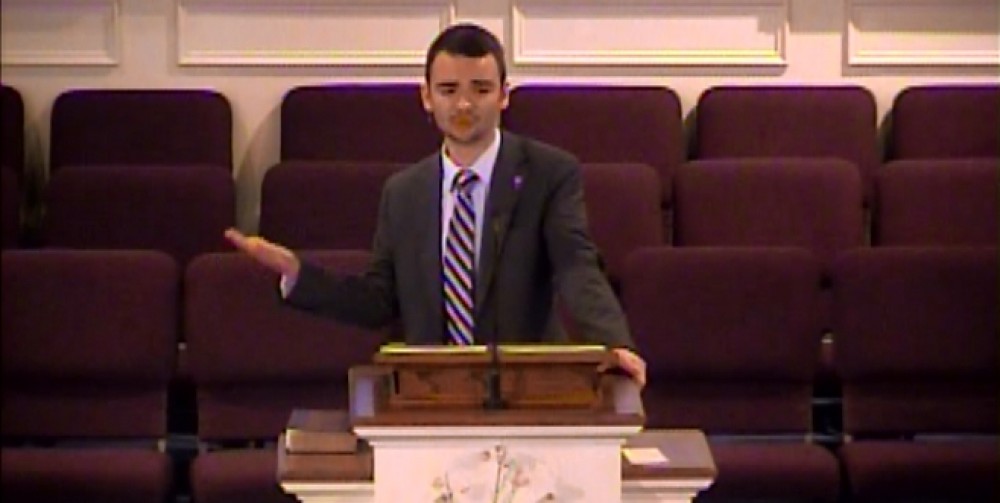
Christ’s Supreme Example of Humility (Philippians 2:5-8)

This message was delivered at Mt. Zion Baptist Church in West Paducah, KY on March 30th, 2014. 

Introduction

When we come to Jesus Christ for salvation, we must come in humility. That is, we must recognize our lowly state—that we are dead in trespasses and sins (Eph. 2:1), enemies of God (Rom. 5:10), hostile to God (Rom. 8:7), under His wrath (John 3:36), and helpless without Jesus. We must recognize how low we are before God can ever lift us up by the rope of His grace. The Bible says, “God resists the proud, but gives grace to the humble” (Prov. 3:34; James 4:6; 1 Pet. 5:5). And we cannot be saved, thinking that we do not need God to be saved—you must recognize your need. And that recognition of need/lowliness is what the Bible calls humility.

I think that we recognize that we need humility to be saved (while God grants it), but it seems like we sweep humility under the rug when it comes to our lives as believers; exercising humility towards our brothers and sisters in Christ. And if we are not living in humility, then we will have divisions in our churches, and disunity in our lives with other believers.

We are not asked to like other Christians, we are not asked to be like them, agree with them (on every point), but we are to recognize and put into action that we are one with them in the Lord, and we share the same benefits as children of one heavenly Father. If we do not live in unity, then we proclaim a false message to the world—because the message of the gospel is a message of unity and of peace. The gospel absolutely eradicates the barriers between us: the racial barriers, economic, and social barriers. And the gospel unites us under one head, Jesus Christ, with on Father of this universal family united by the blood of Jesus Christ.

So if we are in great need of humility for church unity, where shall we look? In Philippians 2, we have the supreme example of humility ever, and from it we will draw out implications for living in humility.

The Text: Philippians 2:5-8

“5 Have this mind among yourselves, which is yours in Christ Jesus, 6 who, though he was in the form of God, did not count equality with God a thing to be grasped, 7 but emptied himself, by taking the form of a servant,being born in the likeness of men. 8 And being found in human form, he humbled himself by becoming obedient to the point of death, even death on a cross.”

Have This Mind: Christ’s

Look at v. 5. Paul writes, “Have this mind among yourselves, which is yours in Christ Jesus.” First, he tells his readers to have this mind among themselves. He is telling them to have a certain way of thinking, a certain mind-set. Many translations read, “Have this attitude among yourselves” (NASB, HCSB, NLT), and that’s what he is telling them here. Paul aims this command not to any individual, but to have this attitude among yourselves. This pictures a congregation, and it is plural. It targets the whole church. It isn’t addressed to some individual, but to “all the saints in Christ Jesus who are at Philippi” (Phil. 1:1).

Further, the phrase “have this mind among yourselves” looks borth backward and forward in this passage. It looks backward to what Paul has already commanded the Philippian believers to do: “Complete my joy by being of the same mind, having the same love, being in full accord and of one mind. Do nothing from selfish ambition or conceit, but in humility count others more significant than yourselves. Let each of you look not only to his own interests, but also to the interests of others” (vv. 2-4). The phrase points back because Paul has already commanded them to live in humility. Because without humility, you cannot “be of the same mind,” or “have the same love,” you will not be “in full accord and of one mind.” You will do things from selfish ambition. But with humility, you will be able to fulfill all these commands. The phase also looks forward to Christ’s perfect fulfillment of this “attitude” of humility, which we will see in this passage. Christ is the perfect example, the supreme example, the unparalleled example of the humility that Christians ought to have towards one another—and following that example is the only way to reach true unity among ourselves. We need to “have this attitude among ourselves,” this that was Christ’s. 1 John 2:6 reads, “Whoever says he abides in him ought to walk in the same way in which he walked.”

So what is this “mind that was in Christ Jesus?” What example are we to follow to attain spiritual unity in the church, which we so desperately need? Well, Paul describes it for us in vv. 6-8. Paul describes how the Son of God left heaven to come to earth; he depicts this by giving a series of eight downward steps from glory into humanity, ending with the death of Christ on the cross. Before we examine these steps, let’s look at the exalted position that Jesus left.

The Exalted Position Jesus Left

Paul writes in v. 6, “Who, though he was in the form of God . . .” Paul says that Jesus “was in the form of God.” Before Christ came to earth He was fully and eternally God. When Christ came to the earth, He was fully and eternally God. And after Christ resurrected from death, He continues to be fully and eternally God. Before Christ took on flesh, He “was in the form of God” as Paul says here. This does not mean that Jesus became the Son of God at some point; He has always been the Son of God. To say that He was in the “form of God” means that He was totally equal with the Father in every way. Still, this doesn’t mean that Jesus is the Father or that the Father is Jesus. The persons of the Trinity are distinct but never divided. Having different roles, but equal. Not three gods, but God in three persons.

So when Christ comes to the earth, a transition takes place. Wayne Grudem, in his great work Systematic Theology, writes, “Remaining what he was, he became what he was not. In other words, while Jesus continued “remaining” what he was (that is, fully divine) he also became what he previously had not been (that is, fully human as well). Jesus did not give up any of his deity when he became a man, but he did take on humanity that was not his before” (1). And when He did, He subjected Himself to many of the limitations that we have. Even if He was only going to be here for 33 years, for Him to take on human flesh would be to subject Himself to our limitations, our weaknesses, and our condition. Yet at the same time, this did not compromise the absolute holiness of Christ: “He committed no sin, neither was deceit found in his mouth” (1 Pet. 2:22). This is a very difficult reality to grasp, but you cannot have Christianity without it.

If Jesus was not fully man, He couldn’t have died, for God cannot die. If Jesus did not die, then we are still dead in our sins, we are still under God’s divine wrath, we are still slaves to sin, we are still children of wrath, we are still following the course of this world, we are not redeemed, we are not new creations, we are still living in the futility of our minds, and we are not saved! But Christ did die for our sins but that would be utterly impossible, had He not been fully man. But praise God, He busted the grave wide open and conquered sin and death when He rose from the grave three days later, and the angles said, “Why do you seek the living among the dead? He is not here, but has risen” (Luke 24:5-6). And that wouldn’t have been possible, had Jesus not been fully God. Christ says, “No one takes [my life] from me, but I lay it down of my own accord. I have authority to lay it down, and I have authority to take it up again. This charge I have received form my Father” (John 10:18).

With all that doctrine in mind, Paul’s point here is that if Christ chose to take on flesh, then there would have to be descent. The incarnation of Jesus is where the Creator takes on the form of the created. The Infinite becomes the finite, the Sinless takes sin upon Himself. The King of kings leaves His kingly throne to subject Himself to our weaknesses, troubles, and struggles: “For we do not have a high priest who is unable to sympathize with our weaknesses, but one who in every respect has been tempted as we are, yet without sin” (Heb. 4:15).

What example then are we to follow here? Because Paul does say to “have this mind among yourselves.” As you probably know, we cannot be incarnated as Jesus was, we cannot come down from heaven to be born as a babe, and we cannot save people from their sins. But that’s not the point of the text here. The point is that Jesus had every inherent right to stay where He was, but He didn’t and He made the ultimate sacrifice of taking on flesh—which would lead to His death on the cross for sin. It was that He was in the “form of God,” but took on flesh to save us from our sins.

We can follow His example because we too are in a great position. We who are “in Christ” as the New Testament teaches, are saved completely by God’s grace (Eph. 2:8-9). God has loved us before time began (Eph. 1:4), God purchased our salvation and what’s more, we have no rights whatsoever to deserve salvation. Still, God calls us His friends (John 15:14-15). We are His children, “As many as received Him, to them He gave the right to become the children of God, even to those who believe in His name” (John 1:12, NASB, emphasis mine). And we have the promise of spending eternity with Him forever to worship at His feet for all eternity.

But we did not earn it. It is not our inherent right. So if God’s eternal son humbled Himself in an incomparable way by taking on flesh to live as a man, leaving His heavenly dominion, leaving His heavenly throne to be a man—how much more ought we to be absolutely determined to live humble and make whatever sacrifices necessary for the kingdom of God? You see, when Jesus left heaven to take on flesh and be born as a babe, His position of being God did not change. He just took upon Himself the weaknesses and struggles of the flesh. And we are not commanded to leave our position as God’s children; we cannot, we are secure in God’s hands. But we are to live humbly and “count others more significant than ourselves.” And when we do that, when we recognize that we are lowly, there will be much change in our lives—and that change often hurts. Humility hurts, just like it did Christ, and it may cost us dearly to live humble lives and do good works for others.

If we live in humility, then we will have the attitude we need to “Bear one another’s burdens, and so fulfill the law of Christ” (Gal. 6:2). It hurts to suffer with someone during their struggle, difficulty, or weakness. But will you give till it hurts? Will you count others greater than yourselves even when it hurts? It’s not by accident that the first Beatitude in Jesus’ Sermon on the Mount is “Blessed are the poor in spirit, for theirs is the kingdom of heaven” (Matt. 5:3).

Step One of Christ’s Humiliation

If you recall earlier, I spoke of Paul’s description of eight downward steps into humanity. From the exalted position that Jesus left, His first step downward was that He “did not count equality with God a thing to be grasped” (v. 6b). Paul has already established that Christ was equal with God. We also know that during Jesus’ earthly ministry, He never denied or diminished the fact that He was God. In John 17, Jesus prays, “Father, the hour has come; glorify your Son that the Son may glorify you, since you have given him authority over all flesh, to give eternal life to all whom you have given him” (John 17:1-2). Only God can give eternal life. In v. 6 of our text, Paul says here that although He was God, in fact equal with God, “He did not count equality with God a thing to be grasped.” The point here is that Jesus never used His power or authority for personal advantage, because to Jesus, though all power and authority and worship are inherently His, these things were not “a thing to be grasped.” Christ refused to hold onto His divine rights and privileges as His own. Jesus had all the rights and privileges of God, and He could never lose the. But He refused to selfishly cling to those things to His own advantage.

You likely recall what Jesus asks during His betrayal: “Do you think that I cannot appeal to my Father, and he will at once send me more than twelve legions of angels?” (Matt. 26:53). If He had, that would have messed up the Father’s plan to accomplish the mission of salvation at the cross. And so Christ would not call “twelve legions of angels” to His side. You also likely recall when Jesus was tempted in the wilderness. Satan said, “If you are the Son of God, command these stones to become loaves of bread” (Matt. 4:3). Have you ever wondered why Jesus didn’t just do that? Why didn’t He just turn them into bread to eat? He had all the power to do so. He even turned the loaves an fish into enough food to feed the five thousand (Matt. 14:13-21). It was because Christ “did not count equality with God a thing to be grasped.” Jesus’ attitude was selfless, it was giving, and it was humble.

That same attitude should characterize our lives today. We are children of God—new creations. But that is not the end of it. God didn’t save us so that we can sit and soak on a wooden pew every Sunday for the rest of our lives. Too often, we are comfortable in our blessings—we rejoice that we are redeemed, justified, and made right in God’s sight, but we keep them to ourselves. Those things are a cause for rejoicing, no doubt! But we should not grasp them selfishly, but follow the example of Christ here and share our blessings with others. All that we have has been given to us by God and we should be generous. How then, you ask, can one share something like justification with someone else? You cannot share your justified position in God’s sight with someone else, can you? You can by taking the message of justification to people—in hopes that they too will receive Christ’s righteousness imputed to their account. So what is it that you are clinging tightly to? Material blessings? Spiritual blessings? Is there something in your life that God wants you to share with others? Surrender that things to God and let Him have His will and His way.

Step Two of Christ’s Humiliation

We have looked at Christ’s first step downward into humanity, now we will look at Christ’s next step from glory to humanity. He “did not count equality with God a thing to be grasped,” Paul says, “but emptied himself . . .” Paul says that instead of counting equality with God, Christ emptied Himself. That’s the second step. The New Testament teaches that Christ emptied Himself of five divine rights (2):

1. His divine glory. The Son of God left the worship of the saints and angels in heaven, and the adornment, and was subject to misunderstandings, denials, unbelief, false accusations, and every sort of persecution by sinful men. He have up the shining brilliance of heaven to suffer an agonizing death on the cross.

2. Independent divine authority. He was equal with the Father (as both Jesus and Paul affirm), but He also stated very often in the New Testament that He depended on the Father for strength and authority. A mystery, but true (John 5:19, 30; 8:28; 12:49).

3. Some of His divine attributes. He did not cease being God, but He did subject Himself to limitations by becoming a man. For example, Christ could only be in one place at one time while He was on the earth. That would be a (temporary) limitation on God’s omniscience.

4. His eternal riches. Paul brings this to light, “For you know the grace of our Lord Jesus Christ, that though he was rich, for your sake he became poor, so that you by his poverty might become rich” (2 Cor. 8:9).

5. His unique, face-to-face relationship with the Father. In order to fulfill the plan of salvation that God sent Him to do, He had to become sin for us: “For our sake he made him to be sin who knew no sin, so that in him we might become the righteousness of God” (2 Cor. 5:21). Jesus takes our sin upon Himself, and gives us His righteousness in exchange; so in God’s sight, Jesus becomes all the filthiness and sin that we are and we become all the righteousness and holiness that He is. If that is true, then it would require that Jesus be separated from the Father at His crucifixion. The Father turned His face away—Habbakuk 1:13 says that the Father’s “eyes are too pure to look on evil.” This is why Christ cried from the cross, “My God, my God, why have you forsaken me?” (Matt. 27:46).

Christ emptied Himself of these things to save us and to fulfill God’s plan of redemption. We obviously cannot empty ourselves to the degree that Jesus did here, but we do have an example to follow.

We are called to empty ourselves of everything that would hinder our obedience and service to Him. That’s what Christ did. He emptied Himself of these divine rights so that he could fulfill the Father’s plan of salvation. He was the Messiah, the One through Him God’s saving purposes would be accomplished. Jesus even took on the limitations of man and “emptied Himself” of the rights that were rightfully His, so that He could purchase salvation for you and for me—thus, being totally obedient to the Father (even to the point of death, v. 8).

If Jesus Christ did everything necessary to be obedient to the Father, by “emptying” Himself of what is rightfully His, how much more should we be willing to empty our lives of whatever it takes to be totally and fully surrendered to God? The only difference is, we don’t even own anything in this life. It all belongs to God, and all that we have is a gift from God Himself. Whatever is in the way of your service and full surrender to God, whether it be possessions, position, money, pride, sex, whatever; pour it down the drain!

What do you need to empty in your life to be totally obedient to God? What do you need to give up in order to be fully surrendered to God’s will?

Step Three of Christ’s Humiliation

Christ not only refused to count equality with God a thing to be grasped, and not only did He empty Himself, but even further in His descent, Christ takes a third step downward. How? Paul writes, “by taking the form of a servant” (v. 7b). Immediately when I read this, my mind races back to Jesus’ washing of the disciples’ feet. Many commentators even say that this is what Paul is referring to here. When Jesus washed their feet in John 13, He was demonstrating to them the best example of humility. Foot-washing was something that normally slaves did in Jesus’ day. He tells them, “If I then, your Lord and Teacher, have washed your feet, you also ought to wash one another’s feet. For I have given you an example, that you also should do just as I have done to you. Truly, truly, I say to you, a servant is not greater than his master, nor is a messenger greater than the one who sent him. If you know these things, blessed are  you if you do them” (John 13:14-17).

What is so ironic about what Jesus did and Paul’s description of Him as a “servant” is this: Jesus Christ is the only One in the entire universe who is worthy to be served, but yet He became a servant. If serving man in the Father’s name was good enough for the Son of God, it ought to be good enough for us. We should be labeled as servants. Let us heed the words of Galatians 6:9-10, “And let us not grow weary of doing good, for in due season we will reap, if we do not give up. So then, as we have opportunity, let us do good to everyone, and especially to those who are of the household of faith.” And when we have served, when we have done what we ought, we do not need to be prideful, but thank God for the opportunities we have been given to serve and then cry out with humility: “We are unworthy slaves; we have done only that which we ought to have done” (Luke 17:10, NASB).

Who are you serving for the cause of Christ? Where has God been stirring your heart to serve? Is it a position here at your church? Is it a soup kitchen? Is it your workplace? Do you need to serve your family more? God calls us to follow the example of Jesus here and be servants. Where does He want you to serve? And what is stopping you from serving and going where God wants you to go? Whatever it is, get it out of the way and start serving.

Step Four of Christ’s Humiliation

We have seen Christ’s example of humility in that He “did not count equality with God a thing to be grasped,” and that He “emptied himself,” and that He took on the form of a servant. Even further into His downward descent, Paul lists a fourth step: “being born in the likeness of men” (v. 7c).

You know the Christmas Story, Jesus miraculous conception and virgin birth. How Mary “was found to be with child from the Holy Spirit” (Matt. 1:18). Paul says here that Jesus became exactly like all other human beings, having all the attributes of humanity—He was a man. It was so obvious that He was a man that even His family and disciples would not have known of His deity if the angels, the Father, and Jesus Himself revealed it to them. He was “born of a woman” (Gal. 4:4), and in a “fleshly body” (Col. 1:22). Hebrews 2 gives a very accurate description of how Jesus was born in the likeness of men:

“Since therefore the children share in flesh and blood, he himself likewise partook of the same things . . . Therefore he had to be made like his brothers in every respect, so that he might become a merciful and faithful high priest in the service of God, to make propitiation for the sins of the people. For because he himself has suffered when tempted, he is able to help those who are being tempted” (Heb. 2:14, 17-18).

Recall too Hebrews 4:15. It says that Jesus was “tempted in every way as we are, yet without sin.” That tells us something. And that’s what this verse indicates as well. Jesus was made in the likeness of flesh/men. That is, flesh minus the sin. It’s very important to understand, too, that this is not God taking on some kind of pre-Fall Adam. That’s not why Paul calls Him the “second Adam” (1 Cor. 15:45). Because if you remember, before the Fall there was no sin and no death, but Jesus did die. Think about it: Did He feel pain? Did He fell sorrow? Did He weep? Did He have strong crying and tears? Did He ever hunger? Did He thirst? Was He weary? Was He weak? Yes, yes, and yes. Here’s the final one: Did He die? Yes, and death is the result of what? The Fall (Gen. 3:17-19). This is not God taking on the “un-fallen” character of humanity, this is God taking on the fallen character of humanity with one significant element eliminated. What is it? Sin. Christ took on all of our weaknesses but one: sin.

Step Five of Christ’s Humiliation

We have seen that Christ did not count equality with God a thing to be grasped for selfish gain, we have seen that Christ emptied Himself, that He took on the form of a servant, and also that He was born in the likeness of our flesh. But is there more to this descent? Is there more to this humiliation? Paul says yes: “And being found in human form” (v. 8a). This advances the truth that Christ was “born in the likeness of men.” Christ was “found” or recognized by those who observed Him, and those He lived with to be in “human form.” The prophet Isaiah had predicted some 700 years earlier, that the Messiah “was despised and forsaken of men, a man of sorrows and acquainted with grief; and like one from whom men hide their face he was despised, and we did not esteem Him” (Isaiah 53:5).

Step Six of Christ’s Humiliation

Continuing this description of Christ’s descent, “he humbled Himself” (v. 8b). Paul says here that Jesus “humbled himself.” Now, this is somewhat different language. Everything up to this point has been about Jesus’ nature and form. This is actually an action—a personal attitude. If anyone humbled himself, it was Jesus Christ! Think back to His trial. Christ was mocked, falsely accused, spat upon, beaten with fists, scourged, and had part of His beard painfully plucked out. Yet He was never defensive was He? I’ve often wondered why Jesus didn’t just show those Pharisees who was boss. For most of the time, He stays silent. He was never demanding, never bitter. He had every right as God to damn them straight to hell at that moment. He refused to assert His rights as God! He didn’t even assert His rights as a human being either. No human would stand for that as justice.

This passage is about Christ, but remember too, that it is the example to follow from the command, “have this mind among yourselves.” I think Paul is crying out to the Philippian believers to not ever forget this: “Don’t forget this” he says, “Don’t forget what the Son of God suffered through, while maintaining humility! Don’t forget when the slightest impulse arises in you to become selfish or self-assertive or self-seeking, and so to break the bond of your fellowship with other believers!” (3)

In what situations in your life do you need to exercise more humility?

Step Seven of Christ’s Humiliation

In His stepping downward, Jesus was willing to suffer, “by becoming obedient to the point of death” (v. 8c). One would think that somewhere along the lines of all the sacrifices Jesus is making here that He would say, “Enough!” But Christ’s perfect submission took Him all the way to His death. Christ was obedient to the will of God “to the point of death.”

Anytime someone dies for a cause, leader, or a revolution—that is probably the greatest demonstration of that person’s devotion that cause, leader, or revolution. And Christ here followed God’s plan, and was so devoted to the Father’s will to “the point of death.” Christ died for the world indeed, but Christ also died for the Father. Not to pay for His sins, He paid for our sins, but He died for God to to His will and fulfill His plan. In Luke 22:42, Jesus prays in the garden of Gethsemane, “Father, if you are willing, remove this cup from me. Nevertheless, not by will, but yours, be done.” The Father did not force death upon Jesus. And Jesus did not wrestle His heavenly Father to the floor of heaven to avoid crucifixion. The death of Jesus was God’s plan. God predestined it to take place. But it was Jesus’ choice—Paul says that Jesus was “obedient” that means a choice was involved. And Christ was obedient.

Ignatius of Antioch, an early church father, was remembered for his joyful outlook on martyrdom. He was going to be killed for his faith in Christ. He writes many letters to different churches while he is waiting to be killed—he viewed his death as being obedient to the will of God. As with the case of Ignatius of Antioch, and many early Christians, death was the price they had to pay to be obedient to God (4).

How far will you go to be obedient to God’s will? If you lost everything for being obedient to God, would it still be worth it to you? Jesus lost His life, His fellowship with the Father, all to be obedient to the Father’s will. If being obedient to God’s will even to the point of death was good enough for Jesus, then it ought to be good enough for us.

Step Eight of Christ’s Humiliation

But it wasn’t just any death. Paul describes that death as the final step in Christ’s downward descent: “even death on a cross” (v. 8d). Today, we have beautified the symbol of the cross so much that we often forget about what it really means. It was a death instrument in Jesus’ day. Jesus could have been killed by stoning or hanging, but instead died on a cross. Galatians 3:13, “Cursed is everyone who hangs on a tree.” Similarly, “He himself bore our sins in his body on the cross, so that we might die to sin and live to righteousness; for by His wounds you were healed” (1 Peter 2:24).

I was in Wal-Mart the other day, and I saw the most ironic thing ever in my life. I couldn’t believe that you could pack so much irony into one moment. I was in the Easter candy isle and saw a chocolate cross. Now to other people who do not think like me, it probably appeared to be just a piece of candy. But I wondered, “Where are the chocolate electric chairs?” The cross, you see, was the worst form of punishment in Jesus’ day. And here was a chocolate death symbol. Of course, because of His resurrection, that cross stands as a symbol of victory of sin and death. But not so in Jesus’ day.

Conclusion

We have seen Christ’s example; His supreme example of humility. He did not count equality with God when He had every right to. He emptied Himself and was poured out for you and me—and in the Father’s will. He became a servant—when He alone is worthy to be served. He was born in the likeness of our flesh. He was found in human form when He was born—as a helpless babe. He was obedient to the Father to the point of death, even death on a cross. I ask you this morning, in which of those steps do you need to line up your life with God’s will? What part of Christ’s example are you not following? Are you following Christ’s example of humility?


1. Wayne Grudem, Systematic Theology (Grand Rapids, MI: Zondervan, 2000), 562.
2. This list is adapted from John MacArthur, Philippians/John MacArthur (Chicago, IL: Moody Publishers, 2001), 126-128.
3. Ibid, 132.

4. The best basic resource on Ignatius and his view of martyrdom is Rediscovering the Church Fathers: Who They Were and How They Shaped the Church by Michael A. G. Haykin.

Ephesians: Start Your Engines (3:14-21)

The following message was delivered at Ohio Valley Baptist Church on March 16, 2014:

Introduction

While studying this text, I have asked why would Paul need to pray here? He’s already prayed in 1:15-23, why would he need to pray again? I discovered why when I began to note the literary differences in 1:1-2:22 and 4:1-6:24. Ephesians 1-2 is all about who you are in Christ and what God is like in salvation—one of the most crucial types of knowledge about God that you can have. These chapters consist of information, doctrine, and statements.

Notice: Ephesians 1:3-14, you are: elected (1:4), holy and blameless before Him (1:4), predestined (1:5), adopted (1:5), redeemed (1:7), forgiven (1:7), sealed with the Holy Spirit (1:13). Didn’t find any commands there.

Ephesians 2:1-22, you are: no longer dead in trespasses and sins (2:1), no longer following the course of this world (2:2), no longer following Satan (2:2), no longer living in the passions of your flesh (2:3), no longer children of wrath (2:3), loved by God’s great love (2:4), given new spiritual life (2:5), seated with Christ in the heavenly places (2:6), saved by grace through faith (2:8), God’s workmanship—created in Christ Jesus for good works (2:10), brought near by the blood of Christ (2:13), united in one body through the cross (2:14-17), no longer strangers and aliens (2:19), fellow citizens with the saints and members of the household of God (2:19), a dwelling place for God by the Spirit (2:22).

Even in Ephesians 3, you are “fellow heirs, members of the same body, and partakers of the promise in Christ Jesus” (3:6).

But look at the difference in language in the latter chapters of Ephesians:

Ephesians 4:1-32—live in unity and live as a new person.

Ephesians 5:1-33—walk in love, wives submit to your husbands, husbands love your wives as Christ loved the church.

Ephesians 6:1-20—children obey your parents, slaves obey your masters, put on the whole armor of God.

So Ephesians 1-2 explains what you are, and Ephesians 4-6 tells you what to do. But just knowing isn’t enough—they always say knowing is half the battle. But it is only half. You need the strength and resources to carry out those commands—the power to live out Ephesians 4-6. That is exactly why Paul prays here—that his readers would have the strength to carry out those commands. Imagine that you as a Christian are an engine. Paul has described all the parts of that engine in the first two chapters, and in the latter chapters that engine is running and working and doing. Somewhere in between you have to get that engine started. So then, the prayer that follows is sort of like Paul saying, “Gentlemen, start your engines!”

The Text

14 For this reason I bow my knees before the Father, 15 from whom every family in heaven and on earth is named, 16 that according to the riches of his glory he may grant you to be strengthened with power through his Spirit in your inner being, 17 so that Christ may dwell in your hearts through faith—that you, being rooted and grounded in love, 18 may have strength to comprehend with all the saints what is the breadth and length and height and depth, 19 and to know the love of Christ that surpasses knowledge, that you may be filled with all the fullness of God. 20 Now to him who is able to do far more abundantly than all that we ask or think, according to the power at work within us, 21 to him be glory in the church and in Christ Jesus throughout all generations, forever and ever. Amen.

INTRODUCTION TO THE PRAYER (3:14-15)

Verse 14 reads, “For this reason I bow my knees before the Father. . .” Remember 3:1 where Paul says the same thing? “For this reason I, Paul, a prisoner for Christ Jesus. . .” Remember that he interrupted his prayer and explained the nature of his apostleship and the different aspects of his ministry. Here in v. 14 is where he picks up again on that prayer. Again, like with the last time we studied this, he states “For this reason” which points back to the salvation and privileges that belong to his readers through Christ. Just read chapters 1-2. That’s the reason Paul “bows [his] knees before the Father.

The Father

The Father has been central to what Paul is saying here in Ephesians. Paul indicates here, like the rest of the Scriptures that every member of the Trinity is necessary for salvation. (You just read about it throughout this letter). In the Bible, God is always seen as acting as a tri-personal team. The Father plans your salvation, the Son carries out your salvation by dying on the cross, and the Spirit of God applies your salvation by giving you new spiritual life and sustaining you till the end.

So Paul prays here to the Father, “from whom every family in heaven and on earth is named” (v. 15). All those in heaven (angels and peoples alike) have their origin from the Father, and all living beings (families of people, families of insects, families of animals, etc. every family) have their origin from the Father.

It’s true that when someone or something is named, it provides a description of what that thing is or who that person is, but also for someone to give a “name” to something must mean that they possess some type of authority to do so. You name your children because your children belong to you and you have the right to name them. Same principle here. For God to give creatures a name isn’t simply to provide them with a label. But it signifies that God has authority over them and every right to give them names. All things depend on God for their existence.

DESCRIPTION OF THE PRAYER (3:16-19)

The reason Paul points to God’s authority here is because of what he is about to say in the description of his prayer. Paul is going to focus mainly on God’s power in the body of his prayer. Think about it: God’s authority points to His sovereignty and His sovereignty points to His power.

Paul’s First Prayer Request

So we will look at Paul’s first prayer request for God’s power in v. 16: “that according to the riches of his glory he may grant you to be strengthened with power through his Spirit in your inner being.”

First he says “that according to the riches of his glory” He may do this for you. Notice that Paul doesn’t say “out of his riches.” There’s a difference—a big difference. If God gives “out of his riches” then He would give a portion from the amount that He has. But if God gives “according to the riches of his glory” (like the Bible says He does) then He would give in some accordance with what He has. If you go to a rich man and say, “I need $500.” The rich man gives you $4. He gives out of his riches. If you go to that rich man and say, “I need $500” and he gives you $1000, that is giving according to the riches that he has.

God always gives in accordance with what He has. “In him we have redemption through his blood, the forgiveness of our trespasses, according to the riches of his grace” (Eph. 1:7). “And my God will supply every need of yours according to his riches in glory in Christ Jesus” (Philippians 4:19).

And Paul prays here that God would give according to His riches, in accordance with what He has, that these Ephesians would be “strengthened with power through his Spirit in [their] inner being.”

Let’s break down this prayer:

Paul’s prayer: That they would be “strengthened with power.”

How it happens: through the Holy Spirit.

Where it happens: in your inner being.

The Inner Being—Strengthened Through the Spirit

It will not happen any other way—if out “inner beings” are to be strengthened, they will only be strengthened through the power of the Holy Spirit. And the only way to be strengthened by the Holy Spirit is to yield yourself to Him, and fill your mind and heart with the Bible—because the Bible is the Spirit’s thoughts on paper and we need to allow the Spirit to fill our mind with His thoughts and that only happens through considerable time with His Book.

The Holy Spirit can’t call to your mind any Scripture that you haven’t read before. What about when you are tempted? Do you know that the Scriptures say that God provides a way of rescue (1 Cor. 10:13)? What about when you are joyful? Do you know that the Scriptures say to delight yourself in the Lord (Psalm 37:4)? What about when you are sorrowful? Do you know that the Scriptures say to “lift up your soul to the LORD (Psalm 25:1)? If you aren’t filling your mind with the book that the Holy Spirit inspired, then He cannot bring these passages to your mind when you are faced with situations that would compromise your fellowship with God.

You will not remain in a neutral state—there will be something that will take place of the thoughts of God if the thoughts of God (in the Bible) are not filling your mind! We need to write these things on the tablets of our hearts (Deut. 11:18), and meditate on these things day and night (Psalm 1:2) so that we can think the thoughts of God in our inner beings, and the Spirit can dominate our thought pattern.

If you wonder why your always thinking about things that you shouldn’t be thinking, then you need to back up a little and start immersing yourself in the Word of God. Because, when you are yielding yourself to the Spirit of God, being filled with the Spirit (Eph. 5:18), allowing Him to control your mind, actions, walk, and influence everything about you—then you will be strengthened in the “inner being,” that is the inside part of you. That’s what Satan is targeting when you are tempted. That’s what sin affects when you are weak. And it’s a daily Christian struggle. Paul expresses this in Romans 7. He says that he wants to do right, but he finds himself always doing what he doesn’t want to do: “21 So I find it to be a law that when I want to do right, evil lies close at hand. 22 For I delight in the law of God, in my inner being, 23 but I see in my members another law waging war against the law of my mind and making me captive to the law of sin that dwells in my members” (Rom. 7:21-23).

But where does Paul find the solution? “For the law of the Spirit of life has set you free in Christ Jesus from the law of sin and death” (Rom. 8:2). We need to pray as Paul did here, that God would strengthen us with power through His Spirit in our inner being. And we need to yield ourselves to the Spirit of God with each passing moment.

Paul’s Second Prayer Request

Paul bows his knees before the Father (v. 14) and prays first that his readers would be strengthened with power in their inner beings through the Spirit (v. 16) Now we read his second prayer request: “so that Christ may dwell in your hearts through faith” (v. 17a).

Paul prays “so that” Christ may dwell in your hearts through faith. That makes all the difference because in order for Christ to dwell in their hearts through faith, something previous would need to have taken place—that is, being strengthened in the inner man through the power of the Holy Spirit. If you’re not strengthened with power through the Holy Spirit, then Christ cannot dwell in your heart through faith. That’s what Paul is saying here.

Katoikeo

I want us to look for a moment at the word “dwell” here. I’m going to give you a Bible study tool for free tonight. 1) The NT was penned in Greek. That was the language used at that time. 2) The Greek language is complex. Many of the characters in Greek consist of what looks like our letter X and O (Maybe God was writing a love letter when He inspired the New Testament). 3) Often times the same English word is used for different Greek words. John 21 is a prime example. Jesus asks Peter, “Do you love me?” three times. The first two times He asks Peter, the word love is agapao which means a “God-like love.” In other words, “Do you love me the way I love you?” The third time, the word love is phileo, which means “to appreciate.” And we read that Peter wept because Jesus asked him that the third time.

Well, the Greek word for “dwell” here is katoikeo. It’s more complex than meets the eye. Split that term in half and katoi means to dwell or to reside in. And keo means to be at home—or to be comfortable in a home. Put those two terms together and you have “to dwell comfortably in a home.” Now read it that way: “So that Christ may ‘dwell comfortably in your hearts’ through faith. . .” Makes a huge difference.

Your Heart—Christ’s Home

This is Paul’s prayer that Christ may dwell comfortably in their hearts but not before they are strengthened with power through the Spirit. Would you say that Christ is not comfortable in the hearts of His people sometimes? Of course. I know that to be true in my case. Often times, in the hearts of His people, Christ goes where He would never choose to go. And listen to me, Christ can’t settle down and be at home in our hearts because He’s always up cleaning the place up all the time because it’s such a mess!

But if our “inner beings” are being strengthened with power through the Spirit and we are allowing God to do with us as He pleases and we are giving Him all the room He needs to work in our lives, and we are opening up every door to Him, then Christ will finally be able to settle down and be at home in our hearts. But He must have full access to every part of your life.

So you get saved and Christ comes to dwell in your heart (now picture your heart like a house as the Greek here would imply). He goes into the library—the control room where all the thoughts are stored. Jesus says, “Alright we’ve got to get these books out of here—too many bad ideas here and lustful thoughts and such. We’re going to burn up these books, and replace them with My Book.” You say alright, Jesus you’re right. He goes into the living room—where you have fellowship. That’s where you leave Jesus when you neglect Him. Jesus says, “Hey you maybe want to sit down and spend some time together? We need to talk.” You say alright Jesus, you’re right. He goes into the dining room—that’s where your appetites are. He says, “Oh I see, this is what you hunger for—pride, prestige, lust, money. . .” Jesus about has the place cleaned up when this terrible odor comes from inside your closet. Because the cleaner the house, the worse it smells. He says, “Hey what’s in that closet?” You say, “Really Jesus? I’ve given you everything, that’s my only closet! You can’t want that—its’ 2×4 at the most!” You see that’s the room in your life where you keep thing from God. You think they’re secrets—but God knows them anyway. These are the things you really don’t want to reveal to God.

That’s the way Paul is relating here: Christ can’t settle down and be at home in your life until the garbage is cleaned out of it, and that will only happen when the Spirit of God has strengthened you in the inner man to give you victory over sin. We must give God access to all the rooms of our life if Christ is to settle down and be at home in our lives. The Spirit of God will do the cleaning—that’s what God does after you’re saved right? He cleans you up. Conversion is only the beginning.

Where in your life is the Spirit of God stifled or hindered? What areas in your life do you need to open up to the Spirit of God?

Paul’s Third Prayer Request

Paul has prayed that the Ephesians would be “strengthened in the inner man through the power of the Holy Spirit,” and he has prayed that Christ would be able to be comfortably at home in the hearts of these Ephesian believers. And in the latter part of v. 17 he says “that you, being rooted and grounded in love.” Paul is assuming that they are already “rooted and grounded in love.” Like it’s something that has already happened because Christ is at home in their hearts. Let’s read this text where Paul names his third prayer request: “so that Christ may dwell in your hearts through faith—that you, being rooted and grounded in love, 18 may have strength to comprehend with all the saints what is the breadth and length and height and depth, 19 and to know the love of Christ that surpasses knowledge. . .” (vv. 17-19)

Knowing the Surpassing Love of Christ

Here we have Paul’s third prayer request: that they may know the love of Christ. Paul prays that they may have strength to comprehend what is the “breadth and length and height and depth” of the love of Christ. That’s a wordy phrase there. Paul simply is pointing to the fact that the love of Christ is far-reaching. He is evoking a sense of immensity and greatness of the love of Christ. And even every type of measurement—like is named here, cannot comprehend the love of Christ.

You know, people say, “I wish I had more love for somebody. I wish I had more love for the Lord. I wish I loved more the things of God and hated the things of the world. I wish my love was properly directed.” It’s just not that simple, people. It’s not enough to have a desire to do that. You need strength for that. Back up! Is Christ really at home in your life? He isn’t unless you’ve been strengthened by His Spirit in the inner man. If you don’t love, Christ is not at home in your life because you are not strong in the inner man, because you are not yielded to the filling of the Holy Spirit. Start at the beginning, and love will be the byproduct.

In v. 19, the Greek for “know” here, is kata lombono. Which means to “seize and make your own.” They always say that you will never know love until you experience love. That’s the idea here. You’ll be able to seize the very love of Christ and make it your own. You will know the “love of Christ that surpasses knowledge.”

You ever see two young people in love? Man everything is just bliss. They’re holding hands, love is just everything—and that’s true. Love is everything when you experience love. Now if human love can do that, imagine what divine love would look like in our lives.

The Fullness of God

Paul has prayed here that the Ephesians would 1) Be strengthened with power through the Spirit in the inner man, 2) Have Christ at home in their hearts, 3) Comprehend the “love of Christ” that surpasses knowledge. Now all that must take place for the end of v. 19 to make any sense. All this must happen for you to be “filled with all the fullness of God” (v. 19b).

This doesn’t mean that you become God or God becomes you. It just means that God’s very essence flows through you and permeates your very being. You see, because if the Spirit is strengthening your inner being, Christ is at home in your heart and He’s not having to be up cleaning it up all the time, and you are really grasping and experiencing the love of Christ in your life—then God can do whatever He wants through you and you will be filled with all the fullness of God!

That’s the only way that vv. 20-21 make any sense. Often times people favorite these verses because they promise that God is able—but there is more to this text than just “God is able.” Now, God is able. God is able to do far more. Far more abundantly. Far more abundantly that all that we ask or think according to this passage of Scripture.

Underestimating God

Now often times we underestimate the fact that God is able. That’s bad enough. We underestimate God and think He isn’t hearing our prayers—when we know that He tells us “call to me and I will answer you and show you great and mighty things” (Jer. 33:3). We underestimate God and think that He doesn’t have forgiveness for our many sins—when we know He says, “Come now, let us reason together, says the LORD: though your sins are like scarlet, they shall be as white as snow; though they are red like crimson, they shall become like wool” (Isaiah 1:18). We underestimate God and think that He isn’t sovereign over our lives and circumstances—when we know that He says, “[He] works all things together for the good of those who love Him and are called according to His purpose” (Rom. 8:28).

But you know what is absolutely bone-chilling for me? When God asks us a question. When God asks the questions in the Bible, something really stirs in me. When we underestimate God, He asks, “Behold, I am the LORD, the God of all flesh. Is anything too hard for me?” (Jeremiah 32:37).

God is Able—Through Us

Now it’s bad enough that we underestimate God’s power as it is . . .but read the rest of this verse . . . “according to the power at work within us.” The Bible doesn’t just say here that God is able—it says that God is able through us. If we underestimate God’s power as it is, how much more will we underestimate His power through us?

That power will not be at work within you—and God will not be free to do what He wants through you until you have first experienced what Paul has talked about above:

1) Be strengthened with power through the Spirit in the inner man,

2) Have Christ at home in their hearts

3) Comprehend the “love of Christ” that surpasses knowledge.

THE DOXOLOGY (3:20-21)

So you’ve got all these things—and God is at work in your life “according to the power at work within you.” You’re a real spiritual big-shot. It’s all going well for you.

But Paul says something in the end of this prayer that keeps you from being prideful: “to him be glory in the church and in Christ Jesus throughout all generations forever and ever” (v. 21). Who gets the glory? Man gets it? No. God gets it. The purpose of God in salvation is to give you Himself—in turn He gets the glory. You enjoy God, He gets glorified—God’s passion if for His glory.

Paul writes to these Ephesians—that’s great if all these things happen for you—just remember that God gets the glory in both the church and in Christ Jesus.

And this will happen for “all generations forever and ever.”

Conclusion

Are we praying this prayer? Are we allowing the Spirit to strengthen us in our inner being? Are we allowing Christ to settle down and be at home in our lives? Are we allowing God to give us the strength to comprehend His love? Are we being filled with all the fullness of God?

You’ve Got Questions: What’s Wrong With Using Allegory to Interpret Scripture?

You’ve Got Questions: What is Wrong with Using Allegory in Interpreting Scripture?

Any time spent in the Word of God is time well-spent. Reading one verse of Scripture is worth having been born just to have the existence to read it. However, while it is always beneficial to read and study the Word of God, it must be recognized that there are faulty interpretative methods used in study of the Bible. One of these flawed interpretative methods used often times is the allegorical approach to interpretation.

Not long after the period of the New Testament, some early church fathers began to use allegorical methods of interpretation (Origen for example). Allegory as defined, is a genre of literature that assigns symbolic significance to textual details. A good example of the use of allegory is in John Bunyan’s famous work, Pilgrim’s Progress. Every character has a signification in relation to the Christian life. Now, when allegory is intended by the writer and understood by the reader(s), allegory can be a powerful literary tool. But, if it is not intended by the author and is used as an interpretive method by the reader, then a dangerous and faulty misrepresentation of the author’s meaning will surely be the result.

A significant reason why allegorical interpretation is flawed is defined in what we are trying to accomplish through interpretation in the first place. What goal are we striving to reach when we study the Bible? We are striving to discover the author’s intended meaning in a text. We are not studying the Bible to discover some secret meaning. If we are using an allegorical approach, then we aren’t trying to discover the author’s intended meaning—we are concluding on an interpretation that appeals to our senses. Just think if two or more people used the allegorical approach to studying the Bible—if that’s the case, then there can be as many interpretations as there are readers! We shouldn’t arrive at an interpretation of a text based on some mysterious skepticism, we should arrive at an interpretation of a text based on the author’s intended meaning.

You would not interpret the Constitution using allegory. The goal is to discover what the Constitutional writers meant by what they wrote. You would not interpret the daily newspaper using allegory. The goal is to find out what the reporters mean by what they write. You wouldn’t even consider using allegory to correctly understand any material you are reading (unless of course the literary genre is allegory). Why should you use allegory in interpreting the Bible? You shouldn’t use allegory unless it is implied by the author. The problem isn’t the literary tool of allegory—the problem is illegitimate importation of allegory.

In any act of communication, there are three elements: a writer or speaker, a text or spoken words, and a reader or listener. So when it comes to the Bible, who decides what the correct meaning is? Many say that the reader is the determiner of meaning, but if that is so, then there can be as many interpretations as there are readers—and they can’t all be right. Some say that the text is the determiner of meaning, but a text is an inanimate object. Texts cannot construct or create meaning, but they can convey meaning. Someone has to put these words on paper, they don’t just evolve onto papyrus or scrolls. The determiner of meaning is the author. The author intended something for a specific group of people at a specific time in history. Any act of communication can progress only on the assumption that someone (the author) is trying to convey meaning to us and we then respond to that meaning by the speaker or writer.

For further helps on interpreting the Bible, please consult: A Basic Guide to Interpreting the Bible, Robert H. Stein and 40 Questions About Interpreting the Bible, Robert L. Plummer


You’ve Got Questions: What Happens if a Christian Gives in to Temptation?

You’ve Got Questions: What Happens if a Christian Gives in to Temptation?

Everyone one of us sin (Rom. 3:23) and are born with a nature inclined to sin (Eph. 2:1-3). So we naturally choose sin over good, more specifically, idols over God: “And instead of worshiping the glorious, ever-living God, they worshiped idols. . .” (Rom. 1:23 NLT). If you are a believer, you will still continue to sin even after you are saved. However, this is not an excuse to continue living in sin: “What shall we say then? Are we to continue in sin that grace may abound? By no means! How can we who died to sin still live in it?” (Rom. 6:1-2, emphasis mine). In fact, if you continue to sin without remorse, guilt or sorrow, then God is not disciplining you and you are not a child of God: “If you are left without discipline, in which all have participated, then you are illegitimate children and not sons” (Heb. 12:8). The Scriptures teach very clearly that you cannot live in unrepentant sin and be saved (1 John 1:6), but the Scriptures also teach that struggling daily with sin is a real problem for real Christians (Romans 7).

Now before Christ, we were completely slaves to sin (John 8:34; Rom. 6:20), but now that we are saved, we have the freedom to serve Christ (Gal. 5:1). The difference is that before we were saved we were slaves to our sinful nature, but now we can choose to live for Christ (Gal. 2:20). Still, however, a problem that all Christians face is temptation (1 Cor. 10:13). Satan presents the opportunity before us to sin, and often times we take that opportunity. When we give in to temptation, we sin against God. In 2 Samuel 11, we find the story of King David’s adultery with Bathsheba and the tragic events which followed. David gave in to temptation and committed a horrible, heinous, hurtful sin, yet he was a child of God. He was a man after God’s own heart (1 Sam. 13:14), and yet he committed awful, terrible, horrible sin. What we see is this: if a person is bound to sin, he is bound to suffer. Sin always brings consequences; even for the believer.

We are completely and totally made accepted in God’s sight based on the justifying work of Christ (Gal. 2:16). And there is nothing you can ever do to make God love you more. Nothing. There is also nothing you have done that makes God love you any less. Nothing. But when we give in to temptation and sin against our Father, our fellowship with Him is hindered. For example, if a son does something wrong to his father—falling short of his expectations or rules—the son has hindered his fellowship with his father. He remains the son of his father, but the relationship suffers. Their fellowship will be hindered until the son admits to his father that he has done wrong. It works the same way with God; our fellowship with Him is hindered until we confess our sin (1 John 1:9). When we confess our sin to God, the fellowship is restored. This is relational forgiveness and we need to seek it when we give in to temptation.

Confession of sin will help to keep us from the discipline of the Lord. If we fail to confess sin, the discipline of the Lord is sure to come until we do confess it. As stated previously, we are totally justified in God’s sight (our sins are forgiven at salvation), but our daily fellowship with God needs to stay in good standing (relational forgiveness). Proper fellowship with God cannot happen with unconfessed sin in our lives. Therefore, we need to confess our sins to God as soon as we are aware that we have sinned, in order to maintain close fellowship with God.

No Other Gospel

The following message was delivered at Ohio Valley Baptist Church on March 16th, 2014:

Introduction

We are going to look at Paul’s letter to the Galatians this morning and how Paul felt about the problems that they were facing. Galatians was one of the problem churches of the New Testament. They had been born out of Paul’s missionary efforts and had become a church—but a crisis has hit this church of Galatia. It’s important that we read about the crisis that hit their church because there isn’t anything that makes us any different from them today. So let’s get into this text.

The Text

6 I am astonished that you are so quickly deserting him who called you in the grace of Christ and are turning to a different gospel— 7 not that there is another one, but there are some who trouble you and want to distort the gospel of Christ. 8 But even if we or an angel from heaven should preach to you a gospel contrary to the one we preached to you, let him be accursed. 9 As we have said before, so now I say again: If anyone is preaching to you a gospel contrary to the one you received, let him be accursed. 10 For am I now seeking the approval of man, or of God? Or am I trying to please man? If I were still trying to please man, I would not be a servant of Christ.

Something’s Missing

Do you see what is missing here? Not that the Scriptures are inefficient and lacking, but there is something missing here that is usually found in Paul’s letters. Let’s take a look at all of Paul’s letters to the churches of the NT and see if you can find out what is missing here in his letter to the Galatians:

To the Romans: “First, I thank my God through Jesus Christ for all of you, because your faith is proclaimed in all the world” (Rom. 1:8).

To the Corinthians: “I give thanks to my God always for you because of the grace of God that was given you in Christ Jesus” (1 Cor. 1:4).

To the Ephesians: “I do not cease to give thanks for you, remembering you in my prayers” (Eph. 1:16).

To the Philippians: “I thank my God in all my remembrance of you” (Phil. 1:3).

To the Colossians: “We always thank God, the Father of our Lord Jesus Christ, when we pray for you” (Col. 1:3).

To the Thessalonians: The first letter, “We give thanks to God always for all of you, constantly mentioning you in our prayers” (1 Thess. 1:2). The second letter, “We ought always to give thanks to God for you, brothers, as is right, because your faith is growing abundantly, and the love of every one of you for one another is increasing” (2 Thess. 1:3).

As soon as we read the first few verses here, we notice that there is no thanksgiving. Of course I don’t mean the holiday, Thanksgiving, but there is no expression of thankfulness for these Galatians like there is in the rest of Paul’s letters to the churches. Paul expresses his thanksgiving to all the churches to whom he has written, except for the Galatians.

But not so with these Galatians. Paul doesn’t waste any time addressing the problem and says, “I am astonished that you are so quickly deserting him who called you in the grace of Christ and are turning to a different gospel” (1:6).

It is Astonishing to Turn Away From the Gospel

First Paul tells his Galatian readers, “I am astonished.” This is his expression—and it wasn’t a good astonishment either. It was astonishing to Paul that these believers were turning away from the gospel. The idea here is that it is astonishing to turn away from the gospel!

The gospel isn’t a genre of music, it’s not a lofty idea in literature, it’s not something that only theologians argue about, folks the gospel is the “power of God for salvation to everyone who believes” (Rom. 1:16). The gospel is the greatest thing that God could ever offer you—and to turn away from it is astonishing.

The gospel is what reconciles us to a God whom we have offended (Rom. 5:10; 2 Cor. 5:10). The gospel not only individually transforms, but it corporately unites (Rom. 15:6; Eph. 2:14-18) . The gospel is received by individuals but the gospel grafts you into the body of Christ (1 Cor. 12:27; Eph. 4:16). The gospel is how you are made right in God’s sight (Rom. 5:1, 8:30; Gal. 2:16-17, 3:24; Titus 3:7). The gospel is how the wrath of God was absorbed for you (Rom. 3:25; 1 John 2:2). The gospel is how you are free to serve God (Gal. 5:1; 1 Peter 2:16). The gospel is what sets you free from the power of sin and death (John 8:36; Rom. 6:7, 8:2). The gospel is what’s worth living and dying for (Phil. 1:21).

The Gospel Brings You to God

The gospel is what brings you to God. You see, God is the ultimate goal. You see, everything that the gospel accomplishes is really to remove the obstacles that are blocking your way to God. Through the gospel, the obstacles are moved out of the way so you can get to God. In justification—sin is out of the way and only Christ’s righteousness is seen (2 Cor. 5:21). In substitutionary atonement—the debt is paid—here’s the warrant for your rightful arrest and it has listed on it “The soul that sinneth shall surely die” but instead of us paying for it, God nails that warrant through the hands of His Son, thus canceling the debt against you (the debt is out of the way). (1 Peter 3:18)
In redemption, God purchases you for Himself. You are His possession. “For you were bought with a price. So glorify God in your body” (1 Cor. 6:20) In setting you free from sin, you are free to serve God—enabled to serve and honor Him (John 8:36). In giving you eternal life, you will be in a place where you will never depart from God’s presence (Revelation 5:9-13).

All that God does is in the gospel is to bring you to Himself. He is the ultimate, final, highest and greatest gift of the gospel. And to turn away from this gospel? That’s absurd! Yet people are doing it every day. The world counts the gospel as foolishness (1 Cor. 1:18), as folly. And apart from the grace of God leading you to faith, you will naturally hate the things of God. So you will naturally turn away from the gospel if you aren’t redeemed.

It is true that people are turning away from the gospel and this is a most astonishing thing, but are we living our lives in such away that demonstrates the worth of the gospel so that people will see what a mistake it is to turn away from the best thing God could ever offer you? Let’s make sure we are demonstrating to the world the worth of the gospel by our lives being transformed.

Turning Away Can Be a Christian Problem

Paul says here that it is astonishing to turn away from the gospel, but he also says more about the problems for these Galatians: “. . . you are so quickly deserting him who called you in the grace of Christ and are turning to a different gospel” (v. 6b). It’s also interesting to note here that Paul says they were quickly deserting Christ and His gospel. This means that not much time has passed since the Galatians had believed in the gospel. Not much time had passed since their conversion, and now they are quickly deserting Christ and His message. More specifically, they were deserting “him who called you in the grace of Christ.” They are not just turning from a doctrine or a teaching. But if they were “called [into] the grace of Christ,” then this indicates that these Galatians were believers.

If they weren’t Paul would not have said that they were “called [into] the grace of Christ.” Because that’s how salvation happens for people. God calls you to repentance and faith in His Son, Jesus Christ—and everything, everything, about salvation is dependent on the grace of God. So this problem of deserting the gospel and turning to a different gospel can be a Christian problem. Nothing has happened that makes them any different from us today. What was the “different gospel” that they were turning to? The teaching of justification by works.

Undermining Justification

We as Christians are suspect to fall prey to “quickly deserting” Jesus Christ and the message of justification by faith just like these Galatians. If the Galatians were, why wouldn’t we be? Their reason for quickly deserting Christ was that there were some who troubled them. It was people who were within the church. They weren’t being infiltrated by some religion in a distant land. They were being deceived by those called themselves Christian “brothers” (Gal. 2:4). They were Judaizers who were within the church trying to teach that justification is by works—in this case, keeping the law. Paul reveals throughout this letter that this is what the Judaizers were trying to teach.

Today we are not likely to hear a church member say that Jesus is not the only way to heaven. Something like that should easily turn on a red light for us, but we do have an epidemic in the church today. Many of us become Christians and then we fall into this “do-it-yourself” mentality. We believe that God gives us grace to be saved, but after we are saved, we fall into a type of thinking where we actually believe that we must do more service to gain more of God’s approval. For some reason, we start to believe that God’s approval and acceptance of us.

This was exactly the problem for the Galatians.

But according to the gospel, there is nothing you could ever do to gain more approval in God’s sight. Nothing. God’s approval and acceptance of you is totally and completely based on the work of Jesus Christ on the cross. His work specifically of justification. Justification is the brightest facet on the gospel diamond.

What happens in justification?

1) Christ takes your sin, like making it His own—charging it to His own account, though He never sinned. That way, in God’s sight it is as though you had never sinned to begin with.

2) But the other side of that coin is that God credits Christ’s righteousness to your account. Christ takes your sin and in exchange gives you His righteousness. That is how we are accepted and approved of in God’s sight. Oh God wants that for us! “Come now, let us reason together, says the LORD: though your sins are like scarlet, they shall be as white as snow; though they are red like crimson, they shall become like wool” (Isaiah 1:18).

You can do nothing to add onto that. You can do nothing to take away from that. What about if you gave away all your money to the poor? Wouldn’t that make Him love you a little bit more? Absolutely not. What if you went to live on the foreign mission field with another people group, a different language, and stripped away from your family? Absolutely not. What if you went one full-week without a single, lustful thought? Absolutely not! God’s approval is based on this: “For our sake he made him to be sin who knew no sin, so that in him we might become the righteousness of God” (2 Cor. 5:21). And Romans makes this truth explode with brilliance: “For God has done what the law, weakened by the flesh, could not do. By sending his own Son in the likeness of sinful flesh and for sin, he condemned sin in the flesh, 4 in order that the righteous requirement of the law might be fulfilled in us, who walk not according to the flesh but according to the Spirit” (Rom. 8:3-4).

In Christ, there is nothing you can do that would make God love you any more than He already does. He loves you because He loves you. And in Christ, there is nothing you have done that makes Him love you any less.

Do not fall into the mindset of “works-righteousness.” Embrace the gospel’s truth of justification by faith. You will wear yourself out trying to gain more of God’s acceptance. In fact, the Scriptures say that you will become a slave to “works-righteousness” if you think that obedience is earning God’s approval: “For freedom Christ has set us free; stand firm therefore, and do not submit again to a yoke of slavery” (Gal. 5:1).

What should be the driving force behind obedience to God then? We are seeking to please Him every day. We are seeking to be more obedient today than we were yesterday. But we should be seeking to be obedient to God because we want to. The proper response to receiving this “so great salvation” (Heb. 2:3) is joyful sacrifice to Him regardless of the cost. Christ paid the greatest cost at Calvary, and we will want to joyfully give our lives in service to Him because He is worth losing everything and anything for.

Make sure you check your motive for obedience to God. Are you motivated by thinking that God will approve of you more? Or are you motivated because you want to make much of Him in every part of your lives? Are you motivated to serve God because you want to see Him glorified, magnified, and lifted up? Are you motivated to serve God because you want people’s attention to be drawn to Him?

No Other Gospel

We have seen that it is astonishing to turn away from the gospel, and that we as believers today are easily subject to fall into the mentality of “works-righteousness” but that we must not, for that is not the gospel at all. Paul continues his argument here and defends the gospel by saying: “not that there is another one, but there are some who trouble you and want to distort the gospel of Christ” (v. 7).

In this verse, Paul says that what they were turning to was not really the gospel at all. He refuses to recognize this heresy as a “gospel.” This “different gospel” was the product of “some who trouble you and want to distort the gospel of Christ.”

Paul states the truth that there is no other gospel. And there isn’t.

There is no other message on the face of the planet that teaches that God completely forgives sin based on the final sacrifice of Jesus Christ on the cross. There is not another message in this world that has endured the test of time, death, persecution, and struggle. The message of the gospel is the final triumphant message in the world—and there is no other gospel. There is no other good news like this good news.

“And there is salvation in no one else, for there is no other name under heaven given among men by which we must be saved” (Acts 4:12). Jesus Christ is the only way to God. “I am the way, and the truth, and the life. No one comes to the Father except through me” (John 14:6). He is not a way. He is not a good way. He is not one out of many ways. He is the way. And there is no other way that you could ever reach God by your own efforts, by your own works, by your own good intentions. The only way that you could ever get to God is through Jesus Christ. There is no other gospel. No other way.

This is quite contrary to the belief today that there are many ways to God. I read in a story once that there were these two religious leaders talking about their religions. One of them was a Buddhist religious leader. The other was a Muslim religious leader. And they said, “You know, when it comes right down to it, our religions aren’t really that different. Some minor details at the most are what make us different. Really we are trying to reach God at the top of a mountain but we are going up that mountain different ways.”

Folks, the message of the gospel is that God came down from that mountain to meet sinners like you and I. We do not climb a mountain different ways to get to the same God. The foundational, life-transforming message of Christianity is that God came to you. Because you couldn’t come to Him. The Bible says that we are born haters of God (Rom. 1:30), sinners by nature and dead in trespasses and sin (Eph. 2:3), enemies of God (Rom. 5:10), not seeking Him (Rom. 3:11). There is no way on earth we could ever get to God on our own. But thank God Jesus paid a debt that we couldn’t pay! He lived the life we could never live! And He died in our place, He paid for our sins, He bought us with a price, He justified us in God’s sight, and He absorbed the wrath of God that we deserved.

Imagine it this way: If you and I were standing about a hundred yards away from a dam of water that was ten thousand miles high and ten thousand miles wide. All of the sudden that dam was broken and a surging flood of water comes crashing down at us. But right before it reaches us, the ground in front of us opens up and swallows it all. Folks, at the cross, Christ drank the full cup of God’s wrath, and when He downed the last drop, he cried out, “It is finished” (John 19:30). All who turn away from sin and have faith in Jesus Christ have can have their sins totally forgiven though this gospel.

Some Who Trouble You

But again, the problem was from those who wanted to distort the gospel of Christ. And there are many today who are deceived by “every wind of doctrine” (Eph. 4:14). Don’t think that you are immune to being easily deceived folks, the Bible says that the devil can even disguise himself as an angel of light (2 Cor. 11:14).

But how will we protect ourselves against “different gospel[s]” as Paul says here if we barely spend time in the Bible? Folks, if Sunday morning and possibly Sunday night is the only time you get a feeding of the Word of God, then you are as vulnerable to false gospels as a baby lamb is to a roaring, hungry lion.

If you are not arming yourself with the Bible, meditating on the Bible, memorizing the Bible, studying the Bible, reading the Bible, then you will be “tossed about like a wave of the sea that is driven and tossed by the wind” (James 1:16). Often times, when we have revivals we get our hearts set on fire for Christ and have a rekindled passion for the word of God. But if we we’re growing in our maturity and knowledge of God’s Word like we should be, then we wouldn’t have to depend on events like these to get revived!

These events are great, but we need to realize that clear knowledge of God is the kindling that sustains fires of affection for God. Theology matters. The study of God matters. Because if you have a low view of God, then your worship of Him will be low. But if you have a high view of God, then your worship of Him will be high. We need to strive for maturity in our faith—and study God’s Word to defend ourselves against what is not true or right.

For years people have tried to cheat the US Treasury Dept. by producing fake bills and attempting to duplicate currency. But you know how the US Treasury Dept. recognizes counterfeit bills? They know the real thing. And we will be utterly defenseless against heresies and false teachings if we do not know the real thing—the Word of God.

Will you take the time to arm yourself with the Word of God? Will you take the time necessary to read, study, and memorize the Word of God in order to recognize “different gospels?” Dive into Bible study and trust that God will help you discern what is right and what is wrong. Just plunge into Bible study on faith.

The Anathema

Paul has expressed that he is astonished that these Galatians are so quickly deserting the gospel. Then he defends the fact that there is not another gospel, but the problem is with “some who trouble you and want to distort the gospel of Christ” (v. 7), now Paul reinforces his argument by saying: “But even if we or an angel from heaven should preach to you a gospel contrary to the one we preached to you, let him be accursed. 9 As we have said before, so now I say again: If anyone is preaching to you a gospel contrary to the one you received, let him be accursed” (vv. 8-9).

Paul says that “even if we” meaning himself and his missionaries, preach a different gospel, let him be accursed. What was the gospel that Paul and his missionaries preached? The gospel of justification by faith. This is clear throughout this letter. In fact, a theme verse to sum up Paul’s argument is Galatians 2:16: “Yet we know that a person is not justified by works of the law but through faith in Jesus Christ, so we also have believed in Christ Jesus, in order to be justified by faith in Christ and not by works of the law, because by works of the law no one will be justified.”

It’s interesting that Paul uses himself and his missionaries as an example here. “Even if we. .” Paul extended that curse to himself and his missionaries if they had preached a different gospel. That means that his message must never change or deviate—because the truth of the gospel never changes. There is nothing you can add to it, nothing you can take away from it.

Paul says that anyone, even an angel, that preaches a gospel contrary to justification by faith, is to be accursed. Paul doesn’t mean “let that person be excommunicated,” like if someone is preaching to you a different gospel, kick him out of your church. It can’t mean that. Paul says that “even if an angel” preaches a contrary gospel, let him be accursed. Angels can’t be excommunicated from a local body. The phrase means “let him be delivered up to the wrath of God.”

Why? Because to preach a different gospel meant to reject the gospel—and if you reject the gospel you bring God’s curse upon yourself. Don’t read over these verses and yawn and then turn the page. What these Judaizers were doing was forthright damnable. If they taught that keeping requirements and keeping laws was the way to be justified in God’s sight, that justification is not based on the finished and final sacrifice of Christ on the cross and you must receive that justification by faith. . . then they were:

1) Presenting a “road of salvation” that actually leads to death. Because no man will be justified in God’s sight by works. Paul says elsewhere in this letter “You are severed from Christ, you who would be justified by the law; you have fallen away from grace” (Gal. 5:4).

2) Denying the claim that Jesus was the Messiah. The Old Testament Scriptures promised that the Messiah was the One through whom God’s saving purposes would be accomplished.

Paul says that if they do that they are anathema. When a person is anathema he is cut off from Christ (Rom. 9:3) and doomed to eternal punishment. Paul says that because this justification by works is the way that leads to death. The way that leads to eternal punishment—because works will never be enough to gain God. They only way to do that is through faith in Jesus Christ.

I just shriek in my heart when I see these televangelists who are preaching the prosperity message and these people are just eating it up! These false teachers are under the anathema and so are the They are “amening,” singing and dancing. And why? Because God has apparently chosen to bless you with nothing but financial wealth? I tell you what, I don’t need that folks. I’m rich enough through the gospel!

This damnation isn’t just for these false teachers described in these verses. This goes for anyone who rejects the gospel. John 3:36, “Whoever believes in the Son has eternal life; whoever does not obey the Son shall not see life, but the wrath of God remains on him.” Paul even uses the same word in 1 Cor. 16:22, “If anyone does not love the Lord, let him be accursed.”

Meditate on the Horror

We need to think deeply about the horror of rejecting the gospel folks. We are too occupied with work, television, and worldly things that we hardly think about the real damnation that people will experience if they reject the gospel. We need to think about the anathema the way a child hears his first peal of thunder, or the way a child feels his first earthquake, or suffers his first storm at sea.

1) God’s wrath is real and we need to be sharing what Christ did about this wrath with everyone we meet. We need to have a real concern for them because the whole world is under God’s curse if they do not trust in Jesus Christ to be their Savior. C. H. Spurgeon said, “Have you no wish for others to be saved? Then you’re not saved yourself, be sure of that!”

2) We need to meditate on that from which we have been saved. That if it wasn’t for Jesus Christ on the cross and God’s grace extending to us who are totally undeserving of His mercy—then we would face the full wrath of God for our sin.

Ponder these things. Allow them to humble you.

The Servant of the Gospel is Not a Servant of Man

Paul has expressed his astonishment for the Galatians giving allegiance to another gospel, which Paul says is no gospel at all. He tells them how serious it is to distort the gospel’s message. And now, Paul concludes this passage of Scripture by asking a few rhetorical questions. Questions that have obvious answers: “For am I now seeking the approval of man, or of God? Or am I trying to please man? If I were still trying to please man, I would not be a servant of Christ” (v. 10).

Paul isn’t asking this question in regards to justification. Because God’s approval was already his through Jesus Christ. The reason Paul says this here is because of what he said above. He has said some things that will not win him very many friends. He says that those who preach a false gospel are accursed. Paul realized that it doesn’t please very many people to hear the pronouncement of damnation. Paul is talking this way because pleasing people (telling them what they want to hear) is much lower on his list of priorities than serving Jesus Christ.

There is too much at stake for Paul to talk lightly about this problem of swearing allegiance to something else other than the gospel—it’s a life or death situation. If the gospel is twisted then Christ’s work on the cross is dishonored. If the gospel is twisted, then the way of salvation for sinners is blocked. So, Paul must oppose the perverting of the gospel with all his might—whether it pleases people or not.

Seeking to Please God

The meaning here is not that if more people are displeased with you, then you are more spiritual. Paul’s aim was never to take people out of the equation. He didn’t want to alienate people (1 Cor. 10:31; Rom. 15:2). It is good to “please people” when it means that pleasing them is a means to their salvation and it builds them up in the faith for God’s glory. But when the gospel is at stake, and we are in situations where our faith could be compromised, we need to ask ourselves, “Am I now seeking to please God or man?” For Acts 5:29 says, “We must obey God rather than men.” When you are tempted to hide your faith ask yourself this question.

Paul indicates here that he lives for God and for God alone. How thrilling is that? You don’t have to worry about pleasing one person here and another person over here. You only live to please one person—God. That challenges every aspect of your life. When you live to please God, everything you do relates to pleasing Him. Should I see this movie? Read this book? Make this purchase? Take this job? Go out on this date? Marry this person? It is so freeing to know that there is one person who is to be pleased in every decision of our lives—Jesus. Sometimes pleasing Him will please others. Other times it won’t. Other times it will cost you dearly—but anything is worth losing when you know you have a God that you can never lose. A God that is infinitely worth more than anything this world affords.

Conclusion

The shining truth of this passage is that there is one, and only one gospel. It is astonishing for one to turn away from this gospel—because you are turning away from God, and away from grace in Christ. It is not only astonishing, but it is tragic, damnable, because the person who rejects the gospel is accursed and cut off from God.

But on the other hand, if you embrace the true gospel—the gospel of the death and resurrection of Jesus Christ for your justification—not only are all your sins forgiven by God, but freedom will come into your life because you will live to please one person—Jesus Christ.

Jonah: Jonah’s Prayer (2:1-10)

Jonah: Jonah’s Prayer (2:1-10)

Introduction

What we are going to study tonight may be the theologically richest part of the book of Jonah. The amazing context of this poetic prayer is Jonah’s gratitude while inside the fish. He fully expected to die in the water. His thanksgiving within the belly of a fish is a proclamation of joy, with the realization that God has delivered him in spite of his running. Though he is not yet on dry land, his faith reaches a new dimension of understanding. He seems to have no doubt that, as he was delivered from drowning, he will also eventually be delivered safely to the shore. In chapter 2 of Jonah we are able to understand Jonah’s point of view, as he speaks in the first person. It also offers a window into the nature and circumstances of true gratitude.

The Text

Then Jonah prayed to the LORD his God from the belly of the fish, 2 saying,

“I called out to the LORD, out of my distress,
and he answered me;
out of the belly of Sheol I cried,
and you heard my voice.
3 For you cast me into the deep,
into the heart of the seas,
and the flood surrounded me;
all your waves and your billows
passed over me.
4 Then I said, ‘I am driven away
from your sight;
yet I shall again look
upon your holy temple.’
5 The waters closed in over me to take my life;
the deep surrounded me;
weeds were wrapped about my head
6 at the roots of the mountains.
I went down to the land
whose bars closed upon me forever;
yet you brought up my life from the pit,
O LORD my God.
7 When my life was fainting away,
I remembered the LORD,
and my prayer came to you,
into your holy temple.
8 Those who pay regard to vain idols
forsake their hope of steadfast love.
9 But I with the voice of thanksgiving
will sacrifice to you;
what I have vowed I will pay.
Salvation belongs to the LORD!”

10 And the LORD spoke to the fish, and it vomited Jonah out upon the dry land.

Inside the Fish

“Then Jonah prayed to the LORD his God from the belly of the fish” (v. 1). The author tells us in the first verse what we are about to read. There is a prayer that follows. And Jonah prayed these things while he was in the belly of the fish. We know that this account is still a miracle—but it is interesting that Jonah actually prays while inside the fish. It’s important to notice here that his is the first time that Jonah speaks directly to God. In all this account and all we’ve experienced with him, he was not spoken to God until now. Remember however, Jonah is still in danger. He is still at sea, inside the fish—but still in danger. He doesn’t have a living room built inside that fish.

But here’s what he prays: “I called out to the LORD, out of my distress, and he answered me; out of the belly of Sheol I cried, and you heard my voice” (v. 2). This is the beginning of the prayer of Jonah. Jonah says that he “called out to” God out of his distress. He says that God answered him. But Jonah says something interesting here: “out of the belly of Sheol I cried.” What does Sheol mean? It’s a term used most often in the Old Testament to mean the place of death. Sometimes it means separation from God. Jonah did not literally pray from Sheol but describes his near-death experience. He says that God heard his voice.

“For you cast me into the deep, into the heart of the seas, and the flood surrounded me; all your waves and your billows passed over me” (v. 3). Jonah is describing his experience being thrown overboard with vivid imagery: “into the deep,” “the heart of the seas,” “your billows passed over me.” Just for clarification, billows are great waves or surging masses of water. Though it was the sailors who had hurled Jonah into the sea (1:15), he knows that God was working sovereignly through them, and so he can say that God cast him into the sea.

Jonah expresses, however that he will see dry land again: “Then I said, ‘I am driven away from your sight; yet I shall again look upon your holy temple’” (v. 4). Here Jonah demonstrates his understanding of the power of simply turning again toward the presence of God. Next Jonah gives a very visual description of coming close to death. In vv. 5-6, “The waters closed in over me to take my life; the deep surrounded me; weeds were wrapped about my heard at the roots of the mountains. I went down to the land whose bars closed upon me forever, yet you brought up my life from the pit, O LORD my God.” He says that the waters closed in on him to take his life—he was probably drowning at this point. The deep surrounded him, and he was definitely at the bottom of the sea because he states that seaweed was “wrapped about” his head. He even went down to the “land whose bars closed upon [him] forever.” Departure into Sheol was to go through gates made of “bars.” Job 17:16 says, “Will it go down to the bars of Sheol?” (emphasis mine) See also Psalm 9:13. But regardless, God brought up Jonah’s life from the “pit.” Jonah also says that “When my life was fainting away, I remembered the LORD, and my prayer came to you, into your holy temple” (v. 7).

Saved but Not Completely Delivered

What is interesting to see throughout this entire account of Jonah’s prayer is this: He has been rescued from death by God’s sending of the fish (1:17), but he has not been delivered to dry land just yet (2:10). He has not drowned, but he was unexpectedly saved from death by the “great fish,” but he isn’t completely safe—he is still in danger.

Our lives are very similar to this story—our lives as believers. When we are converted, when we are saved, we are delivered from death and saved from judgment: “There is therefore now no condemnation for those who are in Christ Jesus” (Rom. 8:1). But, we are not immediately taken to the place where there is no sin, no evil, no suffering, and no pain (Rev. 21:4). We are saved in this life, but we are not completely delivered from the ailments of living in this present world. You probably know all too well, that your struggles do not end once you are saved. Struggles continue. In fact, some struggles happen more often because you are saved (ex. persecution). Remember that salvation is in three tenses:

1) Past: You were saved. “Believe in the Lord Jesus, and you will be saved” (Acts 16:31). Once we had repentance and faith toward Christ, we were saved. That’s a secured deal.

2) Present: You are being saved. “Therefore, by beloved, as you have always obeyed, so now, not only as in my presence but much more in my absence, work out your own salvation with fear and trembling, for it is God who works in you, both to will and to work for his good pleasure” (Philippians 2:12-13, emphasis mine). We are daily being delivered from the presence and power of sin through the Holy Spirit.

3) Future: You will be saved; “Training us to renounce ungodliness and worldly passions, and to live self-controlled, upright, and godly lives in the present age, waiting for our blessed hope, the appearing of the glory of our great God and Savior Jesus Christ” (Titus 2:12-13, emphasis mine). One glorious day we will finally be delivered from the presence and power of sin forever.

This is what we share with Jonah: We have been delivered from death and the penalty of sin, but we are not yet completely free from sin. One day we will be in complete safety (“dry land”), but until then we must do what is necessary to fight sin daily (Rom. 7).

The Real Miracle

Another thing that is interesting to note here (that we tend to look over) is that Jonah should have died. Listen again to this dreadful description of what is was like to nearly drown at sea: “The waters closed in over me to take my life; the deep surrounded me; weeds were wrapped about my head at the roots of the mountains. I went down to the land whose bars closed upon me forever. . .” (vv. 5-6). The real miracle here is that what should have been a place of death for Jonah became the place of deliverance and life! What does he say God did? “Yet you brought up my life from the pit, O LORD my God” (v. 6b).

Remember the “sign of Jonah” expression used by Jesus? “For just as Jonah was three days and three nights in the belly of the great fish, so will the Son of Man be three days and three nights in the heart of the earth” (Matt. 12:40). Jesus used Jonah’s experience to refer to His own death. The apostle Paul states, “he was raised on the third day” (1 Cor. 15:4). But the wonder of the sign of Jesus’ death and of Jonah’s experience is that a place that ought to have been a place of death became a place of deliverance and life. What do you think of when you see a cross? Jesus death? Addition? We have beautified the cross so much that we have a tendency to forget what a cross actually was in Jesus’ day. We have jewelry, t-shirts, rings, pendants, and various things that may have crosses on them, but in Jesus’ day a cross carried a much different meaning. The crucifix was a torture device. The Romans wanted to state their authority loud and clear to criminals, so they devised this form of punishment known as crucifixion. The cross was a symbol of death—the most humiliating form of death.

But because of Christ’s death and resurrection, the cross is a symbol of victory over death and reminds us that at the cross, we were given deliverance from sin and death. So what should have been a place of death has become they symbol for the Christian faith that has stood the test of time. Christ’s descent to earth and His willing humility even to death on a cross brought redemption to all (Phil. 2:5-11).

A Strange Statement

Jonah has described his experience in his prayer to God and utters something rather abstract: “Those who pay regard to vain idols forsake their hope of steadfast love” (v. 8). It’s a true statement—but it’s strange because it has nothing to do with Jonah’s experience. Does it say anything about him drowning or struggling on the ship? No. Jonah has been describing his experience in the waters as he comes close to death—and he expresses thankfulness for God’s sending of the great fish, but here he states something like a proverb. It’s an interesting part of Jonah’s prayer because it expresses something about his relationship with God.

He was truly grateful to God for saving him through this fish. He has truly praised God for rescuing him in this miraculous way. But Jonah is here referring back again to these sailors and the Ninevites and says that “Those who pay regard to vain idols forsake their hope of steadfast love” (v. 8). He doesn’t pray for them, but states this truth about them. So in the midst of Jonah’s prayer (and after all he has been through!) he is still protesting the idea that God should offer forgiveness to the Ninevites. Remember, why did Jonah run from God’s call in the first place? Because he didn’t believe that God should have compassion and forgiveness for sinners. He knew that if he preached to the Ninevites, that there could be a possibility of them repenting from sin and obtaining forgiveness from God. “That is why I made haste to flee to Tarshish; for I knew that you are a gracious God and merciful, slow to anger and abounding in steadfast love, and relenting from disaster” (4:2).

A Strange Struggle

He was praying, but still protesting. We like Jonah may disagree with God for different reasons—but that shouldn’t stop us from praising Him. And God doesn’t expect everyone who praises Him to always have all their questions answered or all of their doubts erased. We will always have questions—but we shouldn’t stop praising God and giving Him thanks. Satan will always use our weaknesses against us. One of our weaknesses is a limited, finite mind. Satan sees an open door there to stumble us and turn our hearts away from God. So when we have questions or doubts about God, we should read the Bible with all our might—listen where God has spoken, but restrain our curiosity beyond His Word. God knows we have struggles and difficulties understanding Him sometimes, but He still welcomes our praise even when we don’t understand or are confused. “For God is not a God of confusion but of peace” (1 Cor. 14:33).

Jonah here, gives thanks to God even when he disagrees with Him concerning the Ninevites. Why is it important to have faith in God when you don’t understand His ways, or you don’t understand your circumstances? Because we have the assurance that God is sovereign, God knows what He is doing, God wants for us what we would want for ourselves (if we had the sense enough to want it), and God calls us to trust Him because of it.

There are numerous biblical examples of this trust that God calls for. One of the greatest is found in Lamentations 3:21-24. This book is a despairing poem about the destruction of Jerusalem. In the midst of the unbearable sorrow, Jeremiah cries out, “But this I call to mind, and therefore I have hope: The steadfast love of the LORD never ceases; his mercies never come to an end; they are new every morning; great is your faithfulness. “The LORD is my portion,” says my soul, “therefore I will hope in him” (ESV). Another example is when the psalmist asks, “How long, O LORD? Will you forget me forever? How long will you hide your face from me?” (Ps. 13:1), but expresses in v. 5, “But I have trusted in your steadfast love; my heart shall rejoice in your salvation.”

We continue to trust God in our difficulties and in our confusions, because we know who He is. Our faith in God is not blind. We know that He is a God “who never lies” (Titus 1:2), and “God is not man, that he should lie, or a son of man, that he should change his mind. Has he said, and will he not do it? Or has he spoken, and will he not fulfill it?” (Numbers 23:19) Therefore, when God makes a promise like “And we know that for those who love God all things work together for good, for those who are called according to his purpose” (Rom. 8:28), we know that He means what He says.

Salvation Belongs to the LORD!

We have come to the end of Jonah’s prayer and his last statement is this: “But I with the voice of thanksgiving will sacrifice to you; what I have vowed I will pay. Salvation belongs to the LORD!” (v. 9). Jonah says that with thanksgiving he will sacrifice to God, and says that he will return to do what he originally was called to do. And he utters a statement that is absolutely foundational to the overarching message of the Bible: “Salvation belongs to the LORD!”

Do you think Jonah expected to be saved when thrown into the raging sea? Of course not. He thought he would surely die. If he didn’t he would have described his experience as going down to the land “whose bars closed upon [him] forever” (v. 6). God was at work to save Jonah even before he was fleeing from Him. Think about your own salvation. Think about that day. Did you expect to be saved? Did you expect it to happen? Did you know any point in your life prior that that day would come? Of course you didn’t. That’s what Jonah expresses here. Salvation belongs to the LORD. It is and was God’s plan, God’s work, God’s way, for God’s glory. It wasn’t your plan (Eph. 1:4), and it was not your way. Jesus’ work of salvation through His death and victory over death was even done while the world was still at odds with God. God is indeed the author of our faith, and Jonah here is a key witness. This shines light on the fact that God has been at work to save you (His enemy; Rom. 5:10) ever since before you were born. And Christ died for broken sinners long before they would ever converted. God alone is deserving of full credit for your salvation.

Conclusion

Plainly put, Jonah has looked toward God. It is enough for his deliverance. God will deal with his protest and running issues later. God answers those who call out in distress whether their issues of protest are resolved or not. He delivers those who call out in times of trouble. He accepts Jonah’s thanks and his lack of repentance because he accepts Jonah’s protest, not as sin but as a welcome dialogue. When Jonah concludes his prayer, God answers this way: “And the LORD spoke to the fish, and it vomited Jonah out upon the dry land” (v. 10). God has not given up on His prophet, and will continue to relentlessly pursue him.

Jonah: Something Fishy (1:3-17)

Jonah: Something Fishy (1:13-17)

The Text

“13 Nevertheless, the men rowed hard to get back to dry land, but they could not, for the sea grew more and more tempestuous against them. 14 Therefore they called out to the LORD, “O LORD, let us not perish for this man’s life, and lay not on us innocent blood, for you, O LORD, have done as it pleased you.” 15 So they picked up Jonah and hurled him into the sea, and the sea ceased from its raging. 16 Then the men feared the LORD exceedingly, and they offered a sacrifice to the LORD and made vows. 17 And the LORD appointed a great fish to swallow up Jonah. And Jonah was in the belly of the fish three days and three nights” (Jonah 1:13-17, ESV).

Out of Options

We now read about what these sailors do as a result of their deadly situation. Even though Jonah asks them to throw him overboard (1:12), they do not want to kill God’s prophet so they attempt to get back to dry land. “Nevertheless, the men rowed hard to get back to dry land, but they could not, for the sea grew more and more tempestuous against them” (v. 13). They know Jonah is a serious problem, but they do not want to be held responsible for killing the prophet of such a powerful God (1:14). Dry land is where they want to be, and you can visualize the back-breaking, vein-pumping rowing of the sailors as they try to fight against God’s storm. But does that work? No because, “the sea grew more and more tempestuous against them.” This storm was growing more violent, more dangerous, and more terrifying. So what happens next?

“Therefore they called out to the LORD, “O LORD, let us not perish for this man’s life, and lay not on us innocent blood, for you, O LORD have done as it pleased you” (v. 14). They do not want to die simply because they have taken on a passenger with a pursuing God. They have run out of other options. They have tried calling on other gods and lightening the ship (1:5), asking Jonah to pray (1:6), casting lots (1:7), interrogating Jonah (1:8), and rowing (v. 13). Their fear is that they will die for doing something they really don’t want to do: participating in God’s judgment on Jonah.

Realizing that they are out of options, they reluctantly proceed with Jonah’s request: “So they picked up Jonah and hurled him into the sea, and the sea ceased from its raging” (v. 15). You can picture it, about three or four strong-armed sailors picking up the prophet and throwing him into sharp waves—and after that, hearing sigh of relief as they see that the waters are now calm. And in v. 16 we read an amazing statement: “Then the men feared the LORD exceedingly, and they offered a sacrifice to the LORD and made vows” (v. 16). They fear God exceedingly. These men aren’t terrified of dying like before (1:5), they are no longer afraid of a God they don’t know (1:10). This is a different type of fear. Because this fear results in that they “offered a sacrifice to the LORD and made vows.” This fear was a reverence for a sovereign God that resulted in their changed lives. Now this text does not tell us whether this new appreciation for the Lord of heaven, land and sea is lasting (whether they keep their “vows”). Nonetheless, this passage describes something new for the sailors in relationship to Yahweh, Jonah’s God. They fear God because they have witnessed His power over creation and because He has honored their prayer for deliverance. Even in Jonah’s disobedience, God has made him effective in his calling as a prophet: bringing people to faith in God.

Readiness to Receive

These sailors provide us an excellent example by their readiness to acknowledge their helplessness, hear Jonah’s witness, act on it , and worship the true God. They hear Jonah’s witness to Yahweh and believe his witness. They, like Jonah, run from the difficult action required of them (throwing Jonah overboard) but realize the futility of rowing against God’s storm. They surrender, believing a seemingly impossible word from God, that God’s appointed man will actually die for their salvation. They believe and worship God.

When we acknowledge that we are helpless without God (Rom. 5:6), hear the gospel witness (Eph. 1:13), and act on that gospel witness—our lives will be changed forever. But will we? Apart from the grace of God we won’t, according the the Bible. The Scriptures teach that our rebellion against God is total, and we are unable to submit to God and do good to His honor. “The mind that is set on the flesh is hostile to God, for it does not submit God’s law; indeed, it cannot. Those who are in the flesh cannot please God” (Rom. 8:7-8). We have deceitful hearts (Jer. 17:9), and “we are going to follow our own plans, and each of us will act according to the stubbornness of [our] evil heart[s]” (Jer. 18:12).

Who can surrender to such difficult demands in faith? Indeed, we cannot. But God in His mercy calls us by His Spirit. Martin Luther writes, “I believe that I cannot, by my own understanding or effort, believe in Jesus Christ my Lord or come to him. But the Holy Spirit has called be by the gospel, enlightened me with his gifts, sanctified and kept me in the true faith. . .” Similarly Basil of Caesarea says, “You have not known God by reason of your righteousness, but God has known you by reason of His goodness.”

The Great Fish

The pagan sailors have experienced salvation under difficult demands and this is great for the sailors, but we are left asking, what happens to Jonah? Is this the end of the story for God’s prophet? In v. 17, the author concludes this chapter and says, “And the LORD appointed a great fish to swallow up Jonah. And Jonah was in the belly of the fish three days and three nights.” Jonah was in the sea, and God saved him from death by appointing a great fish to swallow him. Was it a whale? Probably, but we cannot be dogmatic and say that it was, even if a large sperm whale would’ve had no struggle swallowing a man of Jonah’s size. The point here is that God appointed it to happen and it was a miracle.

Was Jonah Really Swallowed by a Great Fish?

There are many skeptics who say that this story is fictional because that could never happen. Some people conclude, then, that the account of Jonah isn’t really historically true. Some say that this event wasn’t literal. That’s what I want to examine briefly. Can this event be logically true?

First, many just do not believe that miracles happen. Some reject all supernatural claims and so when they read an account like this, they feel justified in thinking that the story of Jonah is a made-up story. Don’t be surprised when you encounter people who are naturalists and reject all supernatural.

Secondly, miracles are not common things. We shouldn’t expect to find too many other people (if any) surviving being fish food. But just because something happens rarely or only once in history is not reason to reject that it ever happened. After all, how many times was Abraham Lincoln assassinated? Exactly as many times as we know of people being swallowed by a fish and surviving.

Thirdly, 2 Kings 14:25, which is clearly a history book, mentions Jonah as a prophet who really existed. Since there are no reasons to think 2 Kings mixes real history with characters from fanciful tales, we have good reason to think Jonah was a real person.

Finally, the best reason for believing that Jonah’s being swallowed was actual history is because Jesus believed it to be true. In Matthew 12:39-41, Jesus used Jonah’s entombment in the fish as a way of verifying His own authority and teaching. “For just as Jonah was three days and three nights in the belly of the great fish, so will the Son of Man be three days and three nights in the heart of the earth” (v. 40, ESV). If Jesus’ genuine bodily resurrection is to be understood in light of Jonah, then Jonah’s experience must have also been genuinely historical. If Jonah’s story is not real history, then Jesus’ reference to it makes no sense. Of course, those who reject Jonah as real history most likely reject the bodily resurrection of Jesus for the same anti-supernatural reasons. But the evidence for Jesus’ bodily resurrection powerfully supports it as real history. So for Jesus’ parallel work, Jonah’s experience must also be real history.

Also, Jesus said that the men of Nineveh, who repented at Jonah’s message, would stand up and judge the current generation for not repenting at Jesus’ proclamation (Luke 11:32). This is an empty threat unless the people of Nineveh did in fact repent. Here again, the non-historical view falls apart. So we have good reasons to accept Jonah being swallowed by a “great fish” as real history. The rejection of this account as history is the real fish story (for further scientific study see Jonah and the Great Fish)

Don’t Get Distracted

The focus however, should not be on Jonah’s miraculous residence inside the fish. The focus of the author here is on the fact that God delivered Jonah from death in this way. God rescued Jonah from drowning. Through the agency of this big fish, Jonah is forgiven and saved (Jonah 2). Also, the storm is stilled and the sailors worship the true God, and eventually the Ninevites receive the message from Jonah, repent, and are saved. In this way the bigness of the “unbelievable” fish is finally about God’s saving way in the world. The great fish makes a specific point of God’s extravagant, unrelenting, pursuing, and saving love.

Conclusion: God’s Mercy

The storm is God’s severe mercy for Jonah and the sailors; it is necessary in order to deliver them from their own lives. I say that God’s mercy here is severe because God will wreck your plans when he sees that your plans are about to wreck you. And that is for your good and for His glory. God does not let Jonah go or leave him to wallow in his rebellion, but He quickly brings him to repentance. He pursues him through the storm and gives him an opportunity to fulfill his prophetic calling before the sailors, to good effect. God assigns a fish to rescue Jonah from drowning, saving both Jonah and his aborted mission.

Ephesians: The Mystery of the Gospel Revealed (3:1-13)

Introduction

Often times when we read an account like this, we tend to run over it, believing that it is not relevant for us today and we read on to the next passage. But the Bible says different: “All Scripture is breathed out by God and profitable for teaching, for reproof, for correction, and for training in righteousness, 17 that the man of God may be complete, equipped for every good work” (2 Tim. 3:16-17). This means that every portion is relevant for our lives. I don’t have to make the Word of God relevant; it is already relevant.

The Text

“For this reason I, Paul, a prisoner for Christ Jesus on behalf of you Gentiles— 2 assuming that you have heard of the stewardship of God’s grace that was given to me for you, 3 how the mystery was made known to me by revelation, as I have written briefly. 4 When you read this, you can perceive my insight into the mystery of Christ, 5 which was not made known to the sons of men in other generations as it has now been revealed to his holy apostles and prophets by the Spirit. 6 This mystery is that the Gentiles are fellow heirs, members of the same body, and partakers of the promise in Christ Jesus through the gospel. 7 Of this gospel I was made a minister according to the gift of God’s grace, which was given me by the working of his power. 8 To me, though I am the very least of all the saints, this grace was given, to preach to the Gentiles the unsearchable riches of Christ, 9 and to bring to light for everyone what is the plan of the mystery hidden for ages in God who created all things,10 so that through the church the manifold wisdom of God might now be made known to the rulers and authorities in the heavenly places. 11 This was according to the eternal purpose that he has realized in Christ Jesus our Lord, 12 in whom we have boldness and access with confidence through our faith in him. 13 So I ask you not to lose heart over what I am suffering for you, which is your glory.”

Paul, the Prisoner for Christ

First Paul writes, “For this reason I, Paul, a prisoner for Christ Jesus on behalf of you Gentiles. . .” (3:1)
For what reason? Well, look at Ephesians chapter 2. What is that chapter all about? The gospel that gives life and includes the Gentiles. This is the guiding purpose in all Paul does. So he writes, “For this reason [for the reason of this great gospel] I, Paul, a prisoner for Christ Jesus on behalf of you Gentiles.” Paul was a prisoner at the time of writing this letter (You can read about that in Acts 28). Paul was a prisoner in Rome because he had been preaching the gospel. And Paul writes that he is a “prisoner for Christ Jesus” here in this passage. That is interesting to note, because he could have said “a prisoner, held captive by these filthy Romans.” It’s interesting because he doesn’t once place blame on anyone for his being held captive. Paul views his imprisonment positively. His imprisonment was definitely a hardship. His imprisonment was an embarrassment. But to our surprise, he gives little focus to his difficulty. He doesn’t blame the Romans, he doesn’t blame God, but you can almost hear a tone of honor in his voice as he says, “I am a prisoner for Christ Jesus.”

Paul’s theology of hardship never focuses on the hardship itself, but on the Christ, His gospel, and His people. We know this all too well from the pen of Paul to the Philippians: “12 I want you to know, brothers, that what has happened to me has really served to advance the gospel, 13 so that it has become known throughout the whole imperial guard and to all the rest that my imprisonment is for Christ. 14 And most of the brothers, having become confident in the Lord by my imprisonment, are much more bold to speak the word without fear” (1:12-14). Yes, Paul is aware of something much larger than his own circumstances. He is aware of something of infinite worth. Something on which no value can be placed. Something worth giving up everything for. Something that is worth losing everything for—and that something is Someone, and He is Jesus. Was Paul’s imprisonment life-threatening? Of course. But Paul’s imprisonment did not define who he was. Only the gospel of Jesus Christ defined who he was.

The Gospel is What Defines

Let me clarify: Paul wasn’t talking about suffering as a result of sin and evil in this world. There are different types of suffering—death, sickness, and disease, but the kind of suffering he was talking about was suffering for Christ. And so we unearth a foundational truth of the Christian life: The gospel will cost you something. The gospel always costs you something. What matters is where your heart is when you lose things for the gospel. And when we will lose things for Christ’s gospel, Jesus asks us if our heart is in the right place when we suffer on His behalf. When we lose things for the gospel. And it’s in a very strange passage of Scripture: “If anyone comes to me and does not hate his own father and mother and wife and children and brothers and sisters, yes, and even his own life, he cannot be my disciple” (Luke 14:26). What Jesus is saying here is that following Him will cost you dearly. You know your dad won’t approve. He’ll roll his eyes and mumble something about you getting carried away with your religion. Your brother or sister won’t know what to make of your decision to lose everything for Jesus. Your friends may distance themselves from you. There’s a good chance your husband or wife will criticize you for losing everything for Jesus. And Jesus is saying, “Yep, that may be part of it. And if you’re not willing to choose me over your family (and over everything, knowing that you may lose it in this life), then you are not ready to follow, and maybe it’s time for you to go on home.”

If you lost everything for the gospel would it still be worth it?

Ephesians says yes. Because when you lose things for the gospel you are not really losing anything—but you are gaining that which is of infinite worth and that is God. Nothing on this earth can compare to God—not the greatest amount of wealth and possessions, not the most power, not popularity from anyone and everyone, not conquest, not great achievement—nothing ever will and ever can compare with the infinite worth of God. “To whom then will you compare me, that I should be like him? says the Holy One. 26 Lift up your eyes on high and see: who created these? He who brings out their host by number, calling them all by name, by the greatness of his might, and because he is strong in power not one is missing” (Isaiah 40:25-26).

And nothing can ever take Him away from you. No force, no power, no nothing can every take you away from God if you belong to Him through faith in Christ Jesus (Romans 8:38-39). So what if you lose something for the sake of Christ and the spread of His gospel? That’s the attitude that Paul had here. Paul rejoiced in his suffering and counted it as an honor to be called a “prisoner for Christ Jesus.” And so asked his readers: “So I ask you not to lose heart over what I am suffering for you, which is your glory” (v. 13).

Value the Treasure

Paul didn’t allow his circumstances to define who he was. He let the gospel do that. He was a prisoner for Christ Jesus. And we need to remember that the gospel defines who we are. Folks, the gospel is all we have. It’s all we need—but it’s all we have. This gospel is the good news that even though we are born haters of God (Rom. 1:30), sinners by nature (Eph. 2:3), enemies of God (Rom. 5:10), not seeking Him(Rom. 3:11)—that God had a plan from eternity to save us (Eph. 1:4) and that salvation was accomplished through Jesus Christ on the cross (Rom. 5:8) and is available to all who would turn away from sin and have faith in Him as Lord and Savior of their lives.

If you are a believer, no sin defines who you are, no past shame defines who you are, no difficulty in life defines who you are, not even death defines who you are—but only the gospel of Jesus Christ defines who you are and that gospel says that you are God’s forever, to enjoy Him forever and make Him your infinite delight.

Paul’s Apostleship

“Assuming that you have heard of the stewardship of God’s grace that was given to me for you, 3 how the mystery was made known to me by revelation, as I have written briefly” (vv. 2-3). Paul stops his prayer here and doesn’t come back to it until 3:14. He stops here to explain the nature of his apostleship and his ministry. Paul’s readers would have heard of God’s entrusting of His grace to Paul if they had only read the above chapters. That’s all it would take. In fact he states in the next verse: “when you read this, you can perceive my insight into the mystery of Christ” (v. 4). He says that he was steward of God’s grace. And he tells his readers that the mystery of the gospel was made known to him by revelation and he was written about it briefly. Paul viewed himself as a manager of grace. Why? Well he had a specific task given to him. In Acts 22, Paul says that Jesus commanded him: ‘Go, for I will send you far away to the Gentiles’” (Acts 22:21, emphasis mine). Paul’s ministry to the Gentiles was unique, and God used Paul to write Holy Spirit inspired letters—and while we can never duplicate Paul in exactly every way, Paul’s theology of grace here really teaches us something that I think we often forget.

Grace Enlists

Grace enlists. Grace commissions. Grace always brings responsibility. Christianity is not a religion of works, but it is a religion of action. If we think that God’s grace is limited to the gift of salvation, and it stops there—then we are deceiving ourselves. This text forces us to reflect on the fact that grace enlists. We are all managers of grace. If we have received the grace of God, we are told to extend it to others: “As each has received a gift, use it to serve one another, as good stewards of God’s varied grace” (1 Peter 4:10). In fact, you may disagree, but I would go as far as to say that if grace is not being worked out in your life, then you never had grace to begin with and are not saved. Grace always brings responsibility and forces us to take action folks. If we are not taking action in our Christian lives today, then did we have grace to begin with? Paul even says later in this passage, “Of this gospel I was made a minister according to the gift of God’s grace, which was given me by the working of his power” (v. 7).

But let me clarify two things:

1) Grace doesn’t just enlist clergy. Grace doesn’t just enlist pastors, Sunday school teachers, and crazy youth pastors. All believers are called to extend God’s grace to others and to live in a way that draws people’s attention to Him. We are all ministers folks. In fact if you want the Bible’s specific definition of how we are all ministers, here you go: “All this is from God, who through Christ reconciled us to himself and gave us the ministry of reconciliation” (2 Cor. 5:18).

2) Ministry is God’s gift to you. It’s not your gift to Him. Often times we think we are doing God a favor when we engage in some spiritual project. But what is really happening is this: God is inviting you through obedience to glorify Him. God delights in that, but really it is a gift to us because we are enjoying God as we are glorifying Him. That’s the cool thing about our relationship to God. Our full joy in Him does not compromise His being glorified and uplifted. Those two things go hand in hand. For example, in the Westminster Catechism the first question asks: “What is the chief aim of man?” The answer there is: “Man’s chief end is to glorify God and to enjoy Him forever.” It doesn’t say ends. We glorify God by enjoying Him. And we will enjoy Him as we extend His grace to others by doing things that will draw people’s attention to Him.

The Mystery Revealed

“When you read this, you can perceive my insight into the mystery of Christ which was not made known to the sons of men in other generations as it has now been revealed to his holy apostles and prophets by the Spirit” (vv. 4-5) Paul says that when his readers read this, they can perceive into his insight into the mystery of Christ. This is a conditional statement. They will not understand the mystery without reading his letter. And Paul says that this mystery was not made known to the sons of men in other generations as it has now been revealed to his holy apostles and prophets. And it wasn’t. This “mystery of Christ” was not known to human beings in earlier generations. However, he insists that the Law and the Prophets (who in past generations attested to the gospel): “But now the righteousness of God has been manifested apart from the law, although the Law and the Prophets bear witness to it” (Rom. 3:21). Moses and the prophets had written of Christ and his coming salvation, and God even promised Abraham that all the nations would be blessed through him (Gen. 12:3), but the full realization of who Christ was and the great extent of His salvation that would come to the Gentiles was not clear until the giving of the Spirit. That’s how Paul says that this mystery was revealed: “by the Spirit.” The Bible attests elsewhere: “For no prophecy was ever produced by the will of man, but men spoke from God as they were carried along by the Holy Spirit” (2 Peter 2:21, emphasis mine).

What is the ‘Mystery of Christ?’

Paul has made mention of this mystery a few times already and now he explains what that mystery is: “This mystery is that the Gentiles are fellow heirs, members of the same body, and partakers of the promise in Christ Jesus through the gospel” (v. 6). Here’s the mystery Paul says: These people who were separated from Israel and her God, (like we’ve seen before in Eph. 2) are fellow heirs, members of the same body, and partakers of the promise in Christ Jesus. How are they made into these things? “Through the gospel” (v. 6 b). What Paul is demonstrating here is a theology of unity. Paul has fought so strenuously for establishing the doctrine of unity between Jew and Gentile. In fact, that has been an aspect of our study in Ephesians since we started. Paul has a real concern for the inclusion of the Gentiles into the body of Christ. Paul is expounding the mystery of Christ and says that the Gentiles belong, and they are on the same footing as Jewish Christians and receive the same benefits. Their unity is not grounded in the similarity of skin color, their unity is not grounded in following the law, their unity is not grounded in anything else but the Lord Jesus Christ.

If being in Christ unites Jews and Gentiles into one body (members of the same body), does it not do the same for us with all other believers who are in Christ? That’s the theme we draw from Paul’s usage of language of reconciliation between Jew and Gentile that we have observed so much.

Unity: Are We Living It?

We are unified in Christ. Regardless of our differences. Regardless of our past. Regardless of any barrier that may make us different from any other person. If we are in Christ, we are unified in one body—Christ’s body. The question is not, Are we unified? The question is, are we living unified? We are not asked to like other Christians, we are not asked to be like them, agree with them, but we are to recognize and to put into action that we are one with them in the Lord, and we share the same benefits. When we realize that we are all “fellow heirs,” “members of the same body,” and “partakers of the promise in Christ Jesus,” we will view our brothers and sisters in Christ in a biblical way. We will see each other on the same level. We will encourage one another because we know that we all struggle with one ultimate problem: sin. We will worship as a family. And all sorts of other benefits.

Here’s where disunity starts to get damnable: if we do not live in unity, then we proclaim a false message to the world. The message of the gospel is a message of unity and a message of peace. And if our church life is characterized by divisions, strivings, and arguments, then we are putting our light under a basket, when we should be “letting [our] light shine before men that they may see our good works and glorify our Father who is in heaven” (Matt. 5:16).

Unity is a lifestyle that we need to put time and effort into folks. We live in a day when people come to church to see what they can get. Some people come to church to fit their preferences and if they don’t get what they want, often times they leave. Or someone will have a petty disagreement with somebody or a wrestling with someone and they leave the fellowship. There are right reasons to leave certain fellowships and there are wrong reasons to leave certain fellowships. And if you’re someone who breaks from a fellowship because you didn’t get your way—that is a wrong, unscriptural reason to leave the fellowship.

Folks, when we meet together as a body—a great protest takes place. That’s right, a protest. When we fellowship together as a family, worship as fellow heirs, see each other as members of the same body, our presence together is a bold protest against division. We meet together as a body to protest divisions and to hold up our picket signs against divisions—and those picket signs have painted on them, “We are one in Christ!”

I Am the Very Least

After Paul describes what this mystery is, he goes on to say, “Of this gospel I was made a minister according to the gift of God’s grace, which was given me by the working of his power” (v. 7). Again, Paul talks about the “grace-enlisting” that we discussed earlier. He tells his readers that he was made a minister of this great, triumphant gospel. How was he made a minister? “according to God’s gift of grace, which was given me by the working of his power.” Again, grace enlists. Grace enlists.

Verse 8 reads, “To me, though I am the very least of all the saints, this grace was given, to preach to the Gentiles the unsearchable riches of Christ. .” Paul maintains such humility here and says basically, “I of all people, was given this grace to preach to the Gentiles the unsearchable riches of Christ.” But what else was he given this grace for? “. . . and to bring to light for everyone what is the plan of the mystery hidden for ages in God who created all things, 10 so that through the church the manifold wisdom of God might now be made known to the rulers and authorities in the heavenly places” (vv. 9-10).

Paul has said that this plan of the mystery was not revealed to “the sons of men in other generations” (v. 5), and the plan of this mystery (as he says here) was hidden for ages in God who created all things. Paul attests to God creating all things to imply that God doesn’t need a creator. That is the only rational explanation for the existence of the universe. Something (we know Someone) outside our realm of existence would have to supernaturally create the universe as we know it. And this something would have to have never had a beginning. Something that doesn’t depend on something else for its existence. This something is Someone and that’s God.

And Paul says that this plan of the mystery was hidden in this eternal God. If God is eternal, then He didn’t need a creator and this plan of the mystery was hidden “for ages” in the limitless, eternal God. Which is why Paul says in the next verse, “This was according to the eternal purpose that he has realized in Christ Jesus our Lord” (v. 11). Paul also says that God gave him grace to bring to light for everyone this mystery for a special kind of testimony: “so that through the church the manifold wisdom of God might now be made known to the rulers and authorities in the heavenly places” (v. 10). Didn’t see that coming. Have you ever read that in the Bible? This means that our testimony provides evil angelic powers with a reminder that their authority has been decisively broken and that all things are subject to Christ.

Thus you have a triumphant testimony of the gospel’s power: No power of hell, no scheme of the devil, and no influence of a demon can hinder the advance of the gospel to Gentiles or their inclusion into the church. And that goes for everyone who would trust in Jesus Christ. The living, breathing Church of God testifies to even demonic powers that we have been unified by Christ and are in subject to Christ.

Boldness and Access With Confidence

Paul says of this Christ, “in whom we have boldness and access with confidence through our faith in him” (v. 12). Paul says that through Christ we have these things.You know, it’s strange that Paul was not frequently discouraged with the failures of his churches. He did criticize the sexual immorality of the church in Corinth, he did exhort the believers in Galatia to stop getting away from the true gospel, but he was convinced that things would work out. So Paul was eager for his readers to share his confidence rather than be discouraged—and once again the gospel is what sustains that: Paul says that in Christ he has “boldness and access with confidence,” through his faith in him.

We have something that the rest of the world doesn’t: access to God. Not only that, we have access to God with confidence. However, “boldness and access with confidence” (v. 12) does not mean that:

1) We have freedom to do whatever we want boldly before God. He sees anyway so I will do sin all the more.

2) We should feel superior to others because we have access to God; Boldness and humility go hand in hand.

3) It also doesn’t mean that we should be passive. It doesn’t mean that confidence in God should result in not taking action.

We know that life is difficult, we have suffering, evil and death all around us. Often times we can make a mistake and deny that these suffering are really impacting us. Listen to me, denial of the struggles in your life is not the solution. Paul knew the difficulties and was still confident. He looked his struggles straight in the eye but said, “I have access with confidence to God.” When we are aware of the fact that we do not go through hardships alone, when we are aware of the fact that we have a Savior who was “in every respect . . tempted as we are” (Heb. 4:15), then we have a great comfort. We as believers even have confidence over death as part of belonging to God.

Conclusion

So Paul concludes by asking his readers, “not to lose heart over what I am suffering for you.” Why? “it is their glory.” Paul’s suffering was worth it because he knew that he wasn’t really losing anything—but gaining that which is of immeasurable worth: God.

May God develop within all of us an attitude like Paul’s here.

Jonah: Storm and Sacrifice (1:4-12)

Jonah: Storm and Sacrifice (1:4-12)

Introduction

“You can run but you cannot hide.”—American Boxer, Joe Louis.

Boxer Joe (not Joe Boxer) probably hadn’t read the story of Jonah, but what he said makes for a great summary statement about this passage of Scripture, and the book of Jonah as a whole. There is no escape from Almighty God.

In the previous section (1:1-3), the author set the tone of an interaction between God and Jonah. God called Jonah to preach to the Ninevites, and he boarded a ship to Tarshish to get away from “the presence of the LORD” (1:3). Now the author has set the tone for this part of the story by telling us about the sailors’ involvement with Jonah and his God.

The Text

“4 But the LORD hurled a great wind upon the sea, and there was a mighty tempest on the sea, so that the ship threatened to break up. 5 Then the mariners were afraid, and each cried out to his god. And they hurled the cargo that was in the ship into the sea to lighten it for them. But Jonah had gone down into the inner part of the ship and had lain down and was fast asleep. 6 So the captain came and said to him, “What do you mean, you sleeper? Arise, call out to your god! Perhaps the god will give a thought to us, that we may not perish.” 7 And they said to one another, “Come, let us cast lots, that we may know on whose account this evil has come upon us.” So they cast lots, and the lot fell on Jonah. 8 Then they said to him, “Tell us on whose account this evil has come upon us. What is your occupation? And where do you come from? What is your country? And of what people are you?” 9 And he said to them, “I am a Hebrew, and I fear the LORD, the God of heaven, who made the sea and the dry land.” 10 Then the men were exceedingly afraid and said to him, “What is this that you have done!” For the men knew that he was fleeing from the presence of the Lord, because he had told them. 11 Then they said to him, “What shall we do to you, that the sea may quiet down for us?” For the sea grew more and more tempestuous. 12 He said to them, “Pick me up and hurl me into the sea; then the sea will quiet down for you, for I know it is because of me that this great tempest has come upon you.”

God Can Do That

Jonah had boarded this ship to get away from God’s presence, but “the LORD hurled a great wind upon the sea, and there was a mighty tempest on the sea, so that the ship threatened to break up” (v. 4). In this verse, you can almost hear the creaking of timbers as waves pound the sides of the ship. You can visualize a ship being tossed back and forth on sharp, unforgiving waves, while lightning strikes the sail. You can feel as if you are being tossed with Jonah and the crew.

So Jonah’s running from God has now caused problems for other people. He has put the sailors in a lot of danger. Now, while it is true that your disobedience to God can cause problems for those around you, there is a grander truth to be seen in this verse as it relates to the entire book. Note, God sent this storm. In fact, he “hurled a great wind upon the sea.” God can do that. And God used this storm to bring about His purposes—the salvation of the Ninevites, in this case. God sovereignly worked through this storm to bring about salvation for these sailors (1:16), Jonah’s repentance (chapter 2), and the salvation of the Ninevites (3:6-10). And so, the glorious truth to be observed here is the sovereignty of God.

The Sovereignty of God

What does it mean to say that God is sovereign? It means that God has unlimited rule of and control over His creation. He is free from outward restraint. Psalm 115 reads, “Our God is in the heavens; he does all that he pleases” (v. 3). Job confesses, “I know that you can do all things, and that no purpose of yours can be thwarted” (Job 42:2). Similarly, in Daniel the prophet says, “All the inhabitants of the earth are accounted as nothing, and he does according to his will among the host of heaven and among the inhabitants of the earth; and none can stay his hand or say to him, “What have you done?”” (Daniel 4:35). And in the New Testament, “Which he will display at the proper time—he who is blessed and only Sovereign, the King of kings and Lord of lords” (1 Tim. 6:15). There are scores of other passages that affirm God’s sovereignty, but the point is, the Bible teaches the doctrine of the sovereignty of God.

God is sovereign over everything, but from this storm and the results, we can note two things that God is sovereign over:

1) Suffering. The storm they experienced brought them face to face with death. They were struggling to survive. God used this storm to bring about His own good purposes. Surely they didn’t think they were going to survive, but God was in control the whole time. Trials in our lives today happen unexpected, like this storm. The struggles we face today may make us feel like we aren’t going to survive, but “we know that for those who love God all things work together for good, for those who are called according to his purpose” (Romans 8:28).

In addition, sometimes we may suffer as a direct result of our sin. When we feel remorse, guilt, and shame after we sin, the suffering we are experiencing is what the Bible calls discipline. You think God was disciplining Jonah? Of course. One of the reasons God sent that storm was so Jonah could face his calling and be obedient to God. God disciplines us when we sin: “It is for discipline that you have to endure. God is treating you as sons. For what son is there whom his father does not discipline?” (Hebrews 12:7).

2) Salvation. God was using not only the storm, but many other elements in creation to bring about salvation to the sailors and the Ninevites. Did they expect to be saved? No. But God brought salvation to them, and sovereignly. The New Testament teaches also that God is sovereign in your salvation:

  • God initiates your salvation and plans for you to be saved in eternity past (Acts 13:48; Ephesians 1:4).
  • God carries out your salvation. He sends Jesus to accomplish the mission (John 3:16; Romans 5:8).
  • God applies your salvation through the Holy Spirit (John 6:44; Titus 3:5).
  • God secures your salvation and keeps you to the end (John 10:29; Romans 8:30).

Now which one of those are you responsible for? None. That’s why God is sovereign. Because He is sovereign in our salvation, that takes away from us any right to take credit. God gets the credit and God gets the glory, because God makes all moves.

Jonah in a Dream State

The ship is threatening to fall apart because of the great storm, so we read “the mariners were afraid, and each cried out to his god. And they hurled the cargo that was in the ship into the sea to lighten it for them. But Jonah had gone down into the inner part of the ship and had lain down and was fast asleep” (v. 5). So all of those on board are searching for every possible way to end their deadly situation. . . except for Jonah. These sailors cry out to their gods. They throw the cargo overboard. The question I know you are asking is, “How can Jonah sleep through all this?” The captain asks the same question in the next verse. The author of the book of Jonah intends for you to ask that question. That’s the way the author crafted this book. Because asking that question reveals an important truth about Jonah’s character—he was careless. His deep sleep reveals his carelessness about his own life and the lives of others.

Like Jonah, sometimes we are careless about other people’s lives. Perhaps we are careless about their needs or their struggles. Perhaps we are careless about their salvation. Maybe you know someone living in deep sin, but do not believe they deserve God’s grace. You might think they are so wicked that they are beyond forgiveness, so you go your own way thinking that “God’s gonna get ’em one day!” It is right to understand that we will all face the judgment of God (Hebrews 9:27), but it is not right to be careless about someones salvation. “If you have no desire for others to be saved, then you are not saved yourself”—C. H. Spurgeon. And still, while it is true that no one deserves salvation, we shouldn’t be careless about their eternity if we truly care about them.

Jonah—Prophet in Disguise

Sleeping through a mighty storm is quite foolish, so we read in the next verse, “So the captain came and said to him, “What do you mean, you sleeper? Arise, call out to your god! Perhaps the god will give a thought to us, that we may not perish” (v. 6). You can hear the accusation language here: “How can you sleep at at time like this?” (NLT). The captain tells Jonah to call out to his god. For these sailors, one god is as good as any as long as it saves them. The captain hopes what Jonah already knows—that Jonah’s God is a God of compassion: “Perhaps the god will give a thought to us. . .” Even more, the literal rendition of this phrase really means, “It may be that haelohim will take notice.” Haelohim in Hebrew here means “the true God.” So the captain acknowledges the possibility that Jonah’s God is the true God.

Why doesn’t Jonah reply to this captain? Why doesn’t he say anything? He doesn’t even bother to help the crew until verse 9. The captain’s request for Jonah to pray to his god was an incredible opportunity for Jonah to give witness to God’s power, but he remains silent. Jonah knew God was sovereign. He knew that God was present. He knew God could have calmed the storm. But he keeps his mouth shut instead.

Making Much of God

Jonah swept this opportunity to glorify God right under the ship. Like Jonah, sometimes we do the same thing. God gives us situations every day where we have the opportunity to put in a good word for Jesus. Your house. Your workplace. Your classroom. Your gas station. Are you making much of God in those aspects of your life? Live in a way that makes much of God. Live and act in a way that draws peoples’ attention to Him. Don’t hide your faith like Jonah did here. Jesus talks about how ridiculous it is to keep your faith hidden: “Nor do people light a lamp and put it under a basket, but on a stand, and it gives light to all in the house. In the same way, let your light shine before others, so that they may see your good works and give glory to your Father who is in heaven” (Matt. 5:15-16).

Searching For a Solution

The sailors want to know who is responsible for this storm so, “they said to one another, “Come let us cast lots, that we may know on whose account this evil has come upon us.” So they cast lots and the lot fell on Jonah” (v. 7). Casting lots was a way of decision making in Bible times. This is similar to drawing straws or casting a pair of dice to determine who goes first, or what direction to follow. So these sailors cast lots, and the lot falls on Jonah. Did the lot just coincidentally fall on Jonah? Of course not! We know it was God’s sovereign hand in the process. The random process of casting lots. God would not let Jonah go. God has used the storm, these sailors, and now lot-casting, to expose Jonah to these sailors and bring him to face his calling as a prophet. All of these things are being used by God as agents for this purpose.

“Then they said to him, “Tell us on whose account this evil has come upon us. What is your occupation? And where do you come from? What is your country? And of what people are you?”” (v. 8). You can hear these rapid fire questions that the sailors are asking Jonah. They want to know more. Again, Jonah is given the chance to be a witness of faith to these sailors. First when the captain told him to cry out to his god. And here, he has another chance to be a witness of faith to the one true God. Jonah’s reply catches us by surprise: “And he said to them, “I am a Hebrew, and I fear the LORD, the God of heaven, who made the sea and the dry land”” (v. 9). He confesses boldly. This confession itself is a fulfillment of his calling as a prophet. He testifies that God is.

However, it probably sounds a little absurd to these sailors. You fear the God who controls the sea, but you are on that sea running from that God? Jonah recognized the sovereignty of God and knew that He was the “God of heaven, who made the sea and the dry land,” but still makes the choice to flee from Him. That sounds foolish because it is. But we do the same thing: we know God is watching our every move, but we like to think, “God can you turn Your head a minute, while I have premarital sex?” or “God close your eyes a second so I can watch this dirty movie” or “God can you look away while I hold back my tithe?” But we know that God is ever present but we continue to declare our independence by sinning. When we sin, we say to God’s face: “I don’t need You to satisfy me. What sin has to offer is greater. I am fine on my own.” But we know in reality that we need Him for our very existence; He is sustaining us, and giving us life every day. It is a struggle, but we must fight sin daily (Romans 7:15-25).

Death or Death Decision

“Then the men were exceedingly afraid and said to him, “What is this that you have done!” For the men knew that he was fleeing from the presence of the LORD, because he had told them”” (v. 10). Now that Jonah has told them who his God is, they are exceedingly afraid. This tremendous storm is the primary evidence that Jonah’s God is powerful. They then ask the equivalent of “Are you crazy!?” Who runs away from the God of the sea. . . on the sea? It’s like running from the cops on foot, while they are tracking you down in their squad cars. They’re going to catch you bro.

Now knowing that Jonah is responsible for this, and because the storm was getting worse, the crew asks Jonah, “What shall we do to you, that the sea may quiet down for us?” For the sea grew more and more tempestuous”” (v. 11). Jonah is now at an interesting point in this story: whatever happens, he will die. If he says nothing to these sailors, the storm will eventually kill them all (Jonah knows that he is responsible for this great storm). If he confesses, he knows that he alone will die. They will throw him overboard. God has done something amazing here. Jonah is again faced with the same decision he faced when God called him in the first place: Will your life/death save the lives of others? In the case of preaching to the Ninevites, Will you go to save their lives by preaching repentance? Jonah makes the decision to run. In the case of this storm and the deathly fate of these sailors, Will you sacrifice to save their lives? This question is put to him so close this time, that Jonah cannot help but notice. He knows this is God again. He knew God had called him to preach to the Ninevites. And he knows that this is the same God that is calling him to do the same thing—sacrifice himself to save others. Except this time, God doesn’t speak directly, but uses elements of creation to get His point across.

Going Overboard

Jonah doesn’t have the will to jump himself, so “He said to them, “Pick me up and hurl me into the sea; then the sea will quiet down for you, for I know that it is because of me that this great tempest has come upon you”” (v. 12). Why doesn’t Jonah just seek forgiveness from God and ask Him to calm the storm? He could have made things right with God and committed himself to go to Nineveh. But he doesn’t. Maybe Jonah believes that he has messed up too much already—and forgiveness isn’t going to happen for him. Maybe he is not sure if God can forgive him. Jonah prefers to believe in a God who only judges. Not in a God who also forgives (that’s why he ran in the first place). He would rather die in the sea than to suggest to the sailors that they turn around and return him to Joppa so he can fulfill his call to Nineveh. Yet, Jonah does have compassion on the innocent sailors. He does not want them to die. He will accept death for them, not in obedience to God but, as it was—an act of heroism born from a desperate situation.

Maybe you are like Jonah. Maybe you believe that you have gone too far for God to forgive you. But God has something to say about that. “Come now, let us reason together, says the LORD: though your sins are like scarlet, they shall be as white as snow; though they are red like crimson, they shall become like wool” (Isaiah 1:18). God’s love is not based on what you are, or what you have done. There is nothing you have done that makes God love you any less, and there is nothing you can do to make Him love you more than He already does. If you believe that God can forgive you, what should you do now? “Seek the LORD while he may be found; call upon him while he is near; 7 let the wicked forsake his way, and the unrighteous man his thoughts; let him return to the LORD, that he may have compassion on him, and to our God, for he will abundantly pardon” (Isaiah 55:6-7).

Ephesians: Not a Brick Temple—Never That Simple

The following message was delivered at Ohio Valley Baptist Church on the 28th DAY OF January 2014:

Introduction—Inevitable Union

There are certain consequences to becoming a believer. One of those consequences is that you become a part of the universal church of God. This is something that happens inevitably—you cannot prevent it from happening. You cannot become a believer and be alone in your walk with God. You cannot have a relationship with God and then sever your relationship with other believers. The Christian life, then, consists of two dimensions—horizontal and vertical.

1) The Christian’s life is vertical because of God.
2) The Christian’s life is horizontal because of God’s people.

These two dimensions interact with each other, and in fact, define each other. Every move you make towards God will affect other believers. Every move you make away from God will affect other believers. You can’t even budge without creating a butterfly effect on the church.

The Text

“19 So then you are no longer strangers and aliens, but you are fellow citizens with the saints and members of the household of God, 20 built on the foundation of the apostles and prophets, Christ Jesus himself being the cornerstone, 21 in whom the whole structure, being joined together, grows into a holy temple in the Lord. 22 In him you also are being built together into a dwelling place for God by the Spirit.”

Strangers and Aliens

In the first verse, Paul says, “So then,” meaning he is getting ready to tell his Gentile readers about the results/implications of Christ’s reconciling work (2:14-18). As a result of Christ’s reconciling work on the cross, so then this is what happens: “you are no longer strangers and aliens, but you are fellow citizens with the saints and members of the household of God” (v. 19). Paul’s Gentile readers had been strangers and aliens in relation to God’s people: “. . at one time you Gentiles in the flesh . . . were . . . alienated from the commonwealth of Israel and strangers to the covenants of promise” (vv. 11-12). But now, their position has changed dramatically. They have a privileged place in God’s new community.

They are no longer strangers and aliens. Now there are some of you out there who are Sci-Fi fanatics, and when you read this you immediately said, “Oh ho! Aliens do exist!” Now even though cosmic aliens do not exist, maybe understanding why we call those green guys aliens in the first place will aid our understanding of what Paul means here. Aliens are those outside earth, according to those with superstitions. And the term is used often times to describe those who come into the United States from an unknown country—illegal aliens. Interestingly enough, the Greek term for aliens here is paroikos, meaning “foreigners.”

For the case of these Gentiles, they were strangers and aliens because they were separate from Israel and her God. But because of Christ’s work on the cross by dying for both of them, these Gentiles would not be transformed into a Jew, and those Jews would not be transformed into Gentiles, but these sinners are transformed into a new being—which makes a new community—the church. What’s more is this: they are not even second-class in this new community, but they are now “fellow citizens with the saints.” That is, with all believers. And even more they are “members of the household of God.”

You are Not What You Once Were—But So Much More

Here’s the way the logic works: You are not what you once were; you are so much more. You are no longer something, but you are now something else. Paul in this chapter has always coupled those two ideas together. He doesn’t ever tell us what we were without telling us what we are now. And he never tells us what we are now without telling us what we were. Throughout this chapter we see this pattern:

1) In Ephesians 2:1-5, “And you were dead in the trespasses and sins. . . [But because of God’s great love, He gave us new life and] made us alive together with Christ.”

2) In Ephesians 2:12-13, “You were . . . alienated from the commonwealth of Israel, and strangers to the covenants of promise, having no hope and without God in the world. But now in Christ Jesus you who once were far off have been brought near by the blood of Christ.”

3) Also in Ephesians 2:14-18, you were two separate peoples (Jew and Gentile) but now through Christ’s death, he has “[reconciled] us both to God in one body through the cross, thereby killing the hostility” (v. 16).

4) And here: “You were foreigners to God’s people, but now you are fellow citizens with the saints and members of the household of God” (v. 19).

From this verse (and the theme taught in this chapter), we draw out one of the beautiful mysteries of the Christian life—we are not what we once were, but we are so much more. In salvation, God doesn’t just make you good. God doesn’t just make you a better person. God doesn’t even just do a few touch ups. He completely replaces what you were—He transforms you, then piles more on top of that. But as Paul teaches here, it is more than that. With that transformation, a baptizing happens that is unavoidable—you may have not wanted it to happen, but it is inescapable. You may have not even been taken through the baptistery yet, but this baptism happens at conversion: “For in one Spirit we were all baptized into one body—Jews or Greeks, slaves or free—and all were made to drink of one Spirit” (1 Cor. 12:13). You do not become a new person and remain as an individual—as a “lone-ranger” Christian, but you indeed are now “citizens in God’s heavenly kingdom, and children in His household.

We Belong

Throughout our lives, let’s face it: We have all felt times when we didn’t belong. We felt unaccepted and inferior. At some point in our lives, we just develop some drive to identify with somebody, some group, or some important cause—even if it is only a sports team. I remember when I was in high school, we would sit in the gym before breakfast—and you could best see the different groups during that particular time. Everyone wanted a place to belong—you had your “All A Students” sitting together with their top dollar clothes. You had your tough guy group who would boast about how much they lift in the gym. You have your gothics, listening to their blaring heavy metal with headphones and wearing dark clothes. And you had your gossip girls. Boy they were a lot of fun to hear in the morning: “Oh no she didn’t girl!” or “I know she was not looking at me!”

But that drive for a sense of belonging is enormous. Why? Because when we identify ourselves with a group, it makes us feel important. Like we are a part of something important. Our text tonight tells us that we do belong. And nobody, and I mean nobody, should feel like an outsider in the church. Like they don’t belong. The people need to know that they do belong. We belong with God’s family. We live in God’s household as members of His family—yet at the same time, we as a body are a house in which God lives and dwells (v. 22). Everyone in this house are family with us.

The Church as a Family of Faith

The church as a family of faith should have the feel of family. What do families do? They care for each other, they are committed to each other, they confront each other, and they sustain each other. “As believers in Christ, we are incomplete without the rest of his body—the church. And the church is incomplete without us. We need others, and others need us” (Craig Groeschel, The Christian Atheist). A sense of family should shape everything about our church life. A sense of family should shape our worship. Worship should not be like a production we watch; rather it should be like a family experience—because that is what it is. The people of God in the worship of God for the glory of God.

Worship—Let Go and Boogey

We shouldn’t be embarrassed to let loose in our worship. In the Old Testament, we read that David’s first wife, Michal, despised him because he was “leaping and dancing before the LORD” (2 Samuel 6:16). She was embarrassed because of his bold expression. They were married and she was embarrassed about his expression of worship—we are brothers and sisters in Christ, so how much more should we feel comfortable expressing our true selves in worship? I don’t know about you, but I am comfortable around my family. I can do anything around them. Laugh and cry. And we shouldn’t feel closed in when we worship God together, we are worshiping Him as a family—and a worldwide family too. There are secret churches who are meeting underground right now, who are worshipping the Lord in another language and tribe. So don’t feel embarrassed to let loose when you praise your Lord. Still, our worship should be orderly and well done because even the angels are observing our worship (1 Cor. 4:9). But we should be comfortable together.

A Sustained Household

If because of Christ’s reconciling work, strangers and aliens are made into citizens with the saints and members of the household of God, then how is that household sustained? It is “built on the foundation of the apostles and prophets, Christ Jesus himself being the cornerstone” (v. 20). Paul has been painting an image for his Gentile readers. First of a people—“citizens” and “members of God’s household.” Now here, as being built on a foundation. As logic would follow, this ‘household’ would need to be built on some type of foundation.

The Apostles and Prophets

What does that foundation consist of? “The apostles and prophets, Christ Jesus himself being the cornerstone.” There is some debate about what “apostles and prophets” means here. But Paul doesn’t mean here Old Testament prophets. He is talking about those who have received God’s revelation of Christ. Old Testament prophets prophesied about the coming Messiah, but He wasn’t revealed to them personally—like the apostles and prophets who walked with Jesus. “When you read this, you can perceive my insight into the mystery of Christ, which was not made known to the sons of men in other generations as it has now been revealed to his holy apostles and prophets by the Spirit” (Eph. 3:4-5). The prophets of the New Testament were very similar to the apostles. But the point Paul is making here is this: You Gentiles are built on the right foundation. You are built on the foundation of God’s revelation. God’s revealing to them of the mysteries of Christ is the source of their foundation.

The Right Foundation

When you are constructing a building, you usually start with the foundation. But as you know, it’s not good enough to just have any old foundation—you have to have the right foundation. You can’t build a brick house on some weak, thin timbers. And the church of God is built on the right foundation—the Word of the living God. Paul was referring here to the revelation that was given to these apostles and prophets—and we have that completed revelation, consisting of 66 books right here in our hands: the Bible.

Revelation: General vs. Special

You see, the only way we could ever know God is if He made Himself known—and He did. He would have to do it that way. There is no other way we could figure Him out. There are two ways in which God reveals Himself to the world:

1) Generally. Creation—it tells us that God is, but it doesn’t tell us anything about His Triunity, or compassion, etc. (Psalm 19:1-6; Romans 1:19-20)

2) Specially. God has also revealed Himself in a personal way—through the Bible. Also through Jesus, as Jesus is the living embodiment of the Word (John 1:1). But if it weren’t for the Bible, we wouldn’t have the accounts of the gospels to tell us about Jesus.

The Church is Built on the Foundation of the Word of God

The church is built on the foundation of the Word of God. It is where we go for instruction, it is where we go for training, it is where we go for rebuke, it is where we go for guidance (2 Tim. 3:16). Equally important, is obeying that Word of God as we read it. If the church doesn’t embrace the Word of God and obedience to that Word of God as its foundation, then that church will crumble faster than a stale cookie. Jesus talks about how important it is to hear His words, but to do them too: “Everyone then who hears these words of mine and does them will be like a wise man who built his house on the rock. 25 And the rain fell, and the floods came, and the winds blew and beat on that house, but it did not fall, because it had been founded on the rock. 26 And everyone who hears these words of mine and does not do them will be like a foolish man who built his house on the sand. 27 And the rain fell, and the floods came, and the winds blew and beat against that house, and it fell, and great was the fall of it” (Matt. 7:24-27).

Christ is the Cornerstone

In the latter part of this verse, Paul also assures his Gentile readers that the foundation is held together by Christ because He is the cornerstone. Isaiah 28:16 reads, “therefore thus says the Lord God, “Behold, I am the one who has laid as a foundation in Zion, a stone, a tested stone, a precious cornerstone, of a sure foundation: ‘Whoever believes will not be in haste.’” This reflected current building practice in which the laying of the cornerstone marked the beginning of the foundation. But not only the beginning of the foundation. Here, Paul doesn’t just say, “You are built on the foundation of the apostles and prophets, and Christ Jesus being the cornerstone.” It’s interesting that Paul says it this way instead: “built on the foundation of the apostles and prophets, Christ Jesus himself being the cornerstone.” Paul not including ‘and’ right here indicates that it’s obvious that this foundation and this community would crumble to pieces if it weren’t for Christ being the cornerstone that holds all of it together. That’s what “cornerstone” means in the Greek here: akrogonianios. It holds together.

The Church is Centered on Christ

Christ holds the church together. Some communities can exist for a variety of reasons, but the Christian church community exists because of Christ and His work and purposes. What distinguishes Christianity apart from other religions is that it is centered on the death, resurrection, and teachings of Jesus. Centered on the only man in any religion who ever claimed to be God. So everything we do in church life—our rituals and traditions—are to draw attention to Jesus Christ. We observe the Lord’s Supper to exalt Jesus. We baptize to exalt Jesus. We tithe to exalt Jesus. Let’s make sure that everything we do in our church life is done in a way that draws attention to God’s mighty Christ. If it’s not done to exalt Christ, it will not last. It will waste away with this perishing earth—“Only one life twill soon be past; only what’s done for Christ will last.”

Being Joined Together

The components of this image Paul is painting that we have now: 1) People and a household consisting of those people (v. 19). 2) A foundation, with a cornerstone holding it together (v. 20). 3) And now a structure, as v. 21 reads, “in whom the whole structure, being joined together, grows into a holy temple in the Lord.” Paul is telling his Gentile readers here that through Christ, when all of these elements are “being joined together,” it grows into a holy temple in the Lord. You see, Paul doesn’t say that it “has been joined together,” or “when it was joined together.” But when it is joined together, it grows.

Paul doesn’t just mean here when the living stones (the people) are joined together that it grows—He has already dealt with how Jew and Gentile were reconciled/joined together through Christ’s reconciling death (Eph. 2:14-18). Why would he need to restate that? He means that when there is union of all of these elements, it grows. What’s more, Paul says it “grows.” Not “has grown,” or “when it was grown.” This means that this new community is always growing—it is a continuing process. Paul uses the same language later in this letter: “5 Rather, speaking the truth in love, we are to grow up in every way into him who is the head, into Christ, 16 from whom the whole body, joined and held together by every joint with which it is equipped, when each part is working properly, makes the body grow so that it builds itself up in love” (Eph. 4:15, 16).

The Church Grows

When you are working on a building project of some kind and you have all the components—the concrete for foundation, the plywood and studs for the walls, the insulation, and the roof material, etc. A building is not completed if all of those components just sit there without being joined together. And when all of these elements are joined together in union, where the people of God realize that they belong to the household of God, and build their lives on the revelation of God, and center their lives on the Son of God, then there will be growth—no doubt.

The church grows in two main ways—in faith and in number. There needs to balance between the both of them—but this growth will not always happen right in front of your eyes. God often times works “behind the scenes.” Probably because when we finally see what God has been up to, we are weak at the knees with humbleness and adoration. But still, God calls us to be obedient to Him even when we are not sure of the results or we cannot see the result.

Dwelling Place for God

Paul has built up tension to reveal this climax. It’s like the high-point of the energy for this text. You are no longer strangers and aliens but you are fellow citizens with the saints and members of the household of God. Alright that’s awesome. I’m now who I once was but I am a member of the kindred of God. You are built on the foundation of the apostles and prophets, Christ Jesus Himself being the cornerstone. Okay we’re getting closer here. The energy is increasing—so not only am I not what I once was, but I am built on a firm foundation—the right foundation and it is held together by Christ. In whom the whole structure, being joined together, grows into a holy temple in the Lord. We’ve almost made it to the top and Paul crowns this chapter: “In him you also are being built together into a dwelling place for God by the Spirit” (v. 22). Paul tops off this chapter by telling his readers they are being built into this place where God lives by His Spirit. The Greek term for “dwelling place” means habitation. Dwelling place here means the same thing as “holy temple in the Lord” (v. 21).

What is ironic about this passage of Scripture is this: The imagery Paul has been using here, pertains to constructing a physical building with all of its components—but what Paul is saying is just the opposite—the church is not a building. It’s not a brick temple. It’s not pews, walls, and lights—it’s the people of God where God dwells by His Spirit.

A Lady Who Despised Church

I was in an Agriculture class one day in high school, and I was talking with one of the substitute teachers about the Christian faith. We soon got on a discussion about church. And I’ll never forget what she said: “I don’t believe in organized religion. That’s why I don’t go to church.” I thought, ‘Lady, the church is an organism!” And that organism has needs, desires, and that organism has pains and sufferings—but that organism is made up of the body of Christ—the people of God.

Don’t you know somebody like that? Don’t you know that there are people who refuse to come to church because they lack an understanding that the church is the people of God? Let’s show them who we belong to. Let’s show them that we are indeed the “dwelling place for God by His Spirit.”

Closing

Let us heed to the Word of God to us tonight. If we are hearers of the Word and not doers—“For if anyone is a hearer of the word and not a doer, he is like a man who looks intently at his natural face in a mirror. For he looks at himself and goes away and at once forgets what he was like” (James 1:23-24). Let no one be deceived, take this Word from God and obey it.

Resources from the Ministry of Pastor Brandon G. Bramlett