Tag Archives: Fall

Keep Ducking | Bible Gleanings | October 11-12, 2025

I always duck my head when I put away the dishes. But not because my wife stealthily wields a frying pan, eager to cash in on some life insurance. No, I instinctively lower my head because of our poorly placed cabinet doorโ€”and my poor memory of its existence. It sits right above the dishwasher, and I have a bad habit of leaving it open while I put away plates, mugs, and cutlery. And having hit my head on it many times, I have learned to automatically duckโ€”even while it is closed.

And the other day, the old adversary vanquished me again. Vibing to some good music with my headphones on, I forgot to duck, and a thud echoed across the kitchen. And a pulsing abrasion on my balding head served as a reminder that no matter how many times youโ€™ve learned your lesson, old problems can still get you. Many dangers remain in place, waiting for you to forget they are there.

Paul the apostle understood this problem profoundly. After twenty-something years of continual Christian maturity, he admitted in Romans that he still โ€œhit his headโ€ from time to time:

โ€œFor I do not understand my own actions. For I do not do what I want, but I do the very thing I hate . . . For I know that nothing good dwells in me, that is, in my flesh. For I have the desire to do what is right, but not the ability to carry it out. For I do not do the good I want, but the evil I do not want is what I keep on doing . . . So I find it to be a law that when I want to do right, evil lies close at handโ€ (Rom. 7:15, 18-19, 21).

Struggling with the same old sins and suffering from setbacks is a part of every saintโ€™s sanctification. Sin isnโ€™t going away until we are away from our bodies and present with the Lord (2 Cor. 5:8). Until then, we must remain diligently watchful and continue ducking our heads to avoid sin and the headaches it induces. The real danger is thinking there is no dangerโ€”that is precisely when sin inflicts another bruise on our heads. As Paul also said, โ€œTherefore let anyone who thinks that he stands take heed lest he fallโ€ (1 Cor. 10:12). 

And when sin hits us on the head due to our carelessness, the good news is that God will lift us up by His grace. The writer of Proverbs 24:16 promised, โ€œFor the righteous falls seven times and rises again, but the wicked stumble in times of calamity.โ€ The psalmist likewise assured, โ€œThough he fall, he shall not be cast headlong, for the LORD upholds his handโ€ (Psalm 37:24). Keep ducking your head, Christian. And when you forget to do so, remember that God raises the humble heads of those who have been wounded by their besetting sins.


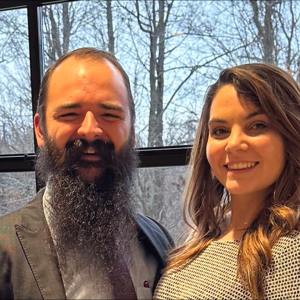
Brandon is the pastor of Bandana Baptist Church in Bandana, Kentucky, where he lives with his wife, Dakota, and their three dogs, Susie, Aries, and Dot. Brandon and Dakota are also foster parents through Sunrise Children’s Services of Kentucky. Brandon is also a published author and a religious columnist for the Advance Yeoman newspaper in Ballard County, Kentucky. He is also a devotional contributor for Kentucky Today, a news publication of the Kentucky Baptist Convention. His columns are also featured in the Times-Argus newspaper of Central City, Kentucky, West Kentucky News of western Kentucky, and the online blog, Reforming the Heart.

Landing on Grace | Bible Gleanings – November 12-13, 2022

He was left dangling and fearing for his life. The young man was being hazed by his college fraternity, and he was carried to a secluded spot in the woods where he was lowered by a greasy rope into an abandoned murky well. He figured his friends would fetch him after a few minutes, but he was mistaken. His bones shook as he saw that they tied their end of the rope over a bar at the top of the well, leaving him hanging in mid-air. After a half-hour of shoulder-burning torture, he let go of the slippery rope and plummeted into the wellโ€”until he planted safely on the dirt two inches beneath his feet!

Solid ground caught him when he let go, and sovereign grace is always there to catch believers in Christ when they โ€œlet goโ€ of the rope of obedience to God. When we sin against the Lord and let go of Him, we will never plummet all the way to spiritual death (cf. John 5:24; 2 Tim. 4:18). However, that doesnโ€™t mean the fall to His sod of steadfast love will be pleasant. When sin loosens our grip on God, we will be bruised on the way down by His loving discipline and the charitable rebuke of our faithful brethren (Heb. 3:13; 12:11). And we may fall as far as Peter did, even denying that we know Christ (Luke 22:54-62), but if we truly belong to God, we will always land on His sovereign grace. 

Christian, sometimes you will lose your way, but Christ will never lose you. He promised, โ€œAnd this is the will of him who sent me, that I should lose nothing of all that he has given me, but raise it up on the last dayโ€ (John 6:39). Sin may slick your hands and relax your hold on grace, but Christโ€™s nail-scarred hands will never let go of you. โ€œI give them eternal life,โ€ Jesus assured, โ€œand they will never perish, and no one will snatch them out of my hand. My Father, who has given them to me, is greater than all, and no one is able to snatch them out of the Fatherโ€™s handโ€ (John 10:28-29).

Of course, this is not an incentive to let go of the Lord. May God forbid that we view His sustaining grace as liberty to let go! To the contrary, the Lord calls us to โ€œcontinue in the faithโ€ and continue no longer in sinful ways (cf. Romans 6:1-4; Col. 1:21-23). Instead, this heartening truth is a holy rationale to wholly rely on Godโ€™s relentless grace to catch us when we fall. Therefore, all believers in the grip of grace may exclaim with the psalmist David, โ€œEven there shall Thy hand lead me, and Thy right hand shall hold meโ€ (Psalm 139:10, KJV).

The words of the hymn He Will Hold Me Fast perfectly capture the believer’s assurance of sovereign grace, saying:

โ€œWhen I fear my faith will fail,

Christ will hold me fast;

When the tempter would prevail,

He can hold me fast!

Refrain:

He will hold me fast,

He will hold me fast;

For my Savior loves me so,

He will hold me fast.

2 I could never keep my hold,

He must hold me fast;

For my love is often cold,

He must hold me fast.

3 I am precious in His sight,

He will hold me fast;

Those He saves are His delight,

He will hold me fast. 

4 He’ll not let my soul be lost,

Christ will hold me fast;

Bought by Him at such a cost,

He will hold me fast.”1

  1. Habershon, Ada R. “He Will Hold Me Fast.” The New National Baptist Hymnal, 2001. Hymn published in 1906.
Bible Gleanings is a widely-read weekend devotional column, written for the Murray Ledger & Times in Calloway County, Kentucky. 

Brandon is the founder and main contributor to Brandon’s Desk, the blog with biblical resources from his ministry. He pastored the family of believers at Locust Grove Baptist Church in Murray, Kentucky for six years. He and his wife Dakota live there with their three dogs, Susie (Jack Russell), Aries (English Shepherd), and Dot (Bluetick Beagle).

Don’t Slip!

โ€œMy steps have held fast to your paths; my feet have not slippedโ€ (Psalm 17:5).

When hiking, it is best to avoid things that might make you fall. I have found that going around creeks with a strong current is better than going through them. It is safer to step on dry rocks rather than grimy ones, even if itโ€™s only a little grime. Walking on beaten dirt paths is preferable to muddy hills and slopes.

The psalmist David certainly understood the importance of avoiding slippery and unstable surfaces while keeping your feet on the right path. Of course, David wasn’t talking about hiking – heโ€™s talking about living. The Christian should long to attain the kind of life David exalts in this verse. Believers should walk on the righteous path of life and avert things that might cause a damaging fall.

Your feet should be fixed to the path of obedience and you must turn aside from slippery and unstable ground. You must bypass tempting situations which threaten to sweep you under. Itโ€™s best to keep your feet on the solid path of righteousness. Your feet will only slip if you take the wrong steps and venture off the right path. Thankfully, even if you do fall, God doesnโ€™t leave you on the ground. God will catch and hold you up: โ€œWhen I thought, “My foot slips,” your steadfast love, O LORD, held me upโ€ (Psalm 94:18).

Watch where you put your feet as you walk the dangerous terrain of life, and don’t slip!

For further study, see Psalm 18:36; 37:31; 38:16; 66:9; 73:2.


_fGOro4V_400x400

Brandon is the founder and main contributor to Brandon’s Desk, the blog with biblical resources from his ministry. He is proud to be the pastor of the family of believers at Locust Grove Baptist Church in Murray, Kentucky. He and his wife Dakota live there with their three dogs, Susie (Jack Russell), Aries (Aussiedor), and Dot (beagle).

What Does the Bible Say About Sickness Being a Result of Sin?

You’ve been sick before – I guarantee it. You might be sick right now. I’m sure your loved ones have had their share of sickness as well. You probably have loved ones who have suffered or passed away from sicknesses and disease, or there might be someone you love who is currently sick. But what does the Bible say about sickness? More specifically, what does the Bible say about sickness being a result of sin? Let’s found out.

First, let us define sickness. For the purposes of this post, we will use the word sickness in a general and broad sense to describe anyย state or instance of being ill. Sickness can mean being in the state or condition of illness. That could be having a cold, the Flu, cancer, HIV/AIDS, or anything else that is abnormal for a healthy human being. But sickness can also mean instances of sudden ailments such as having a stroke, a heart attack, or anything other event that would not be normal for a healthy human being. Sickness is real and both Scripture and experience confirm this. I state that because there is a “Christian” group which has existed for many years who believe and teach that sickness is notย real, but an illusion. The proponents and adherents of Christian Scienceย believe such, and that belief is demonstrably false and destructive.ยน

Second, in a sense, all sickness is a result of sin.ย The question concerns whether or not sickness can be a result of sin, and in a sense, all sickness is a result of sin. That is, all sickness is a result of sinโ€™s effect. The reason for the existence of pain, sorrow, ailments, sickness and even death is because of the effect of sin on the universe. When sin entered the world in Genesis 3, the world became cursed and corrupted. Therefore, anytime you have sickness (of any kind), it is because we live in a fallen and corrupted world which is awaiting its renewal (Romans 8:19-21). One day the world will be made new and there wonโ€™t be any sickness at all (Rev. 21:4; 22:3), but as long as we live in a world cursed and corrupted by sin, there will be sickness. Most of the sickness we experience is merely a result of sin’s curse, because our bodies are fallen. Sickness occurs most oftenย not because God is punishing or disciplining us, but because of the condition and world in which we live.

Third, some sickness is the direct result of sin.ย It is a possibility that sickness comes as a result of having committed sin. Unfortunately, there are some old fashioned fundamentalists who believe that every time you get sick is because youโ€™ve sinned against the Lord, but the Scripture simply doesnโ€™t teach this. It does teach that sometimes sickness can be a result of sin in our lives. Sickness can be the result of committed sin in three ways: 1) Sickness can be the following consequence of committed sin, 2) sickness can be the way God disciplines you when sin is committed, or 3) sickness can be what God uses as a means of judgment.ย Let’s talk about each of these individually.

  1. Sickness can be the consequence of having committed sin. By this I mean that some people get sick as a consequence of their actions. It doesnโ€™t necessarily mean the Lord is punishing or disciplining them, itโ€™s just reality taking place. Someone who gets blackout drunk cannot expect to be healthy and well the next morning! Or if you constantly eat junk food you’re not going to be healthy. If you donโ€™t take care of your body, you will succumb to sickness more often. Sometimes sickness is merely eating the fruit of your deeds. Fruit is a result of what is sown, and what kind of fruit you eat depends on what deeds you have sown. When you commit certain sins which will inevitably affect your health, you may bring sickness on yourself.
  2. Sickness can be the discipline of the Lord.ย Sickness is one of the most severe forms of Godโ€™s discipline of His children. Sometimes itโ€™s the only thing that will get our attention. We have an example of this in Paul’s instructions about the Lord’s Supper in 1 Corinthians 11. The Corinthians were misunderstanding and abusing the Lord’s Supper, namely, observing it in an “unworthy manner” (v. 27). Because they wouldn’t stop doing so, Paul says, “That is why many of you are weak and ill, and some have died” (v. 30). God disciplined the believers there through weakness, illness, and even death. Another example of this is found in Psalm 6, where David prays a prayer of repentance. Apparently, he had committed sin. He doesn’t say specifically what it was, but it was obvious he was suffering from it. And one of the ways he was suffering was physically.ย He expresses in the psalm symptoms of an illness, which he appears to say is the Lord’s discipline. In v. 1 he acknowledges that God is disciplining him, and he notes that his “bones are greatly troubled” (v. 2), and that he is “weary” and “weak” (vv. 6-7). Although he doesn’t specifically say that he was physically ill, he certainly was not physically well.ย As a form of discipline, God allowed for him to experience great pain and it was probably some form of illness. Clearly, God can use sickness as a severe form of discipline upon His children. For determining whether or not your sickness is Godโ€™s discipline, look to see if you have unrepentant sin in your life or a pattern of serious sin. The reason I say that is because sickness is usually one of the most severe forms of God’s discipline. If He’s already tried to get your attention through other means and you stillย haven’t repented, He may resort to a more severe method of discipline – sickness.
  3. Sickness can be the means of the judgment of God.ย Finally, sometimes sickness can be the way God executes judgment upon an individual or individuals. Let me clarify at this point: the words judgment and discipline are not the same. Judgment refers to Godโ€™s punishment of sinners, discipline refers to Godโ€™s fatherly discipline of His children. And sometimes God will use sickness as manifestation of His judgment on the nonbeliever. There are several examples of this in the Bible. One example is in Exodus, where God caused a plague of “festering boils” to come upon the Egyptians in an effort to free His people from slavery (Exodus 9:9). Granted, boils aren’t an illness like a cold or the Flu, but they are in the category of physical ailments like illness. Another example is in Daniel, where God smote king Nebuchadnezzar with mental illness, changing his mind into “the mind of an animal” (Daniel 4:16). The king completely lost his mind and began acting like an animal (v. 33). When God deems it necessary, He will use sickness and other physical ailments as means of judgment.

Sickness is real and it exists because of sinโ€™s effect on the world. It may or may not be the result of committed sin. Sometimes sickness is circumstantial because of the world we live in. Sometimes it is consequential – the direct result of your actions. Sometimes it is God’s discipline, meant for your repentance. And sometimes it is the means which God chooses to use to execute His judgment.

There are two more important matters I want to note in passing. The first is a pressing question often asked when talking about the subject of sickness: why are some people healed of sickness and others are not?ย The overarching answer is simply this: it either was or wasn’t the will of God. If God wills something, it will occur. If God doesn’t will something, it willย notย occur. And whatever God wills will always be for His glory. So, healing may or may not be God’s will for an individual who is sick. Why sometimes it is His will and other times not, we cannot know for sure. It is certainly not because an individual didn’t have enough faith. Some proponents of the health, wealth, and prosperity “gospel,” say that the reason why Christians don’t experience healing is because they didn’t have enough faith – their faith was the reason God didn’t heal them. Such a teaching is man-centered, non-biblical, and false. For believers who are sick, there is great hope even if they don’t receive healing. God uses physical ailments for His glory (see the story of the blind man in John 9), and believers can cling to the promise that “for those who love God all things work together for good, for those who are called according to his purpose” (Romans 8:28). Those who do not believe cannot hope in that promise, for they are not those who “love God,” and they are not “called according to his purpose.” The second thing worth noting here is the obligation that Christians have to care for those who are sick. Scripture tells us that we should visit the sick (Matthew 25:36) and pray for them (James 5:14). It reveals much about our love for the Lord and for the brethren when we fulfill those responsibilities.

What Does the Bible Say?ย is a question and answer series which seeks biblical answers to pressing questions.

  1. George Shaw Cook, “The Remedy for Illusion,” Christian Science Sentinel. www.sentinel.christianscience.com/shared/view/50tfglv60wย (accessed June 16, 2018).

Brandon is the pastor of Bandana Baptist Church in Bandana, Kentucky, where he lives with his wife, Dakota, and their three dogs, Susie, Aries, and Dot. Brandon and Dakota are also foster parents through Sunrise Childrenโ€™s Services of Kentucky. Brandon is also a published author and a religious columnist for theย Advance Yeomanย newspaper in Ballard County, Kentucky. He is also a devotional contributor forย Kentucky Today,ย a news publication of the Kentucky Baptist Convention. His columns are also featured in theย Times-Argusย newspaper of Central City, Kentucky,ย West Kentucky Newsย of western Kentucky, and the online blog,ย Reforming the Heart.