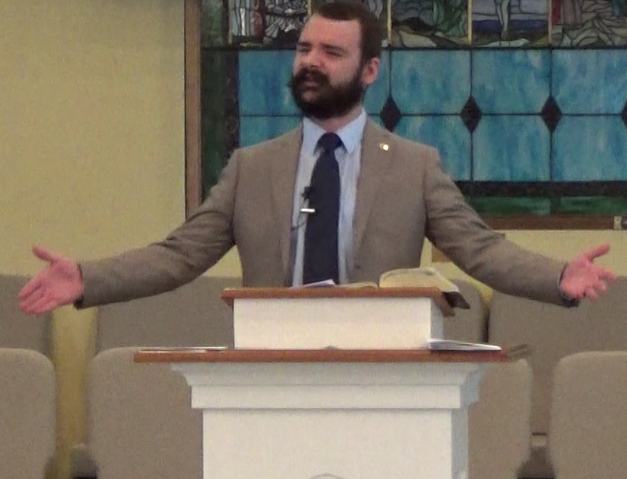
This message was delivered at Mt. Zion Baptist Church in West Paducah, KY on March 30th, 2014.
Introduction
When we come to Jesus Christ for salvation, we must come in humility. That is, we must recognize our lowly state—that we are dead in trespasses and sins (Eph. 2:1), enemies of God (Rom. 5:10), hostile to God (Rom. 8:7), under His wrath (John 3:36), and helpless without Jesus. We must recognize how low we are before God can ever lift us up by the rope of His grace. The Bible says, “God resists the proud, but gives grace to the humble” (Prov. 3:34; James 4:6; 1 Pet. 5:5). And we cannot be saved, thinking that we do not need God to be saved—you must recognize your need. And that recognition of need/lowliness is what the Bible calls humility.
I think that we recognize that we need humility to be saved (while God grants it), but it seems like we sweep humility under the rug when it comes to our lives as believers; exercising humility towards our brothers and sisters in Christ. And if we are not living in humility, then we will have divisions in our churches, and disunity in our lives with other believers.
We are not asked to like other Christians, we are not asked to be like them, agree with them (on every point), but we are to recognize and put into action that we are one with them in the Lord, and we share the same benefits as children of one heavenly Father. If we do not live in unity, then we proclaim a false message to the world—because the message of the gospel is a message of unity and of peace. The gospel absolutely eradicates the barriers between us: the racial barriers, economic, and social barriers. And the gospel unites us under one head, Jesus Christ, with on Father of this universal family united by the blood of Jesus Christ.
So if we are in great need of humility for church unity, where shall we look? In Philippians 2, we have the supreme example of humility ever, and from it we will draw out implications for living in humility.
The Text: Philippians 2:5-8
“5 Have this mind among yourselves, which is yours in Christ Jesus, 6 who, though he was in the form of God, did not count equality with God a thing to be grasped, 7 but emptied himself, by taking the form of a servant,being born in the likeness of men. 8 And being found in human form, he humbled himself by becoming obedient to the point of death, even death on a cross.”
Have This Mind: Christ’s
Look at v. 5. Paul writes, “Have this mind among yourselves, which is yours in Christ Jesus.” First, he tells his readers to have this mind among themselves. He is telling them to have a certain way of thinking, a certain mind-set. Many translations read, “Have this attitude among yourselves” (NASB, HCSB, NLT), and that’s what he is telling them here. Paul aims this command not to any individual, but to have this attitude among yourselves. This pictures a congregation, and it is plural. It targets the whole church. It isn’t addressed to some individual, but to “all the saints in Christ Jesus who are at Philippi” (Phil. 1:1).
Further, the phrase “have this mind among yourselves” looks borth backward and forward in this passage. It looks backward to what Paul has already commanded the Philippian believers to do: “Complete my joy by being of the same mind, having the same love, being in full accord and of one mind. Do nothing from selfish ambition or conceit, but in humility count others more significant than yourselves. Let each of you look not only to his own interests, but also to the interests of others” (vv. 2-4). The phrase points back because Paul has already commanded them to live in humility. Because without humility, you cannot “be of the same mind,” or “have the same love,” you will not be “in full accord and of one mind.” You will do things from selfish ambition. But with humility, you will be able to fulfill all these commands. The phase also looks forward to Christ’s perfect fulfillment of this “attitude” of humility, which we will see in this passage. Christ is the perfect example, the supreme example, the unparalleled example of the humility that Christians ought to have towards one another—and following that example is the only way to reach true unity among ourselves. We need to “have this attitude among ourselves,” this that was Christ’s. 1 John 2:6 reads, “Whoever says he abides in him ought to walk in the same way in which he walked.”
So what is this “mind that was in Christ Jesus?” What example are we to follow to attain spiritual unity in the church, which we so desperately need? Well, Paul describes it for us in vv. 6-8. Paul describes how the Son of God left heaven to come to earth; he depicts this by giving a series of eight downward steps from glory into humanity, ending with the death of Christ on the cross. Before we examine these steps, let’s look at the exalted position that Jesus left.
The Exalted Position Jesus Left
Paul writes in v. 6, “Who, though he was in the form of God . . .” Paul says that Jesus “was in the form of God.” Before Christ came to earth He was fully and eternally God. When Christ came to the earth, He was fully and eternally God. And after Christ resurrected from death, He continues to be fully and eternally God. Before Christ took on flesh, He “was in the form of God” as Paul says here. This does not mean that Jesus became the Son of God at some point; He has always been the Son of God. To say that He was in the “form of God” means that He was totally equal with the Father in every way. Still, this doesn’t mean that Jesus is the Father or that the Father is Jesus. The persons of the Trinity are distinct but never divided. Having different roles, but equal. Not three gods, but God in three persons.
So when Christ comes to the earth, a transition takes place. Wayne Grudem, in his great work Systematic Theology, writes, “Remaining what he was, he became what he was not. In other words, while Jesus continued “remaining” what he was (that is, fully divine) he also became what he previously had not been (that is, fully human as well). Jesus did not give up any of his deity when he became a man, but he did take on humanity that was not his before” (1). And when He did, He subjected Himself to many of the limitations that we have. Even if He was only going to be here for 33 years, for Him to take on human flesh would be to subject Himself to our limitations, our weaknesses, and our condition. Yet at the same time, this did not compromise the absolute holiness of Christ: “He committed no sin, neither was deceit found in his mouth” (1 Pet. 2:22). This is a very difficult reality to grasp, but you cannot have Christianity without it.
If Jesus was not fully man, He couldn’t have died, for God cannot die. If Jesus did not die, then we are still dead in our sins, we are still under God’s divine wrath, we are still slaves to sin, we are still children of wrath, we are still following the course of this world, we are not redeemed, we are not new creations, we are still living in the futility of our minds, and we are not saved! But Christ did die for our sins but that would be utterly impossible, had He not been fully man. But praise God, He busted the grave wide open and conquered sin and death when He rose from the grave three days later, and the angles said, “Why do you seek the living among the dead? He is not here, but has risen” (Luke 24:5-6). And that wouldn’t have been possible, had Jesus not been fully God. Christ says, “No one takes [my life] from me, but I lay it down of my own accord. I have authority to lay it down, and I have authority to take it up again. This charge I have received form my Father” (John 10:18).
With all that doctrine in mind, Paul’s point here is that if Christ chose to take on flesh, then there would have to be descent. The incarnation of Jesus is where the Creator takes on the form of the created. The Infinite becomes the finite, the Sinless takes sin upon Himself. The King of kings leaves His kingly throne to subject Himself to our weaknesses, troubles, and struggles: “For we do not have a high priest who is unable to sympathize with our weaknesses, but one who in every respect has been tempted as we are, yet without sin” (Heb. 4:15).
What example then are we to follow here? Because Paul does say to “have this mind among yourselves.” As you probably know, we cannot be incarnated as Jesus was, we cannot come down from heaven to be born as a babe, and we cannot save people from their sins. But that’s not the point of the text here. The point is that Jesus had every inherent right to stay where He was, but He didn’t and He made the ultimate sacrifice of taking on flesh—which would lead to His death on the cross for sin. It was that He was in the “form of God,” but took on flesh to save us from our sins.
We can follow His example because we too are in a great position. We who are “in Christ” as the New Testament teaches, are saved completely by God’s grace (Eph. 2:8-9). God has loved us before time began (Eph. 1:4), God purchased our salvation and what’s more, we have no rights whatsoever to deserve salvation. Still, God calls us His friends (John 15:14-15). We are His children, “As many as received Him, to them He gave the right to become the children of God, even to those who believe in His name” (John 1:12, NASB, emphasis mine). And we have the promise of spending eternity with Him forever to worship at His feet for all eternity.
But we did not earn it. It is not our inherent right. So if God’s eternal son humbled Himself in an incomparable way by taking on flesh to live as a man, leaving His heavenly dominion, leaving His heavenly throne to be a man—how much more ought we to be absolutely determined to live humble and make whatever sacrifices necessary for the kingdom of God? You see, when Jesus left heaven to take on flesh and be born as a babe, His position of being God did not change. He just took upon Himself the weaknesses and struggles of the flesh. And we are not commanded to leave our position as God’s children; we cannot, we are secure in God’s hands. But we are to live humbly and “count others more significant than ourselves.” And when we do that, when we recognize that we are lowly, there will be much change in our lives—and that change often hurts. Humility hurts, just like it did Christ, and it may cost us dearly to live humble lives and do good works for others.
If we live in humility, then we will have the attitude we need to “Bear one another’s burdens, and so fulfill the law of Christ” (Gal. 6:2). It hurts to suffer with someone during their struggle, difficulty, or weakness. But will you give till it hurts? Will you count others greater than yourselves even when it hurts? It’s not by accident that the first Beatitude in Jesus’ Sermon on the Mount is “Blessed are the poor in spirit, for theirs is the kingdom of heaven” (Matt. 5:3).
Step One of Christ’s Humiliation
If you recall earlier, I spoke of Paul’s description of eight downward steps into humanity. From the exalted position that Jesus left, His first step downward was that He “did not count equality with God a thing to be grasped” (v. 6b). Paul has already established that Christ was equal with God. We also know that during Jesus’ earthly ministry, He never denied or diminished the fact that He was God. In John 17, Jesus prays, “Father, the hour has come; glorify your Son that the Son may glorify you, since you have given him authority over all flesh, to give eternal life to all whom you have given him” (John 17:1-2). Only God can give eternal life. In v. 6 of our text, Paul says here that although He was God, in fact equal with God, “He did not count equality with God a thing to be grasped.” The point here is that Jesus never used His power or authority for personal advantage, because to Jesus, though all power and authority and worship are inherently His, these things were not “a thing to be grasped.” Christ refused to hold onto His divine rights and privileges as His own. Jesus had all the rights and privileges of God, and He could never lose the. But He refused to selfishly cling to those things to His own advantage.
You likely recall what Jesus asks during His betrayal: “Do you think that I cannot appeal to my Father, and he will at once send me more than twelve legions of angels?” (Matt. 26:53). If He had, that would have messed up the Father’s plan to accomplish the mission of salvation at the cross. And so Christ would not call “twelve legions of angels” to His side. You also likely recall when Jesus was tempted in the wilderness. Satan said, “If you are the Son of God, command these stones to become loaves of bread” (Matt. 4:3). Have you ever wondered why Jesus didn’t just do that? Why didn’t He just turn them into bread to eat? He had all the power to do so. He even turned the loaves an fish into enough food to feed the five thousand (Matt. 14:13-21). It was because Christ “did not count equality with God a thing to be grasped.” Jesus’ attitude was selfless, it was giving, and it was humble.
That same attitude should characterize our lives today. We are children of God—new creations. But that is not the end of it. God didn’t save us so that we can sit and soak on a wooden pew every Sunday for the rest of our lives. Too often, we are comfortable in our blessings—we rejoice that we are redeemed, justified, and made right in God’s sight, but we keep them to ourselves. Those things are a cause for rejoicing, no doubt! But we should not grasp them selfishly, but follow the example of Christ here and share our blessings with others. All that we have has been given to us by God and we should be generous. How then, you ask, can one share something like justification with someone else? You cannot share your justified position in God’s sight with someone else, can you? You can by taking the message of justification to people—in hopes that they too will receive Christ’s righteousness imputed to their account. So what is it that you are clinging tightly to? Material blessings? Spiritual blessings? Is there something in your life that God wants you to share with others? Surrender that things to God and let Him have His will and His way.
Step Two of Christ’s Humiliation
We have looked at Christ’s first step downward into humanity, now we will look at Christ’s next step from glory to humanity. He “did not count equality with God a thing to be grasped,” Paul says, “but emptied himself . . .” Paul says that instead of counting equality with God, Christ emptied Himself. That’s the second step. The New Testament teaches that Christ emptied Himself of five divine rights (2):
1. His divine glory. The Son of God left the worship of the saints and angels in heaven, and the adornment, and was subject to misunderstandings, denials, unbelief, false accusations, and every sort of persecution by sinful men. He have up the shining brilliance of heaven to suffer an agonizing death on the cross.
2. Independent divine authority. He was equal with the Father (as both Jesus and Paul affirm), but He also stated very often in the New Testament that He depended on the Father for strength and authority. A mystery, but true (John 5:19, 30; 8:28; 12:49).
3. Some of His divine attributes. He did not cease being God, but He did subject Himself to limitations by becoming a man. For example, Christ could only be in one place at one time while He was on the earth. That would be a (temporary) limitation on God’s omniscience.
4. His eternal riches. Paul brings this to light, “For you know the grace of our Lord Jesus Christ, that though he was rich, for your sake he became poor, so that you by his poverty might become rich” (2 Cor. 8:9).
5. His unique, face-to-face relationship with the Father. In order to fulfill the plan of salvation that God sent Him to do, He had to become sin for us: “For our sake he made him to be sin who knew no sin, so that in him we might become the righteousness of God” (2 Cor. 5:21). Jesus takes our sin upon Himself, and gives us His righteousness in exchange; so in God’s sight, Jesus becomes all the filthiness and sin that we are and we become all the righteousness and holiness that He is. If that is true, then it would require that Jesus be separated from the Father at His crucifixion. The Father turned His face away—Habbakuk 1:13 says that the Father’s “eyes are too pure to look on evil.” This is why Christ cried from the cross, “My God, my God, why have you forsaken me?” (Matt. 27:46).
Christ emptied Himself of these things to save us and to fulfill God’s plan of redemption. We obviously cannot empty ourselves to the degree that Jesus did here, but we do have an example to follow.
We are called to empty ourselves of everything that would hinder our obedience and service to Him. That’s what Christ did. He emptied Himself of these divine rights so that he could fulfill the Father’s plan of salvation. He was the Messiah, the One through Him God’s saving purposes would be accomplished. Jesus even took on the limitations of man and “emptied Himself” of the rights that were rightfully His, so that He could purchase salvation for you and for me—thus, being totally obedient to the Father (even to the point of death, v. 8).
If Jesus Christ did everything necessary to be obedient to the Father, by “emptying” Himself of what is rightfully His, how much more should we be willing to empty our lives of whatever it takes to be totally and fully surrendered to God? The only difference is, we don’t even own anything in this life. It all belongs to God, and all that we have is a gift from God Himself. Whatever is in the way of your service and full surrender to God, whether it be possessions, position, money, pride, sex, whatever; pour it down the drain!
What do you need to empty in your life to be totally obedient to God? What do you need to give up in order to be fully surrendered to God’s will?
Step Three of Christ’s Humiliation
Christ not only refused to count equality with God a thing to be grasped, and not only did He empty Himself, but even further in His descent, Christ takes a third step downward. How? Paul writes, “by taking the form of a servant” (v. 7b). Immediately when I read this, my mind races back to Jesus’ washing of the disciples’ feet. Many commentators even say that this is what Paul is referring to here. When Jesus washed their feet in John 13, He was demonstrating to them the best example of humility. Foot-washing was something that normally slaves did in Jesus’ day. He tells them, “If I then, your Lord and Teacher, have washed your feet, you also ought to wash one another’s feet. For I have given you an example, that you also should do just as I have done to you. Truly, truly, I say to you, a servant is not greater than his master, nor is a messenger greater than the one who sent him. If you know these things, blessed are you if you do them” (John 13:14-17).
What is so ironic about what Jesus did and Paul’s description of Him as a “servant” is this: Jesus Christ is the only One in the entire universe who is worthy to be served, but yet He became a servant. If serving man in the Father’s name was good enough for the Son of God, it ought to be good enough for us. We should be labeled as servants. Let us heed the words of Galatians 6:9-10, “And let us not grow weary of doing good, for in due season we will reap, if we do not give up. So then, as we have opportunity, let us do good to everyone, and especially to those who are of the household of faith.” And when we have served, when we have done what we ought, we do not need to be prideful, but thank God for the opportunities we have been given to serve and then cry out with humility: “We are unworthy slaves; we have done only that which we ought to have done” (Luke 17:10, NASB).
Who are you serving for the cause of Christ? Where has God been stirring your heart to serve? Is it a position here at your church? Is it a soup kitchen? Is it your workplace? Do you need to serve your family more? God calls us to follow the example of Jesus here and be servants. Where does He want you to serve? And what is stopping you from serving and going where God wants you to go? Whatever it is, get it out of the way and start serving.
Step Four of Christ’s Humiliation
We have seen Christ’s example of humility in that He “did not count equality with God a thing to be grasped,” and that He “emptied himself,” and that He took on the form of a servant. Even further into His downward descent, Paul lists a fourth step: “being born in the likeness of men” (v. 7c).
You know the Christmas Story, Jesus miraculous conception and virgin birth. How Mary “was found to be with child from the Holy Spirit” (Matt. 1:18). Paul says here that Jesus became exactly like all other human beings, having all the attributes of humanity—He was a man. It was so obvious that He was a man that even His family and disciples would not have known of His deity if the angels, the Father, and Jesus Himself revealed it to them. He was “born of a woman” (Gal. 4:4), and in a “fleshly body” (Col. 1:22). Hebrews 2 gives a very accurate description of how Jesus was born in the likeness of men:
“Since therefore the children share in flesh and blood, he himself likewise partook of the same things . . . Therefore he had to be made like his brothers in every respect, so that he might become a merciful and faithful high priest in the service of God, to make propitiation for the sins of the people. For because he himself has suffered when tempted, he is able to help those who are being tempted” (Heb. 2:14, 17-18).
Recall too Hebrews 4:15. It says that Jesus was “tempted in every way as we are, yet without sin.” That tells us something. And that’s what this verse indicates as well. Jesus was made in the likeness of flesh/men. That is, flesh minus the sin. It’s very important to understand, too, that this is not God taking on some kind of pre-Fall Adam. That’s not why Paul calls Him the “second Adam” (1 Cor. 15:45). Because if you remember, before the Fall there was no sin and no death, but Jesus did die. Think about it: Did He feel pain? Did He fell sorrow? Did He weep? Did He have strong crying and tears? Did He ever hunger? Did He thirst? Was He weary? Was He weak? Yes, yes, and yes. Here’s the final one: Did He die? Yes, and death is the result of what? The Fall (Gen. 3:17-19). This is not God taking on the “un-fallen” character of humanity, this is God taking on the fallen character of humanity with one significant element eliminated. What is it? Sin. Christ took on all of our weaknesses but one: sin.
Step Five of Christ’s Humiliation
We have seen that Christ did not count equality with God a thing to be grasped for selfish gain, we have seen that Christ emptied Himself, that He took on the form of a servant, and also that He was born in the likeness of our flesh. But is there more to this descent? Is there more to this humiliation? Paul says yes: “And being found in human form” (v. 8a). This advances the truth that Christ was “born in the likeness of men.” Christ was “found” or recognized by those who observed Him, and those He lived with to be in “human form.” The prophet Isaiah had predicted some 700 years earlier, that the Messiah “was despised and forsaken of men, a man of sorrows and acquainted with grief; and like one from whom men hide their face he was despised, and we did not esteem Him” (Isaiah 53:5).
Step Six of Christ’s Humiliation
Continuing this description of Christ’s descent, “he humbled Himself” (v. 8b). Paul says here that Jesus “humbled himself.” Now, this is somewhat different language. Everything up to this point has been about Jesus’ nature and form. This is actually an action—a personal attitude. If anyone humbled himself, it was Jesus Christ! Think back to His trial. Christ was mocked, falsely accused, spat upon, beaten with fists, scourged, and had part of His beard painfully plucked out. Yet He was never defensive was He? I’ve often wondered why Jesus didn’t just show those Pharisees who was boss. For most of the time, He stays silent. He was never demanding, never bitter. He had every right as God to damn them straight to hell at that moment. He refused to assert His rights as God! He didn’t even assert His rights as a human being either. No human would stand for that as justice.
This passage is about Christ, but remember too, that it is the example to follow from the command, “have this mind among yourselves.” I think Paul is crying out to the Philippian believers to not ever forget this: “Don’t forget this” he says, “Don’t forget what the Son of God suffered through, while maintaining humility! Don’t forget when the slightest impulse arises in you to become selfish or self-assertive or self-seeking, and so to break the bond of your fellowship with other believers!” (3)
In what situations in your life do you need to exercise more humility?
Step Seven of Christ’s Humiliation
In His stepping downward, Jesus was willing to suffer, “by becoming obedient to the point of death” (v. 8c). One would think that somewhere along the lines of all the sacrifices Jesus is making here that He would say, “Enough!” But Christ’s perfect submission took Him all the way to His death. Christ was obedient to the will of God “to the point of death.”
Anytime someone dies for a cause, leader, or a revolution—that is probably the greatest demonstration of that person’s devotion that cause, leader, or revolution. And Christ here followed God’s plan, and was so devoted to the Father’s will to “the point of death.” Christ died for the world indeed, but Christ also died for the Father. Not to pay for His sins, He paid for our sins, but He died for God to to His will and fulfill His plan. In Luke 22:42, Jesus prays in the garden of Gethsemane, “Father, if you are willing, remove this cup from me. Nevertheless, not by will, but yours, be done.” The Father did not force death upon Jesus. And Jesus did not wrestle His heavenly Father to the floor of heaven to avoid crucifixion. The death of Jesus was God’s plan. God predestined it to take place. But it was Jesus’ choice—Paul says that Jesus was “obedient” that means a choice was involved. And Christ was obedient.
Ignatius of Antioch, an early church father, was remembered for his joyful outlook on martyrdom. He was going to be killed for his faith in Christ. He writes many letters to different churches while he is waiting to be killed—he viewed his death as being obedient to the will of God. As with the case of Ignatius of Antioch, and many early Christians, death was the price they had to pay to be obedient to God (4).
How far will you go to be obedient to God’s will? If you lost everything for being obedient to God, would it still be worth it to you? Jesus lost His life, His fellowship with the Father, all to be obedient to the Father’s will. If being obedient to God’s will even to the point of death was good enough for Jesus, then it ought to be good enough for us.
Step Eight of Christ’s Humiliation
But it wasn’t just any death. Paul describes that death as the final step in Christ’s downward descent: “even death on a cross” (v. 8d). Today, we have beautified the symbol of the cross so much that we often forget about what it really means. It was a death instrument in Jesus’ day. Jesus could have been killed by stoning or hanging, but instead died on a cross. Galatians 3:13, “Cursed is everyone who hangs on a tree.” Similarly, “He himself bore our sins in his body on the cross, so that we might die to sin and live to righteousness; for by His wounds you were healed” (1 Peter 2:24).
I was in Wal-Mart the other day, and I saw the most ironic thing ever in my life. I couldn’t believe that you could pack so much irony into one moment. I was in the Easter candy isle and saw a chocolate cross. Now to other people who do not think like me, it probably appeared to be just a piece of candy. But I wondered, “Where are the chocolate electric chairs?” The cross, you see, was the worst form of punishment in Jesus’ day. And here was a chocolate death symbol. Of course, because of His resurrection, that cross stands as a symbol of victory of sin and death. But not so in Jesus’ day.
Conclusion
We have seen Christ’s example; His supreme example of humility. He did not count equality with God when He had every right to. He emptied Himself and was poured out for you and me—and in the Father’s will. He became a servant—when He alone is worthy to be served. He was born in the likeness of our flesh. He was found in human form when He was born—as a helpless babe. He was obedient to the Father to the point of death, even death on a cross. I ask you this morning, in which of those steps do you need to line up your life with God’s will? What part of Christ’s example are you not following? Are you following Christ’s example of humility?
1. Wayne Grudem, Systematic Theology (Grand Rapids, MI: Zondervan, 2000), 562.
2. This list is adapted from John MacArthur, Philippians/John MacArthur (Chicago, IL: Moody Publishers, 2001), 126-128.
3. Ibid, 132.











 Brandon is the founder and main contributor to Brandon’s Desk, the blog with biblical resources from his ministry. He is proud to be the pastor of the family of believers at Locust Grove Baptist Church in Murray, Kentucky. He and his wife Dakota live there with their three dogs, Susie, Aries, and Dot.
 Brandon's Desk