The woman was “down in the dumps,” having entangled herself in a messy situation which prompted her to reassess her priorities. The Brinnon Fire Department in Washington State reported that a lady in her 40s requested emergency assistance, after falling headfirst into a vault toilet at a frequented hiking area. On the list of “worst things to happen to hikers,” this ranks as number two. How did she end up neck-deep?
She reportedly dropped her smartphone in the outhouse latrine and attempted to retrieve it—unsuccessfully. Initially, she tried fishing it out with her dog’s leash, and let’s just say her furry friend went home leashless that day. Next, she removed the seat and leaned into the abhorrent abyss to get closer—and that’s when it happened. The entire latrine collapsed inward, causing her to plunge into the filth below, where she dialed 9-1-1 from her soiled cellphone. All of this for a $200 smartphone.
The lengths we will go for what we love and the things we are willing to do for what we value are truly astonishing. And many times, the price we pay in doing so is not worth the gain. But this is precisely what we do when worshiping gods that are not God. We often invest precious time, money, and energy into idols we believe will make us happier and more fulfilled—although they leave us down in the dumps. As the psalmist counseled, “The sorrows of those who run after another god shall multiply” (Psalm 16:4a).
Idol-worship always costs more than it pays, and the false gods of possessions, protection, power, pleasure, prestige, and position always take more than they give. As Jonah cautioned, “Those who pay regard to vain idols forsake their hope of steadfast love” (Jonah 2:8). You can’t get from gods what you can only get from God. So, why give to gods and get nothing when you can give to God and get everything He promises?
Nevertheless, emulating Josiah of old (2 Chron. 34:33) and demolishing our idols is challenging because, as John Calvin once stated, our hearts are “factories of idols,” equipped with a golden-calf assembly line, eager to fashion a god from anything and everything. Paul likewise stated in Romans that we are prone to worship and serve “the creature rather than the Creator” (Rom. 1:25). This is why we are exhorted, “Flee from idolatry” (1 Cor. 10:14, KJV), and admonished, “Little children, keep yourselves from idols” (1 John 5:21). Therefore, we must continually “turn from these vain things to a living God, who made the heaven and the earth and the sea and all that is in them” (Acts 14:15b).
Idols are all glitter and no gold—God is God and always good. Idol-worship stinks—worshiping God satisfies. As David declared: “You make known to me the path of life; in your presence there is fullness of joy; at your right hand are pleasures forevermore” (Psalm 16:11).
Brandon is the pastor of Bandana Baptist Church in Bandana, Kentucky, where he lives with his wife, Dakota, and their three dogs. Brandon and Dakota previously served as foster parents through Sunrise Children’s Services of Kentucky. Brandon is also a published author and his Bible Gleanings columns are featured in over sixteen publications throughout Kentucky, Illinois, Tennessee, and Indiana. He is also a devotional contributor for Kentucky Today,a news publication of the Kentucky Baptist Convention, and an editor at Reforming the Heart.
God rejected Cain because of it (Gen. 4:5). It caused Nadab and Abihu to be incinerated by holy flames (Lev. 10:1-2). According to 2 Chronicles 26:19, it was the cause of Uzziah’s sudden and swift leprosy. It is why the earth split open and swallowed up Korah, Dathan, and Abiram (Numb. 16:31-35). What was it? Careless worship.
The Scripture is replete with stories of those who vainly attempted to “worship” God on their own terms, and scorched spots on the ground where people once stood reveals how the Lord feels about it. Many irreverent worshipers in the Bible approached the Lord of glory recklessly and rashly, with no recognition of His remarkable resplendence—and they paid the price. With too low a view of God and too high a view of themselves, they offered worship to God which was not in line with His character or commands. They were cursed by their own carelessness when they tried to worship the Lord in ways He had not prescribed, and with an indifference He had prohibited. Thus, the testimony of Scripture could not be clearer: God cares about the way in which we worship Him.
God wants our worship to be sincere, submissive, and Scripture-aligned—and He values that over merely outward expressions. He doesn’t care about lip-service as much as He cares about heart-surrender (Isa. 29:13). The authenticity of our worship matters more to God than the amount of our worship. One heart which fears and adores Him is worth more than thousands of hypocritical and half-hearted offerings: “What to me is the multitude of your sacrifices? says the LORD; I have had enough of burnt offerings of rams and the fat of well-fed beasts; I do not delight in the blood of bulls, or of lambs, or of goats” (Isa. 1:11; cf. Amos 5:21-25). The Lord even tells us that He would rather receive no worship than receive negligent, nonchalant, or nonsensical worship: “Oh that there were one among you who would shut the doors, that you might not kindle fire on my altar in vain! I have no pleasure in you, says the LORD of hosts, and I will not accept an offering from your hand” (Malachi 1:10).
All of these stories and stern strictures sound forth one sobering and sanctifying truth: God is holy, and worshiping Him is serious business. The Lord is not the “man upstairs,” a cosmic grandpa, or a spiritual Santa Claus—He is a consuming fire (Heb. 12:29). Because of this, worship is not a game nor something we should enter into lightly. Rather, the Lord should be worshiped with utmost awe, vigorous obedience, and maximum reverence. Because of the gravity of His presence, the greatness of His character, and the glory of His name, our worship of Him in public and private must be wholehearted, not whimsical.
Brandon is the pastor of Bandana Baptist Church in Bandana, Kentucky, where he lives with his wife, Dakota, and their three dogs. Brandon and Dakota previously served as foster parents through Sunrise Children’s Services of Kentucky. Brandon is also a published author and his Bible Gleanings columns are featured in over sixteen publications throughout Kentucky, Illinois, Tennessee, and Indiana. He is also a devotional contributor for Kentucky Today,a news publication of the Kentucky Baptist Convention, and an editor at Reforming the Heart.
Pick up a copy of Brandon’s latest book, Fundamentals for the Faithful, which explains the importance of all the basics which every believer should know:
Complaining. We are all guilty of it. Studies show that most people gripe once every minute during a regular conversation. According to Psychology Today, the average adult burns 8 minutes and 45 seconds grumbling daily, which translates to 1,300 gripes a year! Even worse, a 1996 study by Stanford revealed that whining may actually “physically damage the brain,” demonstrating that complaining is not only counterproductive, but also catastrophic.
Complaining is also corrosive for a Christian’s credibility. According to the apostle Paul, the presence of whining reveals an absence of worship. He commanded believers, “Work out your own salvation with fear and trembling, for it is God who works in you, both to will and to work for his good pleasure. Do all things without grumbling or disputing” (Phil. 2:12b-14). Paul was essentially saying, “Banish bellyaching from your life to demonstrate that God is working in you.” Therefore, complaining contradicts our claim to know Christ, whereas contentment corroborates our confession.
Remember the incessant murmuring of the Israelites in the Old Testament? They griped while they were enslaved in Egypt (Ex. 2:23). Then after the mighty deliverance they experienced, they complained that they weren’t in Egypt (Ex. 16:2-3). And when God miraculously provided manna for them in the wilderness, they grumbled because they didn’t have meat (Num. 11:1-6). They even whined because the taste of the water was not to their liking (Ex. 15:24)!
Picture this: you’re a pagan sojourner who encounters one of these grumbling Israelites. You’d immediately think, “They don’t have anything to be thankful for. There’s nothing exciting or appealing about their ‘God.’ They complain about desert life about as much as I do.” You wouldn’t give a second thought to the fact that the Israelites had just experienced the greatest deliverance in history by the hand of Almighty God. And that is why whining is detrimental to a believer’s testimony—it doesn’t persuade people that we have been liberated from spiritual slavery into salvation because of Jesus Christ. It is no wonder, then, that Paul said we must not grumble like the Israelites (1 Cor. 10:10).
The only fitting response to redemption is gratefulness, not grumbling. Believers should never do anything while murmuring; rather, all things should be done unto the glory of God and with rejoicing (1 Cor. 10:31). We should obey the will of the Lord with glad submission, although it may be difficult at times. And we should shout praises instead of mumbling complaints when God’s providence permits painful situations to come our way. As believers, we should stop whining and start worshiping.
Brandon is the pastor of Bandana Baptist Church in Bandana, Kentucky, where he lives with his wife, Dakota, and their three dogs. Brandon and Dakota previously served as foster parents through Sunrise Children’s Services of Kentucky. Brandon is also a published author and his Bible Gleanings columns are featured in over sixteen publications throughout Kentucky, Illinois, Tennessee, and Indiana. He is also a devotional contributor for Kentucky Today,a news publication of the Kentucky Baptist Convention, and an editor at Reforming the Heart.
Pick up a copy of Brandon’s latest book, Fundamentals for the Faithful, which explains the importance of all the basics which every believer should know:
A toy power drill is stashed away in a box at our house that we keep to occupy the multitude of my wife’s nieces and nephews. It is plastic, devoid of electricity, and always produces entertainment (and sometimes a pounding headache). In my closet is a Black and Decker cordless drill—it is the real deal, and the tool I always use when there is a job to do. I’m not a genius, but I know better than to grab the Fisher Price toy drill when I need to drive a screw through a wood plank or door hinge. I know that the fake drill is incapable of getting the job done because I’ve seen the power of the real drill and the powerlessness of the phony one.
Likewise, the God of the Bible is the real deal—the true and living God—not only because He has displayed His power in creation and salvation, but because all counterfeit gods are powerless. The Lord is God not only because of what He can do, but also because of what false gods cannot do. Idols cannot speak, love, or answer prayer—and the Lord God does all three (Psalm 115:4-8). False gods only bring disappointment, dissatisfaction, destruction, depression, and—apart from repentance—damnation from God. The only One who can provide lasting joy, enduring satisfaction, abiding contentment, and everlasting life is the God whose name is the Lord.
Idols cannot be faithful to you. All they can do is fool you and fail you. The false gods of possessions, pleasure, prestige, power, and position will never give you unconditional love, unceasing care, and eternal soul-satisfaction. Besides, idols are only so-called “gods,” as Paul said: “For although there may be so-called gods in heaven or on earth—as indeed there are many “gods” and many “lords”— yet for us there is one God, the Father, from whom are all things and for whom we exist, and one Lord, Jesus Christ, through whom are all things and through whom we exist” (1 Cor. 8:5-6).
Therefore, only the Lord God is worthy of your service, trust, and worship. He never disappoints, deceives, or dismays. He will satisfy you with good things (Psalm 103:5). He will love you relentlessly (Romans 8:38-39). Do you serve and love Him or the false gods of this world? The choice is as obvious as choosing between a real drill and a toy.
Bible Gleanings is a widely-read weekend devotional column, written for the Murray Ledger & Times in Calloway County, Kentucky.
Brandon is the founder and main contributor to Brandon’s Desk, the blog with biblical resources from his ministry. He pastored the family of believers at Locust Grove Baptist Church in Murray, Kentucky for six years. He and his wife Dakota live there with their three dogs, Susie (Jack Russell), Aries (English Shepherd), and Dot (Bluetick Beagle).
For more devotional entries like this, check out Brandon’s latest book, Bible Gleanings Volume II, which features 100 daily devotionals gleaned from God’s word:
It is incontestably true that, with the exception of Jesus, the apostle Paul made the deepest spiritual impact upon the world and spread the gospel further than anyone else in history. It is also fair to say that, as believers, we all have a desire to transform our world and reach lost souls the same way Paul did. But, as painful as it is to admit, it is observably true that we are not doing so for the most part. So, what are we missing in our evangelism? Why aren’t we impacting the world like Paul did?
We have a plethora of evangelistic resources and tools at our disposal—much more than Paul had—so that’s not the problem. We mostly know how to share the gospel with sinners who will listen, so that’s not the issue. And, we certainly have ample opportunities and plenty of “open doors” to proclaim the gospel every week, so that’s not the hang-up either. What we don’t have oftentimes is the heart Paul had.
What we need in order to reach the world like Paul is a burning and broken heart—a heart that burns hot for God’s glory, and one that is broken and shattered for the sinfulness of man.That’s the heart Paul possessed, and it drove him to evangelize a place as depraved as Athens, Greece. Paul was consumed by a conviction that compelled him to preach the gospel and point idolatrous sinners to the only God who is worthy of worship:
“Now while Paul was waiting for them at Athens, his spirit was provoked within him as he saw that the city was full of idols. So he reasoned in the synagogue with the Jews and the devout persons, and in the marketplace every day with those who happened to be there. Some of the Epicurean and Stoic philosophers also conversed with him” (Acts 17:16-18)
As soon as Paul arrived in Athens, he wasn’t struck by the alluring ancient architecture; he was struck by the awful idolatry that filled the streets. “The city was full of idols,” Luke says. In Greek, this literally means the city streets were “smothered in idols.” And people who passed through Athens confirmed this, as they would often say that it was easier to find a god than a man.
Athens was an idol-factory that never ceased operations. Temples to mythical gods towered thousands of feet high. Every street corner had an altar. Marble busts depicting every fictitious deity imaginable were almost innumerable. And, at the sight of this, Paul was “provoked” within his spirit.
His heart simultaneously erupted in righteous indignation and fractured into a thousand pieces. He was enraged that wood and stone idols were given glory that belongs to God (cf. Deut. 9:7), and he was saddened because he knew that all sinners are hopelessly enslaved to such idolatry. And a burning and broken heart drove him to proclaim the gospel—the only remedy for sinners steeped in perverted idolatry.
Thus, Luke says: “So he reasoned in the synagogue with the Jews and the devout persons, and in the marketplace every day with those who happened to be there. Some of the Epicurean and Stoic philosophers also conversed with him” (vv. 17-18a).
Paul did not raid temples or topple idols. He didn’t grab robes or protest in the streets. And most importantly, he didn’t stand idly by while people sailed merrily to eternal torment. Instead, he patiently and boldly preached the gospel to anyone who would listen.
He “reasoned” with the Jews, proving to them that Jesus was the Christ, just as he had done in many other cities. He conversed with people in the public marketplace, engaging in street evangelism with pedestrians. And he debated the philosophers of the day, arguing that Jesus was the way, the truth, and the life (cf. John 14:6).
Here’s the bottom line: Paul saw sinners the way they truly were, and it compelled him to impact the world for Christ and proclaim the gospel to every listening ear. And thus, we have the missing ingredient in our evangelism. If we want to transform the world the way Paul did, we must speak the way Paul spoke. If we desire to speak the way Paul did, we must feel the way he felt about the world. And, if we want to feel the way Paul felt, we must see the way Paul saw the world: steeped in idolatry and in need of redemption from the Lord.
Seeing the world’s pitiful idolatry through biblical eyes is what fuels our zeal to point lost sinners to the only God who is worthy of worship.
How do you see your unsaved family, friends, and neighbors? Do you see them the same way Paul saw the world? Do you see them as helplessly and hopelessly enslaved to idolatry? That’s the conviction that will compel you to proclaim the gospel to a place as sinful and unreachable as Athens.
“And when they saw it, they made known the saying that had been told them concerning this child. And all who heard it wondered at what the shepherds told them.” —Luke 2:17-18
After being told of the advent of Christ and witnessing the heavenly chorus, the shepherds decide to look for Jesus (Luke 2:15). They quickly went to Bethlehem and found Mary, Joseph, and the Christ-child in no time (v. 16). With excitement, they reported and testified to what they beheld—the announcement of the angel and the celebration of heaven (vv. 10-14). And the audience who heard these things were in wonder: “all who heard it wondered at what the shepherds told them.” At this point, more people were near the manger scene besides just Mary and Joseph, but it is not certain who they were. What is certain is that the news of Jesus’ birth produced wonder in the hearts of all who heard it.
The good news of Christ’s coming should produce wonder in your heart, too. Wonder is that wow-feeling of admiration, astonishment, and amazement that spawns in your heart when you hear or see something spectacular. It is what you feel when looking at vast mountain peaks. It is what you feel when considering the human body—how it is complex and wonderfully made. It is what you feel when pondering the grandeur of the stars, planets, and galaxies.
And it is what you ought to feel when considering the remarkable event of Christ’s birth and its inexhaustible significance. The point of such wonder is worship. Wonder is meant to make you look beyond yourself and this world to the greatness of God. Sadly, not all who wonder will worship—those who do not know God still marvel and the intricacy and order of the universe, but they do not give thanks the God who created it (Romans 1:21). So, don’t let the busyness (or loneliness) of the holiday season slow you from being in awe and wonder at the marvelous nature of the Savior’s birth.
As John Jacob Phillips (1892-1980) wrote many years ago:
I wonder as I wander out under the sky,
How Jesus the Savior did come for to die,
For poor ornery people like you and like I;
I wonder as I wander out under the sky.
Brandon is the founder and main contributor to Brandon’s Desk, the blog with biblical resources from his ministry. He is proud to be the pastor of the family of believers at Locust Grove Baptist Church in Murray, Kentucky. He and his wife Dakota live there with their three dogs, Susie, Aries, and Dot.
I just finished eating roasted turkey, dressing, corn, mashed potatoes and . . . now I’m going to have to get another plate. So while we are feeding ourselves this Thanksgiving Day, I want to offer you a plate of theology to enjoy on this great holiday. There is much to learn from the Scriptures about thanksgiving, that is, giving thanks. We’re going to glean from Psalm 100, and see a couple of principles to use while we give thanks not only today, but in our daily lives.
In Psalm 100, we have what you might call a manual for thanksgiving. In this chapter, the people of Israel were called to give thanks to the Lord. It serves as both a song and instruction on giving thanks. The Israelites would gather for worship, and this would be one of the things they would sing. This psalm/hymn was likely sung during one of their many festivals. The Israelites had a ton of festivals, and this was one of the psalms that was likely sung during one of those. This Psalm will show us how we should give thanks to the Lord, and why we should do so.
So let’s begin by reading it together.
The Text: Psalm 100, ESV
“A Psalm for giving thanks.
Make a joyful noise to the LORD, all the earth!
2 Serve the LORD with gladness!
Come into his presence with singing!
3 Know that the LORD, he is God!
It is he who made us, and we are his;
we are his people, and the sheep of his pasture.
4 Enter his gates with thanksgiving,
and his courts with praise!
Give thanks to him; bless his name!
5 For the LORD is good;
his steadfast love endures forever,
and his faithfulness to all generations.
1. A Celebration of Song (100:1-2)
Giving thanks should be expressed in song/gladness.
In verse one, we see that the whole earth is summoned to make a joyful noise to the Lord. It is an invitation to worship and give thanks that is extended to anyone: “A Psalm for giving thanks. Make a joyful noise to the LORD, all the earth! Serve the LORD with gladness! Come into his presence with singing!” (vv. 1-2)
Here, a joyful song is to be sung to the Lord. When the Israelites would gather for worship, this is one of the many ways they would express their worship of God. They used several instruments in their worship (Psalm 150:3-5). So according to this psalm, one way that we can express our thanksgiving to the Lord is by a song. Do you ever sing to the Lord? You don’t have to sing aloud to the Lord, because a song can also be in your heart.
We are also called to serve the Lord with gladness. Gladness is a feeling of joy or pleasure, to be delighted in serving the Lord. Since we are approaching the Christmas season, I want you to think back with me to Christmas when you were a kid. Now remember that gift you really, really wanted as a kid. Remember the Christmas when you actually got it? You were probably like me, and deserved coal from Santa or a bag of switches. But anyway, man opening that gift you really wanted was a joy wasn’t it? It was what you asked for, and when you opened it up, your heart was full of gladness and delight. That’s how worshiping and giving thanks to the Lord should be. We should have that same kind of gladness when we think of all the gifts God has given us.
2. A Celebration of Covenant (100:3)
Giving thanks should be intimate.
We’ve already seen that giving thanks should be expressed in song, and in this verse we see that giving thanks should be intimate. The psalmist writes, “Know that the LORD, he is God! It is he who made us, and we are his; we are his people, and the sheep of his pasture” (v. 3). As we give thanks with joyful song, we are called to know the Lord. This only makes sense, for giving thanks to the Lord can only be done if we know Him. Giving thanks to the Lord includes knowing the Lord we worship. You can’t properly worship Him without knowing Him—that is, in a personal relationship.
That’s exactly what the author of this psalm is trying to say. In fact, the Hebrew word for “know” here is yada, which means to know intimately, or to have a deep intimacy. Much like the intimacy between a husband and a wife. Isn’t it interesting that the term knew is how Genesis describes Adam and Eve’s intimate relations? In Genesis 4:1, it says that “Adam knew Eve his wife, and she conceived and bore Cain.” If you’ve ever heard someone ramble on and say yada, yada, yada, in actuality they’re saying know intimately, know intimately, know intimately!
Our relationship with the Lord is that way. In fact, the New Testament describes our relationship with Him in terms of a Bridegroom, who is Jesus, and the Bride, the Church (Matt. 25:1-13; Eph. 5:25-27; Rev. 19:6-10). So the idea here in this psalm is that we must have an intimate relationship with the Lord, and our giving thanks to Him should be personal, ongoing, and one-on-one. Our giving thanks to Him needs to be something we do in our private lives. When we get an A on a test, we should thank Him in our hearts. When we wake up, we should thank Him. When we’re about to go to bed, we should thank Him. When we read His word we should thank Him. It’s one-on-one.
Not only must we know the Lord, we also must know that we are accountable to Him: He created us, He owns us, we are His people, and we are His sheep. The psalmist talks about the ownership of God, saying that He created us, we are His, we are His people, and we are the “sheep of his pasture.” He tends to us like a faithful shepherd. These are terms that describe, once again, our closeness to the Lord. We must know Him, and because we know Him, we are His completely. So when you give thanks to the Lord, is it weak and heartless, or is it passionate and intimate? Do you understand your relationship with Him like that?
3. A Celebration of Thanksgiving (100:4)
Giving thanks should be corporate/together.
We’ve already seen that thanksgiving should be expressed to the Lord in song, and that our thanksgiving should be intimate with the Lord, but notice also that our thanksgiving should be expressed together—it should be corporate. This is another call to praise, like vv. 1-2 above. The psalmist says, “Enter his gates with thanksgiving, and his courts with praise! Give thanks to him; bless his name!” (v. 4). Notice the terms gates and courts here. This is clearly referring to corporate worship that would take place in the Old Testament temple. It is an invitation to community worship. It is a call to enter the temple of God with an attitude of thanksgiving—to enter his courts with worship and praise. This was the purpose of the Israelites’ gathering—to give thanks to the Lord. They were to give thanks as they prayed, as they read the Scriptures, as they sacrificed, and as they gave. Even Jesus did this, as we see recorded in Luke 4. Luke writes there, “And he came to Nazareth, where he had been brought up. And as was his custom, he went to the synagogue on the Sabbath day, and he stood up to read” (v. 16). He went to the Jewish place of worship on the Sabbath day and took part in the service by reading the scroll of Isaiah (see v. 17). Basically, Jesus went to church. He valued corporate worship, and so should we.
It bothers me when people say, “I’m a devoted Christian, but I don’t go to church because I don’t believe in it.” Corporate worship is laced throughout the whole of Scripture; Jesus attended corporate worship; it is how we grow in our faith and are equipped to do God’s will (Eph. 4:12-16); and the local church is the representation of the worldwide church of God scattered throughout the earth. When we gather for worship in our local churches, our services should be saturated with thanksgiving. We are to enter our sanctuary doors with thanksgiving, and as we fellowship, sing, and learn from God’s word, we are to do so in His courts with praise and thanksgiving.
4. A Celebration of God (100:5)
Giving thanks should be done because of God.
So we know that our thanksgiving should be expressed in song, it should be intimate, and it should be corporate. Finally, we see in this manual of thanksgiving that our giving thanks should be done because of God and who He is. The psalmist writes, “For the LORD is good; his steadfast love endures forever, and his faithfulness to all generations” (v. 5). Three reasons are given for giving thanks to the Lord. First, we are to give thanks because “the LORD is good.” I love the old saying, “God is good all the time, and all the time God is good.” There is so much truth in that statement. God is completely good in His nature and everything He does. We are to give thanks because He is a good God. Second, we are to give thanks because “his steadfast love endures forever.” Because He is a good God, His love for us endures forever. It is a constant love that never ends. That should definitely be a reason to give thanks to the Lord! He loves you with an eternal love! Finally, we are to give thanks because “his faithfulness [extends] to all generations.” God’s faithfulness never runs out, they are in fact new every morning (Lam. 3:23-33).
Conclusion
We’ve seen in this Psalm that our thanksgiving should be expressed in song and gladness. It should also be intimate, one-on-one with the Lord. It should be corporately expressed, together as we gather for worship. And it should be done because of our good, loving, and faithful God.
If you’re like me, every time I get new tech, I always throw away the manual. Heck, I can figure it out for myself . . . until there’s a problem. Then I have to go to the professionals and have them check it out. And most of the time it’s a simple problem that could’ve been resolved easily if I had only read the manual! Well, let us not make the same mistake in our thanksgiving lives. We have in this Psalm the very manual for thanksgiving, instructions on how to give thanks. So let us use it, cherish it, and use these principles in our lives so that our thanksgiving won’t need to be fixed or repaired.
Have you ever questioned God before? Perhaps you were in a trying situation and you wondered if God still loved you or kept His promises. Have you ever argued with God? Maybe you didn’t agree with His ways, or something didn’t go as you had originally planned. Last question: Have you ever become careless in your worship? We all have. As important as our worship life is, and I wouldn’t say that we don’t view it as insignificant, we typically read our Bibles, say a 5 minute prayer and attend a local church on Sundays (and possibly during mid-week). If we lose our focus on what worship is really all about, we will begin to question God, and we will find ourselves disagreeing with Him – sometimes leading to arguing with Him. We must not lose focus in our worship life and consider it as mundane. That’s what the book of Malachi is all about. The Jews have become careless in their attitude and worship toward God. God graciously and fatherly confronts them on this; He doesn’t leave them in their apathetic state.
Historical Background¹
Malachi’s ministry took place nearly a hundred years after the decree of Cyrus in 538 B.C. (2 Chron. 36:23), which ended the Babylonian captivity and allowed the Jews to return to their homeland and rebuild the temple (on the Babylonian Captivity, see 2 Chronicles 36:18-21 for a summary). After the return from exile, Judah remained an almost insignificant territory of about 20 by 30 miles, inhabited by a population of perhaps 150,000. The Jews acutely felt their subjugation to a foreign power (Neh. 1:3), and they suffered persistent opposition from their neighbors (Ezra 4:23). They were no longer an independent nation and were no longer ruled by a Davidic king.
Book Outline
I. The Priests Are Exhorted to Honor the Lord (1:2-2:9)
They failed to take their responsibilities to the Lord seriously.
II. Judah Exhorted to Faithfulness (2:10-3:6)
The people blamed their economic and social troubles on the Lord. God exhorts them to faithfulness by reminding them of His covenant with them, but warned of the coming judgment.
III. Judah Exhorted to Return and Remember (3:7-4:6)
God commands the people to remember His laws, and stop being disobedient and start being obedient. There are great blessings for being obedient.
Major Themes²
I. God’s Love
God loves His people even when they ignore or disobey Him. Because God loves so much, He hates hypocrisy and careless living. What we give and how we live reflects the sincerity of our love for God (See 1:2; 2:4; 3:6).
II. The Sin of the Priests
The priests were God’s representatives, they knew what God required, but their sacrifices were casual. If leaders go wrong, how will the people be led? We are all leaders in some way—God wants leaders who are faithful and sincere (See 1:6; 2:7-8).
III. The Sin of the People
The people had not learned the lesson of the exile, they had disobeyed God’s commands. God deserves our very best honor and faithfulness—in every area of our lives: devotion/church life, money, relationships, and family (See 2:10-11).
IV. The Lord’s Coming
God’s love for His people is demonstrated by the promise of the Messiah, Jesus. The day of His coming would be of comfort and healing for the faithful, but of judgment and fear for those who reject Him. Jesus came to the earth once, but upon His return, He will expose and condemn those who are unprepared. But right now, forgiveness is available to all who come to Him (See 3:17-18; 4:1).
Structure
This book is structured in a very interesting way. It is written in the form of a debate between God and the Jews. Typically in this book, you see first that 1) God voices an indictment of His people for their behavior, 2) then the people are pictured as asking God how this charge is true, 3) finally God replies to their objection(s), and expands the charge against them. So if you’ve ever found yourself apathetic about serving God, this study is for you. Stay tuned for more each week as we study this fantastic book verse by verse.
1. Adapted from The ESV Study Bible. (Wheaton, IL: Crossway, 2008), 1171-1773.
2. Adapted from the Life Application Study Bible. (Carol Stream, IL: Tyndale House Publishers, Inc., 2004), 1317.
The following message was delivered at Ohio Valley Baptist Church on July 28, 2013:
Introduction
There is nothing boring about worship. There is nothing boring about God, the object of our worship. And we have a collection of prayers, poems, and hymns that focus on worship. This collection is the Book of Psalms. One of my reformer heroes, Charles Spurgeon, called the Psalms “the treasury of David” and similarly John Calvin said that the Psalms are a “treasure for the use of all the people of God.” The Book of Psalms served as a hymnbook for the early church and for centuries, the Book of Psalms has played a leading role in shaping the spiritual life of the church.
The Text
150 Praise the LORD!
Praise God in his sanctuary;
praise him in his mighty heavens!
2 Praise him for his mighty deeds;
praise him according to his excellent greatness!
3 Praise him with trumpet sound;
praise him with lute and harp!
4 Praise him with tambourine and dance;
praise him with strings and pipe!
5 Praise him with sounding cymbals;
praise him with loud clashing cymbals!
6 Let everything that has breath praise the LORD!
Praise the LORD!
Where to Praise God (v. 1a)
The very first phrase “Praise the LORD” here in this passage, would serve as appropriate motto for the entire book of Psalms. Whether David is crying for mercy (Ps. 51), lamenting over his many enemies (Ps. 3), giving thanks (Ps. 92), or expressing the depths of the knowledge of God (Ps. 139), there is always some element of praise in every psalm. Though each psalm is an individual poem with its own theme, there is no psalm that does not contain an element of praise. Though the Psalms are broken into 5 Books, we have now reached a small section towards the end where each psalm begins and ends with the phrase “Praise the LORD.” This new sub-section starts at Psalm 146. Psalm 150 can be broken into three sections:
Where to Praise God (150:1)
Why to Praise God (150:2)
How to Praise God (150:3-6)
How do we know this? Within the context you can easily identify a change of grammar. Look at your Bibles and notice the change from “Praise God in. . .” (v. 1) to “Praise Him for. . .” (v. 2) and to “Praise Him with. . .” (vv. 3-5).
According to this psalmist, God should be praised in his sanctuary (literally “holy place”), a reference to the earthly temple in Jerusalem. The list of musical instruments (vv. 3—5) argues for this earthly designation of the sanctuary. God’s house is to be filled with praise and worship. The Jews went up to Jerusalem to worship the Lord down through the generations as long as the temple stood. Matthew Henry writes in his commentary, “Let his priests, let his people, that attend there, attend him with their praises. Where should he be praised, but there where he does, in a special manner, both manifest his glory and communicate his grace?”
Praise God in His Sanctuary, But Don’t Build Walls Around the Church
This verse doesn’t imply that the only place we are to worship God is in the church ‘sanctuary,’ because at it has been well said before, never build walls around the church. When we praise God, we are to praise Him before our feet hit the floor in the morning, we are to praise Him in the home, we are to praise Him when driving to work, we are to praise Him in the workplace, we are to praise Him indoors and outdoors, and we are to praise Him everywhere! I know this psalmist would agree that we are not to ‘build walls around the church.’ Our giving isn’t limited to church walls, our studying of Scripture isn’t limited to church walls, our prayers aren’t limited to church walls, and our witnessing/evangelism isn’t limited to the church walls. Because if our giving, praying, witnessing, and especially our worship is limited to these walls, then no wonder we may be lukewarm and half-hearted in our worship! If you eat up to three meals daily, but then come to God’s sanctuary for one dose of the Word, the fellowship, and worship, you are setting yourself up to be spiritually malnourished! If you wonder why you are not becoming like Christ, then maybe you’re not getting enough of the Word of God in your life. Jesus said “Sanctify them in the truth; your word is truth” (John 17:17), and to be in this process of sanctification means being in the process of becoming more and more like Jesus through the power of the Holy Spirit. Who inspired the Bible and uses it not only for our information but for our transformation? You guessed it. The Holy Spirit.
The implication of this verse is not that we need to limit our worship to the sanctuary, but rather when God’s people assemble together, this is what we are to do. When we “meet together” (Heb. 10:25), and when we devote our selves “to. . . teaching and the fellowship” (Acts 2:42), we are to lift God’s name on high! Because if we don’t proclaim that we are redeemed, worship as a result of our changed life and faith, and shout that we are “a chosen race, a royal priesthood, a holy nation, a people for his own possession” (1 Peter 2:9) and if we don’t worship, worship, worship, then what makes us different from any other gathering of people? That is the reality. If we do not praise God in His sanctuary, then we are no different from any other gathering of people.
Where to Praise God (v. 1b)
The psalmist also says that God is to be praised “in his mighty heavens.” This is a reference to His heavenly sanctuary in glory. Redeemed saints and elect everywhere, whether on earth below or heaven above. There is an ongoing, eternal worship that surrounds the throne of God. Isaiah describes this beautifully (Isaiah 6:1-5). Also, the cosmos are included so that the heavens and earth are to join together and become one in praising Him (see Ps. 148 “praise him sun and moon,” etc.). There is no place where praise is out of place.
Why to Praise God (v. 2a)
Having called for praise in every place, reason is now given for this worship. God is to be praised “for his mighty deeds” and “according to his excellent greatness.” The Israelites knew well of God’s “mighty deeds.” Take a look through Israel’s history. They knew of how God lead them by the “pillar of cloud by day and the pillar of fire by night” as Pharaoh let them go (Ex. 13:17-22). They could recall the parting of the Red Sea (Ex. 14), the manna from heaven (Ex. 16), the water from the rock (Ex. 17:1-7), and the freedom from slavery and oppression in Egypt (Ex. 12:33—15:27). They knew of when “Mount Sinai was wrapped in smoke because the LORD had descended on it in fire. . .[and] the whole mountain trembled greatly” (Ex. 19:18). They could recall to memory the countless victories they had been granted (see Joshua & Judges). Recall when David had slain Goliath “with a sling and with a stone” (1 Sam. 17:50)? The Israelites knew God was faithful.
Praise Him for His Mighty Deeds
We know of God’s acts of power through creation, providence, salvation, and judgment. Just as Israel experienced manna (the bread from heaven) so we too have experienced and tasted for ourselves the Bread of Life, the Lord Jesus (John 6:35) who alone satisfies us. As they experienced freedom from slavery in Egypt, so we too have experienced freedom from slavery to sin (John 6:63; Rom. 6:17-18)! God provides for us day by day. He enters our lives through His Spirit. He answers our prayers. He delivers us from our enemies. He heals our diseases. He unites us to each other in love. He matures us in His Word, and He remains faithful toward us. Indeed, we are to “Praise him for his mighty deeds”! Matthew Henry writes concerning this verse, “Praise him. . . for all the instances of his might, the power of his providence, the power of his grace, what he has done in the creation, government, and redemption. . .”
Why to Praise God (v. 2b)
In addition, praise is to be rendered to God “according to his excellent greatness.” The Israelites weren’t blind to this either. They knew God was holy, sovereign and righteous. The psalmist here says that everything about God is to be praised, both for His acts and His attributes.
Twofold Praise: What He Has Done and Who He Is
God is infinite yet intimate. He exists outside our realm thus, we cannot categorize Him. We are to praise God for who He is, not only for what He has done. He is the mighty King. He is the eternal God. He is filed with holiness, justice, trustworthiness, and covenant-love. He is the Alpha and the Omega. He is the beginning and the end. Worship this great God! John Calvin writes concerning this part of the verse, “If we would have our minds kindled . . . let us meditate on his power and greatness, which will speedily dispel all such insensibility. Though our minds can never take in this immensity, the mere taste of it will deeply affect us. And God will not reject such praises we offer according to our capacity.” You see, our motives for praise are twofold: we are to praise God for what He has done and we are to praise Him for who He is!
How to Praise God (vv. 3-6)
Having said where God is to be praised and why He is to be praised, the psalmist now tells how He is to be praised. The author of this psalm gives instruction regarding the manner in which God is to be praised. Both musical instruments (vv. 3-5) and human voices (v. 6) are to be employed. The trumpet, a shofar, or ram’s horn is to be sounded. The lute and harp, were also to be used. Both wind and string instruments are listed here in praising God. Also, God is to be praised with tambourine and dance. These two often went together, the former used by women when they danced after God-given victories (Ex. 15:20). Moreover, God is to be worshiped with strings, a general term for all kinds of stringed instruments. Finally in v. 5, God is to be praised with sounding cymbals, instruments usually made of either brass or silver. These were the smaller and higher pitched kind. Loud clashing cymbals were also to be used in God’s sanctuary and they were larger and louder, making a more crashing sound.
Those who should praise the Lord encompasses “everything that has breath.” This includes all the redeemed who gather at God’s house. Everyone in God’s house is to sing praise to God, supported by the playing of instruments by the priests and people, men and women. Finally, this psalm concludes with the dramatic declaration Praise the LORD.
God Is to be Praised by a Symphony of Sound
Today we could legitimately add our own musical instruments to the list. Everything that evokes praise or expresses praise is a legitimate instrument of praise and therefore relevant for the culture and the people using it. The issue is not what instruments we use; the issue is why we use them and how we use them. Millions have been told of the “excellent greatness” of God through K-LOVE Radio just as they have been through the Gaither Vocal Band. God will continue to be praised through Bluegrass Gospel as He will through Lecrae (Christian Rap/Hip Hop).
Will You Answer the Psalmist’s Call to Worship?
Will you bring your wholehearted praise to God? This requires the total response of your entire life. Worship is a lifestyle, not an isolated act, never to be segmented from the whole of your life. Worship must be a passionate life pursuit of rendering praise to God, a deepening reality that should permeate your entire existence. If God is real in your life, then you should be praising Him with all of your being. This, of course, includes times involving the corporate gathering of God’s people when they come together to sing His praises. May you give to God the praise He so rightfully deserves in the midst of the great congregation.
Resources from the Ministry of Pastor Brandon G. Bramlett









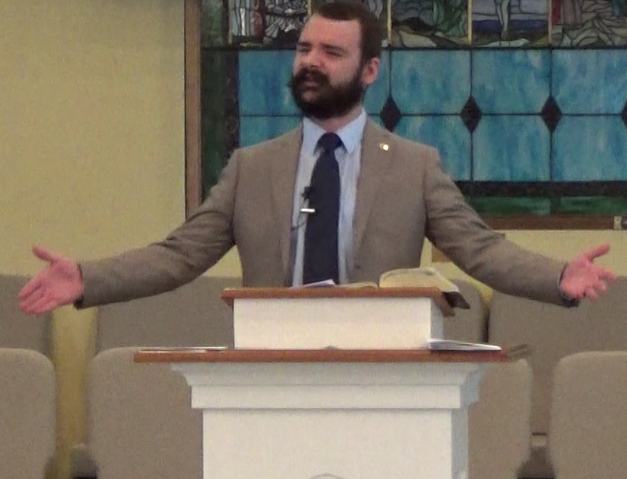 Brandon is the founder and main contributor to Brandon’s Desk, the blog with biblical resources from his ministry. He is proud to be the pastor of the family of believers at Locust Grove Baptist Church in Murray, Kentucky. He and his wife Dakota live there with their three dogs, Susie, Aries, and Dot.


 Brandon's Desk