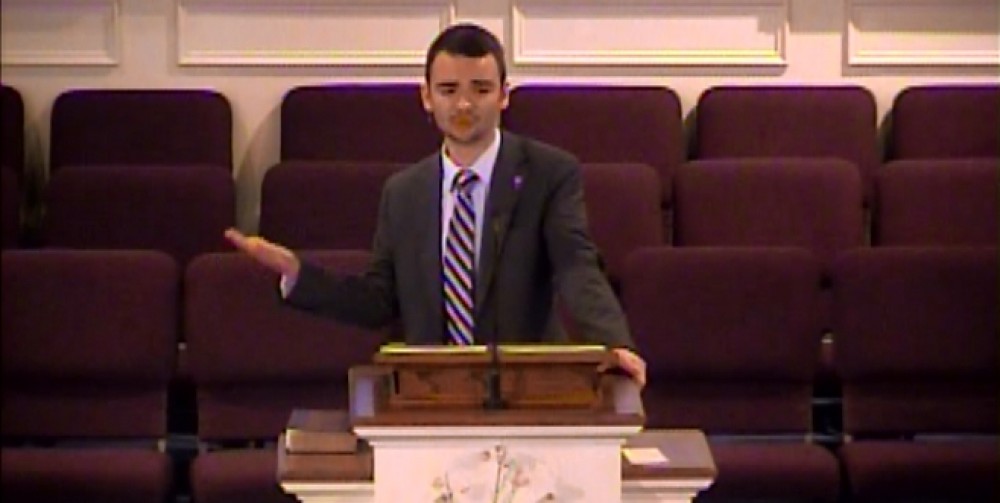
All posts by Brandon G. B.

Sermon on the Mount: The Meek

Sermon on the Mount: The Meek (Matt. 5:5)

“The Christian is altogether different from the world. He is a new man, a new creation; he belongs to an entirely different kingdom. And not only is the world unlike him; it cannot possibly understand him.”—D. Martyn Lloyd-Jones (1)

In our consideration of the Beatitudes, we have already seen that Jesus turns the world’s ideas upside down. The world thinks in terms of strength, power, of ability, self-assurance and aggressiveness. But Jesus says just the opposite in the third Beatitude: “Blessed are the meek, for they shall inherit the earth” (Matt. 5:5). Think about what a shock this statement was to the Jews of Jesus’ day. They had ideas of the kingdom which were not only materialistic but military also, and to them the Messiah was the One who was going to lead them to victory. So they were thinking in terms of conquest and fighting in a material sense, and immediately Christ dismisses all that.

The Text

“Blessed are the meek, for they shall inherit the earth” (Matt. 5:5).

The Meaning of Meekness

It’s important to see the obvious logical connection between these different Beatitudes. Clearly, each one follows on from what has gone before. Also, the Beatitudes, as they proceed, become increasingly difficult. In the first Beatitude (Matt. 5:3), we are asked to recognize our spiritual poverty apart from God. When we truly realize our spiritual poorness apart from God, we inevitably become “poor in spirit.” That in turn leads to the second state in which, realizing our own sinfulness and our own true nature, realizing that we are so helpless because of the indwelling sin within us, we become godly mourners (Mat. 5:4). If these things are present, then it follows that we would reach a point at which we become concerned about other people. That’s where meekness comes in. A man can never be meek unless he is poor in spirit. A man can never be a meek unless he has seen himself as a vile sinner.

What then, is the meaning of meek? The Greek word for meek here is praus, which means to be mild, or gentle. The same Greek term is used of Jesus’ triumphal entry when Matthew quotes Zechariah 9:9, “Say to the daughter of Zion, ‘Behold, your king is coming to you, humble (praus), and mounted on a donkey, on a colt, the foal of a beast of burden” (Matt. 21:5). Meekness is very similar to “poor in spirit,” but it is not exactly the same thing. Meekness is essentially a true view of oneself, expressing itself in attitude and conduct with respect to others. It is my attitude towards myself, and it is an expression of that in my relationship to others. Meekness does not weakness. It doesn’t mean laziness. Meekness does not mean niceness. Meekness is compatible with great strength and it is compatible with great authority and power (as we will see). When a man truly sees himself for what he is, no one can say anything about him that is too bad. “He that is down needs fear no fall”—John Bunyan. When we are meek, there will be a complete absence of the spirit of retaliation, having our own back or seeing that the other person “pays for it.”

The Manifestation of Meekness

Who is this meek person? What is he like? Since this is a hard word to define, perhaps it is best to see examples of meekness to better understand what it means.

Cooperate with me on this. I am going to present you with various scenarios. Read them and imagine yourself as the person described in them. Then think about what you would do in that situation:

1. You own a lot of land. You have a distant in-law who depends on you for their welfare and their safety. They have all they need from your rightful land, but they are not content with it. What would you do? 

The same thing happened to Abraham. After God had called Abraham from Ur of the Chaldeans to the Promised Land and had made the marvelous unconditional covenant with him, a dispute about grazing lands arose between the servants of Abraham and those of his nephew Lot. All of the land of Canaan had been promised to Abraham. He was God’s chosen man and the Father of God’s chosen people. Lot, on the other hand, was essentially a “hanger-on,” an in-law who was largely dependent on Abraham for his welfare and safety. Yet, as the story reads, Abraham willingly let Lot take whatever land he wanted, thus giving up his rights for the sake of his nephew, for the sake of harmony between their households. “Then Abram said to Lot, “Let there be no strife between you and me, and between your herdsmen and my herdsmen, for we are kinsmen. Is not the whole land before you? Separate yourself from me. If you take the left hand, then I will go to the right, or if you take the right hand, then I will go to the left” (Genesis 13:8-9). That is a great example of meekness. 

2. The world is without food and is in a great famine. Before the famine, your own family sold you into brutal slavery. Soon you become the king of the only nation with food. Your family comes to you in need, what would you do?

The same thing happened to Joseph. You know the story. he was abused by his jealous brothers and eventually sold into slavery. Soon he came to be second only to Pharaoh in Egypt and he was in a position to take sever vengeance on his brothers. When they came to Egypt asking for grain for their starving families, Joseph could easily have refused, and he could have even put his brothers into more severe slavery than into which they had sold him! Yet he had only forgiveness and love for them. Speaking to his brothers, “And now do not be distressed or angry with yourselves because you sold me here, for God sent me before you to preserve life. For the famine has been in the land these two years, and there are yet five years in which there will be neither plowing nor harvest. And God sent me before you to preserve for you a remnant on earth, and to keep alive for you many survivors” (Genesis 45:5-7). Joseph understood that it was God’s place to judge and his to forgive and help. His is a great example of true meekness. 

3. If someone had tried to kill you multiple times, and they were right “underneath your nose,” and you had the ability to kill them, what would you do?

The same thing happened to David. He was chosen by God and anointed by Samuel to replace Saul as Israel’s king. But when, in the cave of Engedi, he had the opportunity to take Saul’s life, as Saul often had tried to take his, David refused to do so. “So David persuaded his men with these words and did not permit them to attack Saul. And Saul rose up and left the cave and went on his way” (1 Sam. 24:7). David presents before us a great example of meekness. 

4. You are the founder of a great company. You know more than your employees, you make more than your employees, you are way more powerful than your employees. They mess up your company and destroy everything up and the only way they will live is if you become an employee, give all your power away, and then die a humiliating death. Would you do it?

Similarly, Jesus experienced the same thing. He created this world, and we corrupted it with our sin. Christ is God and that means He is more powerful than we can imagine and more wise than we can imagine. We are dead in our sins (Eph. 2:1), and we will pay the price for our sins (Rom. 6:23), if nothing is done about God’s wrath against us and our terrible condition apart from Him. Christ became a man, going through our struggles, weaknesses and difficulties. Eventually He died a humiliating death that we might live life eternal. Paul expresses this truth: “Who, though he was in the form of God, did not count equality with God a thing to be grasped, but emptied himself, by taking the form of a servant, being born in the likeness of men. And being found in human form, he humbled himself by becoming obedient to the point of death, even death on a cross” (Phil. 2:6-8). Christ has demonstrated the greatest example of meekness. (For further study of Christ’s meekness, see Christ’s Supreme Example of Humility)

The Result of Meekness

Jesus says that those who are meek “shall inherit the earth.” The person who is meek already inherits the earth in this way: A man who is truly meek is a man who is always satisfied, he is a man who is already content. The person who is not satisfied never has enough, he always wants more. On the other hand the satisfied person is happy to enjoy all things. He possess all things and yet those things do not possess him. “As sorrowful, yet always rejoicing; as poor, yet making many rich; as having nothing, yet possessing everything” (2 Cor. 6:10). But the phrase “shall inherit the earth” also has a very future implication. The meek person also knows that everything is in the hands of God—his rights, his cause, his entire future. One day God will completely reclaim His earthly domain, and those who have become His children through faith in His Son will rule that domain with Him. “If we endure, we will also reign with him; if we deny him, he also will deny us” (2 Tim. 2:12). We may not always have earthly blessings, but we have the promise of one day ruling and reigning with Christ.

The Necessity of Meekness

What then, does the Bible say about the necessity of meekness?

It is commanded. “Seek the LORD, all you humble of the land, who do his just commands; seek righteousness; seek humility; perhaps you may be hidden on the day of the anger of the LORD” (Zeph. 2:3). Similarly, James writes to the believers of the Jerusalem church, “Therefore put away all filthiness and rampant wickedness and receive with meekness the implanted word, which is able to save your souls” (James 1:21). Those who do not have a meek/humble spirit are not able even to listen rightly to God’s Word, much less obey it.

Essential for church unity. Meekness is necessary for living in church unity: “I therefore, a prisoner for the Lord, urge you to walk in a manner worthy of the calling to which you have been called, with all humility and gentleness, with patience, bearing with one another in love” (Eph. 4:1-2). Paul commands the Ephesians to live in a way that is worthy of their great calling. How are they to do that? “With all humility and gentleness.” Those are the first characteristics mentioned in Paul’s list of behaviors necessary to live out church unity.

For effective witnessing. Meekness is necessary for witnessing: “But in your hearts honor Christ the Lord as holy, always being prepared to make a defense to anyone who asks you for a reason for the hope that is in you; yet do it with gentleness and respect” (1 Peter 3:15). Peter tells the believers to be prepared to defend the faith and to be verbal about their faith. . .”yet do it with gentleness and respect.”

Direct fruit of the Spirit. Meekness is necessary evidence of walking in the power of the Spirit: “But the fruit of the Spirit is love, joy, peace, patience, kindness, goodness, faithfulness,  gentleness, self-control; against such things there is no law (Gal. 5:22-23).

Conclusion

Are we living in true meekness? Let us face this Sermon on the Mount with all honesty, let us meditate on this statement about being meek; let us look at the examples; above all let us look at Jesus Christ Himself. Let us be finished with ourselves so that He who has bought us at a great price may come in and possess us wholly.


1. David Martyn Lloyd-Jones, Studies in the Sermon on the MountKindle Edition (Grand Rapids, MI: InterVarsity Press, 1959-60; Reprinted 2000), Kindle Locations 866-867.


Colossians: Christ’s Sufficient Reconciliation (Col. 1:20-23)

The following message was delivered  May 4, 2014 at New Hope Baptist Church in Ballard County, KY:

Our Position as Believers: Reconciled

Our position as believers is truly remarkable. There are many terms that describe our position as believers in relation to God and in relation to man as well. The Bible says that we are justified (Rom. 5:1; Gal. 3:24; Titus 3:7), forgiven (Eph. 4:32; Col. 3:13; 1 John 1:9), adopted (Gal. 4:5-7; Eph. 1:5), and redeemed (Rom. 3:24; Eph. 1:7). While there are many other descriptions, one of the greatest of those terms to describe who we are in Christ is reconciliation. That’s what Paul’s theme is in our text. The way Paul uses the term in Colossians pictures a thorough, full, and complete reconciliation. Let’s read it together.

The Text: Colossians 1:20-23, ESV

“20 And through him to reconcile to himself all things, whether on earth or in heaven, making peace by the blood of his cross. 21 And you, who once were alienated and hostile in mind, doing evil deeds, 22 he has now reconciled in his body of flesh by his death, in order to present you holy and blameless and above reproach before him, 23 if indeed you continue in the faith, stable and steadfast, not shifting from the hope of the gospel that you heard, which has been proclaimed in all creation under heaven, and of which I, Paul, became a minister.”

God’s Plan of Reconciliation

Let’s look first at v. 20: “And through him to reconcile to himself all things, whether on earth or in heaven, making peace by the blood of his cross.” You may have noticed that our starting place in today’s text is a bit awkward. The reason for starting in v. 20 is because of the language-change. You see that Paul has changed his language from v. 19 in speaking about Christ’s preeminence to v. 20 talking about reconciliation and the first thing he tells his readers about is God’s plan of reconciliation.

Paul writes that “through him [Jesus] to reconcile to himself [God] all things.” That’s a very heavy statement. All things? Paul says here quite clearly that through Jesus Christ, God’s plan is to reconcile to Himself all things, whether on earth or in heaven. But why would “all things” need to be reconciled to God? If God’s plan is to reconcile all things to Himself, then there must be some type of separation involved, creating the need for reconciliation. For separation is the opposite of reconciliation. What created that need? Well, you remember the creation story in Genesis, don’t you? Do you remember what God said concerning His creation? “And God saw everything that he had made, and behold, it was very good” (Gen. 1:31). About light, day, the moon, sun, stars, plants and animals, you read that God said that it was good. But when God looked and saw everything altogether that He had made, including man, He saw that it was very good.

But what happens two chapters later? The Fall. This is where sin enters the world. When evil and sin entered the world, God’s good creation was marred. It was defiled. Sin destroyed perfect harmony between creatures, and sin affected the entire creation. Paul describes this vividly in Romans 8: “For the creation was subjected to futility, not willingly, but because of him who subjected it” (v. 20), creation, Paul says, is in “bondage to corruption” (v. 21), and, “we know that the whole creation has been groaning together in the pains of childbirth until now” (v. 22). We live on a cursed earth in a cursed universe all because of sin.

Now what is to be said of the beauty that we still see in creation? What about the rocks, trees, fish and lakes? This beauty is owing to God’s common grace. That is, God has still continued to allow creation to display forth beauty and greatness even though it is subjected to futility and corruption. There’s a reason animals kill each other. There’s a reason plants and animals die. There’s a reason that creation is not in exact harmony: sin.

But as you know, the Bible gives us the wonderful promises that God will again restore creation. He will recreate and “God will make friends with creation again” (1). Tremendous, dramatic, glorious changes will take place in that time. Paul says again in Romans 8 that “creation itself will be set free from its bondage to corruption and obtain the freedom of the glory of the children of God” (v. 21). God and the creation will be reconciled—the curse of Genesis 3 will be removed. Finally, “after all is said and done,” there will be a new heaven and a new earth:

“But according to his promise we are waiting for new heavens and a new earth in which righteousness dwells” (2 Peter 3:13).

“Then I saw a new heaven and a new earth, for the first heaven and the first earth had passed away, and the sea was no more” (Rev. 21:2).

God will make everything new and will reconcile all things to Himself. That’s the aim Paul is taking here when he says, “And through him to reconcile to himself all things, whether on earth or in heaven” (1:20a).

A Word About Universalism

Now some have seen this as a path into the heresy known as universalism. This teaching holds that it doesn’t matter what happens in this life, one day everyone who has ever lived will be saved—God has no real wrath against sinners and one day everyone will be reunited with Him forever and there is no such thing as hell or the lake of fire. That’s a lie straight from the pits of hell and you’d be surprised, utterly surprised, at the number of professing Christians who hold to this view of God and eternity. But those who hold to this view say that this text indicates that even fallen angels and unbelieving sinners will be reconciled to God. Paul cannot mean here that there will be ultimate salvation of everyone. Not everyone is going to be saved—we know that. That’s one thing Jesus taught: “Enter by the narrow gate. For the gate is wide and the way is easy that leads to destruction, and those who enter by it are many” (Matthew 7:13). And Christ will one day say to unbelievers, “‘Depart from me, you cursed, into the eternal fire prepared for the devil and his angels” (Matthew 25:41), and then in v. 46 of that chapter, “And these will go away into eternal punishment, but the righteous into eternal life.”

There are no second chances for those who go out into eternity without Christ. It’s against the Scriptures and everything that the Christian faith stands for if you identify with something like universalism. So where do unbelievers and fallen angels fall into this category of reconciliation? They will be reconciled to God in the sense of getting their final judgment. Only in the sense of submitting to Him for final sentencing:

“Therefore God has highly exalted him and bestowed on him the name that is above every name, so that at the name of Jesus every knee should bow, in heaven and on earth and under the earth, and every tongue confess that Jesus Christ is Lord, to the glory of God the Father” (Phil. 2:9-11).

This all happens through Jesus Christ—this is the extent of the power of the atonement of Jesus Christ; this is God’s plan of reconciliation—“to reconcile to himself all things, whether on earth or in heaven, making peace by the blood of his cross” (1:20).

The Opposite of Reconciliation

It is God’s grand, glorious plan to reconcile all things to Himself through Jesus, but now Paul focuses on his readers in a special way. Before Paul talks about God’s central purpose in reconciliation—reconciling men and women to God, he reminds them of their state of being before reconciliation. He describes the opposite of reconciliation: “And you, who once were alienated and hostile in mind, doing evil deeds” (v. 21).

Paul focuses on his readers here. “And you who once were. . .” Paul is talking about something that these readers were, not something that they are now. And he describes the Colossians’ pre-Christian state in a three-fold way:

1. Position: “you . . . once were alienated” (1:21b).

The Bible actually talks about aliens more than you think. When you think of aliens, however, you probably picture the little green guys trying to abduct humans for research. Or possibly more relevant, illegal aliens, are those who come over to our country illegally. But why do we call the fictional green characters aliens, and why do we call illegal immigrants aliens? Because they are strangers. Aliens would be strangers because they’re not from our planet. Immigrants because they are not from our country. And when it comes to Paul’s readers, this is their position apart from God: strangers. To be alienated is to be cut off from God, a stranger to God, a non-participant in the things of God.

Speaking of those who do not know Christ, “They are darkened in their understanding, alienated from the life of God because of the ignorance that is in them, due to their hardness of heart” (Eph. 4:18). Sin is what separates us from God. Sin is what alienates us from God and creates that need for reconciliation back to our Creator. God is holy and we are not—and that is a problem for us. The Scriptures attest about Him, “Your eyes are too pure to look on evil; you cannot tolerate wrongdoing” (Habakkuk 1:13 NIV), “The face of the LORD is against those who do evil, to cut off the memory of them from the earth” (Psalm 34:16), “For you are not a God who delights in wickedness; evil may not dwell with you” (Psalm 5:4, ESV). God is holy and our depraved position apart from Him is alienation/separation. And if nothing’s done about it, it will lead to eternal separation one of these days in the lake of fire where, “And if anyone’s name was not found written in the book of life, he was thrown into the lake of fire” (Rev. 20:15). The reason that it is an eternal hell is because sin is an offense against an eternal God. Our position depraved and apart from the saving grace of God is one of damnation: we were once alienated.

2. Intellect/Thinking: “you . . . once were . . . hostile in mind” (1:21c).

Not only alienated, but the Colossians had also been hostile in mind. This literally means that they had a hateful attitude towards God. According to Paul here in this verse, even our intellect is infected by sin. “For although they knew God, they did not honor him as God or give thanks to him, but they became futile in their thinking, and their foolish hearts were darkened” (Rom. 1:21). The Scripture teaches that the unbeliever’s mind is even corrupt and affected by sin. It doesn’t mean he cannot think, it doesn’t mean that he cannot be philosophical, it doesn’t mean that he has no logic—but it does mean that his mind is corrupted by sin and will not willingly submit to God or the things of God. “For the mind that is set on the flesh is hostile to God, for it does not submit to God’s law; indeed, it cannot” (Rom. 8:7). Our mode of thinking was entirely against God.

There’s an interesting passage in the New Testament about this truth. It’s in 2 Corinthians 4:4, “In their case the god of this world has blinded the minds of the unbelievers, to keep them from seeing the light of the gospel of the glory of Christ, who is the image of God.” Paul says here that their minds are blinded. Wait a minute. I thought being blind meant that you couldn’t see? That’s the point here. Satan so darkens the minds of unbelievers that they cannot see the light of the gospel—they are blinded; even by their own minds. So don’t be under the impression that you can win people over with philosophy, or even theological discussion. You cannot save a single soul. Only God can regenerate a sinner who is that depraved. Only God can transform a man.

3. Actions/Deeds: “you . . . once were . . . doing evil deeds” (1:21d).

Not only were they alienated from God, and their minds hostile to Him, but they were doing evil deeds. If they are already so depraved that they are separated from God and hostile in their thinking, then it would follow that their actions would result in “doing evil deeds.” Jesus confirms this fact: “And this is the judgment: the light has come into the world, and people loved the darkness rather than the light because their works were evil. For everyone who does wicked things hates the light and does not come to the light, lest his works should be exposed” (John 3:19-20). Everything man does in His rebellion against God is sin: “For whatever does not proceed from faith is sin” (Romans 14:23).

Indeed, we are in an extremely depraved condition apart from Christ. Your predicament, if you are an unbeliever, is very heavy. We are not as sinful as we could be—God by His common grace restrains some evil in the world. But the Scripture teaches that everything about us, our minds, hearts, and wills are all inclined and bent towards evil and that every faculty of our being is corrupted by sin. The New Testament is replete with passages about who we are before Christ:

“Backbiters, haters of God, despiteful, proud, boasters, inventors of evil things, disobedient to parents” (Rom. 1:30, KJV)

“Dead in trespasses and sins,” “by nature children of wrath” (Eph. 2:1, 3).

“We were enemies” (Rom. 5:10).

“as it is written: “None is righteous, no, not one; no one understands; no one seeks for God. All have turned aside; together they have become worthless; no one does good, not even one.” (Rom. 3:10-12).

That’s the magnificent thing about salvation. God doesn’t just leave us in our depraved condition. He’d be just and right in doing so. God is not obligated to give grace to anyone—that’s why it’s called grace. It’s undeserved. God reserves the right to give grace to whoever He pleases—He doesn’t have to give grace to any sinner. But thank God He gives grace! God did a great thing on our behalf.

Why is this important to know? Why does the Bible place so much emphasis on our condition before Christ? Well, you will not appreciate your present salvation without remembering your past condition—you will not fully be grateful for your present relationship with God without remembering your past separation from God. If someone has a cold and they take some Mucinex to take care of it, do they normally rejoice, and hop up and down because they no longer have a cold? Not normally, unless they are just a happy person (and probably had too much Mucinex!). But if someone has had a terrible, life-threatening cancer and they receive treatment and beat the cancer. . . Oh there is rejoicing alright. They are very, very thankful. It works the same way in the Christian life. If you do not realize the depth of your sinful condition before Christ, then you will not even begin to realize how great a miracle your salvation actually was!

Too many believers treat their position before Christ like a fake threat. Like they were not in any real danger. It’s like the lady in the circus who spins on the wheel while the knife thrower pretends to throw knives around her. If you ask her at the end, “Don’t you feel glad that’s over? Aren’t you happy you’re still alive?” And she says, “It’s just a trick. The knives pop out of the wheel. What’s to get excited about? It’s just a fake threat” (2).

They say, “Nobody is perfect.” While that’s true, that’s not even scratching the surface of what you were before Christ. Read what the Scripture says about who you were before Christ, because when you recognize who you really were before God transformed you, then you will so much more appreciate your salvation now. Paul even says in Ephesians 2:11-12, “Therefore remember that at one time you were without Christ . . . having no hope, and without God in the world.”

How often do you ponder what your life was like before Christ? How often are you brought to tears of joy before the presence of Almighty God for saving you from such a depraved position? How often do you allow these things to grip you?

The Means of Reconciliation

Paul never tells us who we were before Christ, without also telling us who we are now in Christ (or what God has done for us to transform us). He never tells us to remember what we are now without remembering what we once were. So Paul has talked about the Colossians’ depraved sinful state and the complete opposite of reconciliation. Now he talks about the means of reconciliation: “He has now reconciled in his body of flesh by his death” (v. 22a).

If we have a need for reconciliation to God then how is that accomplished? Paul says, “He has now [this is present tense] reconciled in His body of flesh by His death.” This is talking about Jesus. Jesus Christ is the one who has brought us to God. All the members of the Trinity work actively in your salvation. The Father initiates your salvation, He plans it. The Son accomplishes your salvation on the cross. The Spirit applies your salvation through regeneration. Now, Christ did a lot of things while He was here on this earth, but the main reason He came was to “seek and save that which was lost” (Luke 19:10). And if you know Christ as your Lord and Savior, then you are reconciled to God through His death. Your reconciliation to God is owing completely to the death of Jesus Christ. It wasn’t because you were good enough, it wasn’t because you did or said the right things, it was because Jesus died for you! “You contribute nothing to your salvation, except the sin that made it necessary”—Jonathan Edwards.

Are you reconciled today? Are you reconciled to God through Christ?

The Aim of Reconciliation

Paul has talked about God’s ultimate plan of reconciliation, the opposite of reconciliation, the means of reconciliation and now he talks about the aim of reconciliation: “in order to present you holy and blameless and above reproach before him” (v. 22b).

In contrast with their three-fold depravity, Paul describes the three-fold aim of Christ’s reconciliation work on behalf of the Colossian believers:

1. “in order to present you holy” (1:22b)
2. “in order to present you . . . blameless” (1:22c)
3. “in order to present you . . . above reproach” (1:22d).

The Evidence of Reconciliation

Paul has described God’s plan of reconciliation, the opposite of reconciliation, the means of reconciliation, the aim of that reconciliation, and now he concludes this section by speaking on the evidence of that reconciliation. “If indeed you continue in the faith, stable and steadfast, not shifting from the hope of the gospel that you heard” (v. 23a).

Paul says here that “continuing in the faith” is evidence that you have been reconciled: “Christ reconciled you in order to present you holy, blameless, and above reproach before Him . . . if indeed you continue in the faith, stable and steadfast.”

Paul is not saying here that “continuing in the faith” is necessary to your salvation because you are lacking something that Christ didn’t do. It’s necessary in order to prove your salvation, but not necessary because Christ isn’t enough. Christ is mighty to save, He saves to the uttermost, He is able to reconcile fully, completely, and thoroughly—salvation was not just made “possible” for you at the cross—but it was made actual for you at the cross. Christ actually accomplished, bought, and secured your salvation.

So, “continuing in the faith” is the necessary response and the “out-working” of a life that’s been reconciled to God. And the Scripture teaches that if your life does not show evidence of being reconciled to God, then you are not reconciled to God and you are still “alienated, hostile in mind, and doing evil deeds,” and you are not saved.

One of the most sobering truths of the Bible is that not all who profess to be Christians are in fact saved. Christ warned us about it: “Not everyone who says to me, ‘Lord, Lord,’ will enter the kingdom of heaven, but the one who does the will of my Father who is in heaven. On that day many will say to me, ‘Lord, Lord, did we not prophesy in your name, and cast out demons in your name, and do many mighty works in your name?’ And then will I declare to them, ‘I never knew you; depart from me, you workers of lawlessness.’ (Matthew 7:21-23). And John writes in his epistle, “They went out from us, but they were not of us; for if they had been of us, they would have continued with us. But they went out, that it might become plain that they all are not of us” (1 John 2:19).

No, you can never “lose” your salvation, but there will be a great falling away of those who were never truly saved. Look at Hebrews 6:

“For it is impossible, in the case of those who have once been enlightened, who have tasted the heavenly gift, and have shared in the Holy Spirit, and have tasted the goodness of the word of god and the powers of the age to come, and then have fallen away, to restore them again to repentance, since they are crucifying once again the Son of God to their own harm and holding him up to contempt” (Heb. 6:4-6).

Paul says here in Colossians that if we continue in the faith, we continue to be faithful to Him, continue to serve Him and love Him, if we remain steadfast and stable that it shows forth evidence of our present reconciliation with God.

Are you continuing in the faith? Does your life show evidence that you have been reconciled to God? Can you think of some ways in which God has shown His grace in your life? If not, then heed the words of 2 Cor. 13:5, “Examine yourselves, to see whether you are in the faith. Test yourselves.”

The Ministry of Reconciliation

In addition to Paul talking about the evidence of reconciliation, he speaks briefly in this section about the ministry of reconciliation. He writes, “[this gospel] which has been proclaimed in all creation under heaven, and of which I, Paul, became a minister” (v. 23b).

Paul was made a minister of the gospel. We are all ministers of reconciliation. We are to tell others about Jesus Christ like Paul did. There’s a great passage of Scripture about that:

“Therefore, if anyone is in Christ, he is a new creation. The old has passed away; behold, the new has come. All this is from God, who through Christ reconciled us to himself and gave us the ministry of reconciliation;  that is, in Christ God was reconciling the world to himself, not counting their trespasses against them, and entrusting to us the message of reconciliation. Therefore, we are ambassadors for Christ, God making his appeal through us. We implore you on behalf of Christ, be reconciled to God” (2 Cor. 5:17-20).

We owe people the gospel’s message this side of hell. The proper response to such a great gospel is joyfully sharing it with others. So who are you ministering to? Who has God placed in your life that you need to minister to? “You may be the only Bible people are reading.”—Billy Graham

Conclusion

We’ve seen today: God’s ultimate plan of reconciliation (1:20). Our state before Christ, the opposite of reconciliation (1:21). Christ’s present, real reconciliation work on the cross (1:22). The aim of Christ’s reconciling work (1:22). The evidence of Christ’s reconciling work (1:23). And how we are all made ministers of that gospel (1:23). Where is God stirring in your heart today? In the commands we found in the Scriptures, which are you not obeying? The gospel gives you the power to carry out those commands in obedience, so what are you waiting for? I pray we will be obedient to God and heed the truths gleaned from Colossians concerning this great position we have as believers: reconciled. 


1. John MacArthur, Colossians/Philemon (Chicago, IL: Moody Publishers, 1992), 58.
2. Adapted from John Piper, Remember That You Were Hopeless (Desiring God, 1981).


You’ve Got Questions: What Does “Blessed Are Those Who Mourn” Mean (Matt. 5:4)?

You’ve Got Questions: What Does “Blessed Are Those Who Mourn” Mean (Matt. 5:4)?

While God cares about all legitimate mourning, Jesus is speaking here about godly sorrow, godly mourning, mourning that only those who sincerely desire to belong to Him or who already belong to Him can experience.

Paul speaks of this sorrow in 2 Corinthians 7, “For godly grief produces a repentance that leads to salvation without regret, whereas worldly grief produces death. For see what earnestness this godly grief has produced in you” (vv. 10-11). Paul says here that godly sorrow actually leads to repentance. If you are sorry for your sin, then you will repent and turn away from it. But repentance is not just a turning away from sin; it is a turning to as well. . . a turning to God. That’s why Paul says that it “leads to salvation without regret” (v. 10). But sorrow because you “couldn’t” sin is the “worldly grief [that leads to] produces death.” If you are experiencing that kind of sorrow, if truths like “Being a believer is not a license to sin” turns you off, then you are having improper mourning.

Now the first Beatitude, makes it clear that entrance into the “kingdom of heaven” (Matt. 5:3) begins with being “poor in spirit” (Matt. 5:3), that is, you recognize your total spiritual bankruptcy and come to Christ empty-handed, pleading for God’s grace and mercy. Without that recognition of spiritual poverty, you cannot be saved. So if we are “poor in spirit,” then it follows that we would also become “those who mourn.”

It’s important to note, however, that blessedness or happiness does not come in the mourning itself (“Blessed are those who mourn. . .”). But that blessedness comes with what God does in response to it, with the forgiveness that He brings. When you finally recognize your sin and mourn over it and get it confessed to God, you can identify with David in Psalm 32, “Blessed is the one whose transgression is forgiven, whose sin is covered. Blessed is the man against whom the Lord counts no iniquity, and in whose spirit there is no deceit” (vv. 1-2). But why does David say that those people are blessed? How did they become blessed? He answers that question in vv. 3-5, “For when I kept silent [about my sin], my bones wasted away through my groaning all day long [he experienced sorrow]. For day and night your hand was heavy upon me; my strength was dried up as by the heat of summer. I acknowledged my sin to you, and I did not cover my iniquity; I said, “I will confess my transgressions to the Lord,” and you forgave the iniquity of my sin.” God forgives those who confess their sins to Him (1 John 1:9) and brings eternal comfort to them, and that’s where the blessedness of godly mourning comes from: “they shall be comforted” (Matt. 5:4).

The troubles and sins of the world are just too heavy to continue carrying. “Pack up your troubles in your old kit bag, and smile, smile, smile.” But Jesus isn’t telling us to do that. He’s not telling us to fake it. He says, “Confess your sins, and mourn, mourn, mourn.” Because until sin is confessed, forgiven and removed, you cannot experience true happiness.

There is an interesting passage of Scripture about this reality. It’s found in James 4, and it is strange because the same passage that talks about forsaking sins and crying for them is the same passage that talks about being joyful and exalted. “Draw near to God, and he will draw near to you. Cleanse your hands, you sinners, and purify your hearts, you double-minded. Be wretched and mourn and weep. Let your laughter be turned to mourning and your joy to gloom. Humble yourselves before the Lord, and he will exalt you” (James 4:8-10). James says here that there is a great need in the church to cry instead of laugh. He doesn’t mean that Christians are to be sobbing depressive Eeyores (off Winnie the Pooh). But apparently these believers were treating sin very casually when the proper reaction to sin is “mourning. . . weep[ing]. . and gloom” (v. 9).

God brings eternal comfort to the one who mourns over sin and repents. That’s the meaning of “Blessed are those who mourn, for they shall be comforted.”

For further reading, please consult Sermon on the Mount: Those Who Mourn

Sermon on the Mount: Those Who Mourn

Sermon on the Mount: Those Who Mourn (Matt. 5:4)

The following message was delivered at Ohio Valley Baptist Church on the 27th day of July, 2014:

Introduction

People cry. Babies cry because they might be hungry, sleepy, teething, or they might have a gift for you in their diapers. Children sometimes cry because they didn’t get that Barbie toy they wanted, or possibly because they hate doing homework. Teens cry (trust me, I know) because of the stress of becoming an adult, the pressures of high school, and worst of all: acne. From childhood to adulthood, people cry for different reasons, it could be tears of sorrow or tears of joy. Sometimes experiencing sorrow is referred to as mourning. That’s where the second Beatitude comes in.

The Text

“Blessed are those who mourn, for they shall be comforted” (Matt. 5:4).

The Meaning of Mourning

Certain kinds of sorrow are common to all mankind, experienced by believer and unbeliever alike: “For he makes his sun rise on the evil and on the good, and sends rain on the just and on the unjust” (Matt. 5:45). Some sorrows are appropriate and legitimate and God knows our need. Others are illegitimate and brought about because of sinful passions and objectives. We need to discover what the Bible says about proper mourning so that we can find out what Jesus means by saying “Blessed are those who mourn.” The word mourn has different definitions attached to it. In order to determine what proper mourning is, it is helpful to define what proper mourning is not. 

Improper Mourning

The kind of mourning that is illegitimate is the sorrow of those who are frustrated in fulfilling evil plans and lusts, or those who have misguided loyalties, desires, and affections.

David’s son Amnon is a good example of improper mourning: “And Amnon was so tormented that he made himself ill because of his sister Tamar, for she was a virgin, and it seemed impossible to Amnon to do anything to her” (2 Sam. 13:2). Amnon thought that his sister was “beautiful” (2 Sam. 13:1) and wanted to have incestuous sex with her. It frustrated him to the point where he made himself ill the text says. He had grief because he couldn’t fulfill his lusts.

None of us will probably ever try to commit sin like Amnon here, but we are sometimes like him when we try to pursue sin. He wanted to commit sin, but he knew that as the son of David it would be a dishonor (and that the Bible commanded against it), and sex with his sister was therefore something he was restricted from doing. Sometimes we think that God has put restriction on certain sins to kill our joy and make us obedient soldiers with no choice. But the commands and exhortations in Scripture are for our own good! The psalmist writes, “I am a sojourner on the earth; hide not your commandments from me!” (Psalm 119:19). We are all travelers in this earth and we absolutely need the Word of God to point out places where we shouldn’t go and to show us where the path to true righteousness is.

For the moment of temptation, the sin may look very attractive. To Eve, the fruit of the tree of knowledge of good and evil (which God commanded against) was “good for food, and that it was a delight to the eyes, and that the tree was to be desired to make one wise” (Gen. 3:6). It was very attractive to her. But with sin, the grass is never greener on the other side. Sin is very deceptive (in fact, one of sin’s delusions is that it keeps us unaware of sin!), and we must always rely on the wisdom and power of God to fight against it.

If you are experiencing that kind of sorrow, if truths like “Being a believer is not a license to sin” turns you off, then you are having improper mourning. 

Proper Mourning

The mourning about which Jesus is talking in the second Beatitude, is very much unlike mourning because you are “restricted” from sinning. And while God cares about all legitimate mourning, Jesus is speaking here about godly sorrow, godly mourning, mourning that only those who sincerely desire to belong to Him or who already belong to Him can experience.

Paul speaks of this sorrow in 2 Corinthians 7, “For godly grief produces a repentance that leads to salvation without regret, whereas worldly grief produces death. For see what earnestness this godly grief has produced in you” (vv. 10-11). Paul says here that godly sorrow actually leads to repentance. If you are sorry for your sin, then you will repent and turn away from it. But repentance is not just a turning away from sin; it is a turning to as well. . . a turning to God. That’s why Paul says that it “leads to salvation without regret” (v. 10). But sorrow because you “couldn’t” sin is the “worldly grief [that leads to] produces death.”

Now the first Beatitude, makes it clear that entrance into the “kingdom of heaven” (Matt. 5:3) begins with being “poor in spirit” (Matt. 5:3), that is, you recognize your total spiritual bankruptcy and come to Christ empty-handed, pleading for God’s grace and mercy. Without that recognition of spiritual poverty, you cannot be saved. So if we are “poor in spirit,” then it follows that we would also become “those who mourn.”

It’s important to note, however, that blessedness or happiness does not come in the mourning itself (“Blessed are those who mourn. . .”). But that blessedness comes with what God does in response to it, with the forgiveness that He brings. When you finally recognize your sin and mourn over it and get it confessed to God, you can identify with David in Psalm 32, “Blessed is the one whose transgression is forgiven, whose sin is covered. Blessed is the man against whom the Lord counts no iniquity, and in whose spirit there is no deceit” (vv. 1-2). But why does David say that those people are blessed? How did they become blessed? He answers that question in vv. 3-5, “For when I kept silent [about my sin], my bones wasted away through my groaning all day long [he experienced sorrow]. For day and night your hand was heavy upon me; my strength was dried up as by the heat of summer. I acknowledged my sin to you, and I did not cover my iniquity; I said, “I will confess my transgressions to the Lord,” and you forgave the iniquity of my sin.” God forgives those who confess their sins to Him (1 John 1:9) and brings eternal comfort to them, and that’s where the blessedness of godly mourning comes from.

The troubles and sins of the world are just too heavy to continue carrying. “Pack up your troubles in your old kit bag, and smile, smile, smile.” But Jesus isn’t telling us to do that. He’s not telling us to fake it. He says, “Confess your sins, and mourn, mourn, mourn.” Because until sin is confessed, forgiven and removed, you cannot experience true happiness.

There is an interesting passage of Scripture about this reality. It’s found in James 4, and it is strange because the same passage that talks about forsaking sins and crying for them is the same passage that talks about being joyful and exalted. Draw near to God, and he will draw near to you. Cleanse your hands, you sinners, and purify your hearts, you double-minded. Be wretched and mourn and weep. Let your laughter be turned to mourning and your joy to gloom. Humble yourselves before the Lord, and he will exalt you” (James 4:8-10). James says here that there is a great need in the church to cry instead of laugh. He doesn’t mean that Christians are to be sobbing depressive Eeyores (off Winnie the Pooh). But apparently these believers were treating sin very casually when the proper reaction to sin is “mourning. . . weep[ing]. . and gloom” (v. 9).

The Result of Mourning

So if indeed we are experiencing true godly sorrow, then what is the result? Jesus tells us: “they shall be comforted.” Again, it is not the mourning that blesses or makes one happy, but the comfort that God gives to those who mourn in a godly way. Jesus says that they shall be comforted. This does not refer only to the end of our lives or when we spend eternity with God. Like all other blessings, it will be ultimately fulfilled when we see our Lord face-to-face, and when God “will wipe away every tear from their eyes, and death shall be no more, neither shall there be mourning, nor crying, nor pain anymore, for the former things have passed away” (Rev. 21:4). But the comfort Jesus refers to in Matthew 5:4 is also very present. This comfort comes after the mourning. As we continually mourn over our sin, we shall be continually comforted by God Himself, “Our Lord Jesus Christ himself, and God our Father, who loved us and gave us eternal comfort and good hope through grace” (2 Thess. 2:16).

How to Mourn (Godly)

If we are to mourn godly, and those who mourn godly “shall be comforted,” then what does true mourning over sin involve? How can we become godly mourners?

1. Eliminate Hindrances. The first step in becoming a godly mourner is removing the hindrances that may keep us from mourning over sin. What are some of these hindrances that need trashing?

Love of sin. This is without question, the primary hindrance to mourning over sin. If you love sin, you certainly will not be sorry because of it. Holding onto sin is like standing in the Arctic cold snow. Standing in the below zero winds, being beat in the face by ice pellets, all the while standing still and doing nothing. Just taking it. The longer you do nothing about it, you will freeze and die. The same applies to sin. The longer you let sin have it’s way, the greater the consequences; eventually the more you do something, the more you get used to it. Don’t let that happen with sin in your life. Let it go and confess it to God and ask Him to help you love Him more and love the things of God more.

Despair. This also hinders mourning because despair is giving up on God. You think that because you have sinned so much that God will not forgive you. You think that you are too far from grace. Stop letting Satan whisper in your ear. God will not turn anyone away who comes to Him in repentance and faith. God wants to forgive you and cleanse you. “Come now, let us reason together, says the LORD: though your sins are like scarlet, they shall be as white as snow; though they are red like crimson, they shall become like wool” (Isaiah 1:18).

Conceit. This hinders mourning over sin, because it keeps it hidden. You choose to believe that there is nothing over which to mourn. You try to hide your sin from God, but He sees (Psalm 10:11). But that is like treating a cold the same way you would cancer. Don’t hide your sin from God or even yourself.

Presumption. This hinders mourning over sin because it is really a form of pride. You think that there is a need for grace, but not much grace. You think that sins are bad, they need to be repented of, but that they aren’t really that serious. You presume that you can continue sinning because God will forgive you. Be careful with that type of thinking, because God says “Let the wicked forsake his way, and the unrighteous man his thoughts; let him return to the Lord, that he may have compassion on him, and to our God, for he will abundantly pardon” (Isaiah 55:7).

Procrastination. This also hinders godly mourning simply by putting it off. You say, “One of these days, when things are just right, I’ll take a hard look at my sins, confess them, and ask God’s forgiveness and cleansing.” But that thinking is dangerous. Why would we ever consider putting off God’s forgiveness and mercy when we can experience it right now? The sooner your sin is dealt with, the sooner you “shall be comforted.”

2. Study God’s Word. I believe this too, is an important step in becoming a godly mourner. How will you know what is detestable to God, and what a damning thing sin is? By opening the Word of God. Paul writes that because of the commandment in the Word of God, sin was shown to be what it really was: “in order that sin might be shown to be sin, and through the commandment might become sinful beyond measure” (Rom. 7:13). God’s Word sheds light on our sin and through the Bible, the Holy Spirit makes us more and more aware of our sin.

3. Pray. A very simple step to mourning godly is by spending time in prayer. Sometimes we just need to shut everything off, open our Bibles, and spend some time pouring our hearts out to God. We have so many distractions today and we need to get away from those things and pray, really pray. If you are too busy to pray, you are too busy.

How to Know if We Are Mourning as Christ Commands

Knowing whether or not we have godly mourning is not difficult to determine. First, we need to ask ourselves if we are sensitive to sin. If you take sin lightly, if when you are tempted, you think more of the consequences if you did sin, than God’s provided way of escape (1 Cor. 10:13), then you need to be more sensitive to sin. Second, you will have true sorrow over your sins. You have a realization that “Against you [God], you only, have I sinned and done what is evil in your sight” (Psalm 51:4). Third, we will grieve for the sins of fellow believers and for the sins of the world. We will not judge them and think that we are better than they are, but experience a genuine sorrow for their sin like the psalmist, “My eyes shed streams of tears, because people do not keep your law” (Psalm 119:136). Finally, we will check our sense of God’s forgiveness. Have we experienced the release and freedom and joy of knowing that our sins are forgiven? Do we have divine comfort that God promises to those who have been forgiven, cleansed and purified?

God brings eternal comfort to the one who mourns over sin and repents. 

Christ’s Supreme Example of Humility (Philippians 2:5-8)

This message was delivered at Mt. Zion Baptist Church in West Paducah, KY on March 30th, 2014. 

Introduction

When we come to Jesus Christ for salvation, we must come in humility. That is, we must recognize our lowly state—that we are dead in trespasses and sins (Eph. 2:1), enemies of God (Rom. 5:10), hostile to God (Rom. 8:7), under His wrath (John 3:36), and helpless without Jesus. We must recognize how low we are before God can ever lift us up by the rope of His grace. The Bible says, “God resists the proud, but gives grace to the humble” (Prov. 3:34; James 4:6; 1 Pet. 5:5). And we cannot be saved, thinking that we do not need God to be saved—you must recognize your need. And that recognition of need/lowliness is what the Bible calls humility.

I think that we recognize that we need humility to be saved (while God grants it), but it seems like we sweep humility under the rug when it comes to our lives as believers; exercising humility towards our brothers and sisters in Christ. And if we are not living in humility, then we will have divisions in our churches, and disunity in our lives with other believers.

We are not asked to like other Christians, we are not asked to be like them, agree with them (on every point), but we are to recognize and put into action that we are one with them in the Lord, and we share the same benefits as children of one heavenly Father. If we do not live in unity, then we proclaim a false message to the world—because the message of the gospel is a message of unity and of peace. The gospel absolutely eradicates the barriers between us: the racial barriers, economic, and social barriers. And the gospel unites us under one head, Jesus Christ, with on Father of this universal family united by the blood of Jesus Christ.

So if we are in great need of humility for church unity, where shall we look? In Philippians 2, we have the supreme example of humility ever, and from it we will draw out implications for living in humility.

The Text: Philippians 2:5-8

“5 Have this mind among yourselves, which is yours in Christ Jesus, 6 who, though he was in the form of God, did not count equality with God a thing to be grasped, 7 but emptied himself, by taking the form of a servant,being born in the likeness of men. 8 And being found in human form, he humbled himself by becoming obedient to the point of death, even death on a cross.”

Have This Mind: Christ’s

Look at v. 5. Paul writes, “Have this mind among yourselves, which is yours in Christ Jesus.” First, he tells his readers to have this mind among themselves. He is telling them to have a certain way of thinking, a certain mind-set. Many translations read, “Have this attitude among yourselves” (NASB, HCSB, NLT), and that’s what he is telling them here. Paul aims this command not to any individual, but to have this attitude among yourselves. This pictures a congregation, and it is plural. It targets the whole church. It isn’t addressed to some individual, but to “all the saints in Christ Jesus who are at Philippi” (Phil. 1:1).

Further, the phrase “have this mind among yourselves” looks borth backward and forward in this passage. It looks backward to what Paul has already commanded the Philippian believers to do: “Complete my joy by being of the same mind, having the same love, being in full accord and of one mind. Do nothing from selfish ambition or conceit, but in humility count others more significant than yourselves. Let each of you look not only to his own interests, but also to the interests of others” (vv. 2-4). The phrase points back because Paul has already commanded them to live in humility. Because without humility, you cannot “be of the same mind,” or “have the same love,” you will not be “in full accord and of one mind.” You will do things from selfish ambition. But with humility, you will be able to fulfill all these commands. The phase also looks forward to Christ’s perfect fulfillment of this “attitude” of humility, which we will see in this passage. Christ is the perfect example, the supreme example, the unparalleled example of the humility that Christians ought to have towards one another—and following that example is the only way to reach true unity among ourselves. We need to “have this attitude among ourselves,” this that was Christ’s. 1 John 2:6 reads, “Whoever says he abides in him ought to walk in the same way in which he walked.”

So what is this “mind that was in Christ Jesus?” What example are we to follow to attain spiritual unity in the church, which we so desperately need? Well, Paul describes it for us in vv. 6-8. Paul describes how the Son of God left heaven to come to earth; he depicts this by giving a series of eight downward steps from glory into humanity, ending with the death of Christ on the cross. Before we examine these steps, let’s look at the exalted position that Jesus left.

The Exalted Position Jesus Left

Paul writes in v. 6, “Who, though he was in the form of God . . .” Paul says that Jesus “was in the form of God.” Before Christ came to earth He was fully and eternally God. When Christ came to the earth, He was fully and eternally God. And after Christ resurrected from death, He continues to be fully and eternally God. Before Christ took on flesh, He “was in the form of God” as Paul says here. This does not mean that Jesus became the Son of God at some point; He has always been the Son of God. To say that He was in the “form of God” means that He was totally equal with the Father in every way. Still, this doesn’t mean that Jesus is the Father or that the Father is Jesus. The persons of the Trinity are distinct but never divided. Having different roles, but equal. Not three gods, but God in three persons.

So when Christ comes to the earth, a transition takes place. Wayne Grudem, in his great work Systematic Theology, writes, “Remaining what he was, he became what he was not. In other words, while Jesus continued “remaining” what he was (that is, fully divine) he also became what he previously had not been (that is, fully human as well). Jesus did not give up any of his deity when he became a man, but he did take on humanity that was not his before” (1). And when He did, He subjected Himself to many of the limitations that we have. Even if He was only going to be here for 33 years, for Him to take on human flesh would be to subject Himself to our limitations, our weaknesses, and our condition. Yet at the same time, this did not compromise the absolute holiness of Christ: “He committed no sin, neither was deceit found in his mouth” (1 Pet. 2:22). This is a very difficult reality to grasp, but you cannot have Christianity without it.

If Jesus was not fully man, He couldn’t have died, for God cannot die. If Jesus did not die, then we are still dead in our sins, we are still under God’s divine wrath, we are still slaves to sin, we are still children of wrath, we are still following the course of this world, we are not redeemed, we are not new creations, we are still living in the futility of our minds, and we are not saved! But Christ did die for our sins but that would be utterly impossible, had He not been fully man. But praise God, He busted the grave wide open and conquered sin and death when He rose from the grave three days later, and the angles said, “Why do you seek the living among the dead? He is not here, but has risen” (Luke 24:5-6). And that wouldn’t have been possible, had Jesus not been fully God. Christ says, “No one takes [my life] from me, but I lay it down of my own accord. I have authority to lay it down, and I have authority to take it up again. This charge I have received form my Father” (John 10:18).

With all that doctrine in mind, Paul’s point here is that if Christ chose to take on flesh, then there would have to be descent. The incarnation of Jesus is where the Creator takes on the form of the created. The Infinite becomes the finite, the Sinless takes sin upon Himself. The King of kings leaves His kingly throne to subject Himself to our weaknesses, troubles, and struggles: “For we do not have a high priest who is unable to sympathize with our weaknesses, but one who in every respect has been tempted as we are, yet without sin” (Heb. 4:15).

What example then are we to follow here? Because Paul does say to “have this mind among yourselves.” As you probably know, we cannot be incarnated as Jesus was, we cannot come down from heaven to be born as a babe, and we cannot save people from their sins. But that’s not the point of the text here. The point is that Jesus had every inherent right to stay where He was, but He didn’t and He made the ultimate sacrifice of taking on flesh—which would lead to His death on the cross for sin. It was that He was in the “form of God,” but took on flesh to save us from our sins.

We can follow His example because we too are in a great position. We who are “in Christ” as the New Testament teaches, are saved completely by God’s grace (Eph. 2:8-9). God has loved us before time began (Eph. 1:4), God purchased our salvation and what’s more, we have no rights whatsoever to deserve salvation. Still, God calls us His friends (John 15:14-15). We are His children, “As many as received Him, to them He gave the right to become the children of God, even to those who believe in His name” (John 1:12, NASB, emphasis mine). And we have the promise of spending eternity with Him forever to worship at His feet for all eternity.

But we did not earn it. It is not our inherent right. So if God’s eternal son humbled Himself in an incomparable way by taking on flesh to live as a man, leaving His heavenly dominion, leaving His heavenly throne to be a man—how much more ought we to be absolutely determined to live humble and make whatever sacrifices necessary for the kingdom of God? You see, when Jesus left heaven to take on flesh and be born as a babe, His position of being God did not change. He just took upon Himself the weaknesses and struggles of the flesh. And we are not commanded to leave our position as God’s children; we cannot, we are secure in God’s hands. But we are to live humbly and “count others more significant than ourselves.” And when we do that, when we recognize that we are lowly, there will be much change in our lives—and that change often hurts. Humility hurts, just like it did Christ, and it may cost us dearly to live humble lives and do good works for others.

If we live in humility, then we will have the attitude we need to “Bear one another’s burdens, and so fulfill the law of Christ” (Gal. 6:2). It hurts to suffer with someone during their struggle, difficulty, or weakness. But will you give till it hurts? Will you count others greater than yourselves even when it hurts? It’s not by accident that the first Beatitude in Jesus’ Sermon on the Mount is “Blessed are the poor in spirit, for theirs is the kingdom of heaven” (Matt. 5:3).

Step One of Christ’s Humiliation

If you recall earlier, I spoke of Paul’s description of eight downward steps into humanity. From the exalted position that Jesus left, His first step downward was that He “did not count equality with God a thing to be grasped” (v. 6b). Paul has already established that Christ was equal with God. We also know that during Jesus’ earthly ministry, He never denied or diminished the fact that He was God. In John 17, Jesus prays, “Father, the hour has come; glorify your Son that the Son may glorify you, since you have given him authority over all flesh, to give eternal life to all whom you have given him” (John 17:1-2). Only God can give eternal life. In v. 6 of our text, Paul says here that although He was God, in fact equal with God, “He did not count equality with God a thing to be grasped.” The point here is that Jesus never used His power or authority for personal advantage, because to Jesus, though all power and authority and worship are inherently His, these things were not “a thing to be grasped.” Christ refused to hold onto His divine rights and privileges as His own. Jesus had all the rights and privileges of God, and He could never lose the. But He refused to selfishly cling to those things to His own advantage.

You likely recall what Jesus asks during His betrayal: “Do you think that I cannot appeal to my Father, and he will at once send me more than twelve legions of angels?” (Matt. 26:53). If He had, that would have messed up the Father’s plan to accomplish the mission of salvation at the cross. And so Christ would not call “twelve legions of angels” to His side. You also likely recall when Jesus was tempted in the wilderness. Satan said, “If you are the Son of God, command these stones to become loaves of bread” (Matt. 4:3). Have you ever wondered why Jesus didn’t just do that? Why didn’t He just turn them into bread to eat? He had all the power to do so. He even turned the loaves an fish into enough food to feed the five thousand (Matt. 14:13-21). It was because Christ “did not count equality with God a thing to be grasped.” Jesus’ attitude was selfless, it was giving, and it was humble.

That same attitude should characterize our lives today. We are children of God—new creations. But that is not the end of it. God didn’t save us so that we can sit and soak on a wooden pew every Sunday for the rest of our lives. Too often, we are comfortable in our blessings—we rejoice that we are redeemed, justified, and made right in God’s sight, but we keep them to ourselves. Those things are a cause for rejoicing, no doubt! But we should not grasp them selfishly, but follow the example of Christ here and share our blessings with others. All that we have has been given to us by God and we should be generous. How then, you ask, can one share something like justification with someone else? You cannot share your justified position in God’s sight with someone else, can you? You can by taking the message of justification to people—in hopes that they too will receive Christ’s righteousness imputed to their account. So what is it that you are clinging tightly to? Material blessings? Spiritual blessings? Is there something in your life that God wants you to share with others? Surrender that things to God and let Him have His will and His way.

Step Two of Christ’s Humiliation

We have looked at Christ’s first step downward into humanity, now we will look at Christ’s next step from glory to humanity. He “did not count equality with God a thing to be grasped,” Paul says, “but emptied himself . . .” Paul says that instead of counting equality with God, Christ emptied Himself. That’s the second step. The New Testament teaches that Christ emptied Himself of five divine rights (2):

1. His divine glory. The Son of God left the worship of the saints and angels in heaven, and the adornment, and was subject to misunderstandings, denials, unbelief, false accusations, and every sort of persecution by sinful men. He have up the shining brilliance of heaven to suffer an agonizing death on the cross.

2. Independent divine authority. He was equal with the Father (as both Jesus and Paul affirm), but He also stated very often in the New Testament that He depended on the Father for strength and authority. A mystery, but true (John 5:19, 30; 8:28; 12:49).

3. Some of His divine attributes. He did not cease being God, but He did subject Himself to limitations by becoming a man. For example, Christ could only be in one place at one time while He was on the earth. That would be a (temporary) limitation on God’s omniscience.

4. His eternal riches. Paul brings this to light, “For you know the grace of our Lord Jesus Christ, that though he was rich, for your sake he became poor, so that you by his poverty might become rich” (2 Cor. 8:9).

5. His unique, face-to-face relationship with the Father. In order to fulfill the plan of salvation that God sent Him to do, He had to become sin for us: “For our sake he made him to be sin who knew no sin, so that in him we might become the righteousness of God” (2 Cor. 5:21). Jesus takes our sin upon Himself, and gives us His righteousness in exchange; so in God’s sight, Jesus becomes all the filthiness and sin that we are and we become all the righteousness and holiness that He is. If that is true, then it would require that Jesus be separated from the Father at His crucifixion. The Father turned His face away—Habbakuk 1:13 says that the Father’s “eyes are too pure to look on evil.” This is why Christ cried from the cross, “My God, my God, why have you forsaken me?” (Matt. 27:46).

Christ emptied Himself of these things to save us and to fulfill God’s plan of redemption. We obviously cannot empty ourselves to the degree that Jesus did here, but we do have an example to follow.

We are called to empty ourselves of everything that would hinder our obedience and service to Him. That’s what Christ did. He emptied Himself of these divine rights so that he could fulfill the Father’s plan of salvation. He was the Messiah, the One through Him God’s saving purposes would be accomplished. Jesus even took on the limitations of man and “emptied Himself” of the rights that were rightfully His, so that He could purchase salvation for you and for me—thus, being totally obedient to the Father (even to the point of death, v. 8).

If Jesus Christ did everything necessary to be obedient to the Father, by “emptying” Himself of what is rightfully His, how much more should we be willing to empty our lives of whatever it takes to be totally and fully surrendered to God? The only difference is, we don’t even own anything in this life. It all belongs to God, and all that we have is a gift from God Himself. Whatever is in the way of your service and full surrender to God, whether it be possessions, position, money, pride, sex, whatever; pour it down the drain!

What do you need to empty in your life to be totally obedient to God? What do you need to give up in order to be fully surrendered to God’s will?

Step Three of Christ’s Humiliation

Christ not only refused to count equality with God a thing to be grasped, and not only did He empty Himself, but even further in His descent, Christ takes a third step downward. How? Paul writes, “by taking the form of a servant” (v. 7b). Immediately when I read this, my mind races back to Jesus’ washing of the disciples’ feet. Many commentators even say that this is what Paul is referring to here. When Jesus washed their feet in John 13, He was demonstrating to them the best example of humility. Foot-washing was something that normally slaves did in Jesus’ day. He tells them, “If I then, your Lord and Teacher, have washed your feet, you also ought to wash one another’s feet. For I have given you an example, that you also should do just as I have done to you. Truly, truly, I say to you, a servant is not greater than his master, nor is a messenger greater than the one who sent him. If you know these things, blessed are  you if you do them” (John 13:14-17).

What is so ironic about what Jesus did and Paul’s description of Him as a “servant” is this: Jesus Christ is the only One in the entire universe who is worthy to be served, but yet He became a servant. If serving man in the Father’s name was good enough for the Son of God, it ought to be good enough for us. We should be labeled as servants. Let us heed the words of Galatians 6:9-10, “And let us not grow weary of doing good, for in due season we will reap, if we do not give up. So then, as we have opportunity, let us do good to everyone, and especially to those who are of the household of faith.” And when we have served, when we have done what we ought, we do not need to be prideful, but thank God for the opportunities we have been given to serve and then cry out with humility: “We are unworthy slaves; we have done only that which we ought to have done” (Luke 17:10, NASB).

Who are you serving for the cause of Christ? Where has God been stirring your heart to serve? Is it a position here at your church? Is it a soup kitchen? Is it your workplace? Do you need to serve your family more? God calls us to follow the example of Jesus here and be servants. Where does He want you to serve? And what is stopping you from serving and going where God wants you to go? Whatever it is, get it out of the way and start serving.

Step Four of Christ’s Humiliation

We have seen Christ’s example of humility in that He “did not count equality with God a thing to be grasped,” and that He “emptied himself,” and that He took on the form of a servant. Even further into His downward descent, Paul lists a fourth step: “being born in the likeness of men” (v. 7c).

You know the Christmas Story, Jesus miraculous conception and virgin birth. How Mary “was found to be with child from the Holy Spirit” (Matt. 1:18). Paul says here that Jesus became exactly like all other human beings, having all the attributes of humanity—He was a man. It was so obvious that He was a man that even His family and disciples would not have known of His deity if the angels, the Father, and Jesus Himself revealed it to them. He was “born of a woman” (Gal. 4:4), and in a “fleshly body” (Col. 1:22). Hebrews 2 gives a very accurate description of how Jesus was born in the likeness of men:

“Since therefore the children share in flesh and blood, he himself likewise partook of the same things . . . Therefore he had to be made like his brothers in every respect, so that he might become a merciful and faithful high priest in the service of God, to make propitiation for the sins of the people. For because he himself has suffered when tempted, he is able to help those who are being tempted” (Heb. 2:14, 17-18).

Recall too Hebrews 4:15. It says that Jesus was “tempted in every way as we are, yet without sin.” That tells us something. And that’s what this verse indicates as well. Jesus was made in the likeness of flesh/men. That is, flesh minus the sin. It’s very important to understand, too, that this is not God taking on some kind of pre-Fall Adam. That’s not why Paul calls Him the “second Adam” (1 Cor. 15:45). Because if you remember, before the Fall there was no sin and no death, but Jesus did die. Think about it: Did He feel pain? Did He fell sorrow? Did He weep? Did He have strong crying and tears? Did He ever hunger? Did He thirst? Was He weary? Was He weak? Yes, yes, and yes. Here’s the final one: Did He die? Yes, and death is the result of what? The Fall (Gen. 3:17-19). This is not God taking on the “un-fallen” character of humanity, this is God taking on the fallen character of humanity with one significant element eliminated. What is it? Sin. Christ took on all of our weaknesses but one: sin.

Step Five of Christ’s Humiliation

We have seen that Christ did not count equality with God a thing to be grasped for selfish gain, we have seen that Christ emptied Himself, that He took on the form of a servant, and also that He was born in the likeness of our flesh. But is there more to this descent? Is there more to this humiliation? Paul says yes: “And being found in human form” (v. 8a). This advances the truth that Christ was “born in the likeness of men.” Christ was “found” or recognized by those who observed Him, and those He lived with to be in “human form.” The prophet Isaiah had predicted some 700 years earlier, that the Messiah “was despised and forsaken of men, a man of sorrows and acquainted with grief; and like one from whom men hide their face he was despised, and we did not esteem Him” (Isaiah 53:5).

Step Six of Christ’s Humiliation

Continuing this description of Christ’s descent, “he humbled Himself” (v. 8b). Paul says here that Jesus “humbled himself.” Now, this is somewhat different language. Everything up to this point has been about Jesus’ nature and form. This is actually an action—a personal attitude. If anyone humbled himself, it was Jesus Christ! Think back to His trial. Christ was mocked, falsely accused, spat upon, beaten with fists, scourged, and had part of His beard painfully plucked out. Yet He was never defensive was He? I’ve often wondered why Jesus didn’t just show those Pharisees who was boss. For most of the time, He stays silent. He was never demanding, never bitter. He had every right as God to damn them straight to hell at that moment. He refused to assert His rights as God! He didn’t even assert His rights as a human being either. No human would stand for that as justice.

This passage is about Christ, but remember too, that it is the example to follow from the command, “have this mind among yourselves.” I think Paul is crying out to the Philippian believers to not ever forget this: “Don’t forget this” he says, “Don’t forget what the Son of God suffered through, while maintaining humility! Don’t forget when the slightest impulse arises in you to become selfish or self-assertive or self-seeking, and so to break the bond of your fellowship with other believers!” (3)

In what situations in your life do you need to exercise more humility?

Step Seven of Christ’s Humiliation

In His stepping downward, Jesus was willing to suffer, “by becoming obedient to the point of death” (v. 8c). One would think that somewhere along the lines of all the sacrifices Jesus is making here that He would say, “Enough!” But Christ’s perfect submission took Him all the way to His death. Christ was obedient to the will of God “to the point of death.”

Anytime someone dies for a cause, leader, or a revolution—that is probably the greatest demonstration of that person’s devotion that cause, leader, or revolution. And Christ here followed God’s plan, and was so devoted to the Father’s will to “the point of death.” Christ died for the world indeed, but Christ also died for the Father. Not to pay for His sins, He paid for our sins, but He died for God to to His will and fulfill His plan. In Luke 22:42, Jesus prays in the garden of Gethsemane, “Father, if you are willing, remove this cup from me. Nevertheless, not by will, but yours, be done.” The Father did not force death upon Jesus. And Jesus did not wrestle His heavenly Father to the floor of heaven to avoid crucifixion. The death of Jesus was God’s plan. God predestined it to take place. But it was Jesus’ choice—Paul says that Jesus was “obedient” that means a choice was involved. And Christ was obedient.

Ignatius of Antioch, an early church father, was remembered for his joyful outlook on martyrdom. He was going to be killed for his faith in Christ. He writes many letters to different churches while he is waiting to be killed—he viewed his death as being obedient to the will of God. As with the case of Ignatius of Antioch, and many early Christians, death was the price they had to pay to be obedient to God (4).

How far will you go to be obedient to God’s will? If you lost everything for being obedient to God, would it still be worth it to you? Jesus lost His life, His fellowship with the Father, all to be obedient to the Father’s will. If being obedient to God’s will even to the point of death was good enough for Jesus, then it ought to be good enough for us.

Step Eight of Christ’s Humiliation

But it wasn’t just any death. Paul describes that death as the final step in Christ’s downward descent: “even death on a cross” (v. 8d). Today, we have beautified the symbol of the cross so much that we often forget about what it really means. It was a death instrument in Jesus’ day. Jesus could have been killed by stoning or hanging, but instead died on a cross. Galatians 3:13, “Cursed is everyone who hangs on a tree.” Similarly, “He himself bore our sins in his body on the cross, so that we might die to sin and live to righteousness; for by His wounds you were healed” (1 Peter 2:24).

I was in Wal-Mart the other day, and I saw the most ironic thing ever in my life. I couldn’t believe that you could pack so much irony into one moment. I was in the Easter candy isle and saw a chocolate cross. Now to other people who do not think like me, it probably appeared to be just a piece of candy. But I wondered, “Where are the chocolate electric chairs?” The cross, you see, was the worst form of punishment in Jesus’ day. And here was a chocolate death symbol. Of course, because of His resurrection, that cross stands as a symbol of victory of sin and death. But not so in Jesus’ day.

Conclusion

We have seen Christ’s example; His supreme example of humility. He did not count equality with God when He had every right to. He emptied Himself and was poured out for you and me—and in the Father’s will. He became a servant—when He alone is worthy to be served. He was born in the likeness of our flesh. He was found in human form when He was born—as a helpless babe. He was obedient to the Father to the point of death, even death on a cross. I ask you this morning, in which of those steps do you need to line up your life with God’s will? What part of Christ’s example are you not following? Are you following Christ’s example of humility?


1. Wayne Grudem, Systematic Theology (Grand Rapids, MI: Zondervan, 2000), 562.
2. This list is adapted from John MacArthur, Philippians/John MacArthur (Chicago, IL: Moody Publishers, 2001), 126-128.
3. Ibid, 132.

4. The best basic resource on Ignatius and his view of martyrdom is Rediscovering the Church Fathers: Who They Were and How They Shaped the Church by Michael A. G. Haykin.

Ephesians: Start Your Engines (3:14-21)

The following message was delivered at Ohio Valley Baptist Church on March 16, 2014:

Introduction

While studying this text, I have asked why would Paul need to pray here? He’s already prayed in 1:15-23, why would he need to pray again? I discovered why when I began to note the literary differences in 1:1-2:22 and 4:1-6:24. Ephesians 1-2 is all about who you are in Christ and what God is like in salvation—one of the most crucial types of knowledge about God that you can have. These chapters consist of information, doctrine, and statements.

Notice: Ephesians 1:3-14, you are: elected (1:4), holy and blameless before Him (1:4), predestined (1:5), adopted (1:5), redeemed (1:7), forgiven (1:7), sealed with the Holy Spirit (1:13). Didn’t find any commands there.

Ephesians 2:1-22, you are: no longer dead in trespasses and sins (2:1), no longer following the course of this world (2:2), no longer following Satan (2:2), no longer living in the passions of your flesh (2:3), no longer children of wrath (2:3), loved by God’s great love (2:4), given new spiritual life (2:5), seated with Christ in the heavenly places (2:6), saved by grace through faith (2:8), God’s workmanship—created in Christ Jesus for good works (2:10), brought near by the blood of Christ (2:13), united in one body through the cross (2:14-17), no longer strangers and aliens (2:19), fellow citizens with the saints and members of the household of God (2:19), a dwelling place for God by the Spirit (2:22).

Even in Ephesians 3, you are “fellow heirs, members of the same body, and partakers of the promise in Christ Jesus” (3:6).

But look at the difference in language in the latter chapters of Ephesians:

Ephesians 4:1-32—live in unity and live as a new person.

Ephesians 5:1-33—walk in love, wives submit to your husbands, husbands love your wives as Christ loved the church.

Ephesians 6:1-20—children obey your parents, slaves obey your masters, put on the whole armor of God.

So Ephesians 1-2 explains what you are, and Ephesians 4-6 tells you what to do. But just knowing isn’t enough—they always say knowing is half the battle. But it is only half. You need the strength and resources to carry out those commands—the power to live out Ephesians 4-6. That is exactly why Paul prays here—that his readers would have the strength to carry out those commands. Imagine that you as a Christian are an engine. Paul has described all the parts of that engine in the first two chapters, and in the latter chapters that engine is running and working and doing. Somewhere in between you have to get that engine started. So then, the prayer that follows is sort of like Paul saying, “Gentlemen, start your engines!”

The Text

14 For this reason I bow my knees before the Father, 15 from whom every family in heaven and on earth is named, 16 that according to the riches of his glory he may grant you to be strengthened with power through his Spirit in your inner being, 17 so that Christ may dwell in your hearts through faith—that you, being rooted and grounded in love, 18 may have strength to comprehend with all the saints what is the breadth and length and height and depth, 19 and to know the love of Christ that surpasses knowledge, that you may be filled with all the fullness of God. 20 Now to him who is able to do far more abundantly than all that we ask or think, according to the power at work within us, 21 to him be glory in the church and in Christ Jesus throughout all generations, forever and ever. Amen.

INTRODUCTION TO THE PRAYER (3:14-15)

Verse 14 reads, “For this reason I bow my knees before the Father. . .” Remember 3:1 where Paul says the same thing? “For this reason I, Paul, a prisoner for Christ Jesus. . .” Remember that he interrupted his prayer and explained the nature of his apostleship and the different aspects of his ministry. Here in v. 14 is where he picks up again on that prayer. Again, like with the last time we studied this, he states “For this reason” which points back to the salvation and privileges that belong to his readers through Christ. Just read chapters 1-2. That’s the reason Paul “bows [his] knees before the Father.

The Father

The Father has been central to what Paul is saying here in Ephesians. Paul indicates here, like the rest of the Scriptures that every member of the Trinity is necessary for salvation. (You just read about it throughout this letter). In the Bible, God is always seen as acting as a tri-personal team. The Father plans your salvation, the Son carries out your salvation by dying on the cross, and the Spirit of God applies your salvation by giving you new spiritual life and sustaining you till the end.

So Paul prays here to the Father, “from whom every family in heaven and on earth is named” (v. 15). All those in heaven (angels and peoples alike) have their origin from the Father, and all living beings (families of people, families of insects, families of animals, etc. every family) have their origin from the Father.

It’s true that when someone or something is named, it provides a description of what that thing is or who that person is, but also for someone to give a “name” to something must mean that they possess some type of authority to do so. You name your children because your children belong to you and you have the right to name them. Same principle here. For God to give creatures a name isn’t simply to provide them with a label. But it signifies that God has authority over them and every right to give them names. All things depend on God for their existence.

DESCRIPTION OF THE PRAYER (3:16-19)

The reason Paul points to God’s authority here is because of what he is about to say in the description of his prayer. Paul is going to focus mainly on God’s power in the body of his prayer. Think about it: God’s authority points to His sovereignty and His sovereignty points to His power.

Paul’s First Prayer Request

So we will look at Paul’s first prayer request for God’s power in v. 16: “that according to the riches of his glory he may grant you to be strengthened with power through his Spirit in your inner being.”

First he says “that according to the riches of his glory” He may do this for you. Notice that Paul doesn’t say “out of his riches.” There’s a difference—a big difference. If God gives “out of his riches” then He would give a portion from the amount that He has. But if God gives “according to the riches of his glory” (like the Bible says He does) then He would give in some accordance with what He has. If you go to a rich man and say, “I need $500.” The rich man gives you $4. He gives out of his riches. If you go to that rich man and say, “I need $500” and he gives you $1000, that is giving according to the riches that he has.

God always gives in accordance with what He has. “In him we have redemption through his blood, the forgiveness of our trespasses, according to the riches of his grace” (Eph. 1:7). “And my God will supply every need of yours according to his riches in glory in Christ Jesus” (Philippians 4:19).

And Paul prays here that God would give according to His riches, in accordance with what He has, that these Ephesians would be “strengthened with power through his Spirit in [their] inner being.”

Let’s break down this prayer:

Paul’s prayer: That they would be “strengthened with power.”

How it happens: through the Holy Spirit.

Where it happens: in your inner being.

The Inner Being—Strengthened Through the Spirit

It will not happen any other way—if out “inner beings” are to be strengthened, they will only be strengthened through the power of the Holy Spirit. And the only way to be strengthened by the Holy Spirit is to yield yourself to Him, and fill your mind and heart with the Bible—because the Bible is the Spirit’s thoughts on paper and we need to allow the Spirit to fill our mind with His thoughts and that only happens through considerable time with His Book.

The Holy Spirit can’t call to your mind any Scripture that you haven’t read before. What about when you are tempted? Do you know that the Scriptures say that God provides a way of rescue (1 Cor. 10:13)? What about when you are joyful? Do you know that the Scriptures say to delight yourself in the Lord (Psalm 37:4)? What about when you are sorrowful? Do you know that the Scriptures say to “lift up your soul to the LORD (Psalm 25:1)? If you aren’t filling your mind with the book that the Holy Spirit inspired, then He cannot bring these passages to your mind when you are faced with situations that would compromise your fellowship with God.

You will not remain in a neutral state—there will be something that will take place of the thoughts of God if the thoughts of God (in the Bible) are not filling your mind! We need to write these things on the tablets of our hearts (Deut. 11:18), and meditate on these things day and night (Psalm 1:2) so that we can think the thoughts of God in our inner beings, and the Spirit can dominate our thought pattern.

If you wonder why your always thinking about things that you shouldn’t be thinking, then you need to back up a little and start immersing yourself in the Word of God. Because, when you are yielding yourself to the Spirit of God, being filled with the Spirit (Eph. 5:18), allowing Him to control your mind, actions, walk, and influence everything about you—then you will be strengthened in the “inner being,” that is the inside part of you. That’s what Satan is targeting when you are tempted. That’s what sin affects when you are weak. And it’s a daily Christian struggle. Paul expresses this in Romans 7. He says that he wants to do right, but he finds himself always doing what he doesn’t want to do: “21 So I find it to be a law that when I want to do right, evil lies close at hand. 22 For I delight in the law of God, in my inner being, 23 but I see in my members another law waging war against the law of my mind and making me captive to the law of sin that dwells in my members” (Rom. 7:21-23).

But where does Paul find the solution? “For the law of the Spirit of life has set you free in Christ Jesus from the law of sin and death” (Rom. 8:2). We need to pray as Paul did here, that God would strengthen us with power through His Spirit in our inner being. And we need to yield ourselves to the Spirit of God with each passing moment.

Paul’s Second Prayer Request

Paul bows his knees before the Father (v. 14) and prays first that his readers would be strengthened with power in their inner beings through the Spirit (v. 16) Now we read his second prayer request: “so that Christ may dwell in your hearts through faith” (v. 17a).

Paul prays “so that” Christ may dwell in your hearts through faith. That makes all the difference because in order for Christ to dwell in their hearts through faith, something previous would need to have taken place—that is, being strengthened in the inner man through the power of the Holy Spirit. If you’re not strengthened with power through the Holy Spirit, then Christ cannot dwell in your heart through faith. That’s what Paul is saying here.

Katoikeo

I want us to look for a moment at the word “dwell” here. I’m going to give you a Bible study tool for free tonight. 1) The NT was penned in Greek. That was the language used at that time. 2) The Greek language is complex. Many of the characters in Greek consist of what looks like our letter X and O (Maybe God was writing a love letter when He inspired the New Testament). 3) Often times the same English word is used for different Greek words. John 21 is a prime example. Jesus asks Peter, “Do you love me?” three times. The first two times He asks Peter, the word love is agapao which means a “God-like love.” In other words, “Do you love me the way I love you?” The third time, the word love is phileo, which means “to appreciate.” And we read that Peter wept because Jesus asked him that the third time.

Well, the Greek word for “dwell” here is katoikeo. It’s more complex than meets the eye. Split that term in half and katoi means to dwell or to reside in. And keo means to be at home—or to be comfortable in a home. Put those two terms together and you have “to dwell comfortably in a home.” Now read it that way: “So that Christ may ‘dwell comfortably in your hearts’ through faith. . .” Makes a huge difference.

Your Heart—Christ’s Home

This is Paul’s prayer that Christ may dwell comfortably in their hearts but not before they are strengthened with power through the Spirit. Would you say that Christ is not comfortable in the hearts of His people sometimes? Of course. I know that to be true in my case. Often times, in the hearts of His people, Christ goes where He would never choose to go. And listen to me, Christ can’t settle down and be at home in our hearts because He’s always up cleaning the place up all the time because it’s such a mess!

But if our “inner beings” are being strengthened with power through the Spirit and we are allowing God to do with us as He pleases and we are giving Him all the room He needs to work in our lives, and we are opening up every door to Him, then Christ will finally be able to settle down and be at home in our hearts. But He must have full access to every part of your life.

So you get saved and Christ comes to dwell in your heart (now picture your heart like a house as the Greek here would imply). He goes into the library—the control room where all the thoughts are stored. Jesus says, “Alright we’ve got to get these books out of here—too many bad ideas here and lustful thoughts and such. We’re going to burn up these books, and replace them with My Book.” You say alright, Jesus you’re right. He goes into the living room—where you have fellowship. That’s where you leave Jesus when you neglect Him. Jesus says, “Hey you maybe want to sit down and spend some time together? We need to talk.” You say alright Jesus, you’re right. He goes into the dining room—that’s where your appetites are. He says, “Oh I see, this is what you hunger for—pride, prestige, lust, money. . .” Jesus about has the place cleaned up when this terrible odor comes from inside your closet. Because the cleaner the house, the worse it smells. He says, “Hey what’s in that closet?” You say, “Really Jesus? I’ve given you everything, that’s my only closet! You can’t want that—its’ 2×4 at the most!” You see that’s the room in your life where you keep thing from God. You think they’re secrets—but God knows them anyway. These are the things you really don’t want to reveal to God.

That’s the way Paul is relating here: Christ can’t settle down and be at home in your life until the garbage is cleaned out of it, and that will only happen when the Spirit of God has strengthened you in the inner man to give you victory over sin. We must give God access to all the rooms of our life if Christ is to settle down and be at home in our lives. The Spirit of God will do the cleaning—that’s what God does after you’re saved right? He cleans you up. Conversion is only the beginning.

Where in your life is the Spirit of God stifled or hindered? What areas in your life do you need to open up to the Spirit of God?

Paul’s Third Prayer Request

Paul has prayed that the Ephesians would be “strengthened in the inner man through the power of the Holy Spirit,” and he has prayed that Christ would be able to be comfortably at home in the hearts of these Ephesian believers. And in the latter part of v. 17 he says “that you, being rooted and grounded in love.” Paul is assuming that they are already “rooted and grounded in love.” Like it’s something that has already happened because Christ is at home in their hearts. Let’s read this text where Paul names his third prayer request: “so that Christ may dwell in your hearts through faith—that you, being rooted and grounded in love, 18 may have strength to comprehend with all the saints what is the breadth and length and height and depth, 19 and to know the love of Christ that surpasses knowledge. . .” (vv. 17-19)

Knowing the Surpassing Love of Christ

Here we have Paul’s third prayer request: that they may know the love of Christ. Paul prays that they may have strength to comprehend what is the “breadth and length and height and depth” of the love of Christ. That’s a wordy phrase there. Paul simply is pointing to the fact that the love of Christ is far-reaching. He is evoking a sense of immensity and greatness of the love of Christ. And even every type of measurement—like is named here, cannot comprehend the love of Christ.

You know, people say, “I wish I had more love for somebody. I wish I had more love for the Lord. I wish I loved more the things of God and hated the things of the world. I wish my love was properly directed.” It’s just not that simple, people. It’s not enough to have a desire to do that. You need strength for that. Back up! Is Christ really at home in your life? He isn’t unless you’ve been strengthened by His Spirit in the inner man. If you don’t love, Christ is not at home in your life because you are not strong in the inner man, because you are not yielded to the filling of the Holy Spirit. Start at the beginning, and love will be the byproduct.

In v. 19, the Greek for “know” here, is kata lombono. Which means to “seize and make your own.” They always say that you will never know love until you experience love. That’s the idea here. You’ll be able to seize the very love of Christ and make it your own. You will know the “love of Christ that surpasses knowledge.”

You ever see two young people in love? Man everything is just bliss. They’re holding hands, love is just everything—and that’s true. Love is everything when you experience love. Now if human love can do that, imagine what divine love would look like in our lives.

The Fullness of God

Paul has prayed here that the Ephesians would 1) Be strengthened with power through the Spirit in the inner man, 2) Have Christ at home in their hearts, 3) Comprehend the “love of Christ” that surpasses knowledge. Now all that must take place for the end of v. 19 to make any sense. All this must happen for you to be “filled with all the fullness of God” (v. 19b).

This doesn’t mean that you become God or God becomes you. It just means that God’s very essence flows through you and permeates your very being. You see, because if the Spirit is strengthening your inner being, Christ is at home in your heart and He’s not having to be up cleaning it up all the time, and you are really grasping and experiencing the love of Christ in your life—then God can do whatever He wants through you and you will be filled with all the fullness of God!

That’s the only way that vv. 20-21 make any sense. Often times people favorite these verses because they promise that God is able—but there is more to this text than just “God is able.” Now, God is able. God is able to do far more. Far more abundantly. Far more abundantly that all that we ask or think according to this passage of Scripture.

Underestimating God

Now often times we underestimate the fact that God is able. That’s bad enough. We underestimate God and think He isn’t hearing our prayers—when we know that He tells us “call to me and I will answer you and show you great and mighty things” (Jer. 33:3). We underestimate God and think that He doesn’t have forgiveness for our many sins—when we know He says, “Come now, let us reason together, says the LORD: though your sins are like scarlet, they shall be as white as snow; though they are red like crimson, they shall become like wool” (Isaiah 1:18). We underestimate God and think that He isn’t sovereign over our lives and circumstances—when we know that He says, “[He] works all things together for the good of those who love Him and are called according to His purpose” (Rom. 8:28).

But you know what is absolutely bone-chilling for me? When God asks us a question. When God asks the questions in the Bible, something really stirs in me. When we underestimate God, He asks, “Behold, I am the LORD, the God of all flesh. Is anything too hard for me?” (Jeremiah 32:37).

God is Able—Through Us

Now it’s bad enough that we underestimate God’s power as it is . . .but read the rest of this verse . . . “according to the power at work within us.” The Bible doesn’t just say here that God is able—it says that God is able through us. If we underestimate God’s power as it is, how much more will we underestimate His power through us?

That power will not be at work within you—and God will not be free to do what He wants through you until you have first experienced what Paul has talked about above:

1) Be strengthened with power through the Spirit in the inner man,

2) Have Christ at home in their hearts

3) Comprehend the “love of Christ” that surpasses knowledge.

THE DOXOLOGY (3:20-21)

So you’ve got all these things—and God is at work in your life “according to the power at work within you.” You’re a real spiritual big-shot. It’s all going well for you.

But Paul says something in the end of this prayer that keeps you from being prideful: “to him be glory in the church and in Christ Jesus throughout all generations forever and ever” (v. 21). Who gets the glory? Man gets it? No. God gets it. The purpose of God in salvation is to give you Himself—in turn He gets the glory. You enjoy God, He gets glorified—God’s passion if for His glory.

Paul writes to these Ephesians—that’s great if all these things happen for you—just remember that God gets the glory in both the church and in Christ Jesus.

And this will happen for “all generations forever and ever.”

Conclusion

Are we praying this prayer? Are we allowing the Spirit to strengthen us in our inner being? Are we allowing Christ to settle down and be at home in our lives? Are we allowing God to give us the strength to comprehend His love? Are we being filled with all the fullness of God?

You’ve Got Questions: What’s Wrong With Using Allegory to Interpret Scripture?

You’ve Got Questions: What is Wrong with Using Allegory in Interpreting Scripture?

Any time spent in the Word of God is time well-spent. Reading one verse of Scripture is worth having been born just to have the existence to read it. However, while it is always beneficial to read and study the Word of God, it must be recognized that there are faulty interpretative methods used in study of the Bible. One of these flawed interpretative methods used often times is the allegorical approach to interpretation.

Not long after the period of the New Testament, some early church fathers began to use allegorical methods of interpretation (Origen for example). Allegory as defined, is a genre of literature that assigns symbolic significance to textual details. A good example of the use of allegory is in John Bunyan’s famous work, Pilgrim’s Progress. Every character has a signification in relation to the Christian life. Now, when allegory is intended by the writer and understood by the reader(s), allegory can be a powerful literary tool. But, if it is not intended by the author and is used as an interpretive method by the reader, then a dangerous and faulty misrepresentation of the author’s meaning will surely be the result.

A significant reason why allegorical interpretation is flawed is defined in what we are trying to accomplish through interpretation in the first place. What goal are we striving to reach when we study the Bible? We are striving to discover the author’s intended meaning in a text. We are not studying the Bible to discover some secret meaning. If we are using an allegorical approach, then we aren’t trying to discover the author’s intended meaning—we are concluding on an interpretation that appeals to our senses. Just think if two or more people used the allegorical approach to studying the Bible—if that’s the case, then there can be as many interpretations as there are readers! We shouldn’t arrive at an interpretation of a text based on some mysterious skepticism, we should arrive at an interpretation of a text based on the author’s intended meaning.

You would not interpret the Constitution using allegory. The goal is to discover what the Constitutional writers meant by what they wrote. You would not interpret the daily newspaper using allegory. The goal is to find out what the reporters mean by what they write. You wouldn’t even consider using allegory to correctly understand any material you are reading (unless of course the literary genre is allegory). Why should you use allegory in interpreting the Bible? You shouldn’t use allegory unless it is implied by the author. The problem isn’t the literary tool of allegory—the problem is illegitimate importation of allegory.

In any act of communication, there are three elements: a writer or speaker, a text or spoken words, and a reader or listener. So when it comes to the Bible, who decides what the correct meaning is? Many say that the reader is the determiner of meaning, but if that is so, then there can be as many interpretations as there are readers—and they can’t all be right. Some say that the text is the determiner of meaning, but a text is an inanimate object. Texts cannot construct or create meaning, but they can convey meaning. Someone has to put these words on paper, they don’t just evolve onto papyrus or scrolls. The determiner of meaning is the author. The author intended something for a specific group of people at a specific time in history. Any act of communication can progress only on the assumption that someone (the author) is trying to convey meaning to us and we then respond to that meaning by the speaker or writer.

For further helps on interpreting the Bible, please consult: A Basic Guide to Interpreting the Bible, Robert H. Stein and 40 Questions About Interpreting the Bible, Robert L. Plummer


You’ve Got Questions: What Happens if a Christian Gives in to Temptation?

You’ve Got Questions: What Happens if a Christian Gives in to Temptation?

Everyone one of us sin (Rom. 3:23) and are born with a nature inclined to sin (Eph. 2:1-3). So we naturally choose sin over good, more specifically, idols over God: “And instead of worshiping the glorious, ever-living God, they worshiped idols. . .” (Rom. 1:23 NLT). If you are a believer, you will still continue to sin even after you are saved. However, this is not an excuse to continue living in sin: “What shall we say then? Are we to continue in sin that grace may abound? By no means! How can we who died to sin still live in it?” (Rom. 6:1-2, emphasis mine). In fact, if you continue to sin without remorse, guilt or sorrow, then God is not disciplining you and you are not a child of God: “If you are left without discipline, in which all have participated, then you are illegitimate children and not sons” (Heb. 12:8). The Scriptures teach very clearly that you cannot live in unrepentant sin and be saved (1 John 1:6), but the Scriptures also teach that struggling daily with sin is a real problem for real Christians (Romans 7).

Now before Christ, we were completely slaves to sin (John 8:34; Rom. 6:20), but now that we are saved, we have the freedom to serve Christ (Gal. 5:1). The difference is that before we were saved we were slaves to our sinful nature, but now we can choose to live for Christ (Gal. 2:20). Still, however, a problem that all Christians face is temptation (1 Cor. 10:13). Satan presents the opportunity before us to sin, and often times we take that opportunity. When we give in to temptation, we sin against God. In 2 Samuel 11, we find the story of King David’s adultery with Bathsheba and the tragic events which followed. David gave in to temptation and committed a horrible, heinous, hurtful sin, yet he was a child of God. He was a man after God’s own heart (1 Sam. 13:14), and yet he committed awful, terrible, horrible sin. What we see is this: if a person is bound to sin, he is bound to suffer. Sin always brings consequences; even for the believer.

We are completely and totally made accepted in God’s sight based on the justifying work of Christ (Gal. 2:16). And there is nothing you can ever do to make God love you more. Nothing. There is also nothing you have done that makes God love you any less. Nothing. But when we give in to temptation and sin against our Father, our fellowship with Him is hindered. For example, if a son does something wrong to his father—falling short of his expectations or rules—the son has hindered his fellowship with his father. He remains the son of his father, but the relationship suffers. Their fellowship will be hindered until the son admits to his father that he has done wrong. It works the same way with God; our fellowship with Him is hindered until we confess our sin (1 John 1:9). When we confess our sin to God, the fellowship is restored. This is relational forgiveness and we need to seek it when we give in to temptation.

Confession of sin will help to keep us from the discipline of the Lord. If we fail to confess sin, the discipline of the Lord is sure to come until we do confess it. As stated previously, we are totally justified in God’s sight (our sins are forgiven at salvation), but our daily fellowship with God needs to stay in good standing (relational forgiveness). Proper fellowship with God cannot happen with unconfessed sin in our lives. Therefore, we need to confess our sins to God as soon as we are aware that we have sinned, in order to maintain close fellowship with God.

No Other Gospel

The following message was delivered at Ohio Valley Baptist Church on March 16th, 2014:

Introduction

We are going to look at Paul’s letter to the Galatians this morning and how Paul felt about the problems that they were facing. Galatians was one of the problem churches of the New Testament. They had been born out of Paul’s missionary efforts and had become a church—but a crisis has hit this church of Galatia. It’s important that we read about the crisis that hit their church because there isn’t anything that makes us any different from them today. So let’s get into this text.

The Text

6 I am astonished that you are so quickly deserting him who called you in the grace of Christ and are turning to a different gospel— 7 not that there is another one, but there are some who trouble you and want to distort the gospel of Christ. 8 But even if we or an angel from heaven should preach to you a gospel contrary to the one we preached to you, let him be accursed. 9 As we have said before, so now I say again: If anyone is preaching to you a gospel contrary to the one you received, let him be accursed. 10 For am I now seeking the approval of man, or of God? Or am I trying to please man? If I were still trying to please man, I would not be a servant of Christ.

Something’s Missing

Do you see what is missing here? Not that the Scriptures are inefficient and lacking, but there is something missing here that is usually found in Paul’s letters. Let’s take a look at all of Paul’s letters to the churches of the NT and see if you can find out what is missing here in his letter to the Galatians:

To the Romans: “First, I thank my God through Jesus Christ for all of you, because your faith is proclaimed in all the world” (Rom. 1:8).

To the Corinthians: “I give thanks to my God always for you because of the grace of God that was given you in Christ Jesus” (1 Cor. 1:4).

To the Ephesians: “I do not cease to give thanks for you, remembering you in my prayers” (Eph. 1:16).

To the Philippians: “I thank my God in all my remembrance of you” (Phil. 1:3).

To the Colossians: “We always thank God, the Father of our Lord Jesus Christ, when we pray for you” (Col. 1:3).

To the Thessalonians: The first letter, “We give thanks to God always for all of you, constantly mentioning you in our prayers” (1 Thess. 1:2). The second letter, “We ought always to give thanks to God for you, brothers, as is right, because your faith is growing abundantly, and the love of every one of you for one another is increasing” (2 Thess. 1:3).

As soon as we read the first few verses here, we notice that there is no thanksgiving. Of course I don’t mean the holiday, Thanksgiving, but there is no expression of thankfulness for these Galatians like there is in the rest of Paul’s letters to the churches. Paul expresses his thanksgiving to all the churches to whom he has written, except for the Galatians.

But not so with these Galatians. Paul doesn’t waste any time addressing the problem and says, “I am astonished that you are so quickly deserting him who called you in the grace of Christ and are turning to a different gospel” (1:6).

It is Astonishing to Turn Away From the Gospel

First Paul tells his Galatian readers, “I am astonished.” This is his expression—and it wasn’t a good astonishment either. It was astonishing to Paul that these believers were turning away from the gospel. The idea here is that it is astonishing to turn away from the gospel!

The gospel isn’t a genre of music, it’s not a lofty idea in literature, it’s not something that only theologians argue about, folks the gospel is the “power of God for salvation to everyone who believes” (Rom. 1:16). The gospel is the greatest thing that God could ever offer you—and to turn away from it is astonishing.

The gospel is what reconciles us to a God whom we have offended (Rom. 5:10; 2 Cor. 5:10). The gospel not only individually transforms, but it corporately unites (Rom. 15:6; Eph. 2:14-18) . The gospel is received by individuals but the gospel grafts you into the body of Christ (1 Cor. 12:27; Eph. 4:16). The gospel is how you are made right in God’s sight (Rom. 5:1, 8:30; Gal. 2:16-17, 3:24; Titus 3:7). The gospel is how the wrath of God was absorbed for you (Rom. 3:25; 1 John 2:2). The gospel is how you are free to serve God (Gal. 5:1; 1 Peter 2:16). The gospel is what sets you free from the power of sin and death (John 8:36; Rom. 6:7, 8:2). The gospel is what’s worth living and dying for (Phil. 1:21).

The Gospel Brings You to God

The gospel is what brings you to God. You see, God is the ultimate goal. You see, everything that the gospel accomplishes is really to remove the obstacles that are blocking your way to God. Through the gospel, the obstacles are moved out of the way so you can get to God. In justification—sin is out of the way and only Christ’s righteousness is seen (2 Cor. 5:21). In substitutionary atonement—the debt is paid—here’s the warrant for your rightful arrest and it has listed on it “The soul that sinneth shall surely die” but instead of us paying for it, God nails that warrant through the hands of His Son, thus canceling the debt against you (the debt is out of the way). (1 Peter 3:18)
In redemption, God purchases you for Himself. You are His possession. “For you were bought with a price. So glorify God in your body” (1 Cor. 6:20) In setting you free from sin, you are free to serve God—enabled to serve and honor Him (John 8:36). In giving you eternal life, you will be in a place where you will never depart from God’s presence (Revelation 5:9-13).

All that God does is in the gospel is to bring you to Himself. He is the ultimate, final, highest and greatest gift of the gospel. And to turn away from this gospel? That’s absurd! Yet people are doing it every day. The world counts the gospel as foolishness (1 Cor. 1:18), as folly. And apart from the grace of God leading you to faith, you will naturally hate the things of God. So you will naturally turn away from the gospel if you aren’t redeemed.

It is true that people are turning away from the gospel and this is a most astonishing thing, but are we living our lives in such away that demonstrates the worth of the gospel so that people will see what a mistake it is to turn away from the best thing God could ever offer you? Let’s make sure we are demonstrating to the world the worth of the gospel by our lives being transformed.

Turning Away Can Be a Christian Problem

Paul says here that it is astonishing to turn away from the gospel, but he also says more about the problems for these Galatians: “. . . you are so quickly deserting him who called you in the grace of Christ and are turning to a different gospel” (v. 6b). It’s also interesting to note here that Paul says they were quickly deserting Christ and His gospel. This means that not much time has passed since the Galatians had believed in the gospel. Not much time had passed since their conversion, and now they are quickly deserting Christ and His message. More specifically, they were deserting “him who called you in the grace of Christ.” They are not just turning from a doctrine or a teaching. But if they were “called [into] the grace of Christ,” then this indicates that these Galatians were believers.

If they weren’t Paul would not have said that they were “called [into] the grace of Christ.” Because that’s how salvation happens for people. God calls you to repentance and faith in His Son, Jesus Christ—and everything, everything, about salvation is dependent on the grace of God. So this problem of deserting the gospel and turning to a different gospel can be a Christian problem. Nothing has happened that makes them any different from us today. What was the “different gospel” that they were turning to? The teaching of justification by works.

Undermining Justification

We as Christians are suspect to fall prey to “quickly deserting” Jesus Christ and the message of justification by faith just like these Galatians. If the Galatians were, why wouldn’t we be? Their reason for quickly deserting Christ was that there were some who troubled them. It was people who were within the church. They weren’t being infiltrated by some religion in a distant land. They were being deceived by those called themselves Christian “brothers” (Gal. 2:4). They were Judaizers who were within the church trying to teach that justification is by works—in this case, keeping the law. Paul reveals throughout this letter that this is what the Judaizers were trying to teach.

Today we are not likely to hear a church member say that Jesus is not the only way to heaven. Something like that should easily turn on a red light for us, but we do have an epidemic in the church today. Many of us become Christians and then we fall into this “do-it-yourself” mentality. We believe that God gives us grace to be saved, but after we are saved, we fall into a type of thinking where we actually believe that we must do more service to gain more of God’s approval. For some reason, we start to believe that God’s approval and acceptance of us.

This was exactly the problem for the Galatians.

But according to the gospel, there is nothing you could ever do to gain more approval in God’s sight. Nothing. God’s approval and acceptance of you is totally and completely based on the work of Jesus Christ on the cross. His work specifically of justification. Justification is the brightest facet on the gospel diamond.

What happens in justification?

1) Christ takes your sin, like making it His own—charging it to His own account, though He never sinned. That way, in God’s sight it is as though you had never sinned to begin with.

2) But the other side of that coin is that God credits Christ’s righteousness to your account. Christ takes your sin and in exchange gives you His righteousness. That is how we are accepted and approved of in God’s sight. Oh God wants that for us! “Come now, let us reason together, says the LORD: though your sins are like scarlet, they shall be as white as snow; though they are red like crimson, they shall become like wool” (Isaiah 1:18).

You can do nothing to add onto that. You can do nothing to take away from that. What about if you gave away all your money to the poor? Wouldn’t that make Him love you a little bit more? Absolutely not. What if you went to live on the foreign mission field with another people group, a different language, and stripped away from your family? Absolutely not. What if you went one full-week without a single, lustful thought? Absolutely not! God’s approval is based on this: “For our sake he made him to be sin who knew no sin, so that in him we might become the righteousness of God” (2 Cor. 5:21). And Romans makes this truth explode with brilliance: “For God has done what the law, weakened by the flesh, could not do. By sending his own Son in the likeness of sinful flesh and for sin, he condemned sin in the flesh, 4 in order that the righteous requirement of the law might be fulfilled in us, who walk not according to the flesh but according to the Spirit” (Rom. 8:3-4).

In Christ, there is nothing you can do that would make God love you any more than He already does. He loves you because He loves you. And in Christ, there is nothing you have done that makes Him love you any less.

Do not fall into the mindset of “works-righteousness.” Embrace the gospel’s truth of justification by faith. You will wear yourself out trying to gain more of God’s acceptance. In fact, the Scriptures say that you will become a slave to “works-righteousness” if you think that obedience is earning God’s approval: “For freedom Christ has set us free; stand firm therefore, and do not submit again to a yoke of slavery” (Gal. 5:1).

What should be the driving force behind obedience to God then? We are seeking to please Him every day. We are seeking to be more obedient today than we were yesterday. But we should be seeking to be obedient to God because we want to. The proper response to receiving this “so great salvation” (Heb. 2:3) is joyful sacrifice to Him regardless of the cost. Christ paid the greatest cost at Calvary, and we will want to joyfully give our lives in service to Him because He is worth losing everything and anything for.

Make sure you check your motive for obedience to God. Are you motivated by thinking that God will approve of you more? Or are you motivated because you want to make much of Him in every part of your lives? Are you motivated to serve God because you want to see Him glorified, magnified, and lifted up? Are you motivated to serve God because you want people’s attention to be drawn to Him?

No Other Gospel

We have seen that it is astonishing to turn away from the gospel, and that we as believers today are easily subject to fall into the mentality of “works-righteousness” but that we must not, for that is not the gospel at all. Paul continues his argument here and defends the gospel by saying: “not that there is another one, but there are some who trouble you and want to distort the gospel of Christ” (v. 7).

In this verse, Paul says that what they were turning to was not really the gospel at all. He refuses to recognize this heresy as a “gospel.” This “different gospel” was the product of “some who trouble you and want to distort the gospel of Christ.”

Paul states the truth that there is no other gospel. And there isn’t.

There is no other message on the face of the planet that teaches that God completely forgives sin based on the final sacrifice of Jesus Christ on the cross. There is not another message in this world that has endured the test of time, death, persecution, and struggle. The message of the gospel is the final triumphant message in the world—and there is no other gospel. There is no other good news like this good news.

“And there is salvation in no one else, for there is no other name under heaven given among men by which we must be saved” (Acts 4:12). Jesus Christ is the only way to God. “I am the way, and the truth, and the life. No one comes to the Father except through me” (John 14:6). He is not a way. He is not a good way. He is not one out of many ways. He is the way. And there is no other way that you could ever reach God by your own efforts, by your own works, by your own good intentions. The only way that you could ever get to God is through Jesus Christ. There is no other gospel. No other way.

This is quite contrary to the belief today that there are many ways to God. I read in a story once that there were these two religious leaders talking about their religions. One of them was a Buddhist religious leader. The other was a Muslim religious leader. And they said, “You know, when it comes right down to it, our religions aren’t really that different. Some minor details at the most are what make us different. Really we are trying to reach God at the top of a mountain but we are going up that mountain different ways.”

Folks, the message of the gospel is that God came down from that mountain to meet sinners like you and I. We do not climb a mountain different ways to get to the same God. The foundational, life-transforming message of Christianity is that God came to you. Because you couldn’t come to Him. The Bible says that we are born haters of God (Rom. 1:30), sinners by nature and dead in trespasses and sin (Eph. 2:3), enemies of God (Rom. 5:10), not seeking Him (Rom. 3:11). There is no way on earth we could ever get to God on our own. But thank God Jesus paid a debt that we couldn’t pay! He lived the life we could never live! And He died in our place, He paid for our sins, He bought us with a price, He justified us in God’s sight, and He absorbed the wrath of God that we deserved.

Imagine it this way: If you and I were standing about a hundred yards away from a dam of water that was ten thousand miles high and ten thousand miles wide. All of the sudden that dam was broken and a surging flood of water comes crashing down at us. But right before it reaches us, the ground in front of us opens up and swallows it all. Folks, at the cross, Christ drank the full cup of God’s wrath, and when He downed the last drop, he cried out, “It is finished” (John 19:30). All who turn away from sin and have faith in Jesus Christ have can have their sins totally forgiven though this gospel.

Some Who Trouble You

But again, the problem was from those who wanted to distort the gospel of Christ. And there are many today who are deceived by “every wind of doctrine” (Eph. 4:14). Don’t think that you are immune to being easily deceived folks, the Bible says that the devil can even disguise himself as an angel of light (2 Cor. 11:14).

But how will we protect ourselves against “different gospel[s]” as Paul says here if we barely spend time in the Bible? Folks, if Sunday morning and possibly Sunday night is the only time you get a feeding of the Word of God, then you are as vulnerable to false gospels as a baby lamb is to a roaring, hungry lion.

If you are not arming yourself with the Bible, meditating on the Bible, memorizing the Bible, studying the Bible, reading the Bible, then you will be “tossed about like a wave of the sea that is driven and tossed by the wind” (James 1:16). Often times, when we have revivals we get our hearts set on fire for Christ and have a rekindled passion for the word of God. But if we we’re growing in our maturity and knowledge of God’s Word like we should be, then we wouldn’t have to depend on events like these to get revived!

These events are great, but we need to realize that clear knowledge of God is the kindling that sustains fires of affection for God. Theology matters. The study of God matters. Because if you have a low view of God, then your worship of Him will be low. But if you have a high view of God, then your worship of Him will be high. We need to strive for maturity in our faith—and study God’s Word to defend ourselves against what is not true or right.

For years people have tried to cheat the US Treasury Dept. by producing fake bills and attempting to duplicate currency. But you know how the US Treasury Dept. recognizes counterfeit bills? They know the real thing. And we will be utterly defenseless against heresies and false teachings if we do not know the real thing—the Word of God.

Will you take the time to arm yourself with the Word of God? Will you take the time necessary to read, study, and memorize the Word of God in order to recognize “different gospels?” Dive into Bible study and trust that God will help you discern what is right and what is wrong. Just plunge into Bible study on faith.

The Anathema

Paul has expressed that he is astonished that these Galatians are so quickly deserting the gospel. Then he defends the fact that there is not another gospel, but the problem is with “some who trouble you and want to distort the gospel of Christ” (v. 7), now Paul reinforces his argument by saying: “But even if we or an angel from heaven should preach to you a gospel contrary to the one we preached to you, let him be accursed. 9 As we have said before, so now I say again: If anyone is preaching to you a gospel contrary to the one you received, let him be accursed” (vv. 8-9).

Paul says that “even if we” meaning himself and his missionaries, preach a different gospel, let him be accursed. What was the gospel that Paul and his missionaries preached? The gospel of justification by faith. This is clear throughout this letter. In fact, a theme verse to sum up Paul’s argument is Galatians 2:16: “Yet we know that a person is not justified by works of the law but through faith in Jesus Christ, so we also have believed in Christ Jesus, in order to be justified by faith in Christ and not by works of the law, because by works of the law no one will be justified.”

It’s interesting that Paul uses himself and his missionaries as an example here. “Even if we. .” Paul extended that curse to himself and his missionaries if they had preached a different gospel. That means that his message must never change or deviate—because the truth of the gospel never changes. There is nothing you can add to it, nothing you can take away from it.

Paul says that anyone, even an angel, that preaches a gospel contrary to justification by faith, is to be accursed. Paul doesn’t mean “let that person be excommunicated,” like if someone is preaching to you a different gospel, kick him out of your church. It can’t mean that. Paul says that “even if an angel” preaches a contrary gospel, let him be accursed. Angels can’t be excommunicated from a local body. The phrase means “let him be delivered up to the wrath of God.”

Why? Because to preach a different gospel meant to reject the gospel—and if you reject the gospel you bring God’s curse upon yourself. Don’t read over these verses and yawn and then turn the page. What these Judaizers were doing was forthright damnable. If they taught that keeping requirements and keeping laws was the way to be justified in God’s sight, that justification is not based on the finished and final sacrifice of Christ on the cross and you must receive that justification by faith. . . then they were:

1) Presenting a “road of salvation” that actually leads to death. Because no man will be justified in God’s sight by works. Paul says elsewhere in this letter “You are severed from Christ, you who would be justified by the law; you have fallen away from grace” (Gal. 5:4).

2) Denying the claim that Jesus was the Messiah. The Old Testament Scriptures promised that the Messiah was the One through whom God’s saving purposes would be accomplished.

Paul says that if they do that they are anathema. When a person is anathema he is cut off from Christ (Rom. 9:3) and doomed to eternal punishment. Paul says that because this justification by works is the way that leads to death. The way that leads to eternal punishment—because works will never be enough to gain God. They only way to do that is through faith in Jesus Christ.

I just shriek in my heart when I see these televangelists who are preaching the prosperity message and these people are just eating it up! These false teachers are under the anathema and so are the They are “amening,” singing and dancing. And why? Because God has apparently chosen to bless you with nothing but financial wealth? I tell you what, I don’t need that folks. I’m rich enough through the gospel!

This damnation isn’t just for these false teachers described in these verses. This goes for anyone who rejects the gospel. John 3:36, “Whoever believes in the Son has eternal life; whoever does not obey the Son shall not see life, but the wrath of God remains on him.” Paul even uses the same word in 1 Cor. 16:22, “If anyone does not love the Lord, let him be accursed.”

Meditate on the Horror

We need to think deeply about the horror of rejecting the gospel folks. We are too occupied with work, television, and worldly things that we hardly think about the real damnation that people will experience if they reject the gospel. We need to think about the anathema the way a child hears his first peal of thunder, or the way a child feels his first earthquake, or suffers his first storm at sea.

1) God’s wrath is real and we need to be sharing what Christ did about this wrath with everyone we meet. We need to have a real concern for them because the whole world is under God’s curse if they do not trust in Jesus Christ to be their Savior. C. H. Spurgeon said, “Have you no wish for others to be saved? Then you’re not saved yourself, be sure of that!”

2) We need to meditate on that from which we have been saved. That if it wasn’t for Jesus Christ on the cross and God’s grace extending to us who are totally undeserving of His mercy—then we would face the full wrath of God for our sin.

Ponder these things. Allow them to humble you.

The Servant of the Gospel is Not a Servant of Man

Paul has expressed his astonishment for the Galatians giving allegiance to another gospel, which Paul says is no gospel at all. He tells them how serious it is to distort the gospel’s message. And now, Paul concludes this passage of Scripture by asking a few rhetorical questions. Questions that have obvious answers: “For am I now seeking the approval of man, or of God? Or am I trying to please man? If I were still trying to please man, I would not be a servant of Christ” (v. 10).

Paul isn’t asking this question in regards to justification. Because God’s approval was already his through Jesus Christ. The reason Paul says this here is because of what he said above. He has said some things that will not win him very many friends. He says that those who preach a false gospel are accursed. Paul realized that it doesn’t please very many people to hear the pronouncement of damnation. Paul is talking this way because pleasing people (telling them what they want to hear) is much lower on his list of priorities than serving Jesus Christ.

There is too much at stake for Paul to talk lightly about this problem of swearing allegiance to something else other than the gospel—it’s a life or death situation. If the gospel is twisted then Christ’s work on the cross is dishonored. If the gospel is twisted, then the way of salvation for sinners is blocked. So, Paul must oppose the perverting of the gospel with all his might—whether it pleases people or not.

Seeking to Please God

The meaning here is not that if more people are displeased with you, then you are more spiritual. Paul’s aim was never to take people out of the equation. He didn’t want to alienate people (1 Cor. 10:31; Rom. 15:2). It is good to “please people” when it means that pleasing them is a means to their salvation and it builds them up in the faith for God’s glory. But when the gospel is at stake, and we are in situations where our faith could be compromised, we need to ask ourselves, “Am I now seeking to please God or man?” For Acts 5:29 says, “We must obey God rather than men.” When you are tempted to hide your faith ask yourself this question.

Paul indicates here that he lives for God and for God alone. How thrilling is that? You don’t have to worry about pleasing one person here and another person over here. You only live to please one person—God. That challenges every aspect of your life. When you live to please God, everything you do relates to pleasing Him. Should I see this movie? Read this book? Make this purchase? Take this job? Go out on this date? Marry this person? It is so freeing to know that there is one person who is to be pleased in every decision of our lives—Jesus. Sometimes pleasing Him will please others. Other times it won’t. Other times it will cost you dearly—but anything is worth losing when you know you have a God that you can never lose. A God that is infinitely worth more than anything this world affords.

Conclusion

The shining truth of this passage is that there is one, and only one gospel. It is astonishing for one to turn away from this gospel—because you are turning away from God, and away from grace in Christ. It is not only astonishing, but it is tragic, damnable, because the person who rejects the gospel is accursed and cut off from God.

But on the other hand, if you embrace the true gospel—the gospel of the death and resurrection of Jesus Christ for your justification—not only are all your sins forgiven by God, but freedom will come into your life because you will live to please one person—Jesus Christ.

Jonah: Jonah’s Prayer (2:1-10)

Jonah: Jonah’s Prayer (2:1-10)

Introduction

What we are going to study tonight may be the theologically richest part of the book of Jonah. The amazing context of this poetic prayer is Jonah’s gratitude while inside the fish. He fully expected to die in the water. His thanksgiving within the belly of a fish is a proclamation of joy, with the realization that God has delivered him in spite of his running. Though he is not yet on dry land, his faith reaches a new dimension of understanding. He seems to have no doubt that, as he was delivered from drowning, he will also eventually be delivered safely to the shore. In chapter 2 of Jonah we are able to understand Jonah’s point of view, as he speaks in the first person. It also offers a window into the nature and circumstances of true gratitude.

The Text

Then Jonah prayed to the LORD his God from the belly of the fish, 2 saying,

“I called out to the LORD, out of my distress,
and he answered me;
out of the belly of Sheol I cried,
and you heard my voice.
3 For you cast me into the deep,
into the heart of the seas,
and the flood surrounded me;
all your waves and your billows
passed over me.
4 Then I said, ‘I am driven away
from your sight;
yet I shall again look
upon your holy temple.’
5 The waters closed in over me to take my life;
the deep surrounded me;
weeds were wrapped about my head
6 at the roots of the mountains.
I went down to the land
whose bars closed upon me forever;
yet you brought up my life from the pit,
O LORD my God.
7 When my life was fainting away,
I remembered the LORD,
and my prayer came to you,
into your holy temple.
8 Those who pay regard to vain idols
forsake their hope of steadfast love.
9 But I with the voice of thanksgiving
will sacrifice to you;
what I have vowed I will pay.
Salvation belongs to the LORD!”

10 And the LORD spoke to the fish, and it vomited Jonah out upon the dry land.

Inside the Fish

“Then Jonah prayed to the LORD his God from the belly of the fish” (v. 1). The author tells us in the first verse what we are about to read. There is a prayer that follows. And Jonah prayed these things while he was in the belly of the fish. We know that this account is still a miracle—but it is interesting that Jonah actually prays while inside the fish. It’s important to notice here that his is the first time that Jonah speaks directly to God. In all this account and all we’ve experienced with him, he was not spoken to God until now. Remember however, Jonah is still in danger. He is still at sea, inside the fish—but still in danger. He doesn’t have a living room built inside that fish.

But here’s what he prays: “I called out to the LORD, out of my distress, and he answered me; out of the belly of Sheol I cried, and you heard my voice” (v. 2). This is the beginning of the prayer of Jonah. Jonah says that he “called out to” God out of his distress. He says that God answered him. But Jonah says something interesting here: “out of the belly of Sheol I cried.” What does Sheol mean? It’s a term used most often in the Old Testament to mean the place of death. Sometimes it means separation from God. Jonah did not literally pray from Sheol but describes his near-death experience. He says that God heard his voice.

“For you cast me into the deep, into the heart of the seas, and the flood surrounded me; all your waves and your billows passed over me” (v. 3). Jonah is describing his experience being thrown overboard with vivid imagery: “into the deep,” “the heart of the seas,” “your billows passed over me.” Just for clarification, billows are great waves or surging masses of water. Though it was the sailors who had hurled Jonah into the sea (1:15), he knows that God was working sovereignly through them, and so he can say that God cast him into the sea.

Jonah expresses, however that he will see dry land again: “Then I said, ‘I am driven away from your sight; yet I shall again look upon your holy temple’” (v. 4). Here Jonah demonstrates his understanding of the power of simply turning again toward the presence of God. Next Jonah gives a very visual description of coming close to death. In vv. 5-6, “The waters closed in over me to take my life; the deep surrounded me; weeds were wrapped about my heard at the roots of the mountains. I went down to the land whose bars closed upon me forever, yet you brought up my life from the pit, O LORD my God.” He says that the waters closed in on him to take his life—he was probably drowning at this point. The deep surrounded him, and he was definitely at the bottom of the sea because he states that seaweed was “wrapped about” his head. He even went down to the “land whose bars closed upon [him] forever.” Departure into Sheol was to go through gates made of “bars.” Job 17:16 says, “Will it go down to the bars of Sheol?” (emphasis mine) See also Psalm 9:13. But regardless, God brought up Jonah’s life from the “pit.” Jonah also says that “When my life was fainting away, I remembered the LORD, and my prayer came to you, into your holy temple” (v. 7).

Saved but Not Completely Delivered

What is interesting to see throughout this entire account of Jonah’s prayer is this: He has been rescued from death by God’s sending of the fish (1:17), but he has not been delivered to dry land just yet (2:10). He has not drowned, but he was unexpectedly saved from death by the “great fish,” but he isn’t completely safe—he is still in danger.

Our lives are very similar to this story—our lives as believers. When we are converted, when we are saved, we are delivered from death and saved from judgment: “There is therefore now no condemnation for those who are in Christ Jesus” (Rom. 8:1). But, we are not immediately taken to the place where there is no sin, no evil, no suffering, and no pain (Rev. 21:4). We are saved in this life, but we are not completely delivered from the ailments of living in this present world. You probably know all too well, that your struggles do not end once you are saved. Struggles continue. In fact, some struggles happen more often because you are saved (ex. persecution). Remember that salvation is in three tenses:

1) Past: You were saved. “Believe in the Lord Jesus, and you will be saved” (Acts 16:31). Once we had repentance and faith toward Christ, we were saved. That’s a secured deal.

2) Present: You are being saved. “Therefore, by beloved, as you have always obeyed, so now, not only as in my presence but much more in my absence, work out your own salvation with fear and trembling, for it is God who works in you, both to will and to work for his good pleasure” (Philippians 2:12-13, emphasis mine). We are daily being delivered from the presence and power of sin through the Holy Spirit.

3) Future: You will be saved; “Training us to renounce ungodliness and worldly passions, and to live self-controlled, upright, and godly lives in the present age, waiting for our blessed hope, the appearing of the glory of our great God and Savior Jesus Christ” (Titus 2:12-13, emphasis mine). One glorious day we will finally be delivered from the presence and power of sin forever.

This is what we share with Jonah: We have been delivered from death and the penalty of sin, but we are not yet completely free from sin. One day we will be in complete safety (“dry land”), but until then we must do what is necessary to fight sin daily (Rom. 7).

The Real Miracle

Another thing that is interesting to note here (that we tend to look over) is that Jonah should have died. Listen again to this dreadful description of what is was like to nearly drown at sea: “The waters closed in over me to take my life; the deep surrounded me; weeds were wrapped about my head at the roots of the mountains. I went down to the land whose bars closed upon me forever. . .” (vv. 5-6). The real miracle here is that what should have been a place of death for Jonah became the place of deliverance and life! What does he say God did? “Yet you brought up my life from the pit, O LORD my God” (v. 6b).

Remember the “sign of Jonah” expression used by Jesus? “For just as Jonah was three days and three nights in the belly of the great fish, so will the Son of Man be three days and three nights in the heart of the earth” (Matt. 12:40). Jesus used Jonah’s experience to refer to His own death. The apostle Paul states, “he was raised on the third day” (1 Cor. 15:4). But the wonder of the sign of Jesus’ death and of Jonah’s experience is that a place that ought to have been a place of death became a place of deliverance and life. What do you think of when you see a cross? Jesus death? Addition? We have beautified the cross so much that we have a tendency to forget what a cross actually was in Jesus’ day. We have jewelry, t-shirts, rings, pendants, and various things that may have crosses on them, but in Jesus’ day a cross carried a much different meaning. The crucifix was a torture device. The Romans wanted to state their authority loud and clear to criminals, so they devised this form of punishment known as crucifixion. The cross was a symbol of death—the most humiliating form of death.

But because of Christ’s death and resurrection, the cross is a symbol of victory over death and reminds us that at the cross, we were given deliverance from sin and death. So what should have been a place of death has become they symbol for the Christian faith that has stood the test of time. Christ’s descent to earth and His willing humility even to death on a cross brought redemption to all (Phil. 2:5-11).

A Strange Statement

Jonah has described his experience in his prayer to God and utters something rather abstract: “Those who pay regard to vain idols forsake their hope of steadfast love” (v. 8). It’s a true statement—but it’s strange because it has nothing to do with Jonah’s experience. Does it say anything about him drowning or struggling on the ship? No. Jonah has been describing his experience in the waters as he comes close to death—and he expresses thankfulness for God’s sending of the great fish, but here he states something like a proverb. It’s an interesting part of Jonah’s prayer because it expresses something about his relationship with God.

He was truly grateful to God for saving him through this fish. He has truly praised God for rescuing him in this miraculous way. But Jonah is here referring back again to these sailors and the Ninevites and says that “Those who pay regard to vain idols forsake their hope of steadfast love” (v. 8). He doesn’t pray for them, but states this truth about them. So in the midst of Jonah’s prayer (and after all he has been through!) he is still protesting the idea that God should offer forgiveness to the Ninevites. Remember, why did Jonah run from God’s call in the first place? Because he didn’t believe that God should have compassion and forgiveness for sinners. He knew that if he preached to the Ninevites, that there could be a possibility of them repenting from sin and obtaining forgiveness from God. “That is why I made haste to flee to Tarshish; for I knew that you are a gracious God and merciful, slow to anger and abounding in steadfast love, and relenting from disaster” (4:2).

A Strange Struggle

He was praying, but still protesting. We like Jonah may disagree with God for different reasons—but that shouldn’t stop us from praising Him. And God doesn’t expect everyone who praises Him to always have all their questions answered or all of their doubts erased. We will always have questions—but we shouldn’t stop praising God and giving Him thanks. Satan will always use our weaknesses against us. One of our weaknesses is a limited, finite mind. Satan sees an open door there to stumble us and turn our hearts away from God. So when we have questions or doubts about God, we should read the Bible with all our might—listen where God has spoken, but restrain our curiosity beyond His Word. God knows we have struggles and difficulties understanding Him sometimes, but He still welcomes our praise even when we don’t understand or are confused. “For God is not a God of confusion but of peace” (1 Cor. 14:33).

Jonah here, gives thanks to God even when he disagrees with Him concerning the Ninevites. Why is it important to have faith in God when you don’t understand His ways, or you don’t understand your circumstances? Because we have the assurance that God is sovereign, God knows what He is doing, God wants for us what we would want for ourselves (if we had the sense enough to want it), and God calls us to trust Him because of it.

There are numerous biblical examples of this trust that God calls for. One of the greatest is found in Lamentations 3:21-24. This book is a despairing poem about the destruction of Jerusalem. In the midst of the unbearable sorrow, Jeremiah cries out, “But this I call to mind, and therefore I have hope: The steadfast love of the LORD never ceases; his mercies never come to an end; they are new every morning; great is your faithfulness. “The LORD is my portion,” says my soul, “therefore I will hope in him” (ESV). Another example is when the psalmist asks, “How long, O LORD? Will you forget me forever? How long will you hide your face from me?” (Ps. 13:1), but expresses in v. 5, “But I have trusted in your steadfast love; my heart shall rejoice in your salvation.”

We continue to trust God in our difficulties and in our confusions, because we know who He is. Our faith in God is not blind. We know that He is a God “who never lies” (Titus 1:2), and “God is not man, that he should lie, or a son of man, that he should change his mind. Has he said, and will he not do it? Or has he spoken, and will he not fulfill it?” (Numbers 23:19) Therefore, when God makes a promise like “And we know that for those who love God all things work together for good, for those who are called according to his purpose” (Rom. 8:28), we know that He means what He says.

Salvation Belongs to the LORD!

We have come to the end of Jonah’s prayer and his last statement is this: “But I with the voice of thanksgiving will sacrifice to you; what I have vowed I will pay. Salvation belongs to the LORD!” (v. 9). Jonah says that with thanksgiving he will sacrifice to God, and says that he will return to do what he originally was called to do. And he utters a statement that is absolutely foundational to the overarching message of the Bible: “Salvation belongs to the LORD!”

Do you think Jonah expected to be saved when thrown into the raging sea? Of course not. He thought he would surely die. If he didn’t he would have described his experience as going down to the land “whose bars closed upon [him] forever” (v. 6). God was at work to save Jonah even before he was fleeing from Him. Think about your own salvation. Think about that day. Did you expect to be saved? Did you expect it to happen? Did you know any point in your life prior that that day would come? Of course you didn’t. That’s what Jonah expresses here. Salvation belongs to the LORD. It is and was God’s plan, God’s work, God’s way, for God’s glory. It wasn’t your plan (Eph. 1:4), and it was not your way. Jesus’ work of salvation through His death and victory over death was even done while the world was still at odds with God. God is indeed the author of our faith, and Jonah here is a key witness. This shines light on the fact that God has been at work to save you (His enemy; Rom. 5:10) ever since before you were born. And Christ died for broken sinners long before they would ever converted. God alone is deserving of full credit for your salvation.

Conclusion

Plainly put, Jonah has looked toward God. It is enough for his deliverance. God will deal with his protest and running issues later. God answers those who call out in distress whether their issues of protest are resolved or not. He delivers those who call out in times of trouble. He accepts Jonah’s thanks and his lack of repentance because he accepts Jonah’s protest, not as sin but as a welcome dialogue. When Jonah concludes his prayer, God answers this way: “And the LORD spoke to the fish, and it vomited Jonah out upon the dry land” (v. 10). God has not given up on His prophet, and will continue to relentlessly pursue him.