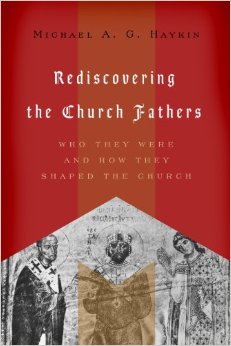
A Review: Rediscovering the Church Fathers by Michael A. G. Haykin

The significance of studying the church fathers cannot be measured. Their defenses of Christian doctrine against the earliest heresies, their rich interpretation of Scripture, and their brilliant philosophies are definitely worth careful consideration. Rediscovering the Church Fathers is a great place to start. As Michael A. G. Haykin walks you through the lives of the most important key figures in church history, you will find yourself captivated by the godly lives of these men who devoted their time and effort to edifying the body of Christ. This book is for anyone desiring to have a beginner’s understanding of the lives and writings of the early church fathers.

Haykin begins this book by stating its purpose in the first chapter: the need for studying the fathers among evangelicals. Haykin states that we should study the church fathers for such reasons as freedom and wisdom, understanding the New Testament, correcting mistaken views about the fathers, apologetic reasons, and for spiritual nourishment. The second chapter considers the life and thought of Ignatius of Antioch. He was known mainly for his martyrdom, and some even call him insane for the way he viewed his sure death. As Haykin brings out, Ignatius was willing to die by martyrdom because he “is certain that his martyrdom will please God” (p. 42). The argument of this chapter is that the Christian message was “so central [to] Christian orthodoxy, that it was worth dying for” (p. 48).

Chapter 3 is an examination of the apologetic writing, The Letter to Diognetus. Haykin walks you through the significant points of this letter and demonstrates how apologetically minded the author of this letter was and how this letter contributed to the shape of the early church in that it “permeated the ancient church’s witness to a sin-shaped culture” (p. 67). Chapter 4 is a study of the life and thought of the great exegete, Origen. Haykin gives a detailed biography of Origen’s early life and his contribution to the life of the early church by writing commentaries, books, and pioneering interpretation of biblical texts. This is one of the best balanced treatments of Origen that I have ever read. Chapter 5 is a look at the lives of two men who helped thrust religious piety towards the Lord’s Supper: Cyprian and Ambrose. Haykin shows the ways in which they both contributed to a biblical understanding of the Eucharist. Cyprian’s contribution was that he viewed the Eucharist as “a place where the believer knows afresh the forgiveness of the Lord and as a result is suffused with joy” (p. 97). This, of course, is the more reformed view of the Lord’s Supper. Ambrose’s contribution however, was that he identified “Christ’s words of institution as the means by which a change is effected in the elements of bread and wine” (p. 100). Ambrose’s thought would lead to a confusion of symbol and meaning, but nevertheless, both Cyprian and Ambrose are good representatives of the shifts in thought about the Lord’s Supper during that time. Haykin brings this out very well.

Then chapter 6 is a lengthy examination of the life and thought of Basil of Caesarea. This chapter is full of great quotes and rich writings from the pen of Basil, and Haykin shows what a great monastic reformer he was. Haykin mentions Basil’s defense of the Holy Spirit’s deity, during a time of controversy by noting the greatest work from the pen of Basil, namely On the Holy Spirit. This too, like the treatment of Origen, is one of the greatest readings on Basil of Caesarea. Chapter 7 is the last of the church fathers that are studied in this book, and it consists of a brief biography of Saint Patrick. Haykin tells us what the economic and social setting of that time was, and then proceeds to talk about Patrick’s career and his conversion. This is one of the most beautiful conversion stories in the history of the early church. What Haykin writes about Patrick’s conversion is worth getting this book. Haykin also notes what Patrick is most known for: his great missionary efforts. And Haykin concludes this chapter with a brief look at the impact he had on the Celtic church.

In chapter 8, Haykin gives a personal testimony to his encounter with studying the fathers. He talks about his honored mentors who introduced him to Patristics (the study of the church fathers), and encouraged him to further study. Then Haykin describes his doctoral studies on the life and thought of Basil and Athanasius. The appendixes of this book are also helpful. Haykin asks the question, “Where does one begin reading the fathers?” (p. 157). He then lists a number of helpful books that would aid anyone in their understanding of Patristics. Haykin concludes this book with an examination of one of his mentors, Jaroslav Pelikan, and his thought in Patristics. This part of the book is very touching because you get to see the personal life of Dr. Haykin.

What Haykin attempts to accomplish throughout this book is to give an outlook of how these early Christian figures have shaped our understanding of theology. They have contributed through their preaching, their many books, and in some cases their deaths. Haykin gives a new perspective on these great Christian thinkers by showing the different ways in which they have shaped contemporary Christianity.

Get Rediscovering the Church Fathers $9.39 for Kindle, or $13.82 Paperback.

The Biblical Command Not to Love

The following message was delivered at Ohio Valley Baptist Church the 27th day of July, 2014:

Familiarity

We are familiar with many commands in the Bible that tell us to love. We know all too well the passage where Jesus is questioned by the Pharisees about the greatest commandment: “Teacher, which is the great commandment in the Law?” And he said to him, “You shall love the Lord your God with all your heart and with all your soul and with all your mind. This is the great and first commandment. And a second is like it: You shall love your neighbor as yourself” (Matt. 22:36-39). We know 1 Corinthians 16:14, “Let all that you do be done in love.” And there are many other commands in the Bible to love others, to love God, to love the things of God . . . But have you ever considered that there may be a command in the Bible not to love? Well, there is, and we find it in John’s first epistle, the second chapter. We are very familiar with the biblical commands to love, but not as much with the biblical command not to love. It is a fatal spiritual tragedy if we ignore the biblical command not to love and as soon as we start obeying the command not to love, we will be loving God more, and loving others.

The Text: 1 John 2:15-17, ESV

15 Do not love the world or the things in the world. If anyone loves the world, the love of the Father is not in him. 16 For all that is in the world—the desires of the flesh and the desires of the eyes and pride of life—is not from the Father but is from the world. 17 And the world is passing away along with its desires, but whoever does the will of God abides forever.

The Exhortation: Do Not Love the World (v. 15a)

The first thing John tells his readers is “Do not love the world or the things in the world.” That is the only command in this text. The rest of the passage is John’s argument for why they shouldn’t love the world. So what does John mean by “do not love the world or the things in the world?” First of all, John isn’t talking about not loving the people of the world. To understand what he means, it’s important to define what the word “love” here means.

If you’ve studied the Bible for long, you know that the New Testament was not originally written in English. It was written in Greek. This presents some difficulty for readers today because the same English word may not be the same Greek word. There are actually many terms used for the word “love” in our English Bibles, and they don’t all mean the same thing. The word for “love” here is agapate. It means “to delight in.” Often times in the New Testament, it carries a negative sense to it. Let me show you.

This same Greek word is used by Jesus when He describes the hypocritical behavior of the Pharisees, listen for it: “Woe to you Pharisees! For you (agapate) love the best seat in the synagogues and greetings in the marketplaces” (Luke 11:43). They loved the adoration and pride of place, seen by the people as the religious rulers of that day. This was not a love for God, but loving to be worshipped by the people. John himself also uses this Greek word in his own gospel: “And this is the judgment: the light has come into the world, and people (agapate) loved the darkness rather than the light because their works were evil” (John 3:19). The people of the world, John writes, loved and delighted in the world because their works were evil.

So here in our text, the word “love” is negative. It is not the same word for love that John has been talking about when he says that we ought to “love our brothers” (2:10). This love that John is saying his readers ought not to have is a love that is focused on self-pleasure and self-gratification. He is talking about the sinful attractions of the world, and John says, “Do not love the world or the things in the world.” By him saying, “Do not love the things of the world,” he gives us more insight into what he means here. Do not love worldly pleasures, do not love the attitudes and values and attractions that are opposed to God!

What John means by “things in the world” is described in v. 16, which we will look at. People will do crazy things for what they love. Love for the world is to be avoided by the Christian.

The 1st Reason: Love for the World is Incompatible with Love for God (v. 15b)

So John commands against loving the world. But why? Why would it be a problem to love the world? John gives four reasons. The first reason John says not to love the world is because love for the world is incompatible with love for God (v. 15). Do not love the world because you cannot love God at the same time. He presents a possibility here and says, “If anyone loves the world, the love of the Father is not in him.” If it is true that there is anyone among you who does love the world, the love of the Father is not in him. If that’s a possibility to happen, who would be the one John is describing as the one who could love the world? It’s the person who doesn’t have the love of the Father in him.

What does John mean by “the love of the Father?” It does not mean God’s love for the believer—God is going to love you whether you love the world or not—He’s going to love you no matter what you’ve done or haven’t done: His love endures forever. What John does mean here is “your love for God.” He must mean that because he isn’t talking about God’s love for the world at all in this passage. He is talking to believers (like you and me) who were susceptible to falling in-love with the world, when they should be falling in love with God. If Christians could not love the world, then John wouldn’t have written this letter. He was writing to people just like us—they loved their brothers and sisters—they loved fellowship with one another, and fellowship with God. But they, just like anyone, can easily fall into the death trap of loving the world that promises us nothing!

Love for God is incompatible with love for the world; James writes an interesting statement about that truth: “You adulterous people! Do you not know that friendship with the world is enmity with God? Therefore whoever wishes to be a friend of the world makes himself an enemy of God” (James 4:4). James says that if you love the world, you put yourself over here in the category of the God-haters who are His enemies. Loving God and loving the world is like fire and water—they don’t mix. Either you’ve allowed the world to water down you love for God, or you love for God is so fiery hot that it has evaporated the love for the world. Don’t you be deceived into thinking that you can fully love God and love the world at the same time, but that is not true according to v. 15: “If anyone loves the world, the love of the Father is not in him.” Love for the world will push out love for God, or love for God will push out love for the world.

If your love for God has grown cold, then you have allowed other temporary things to creep in and choke your love for God. You have been allowing yourself to eat the crums at the floor of the world instead of feasting at the table of our God who gives spiritual satisfaction to all who seek Him.

The 2nd Reason: All That is in the World is From the World (v. 16)

John has commanded the believers against loving the world and says that the first reason they should not love the world is because love for the world and love for God is incompatible. The second reason, John writes, why we should not love the world is because all that is in the world is not from God, but is from the world (v. 16). John is explaining here why love for God and love for the world is incompatible. So what’s to be said about the good we see in the world? The trees, rocks, lakes, family, children and relationships? Is that what John is talking about? No, John defines what he means by “all that is in the world” in v. 16. He names three things that build on each other:

A. “the desires of the flesh”

First, John says that the “desires of the flesh” are of the world and not from God. Let’s talk about that word “desire” for a moment. The Greek word for “desire” here is epithymia. It is used 38 times in the New Testament and only three times is it used in a positive way. This word, like love that we talked about, is used mainly in a negative way. Here are some Scriptures that demonstrate its usage:

“Put to death therefore what is earthly in you: sexual immorality, impurity, passion, evil (epithymia) desire, and covetousness, which is idolatry” (Col. 3:5).

“But each person is tempted when he is lured and enticed by his own (epithymia) desire. Then (epithymia) desire when it has conceived gives birth to sin, and sin when it is fully grown brings forth death” (James 1:14-15).

“By which he has granted to us his precious and very great promises, so that through them you may become partakers of the divine nature, having escaped from the corruption that is in the world because of sinful (epithymia) desire” (2 Peter 1:4).

John doesn’t say that there is anything wrong with desire, but the “desires of the flesh,” that is from the world! He literally means that desires that come from the flesh. It is the whole of sinful man; in his rebellion. The flesh is our enemy! We have been born with a sin nature that is naturally rebellious against God—that gives us no excuse for running from God and having desires for other things besides God . . . But more so as a believer, we have no excuse for giving in to the sinful cravings of our flesh! We’ve been made new, we’ve got the Holy Spirit of Almighty God to give us the strength to resist sin and be obedient to the Lord, we need to heed the Bible when it says to “Crucify the flesh with its passions and desires” as in Galatians 5:24.

Your desires rule you. Did you know that you cannot even make a choice without a desire? You must first have a desire before you can ever even make a choice for something. And when it comes to the moment of decision, whatever you desire most is what you are going to choose. I’ve been trying to eat healthy for a few weeks now, and so when I go to town for lunch, I desire to eat a good salad. Well, when I get to the restaurant and I glance at the menu and see a bacon cheeseburger staring at me, begging me to eat it, my desires change. I have a conflict in me: I desire to eat healthy, but I also desire to eat the cheeseburger. If I choose a salad, ultimately my desire to eat healthy was stronger than my desire to eat a bacon cheeseburger. If I choose a bacon cheeseburger, then my desire to indulge was stronger than my desire to eat healthy. If I choose not to eat at all, my desire to not eat salad or the cheeseburger was stronger than my desire to eat.

We are desiring people by nature. That’s why it is so important to have a stronger desire for God than for the world! Because if you are desiring God, then the things you do will be influenced by that desire for God. The problem is, when we were born with our sin nature, we naturally desire sin and evil over God: “Claiming to be wise, they became fools, and exchanged the glory of the immortal God for images resembling mortal man and birds and animals and creeping things” (Rom. 1:22-23). I don’t know about you, but I’ve got the Lord, and that’s enough! I don’t need that sin that promises me nothing but sorrow, pain, and hurt. We need to fight sin and our evil desires of the flesh and replace those desires with desires for wholehearted worship and adoration and white-hot passion for God.

B. “the desires of the eyes”

It is important that John names this next in his list. Why? Because what you desire with your eyes is what you will desire with your flesh. The sinful cravings of the flesh are activated by what people see. The eyes are often the source of desire. And John tells his readers that the “desires of the eyes” are from the world, they do not originate with God. Jesus has much to say about the eyes:

“And if your eye causes you to sin, tear it out and throw it away. It is better for you to enter life with one eye than with two eyes to be thrown into the hell of fire” (Matt. 18:9).

What Jesus means here is not to be taken literal—please there was an early church theologian named Origen who castrated himself because of this verse. Jesus means here that we need to take whatever measure necessary to eradicate the sinful desires in our lives.

Another penetrating statement about this from Jesus is found in Jesus’ Sermon on the Mount:

“The eye is the lamp of the body. So, if your eye is healthy, your whole body will be full of light, but if your eye is bad, your whole body will be full of darkness. If then the light in you is darkness, how great is the darkness!” (Matt. 6:22-23).

We need to get filled with the power of the Holy Spirit, and keep ourselves under control when it comes to our eyes. We need to identify with the Psalmist David when he says, “I will not set before my eyes anything that is worthless. I hate the work of those who fall away; it shall not cling to me” (Psalm 101:3). The “desires of the eyes” are from the world.

C. “pride of life”

Pride is the chief sin—Pride lifts you up far above others and makes you think that you are even above God. John means here that the “pride of life” is boasting and arrogance. It is being puffed up in pride because of what you have on the earth. It expresses a sense of human self-sufficiency and independence from God. When you look at all that you have, Pride says, “Look what I did! I did this!” Against this, Paul writes, “What do you have that you did not receive? If then you received it, why do you boast as if you did not receive it?” (1 Cor. 3:7) So to boasting Paul says, “Let the one who boasts, boast in the Lord.” (1 Cor. 1:31). Pride is rooted in every sin that we commit. Pride is saying to God’s face when we sin, “I do not need You to be satisfied; I do not need You at all! I will find meaning and satisfaction in things of the world.” Proverbs 16:5 says, “Everyone who is arrogant in heart is an abomination to the Lord; be assured, he will not go unpunished.”

John has named three things that make up “all that is in the world.” The desires of the flesh, the desires of the eyes, and the pride of life. Are you desiring God or desiring the world? Surrender your sinful desires to God, give Him all the room He needs to work—but be willing to get rid of those sinful desires. “Let not sin therefore reign in your mortal body, to make you obey its passions” (Romans 6:12).

The 3rd Reason: The World is Passing Away (v. 17a)

John has exhorted the believers against loving the world and has given two reasons why not to love the world. Don’t love the world because love for God and love for the world is incompatible. Don’t love the world because all that is in the world is not from the Father, but is from the world: the desires of the flesh, the desires of the eyes, the pride of life. But further, the third reason why we should not love the world is because the world is passing away along with those desires which entice us: “And the world is passing away along with its desires” (v. 17a). John writes to his readers that it would be foolish to love the world, because it doesn’t last—it is passing away. Not only that, it is passing away along with its desires. The world is passing away and its days are numbered. All that is against God and His grace is passing away. There is no future in worldliness. There are two ways in which the world is passing away:

A. Temporary by Nature:  What it offers is temporary—it is not eternal; it does not last. Solomon has some wisdom from Ecclesiastes concerning this: “He who loves money will not be satisfied with money, nor he who loves wealth with his income; this also is vanity” (Eccl. 5:10). Solomon is establishing a very important truth: Sin never satisfies. Sin will always tell you need more and more of it to be satisfied, that you will not be satisfied until you have it. But that is a lie! The author of Hebrews writes that the pleasures of sin are fleeting (11:25). Sin will never be enough—only God is enough. Further, Peter writes, “They have eyes full of adultery, insatiable (impossible to be satisfied) for sin. They entice unsteady souls. They have hearts trained in greed. Accursed children!” (2 Pet. 2:14, emphasis mine).

B. Consummation: It will one day be gone, but made new. The Bible says that we are awaiting a new heavens and new earth. Again from Ecclesiastes, “All go to one place. All are from the dust, and to dust all return” (Eccl. 3:20). Everything in this world that is material and contrary to God, will one day waste away. Back in 1987, Kansas released a song titled, “Dust in the Wind.” Kansas guitarist Kerry Livgren wrote this after reading a book of Native American poetry. The line that caught his attention was “For All We Are Is Dust In The Wind.” This got him thinking about the true value of material things and the meaning of success. The band was doing well and making money, but Kerry realized that in the end, he would eventually die just like everyone else. No matter our possessions or accomplishments, we all end up back in the ground.

Do not be fooled into living for the moment. “Do not conform to the ways of this world” says Paul in Romans 12. Let us work and think and plan and desire all to exalt God and to make Him known—let us do those things which really matter: worshipping God and making His name known where it is not exalted. This world will one day pass away with everything in it.

The 4th Reason: Whoever Does God’s Will Abides Forever (v. 17b)

John has given three reasons so far as to why we ought not love the world. The fourth reason is found in the latter part of v. 17: ” . . . but whoever does the will of God abides forever.” In contrast to the person who loves the world, the Christian who does God’s will shall abide forever. This is the climax of John’s argument for why not to love the world. I don’t know about you, but this is who I want to be: “whoever does the will of God abides forever.” Who is the one who would do the “will of God?” Well, in this context, John is talking about salvation because he says that whoever does God’s will “abides forever.”

John writes much about abiding forever in his gospel:

“I am the living bread that came down from heaven. If anyone eats of this bread, he will live forever. And the bread that I will give for the life of the world is my flesh” (John 6:51).

“I will give them eternal life, and they will never perish, and no one will snatch them out of my hand” (John 10:28).

“And everyone who lives and believes in me shall never die” (John 11:26).

So who is it that will overcome the world? Who will be able to overcome the sinful desires of the flesh? Who will be able to overcoming loving the world? John asks the same question in 1 John 5:5, “Who is it that overcomes the world except the one who believes that Jesus is the Son of God?” Friends, if you a believer in the Lord Jesus Christ—if He has made you a new person, you will abide forever. You have the power accessible to you to overcome loving the world and loving the desires of the world. You know what the difference is between you loving the world and someone who doesn’t know Christ as their Savior? John answers that question: “We know that we are from God, and the whole world lies in the power of the evil one” (5:19).

John Presents the Biblical Command Not to Love

John gives the biblical command not to love. If you are loving the things of the world, God can change your desires. Confess it to Him, repent, allow Him to work in you—fall inlove with Him by getting to know Him through the Bible. John tells us that everything in the world is not from God, but from the world. If you have problems with these desires that John named, get things right with God, and through the power of the gospel of Jesus Christ, you will overcome them. Overcoming our desires is not just something we ought to do, or something we need to do—it’s something we can do through Christ who strengthens us. John reminds us that this world is passing away, but whoever does God’s will abides forever. What John presents for us in this text, my friends, is the biblical command not to love.

Theological Reflections: God’s Omnipotence and Logical Possibility

The omnipotence of God is a central, biblical doctrine to Christianity. It refers to God’s all-encompassing power. He is the all-powerful Lord who has created all things and sustains them by the Word of His power (Gen. 1:1-3; Heb. 1:3). God reveals in the Bible that He is all-powerful and in the final sense, He is the ruler of nature and history. Psalm 147:5 reveals, “Great is our Lord, and abundant in power; his understanding is beyond measure.” Similarly, Job says “I know that you can do all things, and that no purpose of yours can be thwarted” (Job 42:2, emphasis mine). The Scriptures reveal, then, that God is all-powerful—He is omnipotent. Further, if God is infinite, and if He is sovereign, which we know He is, then He must also be omnipotent. He has all power over all things at all times and in all ways.

Given this understanding of God’s omnipotence, does this mean that God can sin or bring about contradictions in Himself? After all, He can do all things. Some people shriek when any limitations, logical or physical, are placed on the power of God. The Scriptures reveal, however, that there are certain things that even an all-powerful God cannot do. Ronald H. Nash writes, “If there is anything to be learned from the classical Christian discussions of omnipotence, it is that omnipotence was always understood to be compatible with certain limitations on God’s power.”¹ How is God’s power “limited” in regards to logical and physical possibilities? First, if something is physically impossible, no human can perform that act in the real world. More than that, if something is logically impossible, then it cannot be done in the real world (or other possible worlds) by anyone or anything under any conditions (that would include God). So in relation to God, His omnipotence does not extend to things that are logically impossible. This does not count against His omnipotence, however, because as Frankfurt observes, “If an omnipotent being can do what is logically impossible, then he can not only create situations which he cannot handle but also, since he is not bound by the limits of consistency, he can handle situations which he cannot handle.”² If God was above the law of non-contradiction and the matters of logic, then He would be unknowable and unintelligible. So then, God’s inability to perform the logically impossible does not count against His omnipotence. Those logical impossibilities just cannot be done.

So when it comes to matters of contradictions within the Godhead, or the question of God’s ability to sin, or ability to bring about a contradictory state of affairs, those are logical impossibilities. Logical consistency is a necessary condition for God’s omnipotence, not merely physical possibility. Is sin a logical and physical possibility? Yes. After all, sinning is done by humans all the time and it is logically and physically possible. How then, can God not sin? Early Christian thinkers like Thomas Aquinas and Anselm were faced with the same question. They pointed out that God could not sin because the ability to sin is not a power. Writing about Anselm, Nash observes that “[Anselm suggested] that the ability to sin results not from power but from lack of power.”³ If God could sin, then that would mean a lack of power, which would then mean that He is not omnipotent. God’s inability to sin, then, is not contradictory to His omnipotence. This compatibility does not mean that “God is above logic” or that the law of non-contradiction is a limitation on God’s power. Nash writes, “no logical contradiction results from ascribing a certain action like sinning to a human being, the action does become self-contradictory when it is attributed to God.” In conclusion, the Scriptures attest to God’s omnipotence, but do not support the view of a God who can do the logically impossible—it cannot be done.


1. Ronald H. Nash, Life’s Ultimate Questions: An Introduction to Philosophy (Grand Rapids, MI: Zondervan, 1999), 306.
2. Harry G. Frankfurt cited in Nash, 311.
3. Nash, 312-313.
4. Nash, 314.

Theological Reflections: Is Open Theism Biblical?

There are certain essential attributes that theology ascribes to God. These attributes are drawn from what is clearly revealed in the Bible about God’s nature. Among these essential attributes are: omnipotence (God is all-powerful), omnipresence (God is all-present), and omniscience (God is all-knowing). All of these are equally important, and require careful study and attention. For God to be God, these attributes must be His nature. He must be all powerful, able to do anything—He must be always present with His creation, and He must be all-knowing, not restricted by any means.

God’s omniscience, however, presents a struggle in matters of God’s power to know all things, and how that relates to human freedom. Omniscience refers to God’s perfect knowledge about the past, present, and the future. Biblical Christians have always affirmed that God is omniscient, but recently certain thinkers have denied God’s perfect knowledge about the future. These “certain thinkers” are proponents of what is known as open theism. Their denial of God’s complete omniscience is due mainly to their system of theology that seeks to answer a problem in relation to God’s omniscience and human freedom.

Since God is all-knowing, this implies that He must know the future. If He knows the future, this poses difficulties for the freedom of human choices and ability. If God knows what humans will do in the future, do humans have the ability to do anything other than what God knows they will do? If humans had the power to do something other than what God foreknows, then God would be mistaken—His knowledge would be false, thus He would not know the future. Ronald H. Nash writes, “God’s foreknowledge would have actually been fore-ignorance.”¹ So the nature of the problem is reconciling God’s divine foreknowledge of the future, with human freedom in regards to their choices and abilities.

The system of theology known as open theism has attempted to provide an adequate answer to this difficulty. Defined by Nash, the basic tenet of open theism is this: “[Proponents of open theism] believe it is necessary to eliminate God’s knowledge of future human actions in order to preserve a sphere of human free will.”² In order to “protect” human freedom and reconcile this problem of divine-foreknowledge-human-freedom, God cannot have knowledge of any future human decisions, or those decisions would lose their significance. As open theists propose, God can have no knowledge about future human possibilities. Those who hold to this view say that God cannot know these things because there is nothing to know—the decisions, choices, and actions have not been made by humans yet because they are future contingents, and not done in the past. The past is fixed, but the future is not, and since those actions have not yet been done, God could not possibly know them.

It is important to point out that, though open theist deny God’s knowledge of the future, they are not necessarily saying that God doesn’t know about everything in the future. According to their view, God knows that “the multiplication tables will be true in the future, just as he knows that the law of gravity will continue to obtain.”³ God doesn’t know the specifics about future contingents—He just knows the fundamentals, if you will, those things which can be accurately predicted because they do not change. Things like natural laws and obvious consequences. But if God can know one contingent like these, how can He not know more? Who or what is the authority in determining how many future contingents God can or cannot know?

Open theism, then, creates more problems than it attempts to resolve. The theological implications of a limitation on God’s foreknowledge are possibly something the proponents of open theism have not considered. One implication is that God would have no knowledge of which human beings will come into existence in the future. God had no knowledge of anyone’s future existence, and He couldn’t have (if they did not yet exist). How then, would the atonement of Christ accomplish anything at all? This would mean that God sent Christ to die with the possibility of dying for no one—for He had no way of knowing if even one human being would come to faith. Nash writes, “Just as the God of open theism cannot know which future human beings will exist, neither can he know which future humans will become Christian believers, will receive his salvation, and will be blessed with eternal life.”

This theory of open theism also does serious damage to the teaching of the knowledge of God revealed in the Scriptures. God “knows everything” (1 John 3:20), and even says of Himself, “[I declare] the end from the beginning and from ancient times things not yet done, saying, ‘My counsel shall stand, and I will accomplish all my purpose’” (Isaiah 46:10). The psalmist writes, “Even before a word is on my tongue, behold, O LORD, you know it altogether” (Psalm 139:4). Open theism, therefore, cannot provide an adequate reconciliation for the struggle between God’s foreknowledge and human freedom. The Bible affirms that God knows all things, and that He knows the future perfectly. God has true foreknowledge of what human beings will do in the future, and those actions are determined, while at the same time, not violating human free will. All human choices and future contingents will therefore be what God already knows they will be.


1. Ronald H. Nash, Life’s Ultimate Questions: An Introduction to Philosophy (Grand Rapids, MI: Zondervan, 1999), 316.
2. Nash, 317.
3. Nash, 320.
4. Nash, 323.

The Need for Biblical Interpretation

The need for biblical interpretation is ever-increasing in our postmodern age, especially considering the growing pluralism in the world. Since God is the ultimate authority in all matters, and we believe that the Bible is God’s very words, we look to the Bible for a solid foundation to all matters of life. Because of this, we want to know what the Bible means. In order to find this out, we need to reflect on how the meaning of the Bible is obtained.

Since we know that the books and letters of the Bible are a written form of communication, we know that three main components are involved, because these three components are part of any written communication. These are: the text/writing, the reader, and the author. First, it is important that we evaluate all three and see if they could be the determiners of meaning. We are asking, “Who or what determines the meaning of a biblical text?” The text cannot be the determiner of meaning because it is an inanimate object, and cannot produce meaning—it may convey meaning, but can never produce it. The reader cannot be the determiner of meaning, because if that is true, then there can be as many meanings as there are readers—and they cannot all be right. The author as the determiner of meaning is the only legitimate conclusion. The author meant one thing by what he wrote, and that intention was fixed at the time of writing—and cannot be changed. All literature is rightly interpreted this way.

Therefore, the main goal in interpreting the Bible is determining what the author meant by what he wrote. This goal that we want to reach cannot happen spontaneously, however. There are many barriers to discovering what the author meant by what he wrote. Historical barriers, cultural barriers, linguistic or language barriers, and philosophical barriers. Because of these barriers, the need for biblical interpretation is created.

First of all, we are centuries in time difference from the authors of the Old and New Testaments. There were things that were common to them back then, that may not be to us today. For instance, we cannot necessarily interpret Leviticus through a 21st century lens. Second, there are many cultural differences that cause a barrier between us and the time of the biblical writers. Namely, oaths and marriages were quite different in that day than in ours. It would not be sound, then, to think of Mary and Joseph’s “betrothal” (Matt. 1:18-25; Luke 1:26-56) as simply an engagement in our time because engagement is culturally relevant to our world today. The culture then was much different than today, and this creates the need for biblical interpretation. Third, the very language of the Bible is not the language we speak. The original language of the Old Testament was Hebrew (with portions of Aramaic), and the New Testament in Greek. Hebrew and Greek are an entirely different language, with different letters, usages, rules, and phrases. Biblical interpretation is important because in order to determine what the author meant by what he wrote, we must look at the original languages as best as we can. Finally, the philosophy of the Bible is very different than that of our 21st century. We live in a postmodern world with pluralistic ideologies. This creates the need for biblical interpretation because the philosophy of the Bible is not pluralistic, and it is not hedonistic either, like our world is today. People today doubt the existence of a Triune God, while the people of Bible times just assumed His existence—their philosophy was different.

So then, discovering the author’s intended meaning will require biblical interpretation in light of all of these barriers that might hinder us from finding out the meaning that the author intended.

[Below is an addition, published on July 29, 2017]

So do we arrive at the true meaning of the Bible based on our own interpretation of the Bible? Can we arrive at a biblical interpretation on our own? Do we all have an equally valuable opinion about what Scripture means? Does everyone have a shot at biblical interpretation and can we use any rules of interpretation we want? It’s not exactly as simple as it may sound.

Consider the oft spoken phrase, “Well, that’s just your interpretation.” This is easily the most cliche statement uttered in Christian circles, usually when there is disagreement about the meaning of a text. And it is becoming quite wearisome to continually hear it spoken as a defense of one’s own interpretation of a text. Usually they add, “That’s your interpretation and this is mine.” I will go ahead and say at the outset that there are two fundamental reasons why this assumption is not only wrong, but even heretical in my estimation. First of all, it allows for everyone and anyone to have any opinion whatsoever about the meaning of Scripture. And secondly, it doesn’t allow the real meaning of the Bible to be preserved and taught.

Let’s deal with the first reason. It may sound narrow-minded to say that no one should be allowed to have as many opinions as they want about the meaning of Scripture, and yes – it is narrow-minded, but in a good way and I will explain this more later. The fallacy with this idea that everyone has a “say-so” concerning the meaning of Scripture is found in the implications and logical conclusions of that approach. What this approach to interpretation implies is that there is no real, concrete, or reliable interpretation of any biblical text whatsoever. If everyone has an equal say in what a text means, and if everyone’s assumption holds equal value (what this assertion implies), then there can be no real meaning. If A is equally valuable to B, C, and D, and they are all esteemed as possibly correct interpretations, then either everybody is right or everybody is wrong.

Now, let’s be honest – most of those interpretations are likely going to contradict one another. Most of the time varying interpretations contradict one another, otherwise there would be no disagreement leading to a round table discussion where everyone gives their opinions about meaning! And in the case when those interpretations do contradict, plain sense would tell you that not everybody around the table has an equal say about what a biblical text means. Either they are insane, or the authors of the Bible were insane. If Billy thinks the verse means that Scripture is without error, and Sally thinks the verse means that Scripture is full of error, then somebody is wrong because those two assertions contradict one another. Both of them might be wrong, but both of them cannot simultaneously be right.

The second reason this approach to interpretation is wrong also has to do with consistency – the author’s original meaning is no longer preserved. Consider that we do not believe it to be ethical or right to take a historical document and twist it anyway we want. When a document is written in history, the author’s meaning is sealed forever. Therefore, the only correct interpretation of any historical document must be in harmony and accordance with what the author really meant by what he wrote. We dare not do this with great works in history such as the writings of Eusebius, or Josephus, or the Constitution. One could possibly be jailed for reading something into those documents that was not intended by the original author.

So then, it is absolute insanity to suppose that it is wrong to do this with historical works, but it is right to do this with the Bible. The Bible is the word of God, supremely more valuable than any historical document – and like any historical document its meaning is sealed in history forever. The only way one can discover its meaning is by discovering the author’s original meaning – which we are very much able to do.

But note the insanity of interpreting a written text in any fashion desirable: If I text my wife that we need milk and eggs, she is not free to interpret that in any way she wants, and neither is anybody else. To take it a step further, let’s suppose I send her that text on Monday, and she doesn’t read it until Wednesday. Can she now interpret that anyway she wants, because it is an old message? I would believe her to be insane if she sat down with a group of her friends for two hours trying to figure out what I meant by that text. How strange would it be for each of her friends to offer a different interpretation of what I meant by that text. One might say, “Well here’s what I think – he probably wants you to buy rice milk and snake eggs.” Another remarks, “Your husband strikes me as the type that likes to get prepared, so he probably wants you to bring home a cow and a few chickens so that you never have to go to the market to buy milk and eggs ever again.” Another says, “Well, let’s think about it this way – what do you get when you mix milk and eggs? Usually scrambled eggs, right? He probably has a craving for some scrambled eggs from Cracker Barrel.”

It sounds ridiculous, doesn’t it? Clearly, I meant that my wife needs to pick up a gallon of milk and a carton of eggs from the supermarket. But with a philosophy of interpretation that allows for anyone to interpret what I wrote in any way they want, the original meaning is lost and no longer preserved. In fact, the value of my text becomes virtually worthless. The interpretations make my text obsolete. My text no longer has any value if it is subject to this many interpretations. Neither are we allowed to do this with the Bible!

It doesn’t matter what your interpretation is, and it doesn’t matter what my interpretation is. What matters is the right interpretation. We must answer the question: What did author of the text mean by what he wrote to the original audience?

Clearly, there are many other rules of interpretation to follow when seeking to discover the author’s original meaning. But all of those rules must flow from pursuing the answer to this one question. Therefore, any interpretation which does not agree with the author’s original meaning is false and should be rejected. And we discover the original meaning through careful study of the context, study of history, study of the original languages, and many other things. I understand that many of us do not have either the time nor the professional training required to use all of those means listed to discover the author’s original meaning. But there is one rule of interpretation upon which we must all agree. And this one rule of interpretation is fundamental to understanding any verse of Scripture, and it is certainly fundamental to discovering the author’s original meaning by what he wrote. In addition, while we may not know much of how to use those means of discovering the author’s meaning listed above, this one rule alone will suffice. In fact, all of those other means proceed from this one rule, therefore even using them is an extension of using this one rule (and to some degree is necessary to using this one rule in its fullness). This one rule concerns consistency, and it is this: We must interpret Scripture with Scripture. We must do so, brothers and sisters. This is to say, what we assert as an interpretation of any biblical text must agree with Scripture as a whole. If our interpretation is in disagreement with any other verse, idea, or teaching in Scripture then our interpretation is wrong and must be changed.

To the example earlier, if Sally asserts that the correct interpretation of 2 Timothy 3:16 is that Scripture contains error, then we must endeavor to discover if that interpretation agrees with the rest of Scripture. And anybody who knows their Bible even remotely understands that 2 Timothy 3:16, and Scripture as a whole refutes that interpretation. The Bible itself claims that it is a book that should be received as the divine revelation of God, for that is what it is. Therefore, it is without error and inerrant. So Sally’s interpretation is wrong.

Well, that’s just your interpretation.” Let us both stop saying this and encouraging others to do so. We are not free to interpret the Bible any way we want – we are only free to discover the author’s original meaning by what they wrote in the sacred text. Let us study the Scriptures daily to discover their true meaning, and may our interpretations be in unison with the overall teaching of Scripture.

Having Coffee with Your Trials (James 1:2-4)

The following message was delivered at Harmony Baptist Church in West Paducah, KY on June 22, 2014:

Introduction

As an Associate Pastor, I’ve had the privilege to counsel with many teens and church members alike. About a year ago, I counseled a middle school girl whose baby sister passed away unexpectedly. I did the best I could to share with her the comfort and compassion of God from the Scriptures. Just recently, for hours I counseled a young man whose uncle passed away from a heroin overdose that no one ever knew about. I’ve counseled many hours with a woman who has a wayward daughter with a severe drug addiction.

We all face trials in our lives. Charles Spurgeon says, “Sometimes God sends His mercies in a black envelope.” As a concerned pastor, I always try to share with our members the best advice from the Scriptures during their time of need. In our New Testaments we have a letter from a very concerned pastor. This letter is often called the “Proverbs of the New Testament” because of its wisdom. It is the letter of James.

The reason I have titled this message Having Coffee with Your Trials is because I would like you to picture yourself having a meeting with your trials. That’s the way our text presents trials to us: as a meeting. What are they? Financial, family, physical trials? Whatever they are, I want you to look them at them right in the face—look at them through the biblical perspective (as James presents) so that we can reap the full biblical benefit. As we delve into this pastoral advice from James’ pen, imagine yourself conversing with your trials about the truth from God’s Word.

The Text: James 1:2-4

“Count it all joy, my brothers, when you meet trials of various kinds, for you know that the testing of your faith produces steadfastness. And let steadfastness have its full effect, that you may be perfect and complete, lacking in nothing.”

Trials are a very important thing to James as he is writing to this letter. If you’ve read your New Testaments for very long, you have probably seen that most authors of New Testament books or letters, introduce themselves and then express their thanksgiving for the believers (to whom they are writing) and offer up a prayer. But not so with James—he gets right down to what he think is most important—and that is telling his readers about the biblical perspective and the biblical response, and the biblical result of trials experienced by the Christian.

There are at least five observations to be seen here in this verse:

1. Trials Are to be Counted as Joy by Believers (v. 2a)

First, James dives right into exhorting his readers to do something: to count their trials as joy. However, before we can discover what James is saying by this, I think it is beneficial to discover what he is not saying: James does not say that joy is the only response to trials. He is not suggesting that Christians facing trials will never have any other response to them but joy. Christians have many different responses to trials—perhaps anger at God, shaking their fists at Him, begging to know: “Why did You let this happen?” Sadness is often a response to the trials Christians face. Exhaustion perhaps because of so many trials faced at one time. The response I have had so often to trials is just desiring to escape—I just wanted to get out. But James says that the response we are to have towards our trials is joy—we are to count them as joy. Further, James is not ordering all-encompassing joyful emotion during severe trials; nor is he demanding that his readers must enjoy their trials, or that trials are joy. Joy isn’t the only response, but it is the biblical response and you had better face regard your trials as joy if you are to reap the full benefits.

What he is saying is that trials should be an occasion for genuine rejoicing because we know that they produce perseverance in us. The Greek word for “count” here is a verb in the Greek; it is hegesasthe, and it is implying that an action be done. The word means to “consider, think, regard” your trials as joy. Now, joy is different than happiness. Joy depends on your relationship with God—while happiness depends on your circumstances. Happiness comes and goes, but joy remains. We are to have this “joy outlook,” on our trials.

Have you ever looked through a pair of 3D glasses? It’s alters your perspective. When you watch a movie, you see what seems to be real objects and real things happening to you in a theater. We need to put our biblical glasses on and view our trials through the lens of joy.

2. Trials Happen to Believers (v. 2b)

Not only does James say that we are to count our trials as joy, but he implies that trials happen to believers. Look at v. 2. To whom does he command to count it all joy? “My brothers.” This is James’ favorite address of his readers—he uses the word “brothers” 14 times in this letter. He was a concerned pastor of the Jerusalem church and loved his people. And he told them that trials happen to believers.

Many people believe that being a Christian means that you are immune to trials and difficulty. “Christians must really have it easy” they say, “Surely, as the children of God, nothing bad can ever happen to them. If God is truly their Father and He is filled with love and compassion, it must be true that all Christians live on easy street.” But that is the opposite of what James says here.

3. Trials Are Sure to Happen (v. 2c)

Trials are endured by both Christians and non-Christians. Jesus says, “For he makes his sun rise on the evil and on the good, and sends rain on the just and on the unjust” (Matt. 5:45). But even further to his point that Christians endure trials, James says that trials are sure to happen. Notice what a major difference one word makes in this text. Put the word “if” in place of “when.” “If you meet trials of various kinds. . .” But James doesn’t say that. He says “when you meet trials.”

God promises that trials will come. Not only here in James, but Christ Himself does: “I have said these things to you, that in me you may have peace. In the world you will have tribulation. But take heart; I have overcome the world” (John 16:33).

Let me ask you a question: Do you believe that your salvation is secure in the hands of God? Do you believe Christ when He says of you, “My Father, who has given them to me, is greater than all, and no one is able to snatch them out of the Father’s hand” (John 10:29)? If salvation were in your hands—you’d lose it—but the holes in His hands are the proof that He’ll never drop you. You believe that promise with all your heart? Then you had better believe “In the world you will have tribulation” with the same assurance. It came from the same mouth.

Further, Paul writes, “But as servants of God we commend ourselves in every way: by great endurance, in afflictions, hardships, calamities, beatings, imprisonments, riots, labors, sleepless nights, hunger” (2 Cor. 6:4-5).

4. Trials Occur Unexpectedly But Should be Expected (v. 2c)

James writes that trials happen when you least expect them. James says, “when you meet trials.” If trials are met, then they were not expected—but . . . we should expect them. The Greek word for “meet” here is peripipto, a verb that means “to fall into the hands of.” Now read it that way: “Count it all joy, my brothers, when you fall into the hands of trials.” Isn’t that how it happens folks? You fall into the hands of an unexpected bill . . . you fall into the hands of a cancer, disease, or sickness . . . you fall into the hands of death or maybe family problems and the like. We don’t know these things are coming so wouldn’t it be wise to place our faith and trust in the One who knows they are coming? The One who knows all things? God knows when our next trial is coming—we ought to be trusting Him to give us the strength to face it when it comes.

How many of you have hit a deer with your vehicle before? Probably most of you. I’m sure you didn’t say, “Well, honey let’s go out tonight looking for a deer we can run over—oh and then we will take out a loan to get our car fixed because we totaled it.” No, every deer you’ve ever run over—it was unexpected. But since then, you are on the lookout for them every night. Driving slow in wooded areas because you know one of them might come out. Let’s have the same attitude about our trials—let’s expect them to come even when they are unexpected.

5. Trials Are Various: (v. 2c)

James also says that trials are of various kinds. The trials his readers were facing was most likely poverty and religious persecution. I say poverty because he makes clear that the majority of his readers are poor. One example: “Listen, my beloved brothers, has not God chosen those who are poor in the world to be rich in faith and heirs of the kingdom, which he has promised to those who love him?” (James 2:5). I say religious persecution because rich people at that time were persecuting the Christians by withholding from them their wages and pay: “Behold, the wages of the laborers who mowed your fields, which you kept back by fraud, are crying out against you, and the cries of the harvesters have reached the ears of the Lord of hosts” (James 5:4). But it’s interesting that James doesn’t explicitly say, “Count it all joy when you face trials of poverty and religious persecution,” because he could have. He was writing to a specific people with a specific purpose. But he was also writing under the inspiration of the Holy Spirit. James casts the net widely including all of the many trials that Christians face simply by saying, “trials of various kinds.”
We face trials of all kinds: death of a family or friend, financial struggles (providing for your family, etc), dealing with disease or sickness, problems in the marriage, possibly your career is going down the drain. And to all of those, James says, “Count them all joy.”

What kind of response to you have towards your trials? Do you count them as a joy? Are you viewing your trials through the lens of joy?

You may say, “Alright, I want to regard my trials as joy, but why would I do that?” Why would you view your trials through the lens of joy? What reason is there to count your difficult trials as joy? James answers in v. 3: “for you know that the testing of your faith produces steadfastness.”

Other New Testament writers express this very same thing: Paul writes in Romans 5, “Not only that, but we rejoice in our sufferings, knowing that suffering produces endurance, and endurance produces character, and character produces hope” (Rom. 5:3-4). Similarly Peter says, “In this you rejoice, though now for a little while, if necessary, you have been grieved by various trials,  so that the tested genuineness of your faith—more precious than gold that perishes though it is tested by fire—may be found to result in praise and glory and honor at the revelation of Jesus Christ” (1 Pet. 1:6-7).

James gives his readers the reason for his seemingly irrational call to count their trials as joy. Here’s how it is possible to “count [your] trials as joy”: for you know that the testing of your faith produces steadfastness/perseverance.

So there are two important observations to be made about v. 3 of our text:

1. Believers Ought to Know That Trials Are a Testing of Their Faith (v. 3a).

First of all, James assumes that his readers “know that the testing of [their] faith produces steadfastness.” It is on the basis of this knowing that they are able to count their trials as joy. “Count it all joy, my brothers, when you meet trials of various kinds, for you know that the testing of your faith produces steadfastness” (vv. 2-3). They are able to count their trials as joy because of what God Almighty is doing in the midst of those.

You’re not alone in your trials! We serve a Christ who has been where we are: He suffered the same ways in which you have and the same ways in which you will suffer—in fact, He suffered much worse. God is faithful to those who are faithless, God is with us, God is in us, and God is for us. We have all we need in God alone and He is even working in our trials and difficulties: “And I am sure of this, that he who began a good work in you will bring it to completion at the day of Jesus Christ” (Phil. 1:6). God is working in your trials and He is refining your faith—and James says that you need to come to the place where you know that this is God’s purpose in trials.

The Greek word for “know” here is ginosko: To illustrate the importance of the word “know” here, it is helpful to see how it is used by other biblical writers:

Peter writes, “Knowing (GK: ginosko) this first of all, that no prophecy of Scripture comes from someone’s own interpretation” (2 Peter 1:20). Peter is talking about the inspiration of the Holy Spirit in Scripture, saying that nobody just came up with the Bible—it was penned by men of God under the divine inspiration of the Holy Spirit. When Peter says, “knowing,” it’s the same Greek term as used here in James. The inspiration of the Holy Spirit in the writing of Scripture is a conviction that is held by evangelicals, in fact, if you deny that the Word of God was inspired by the Holy Spirit, then you deny the fact that it is the Word of God. And Peter writes here that we should ginosko this first of all—that we should know this; understand this deeply. And in the same way, James writes, I believe that we need to come to a place of spiritual conviction that we know that our trials are a testing of our faith.

Normally when you test something, you are testing the genuineness of it. For example, computer companies put their laptops, tablets, through a series of tests to see if they are going to hold up under years of use—lots of space/memory used, etc. They see how much a computer can take and they work on it to make improvements. Most tests we think of are for reliability—“Is this product useful? Is it reliable?” But if a company really cares about the customers, they will work to improve their product. That is the idea that James has here. He is not saying that trials are a test to see whether or not you are a Christian. He cannot be saying that, for even non-Christians experience trials. Even more, the test of genuine faith in Christ is a life of holiness expressed in good works: “Faith without works is dead” (James 2:14-26).

James is saying that God uses trials to perfect our faith and to make us stronger Christians—to produce in us steadfastness.
Why should you know that? So you can count it all joy. But the full joy doesn’t come without also knowing the rest of it: James continues. . .

2. Trials, Which Are a Testing of Faith, Produce Perseverance (“steadfastness”) (v. 3b)

James states here that trials produce steadfastness. James is not simply identifying with Kelly Clarkson by saying, “What doesn’t kill you makes you stronger,” okay? James is saying that trials in life are intended by God to refine our faith: to get us so heated in the crucible of suffering so that impurities are refined away and so that we become pure and valuable before the Lord—trials are intended to purify the faith that we already have. Kent Hughes writes, “Here is how this works: we develop toughness or fortitude by repeatedly being tested and prevailing. The more tests we pass, the tougher we become. As a boxer engages in bout after bout, he toughens and becomes wiser and stronger. After a time he develops such fortitude, perseverance and staying power that he can take on the best. There is no way a fighter, or any of us, can develop toughness without testing!” (1

What kind of perseverance is this? The perseverance mentioned here is like “spiritual toughness,” it doesn’t mean that you are going to become prideful and full of yourself, but that you will gain true strength for trials—you will learn to remain faithful to God when the going gets tough. He tells his readers to count all their trials as joy because it is a testing of their faith that produces. Proverbs offers us similar wisdom: “The crucible is for silver, and the furnace is for gold, and a man is tested by his praise” (Prov. 27:21).

Do you know that trials are a test of your faith or do you think that they are just “that old devil,” as some say? Do you count your trials as joy because you know they produce perseverance?

We have seen that trials happen to believers and are to be regarded as pure joy because we know that they are tests of our faith—and those tests produce perseverance. But James has yet more to say about this virtue of perseverance: “And let steadfastness have its full effect, that you may be perfect and complete, lacking in nothing” (v. 4)

As with the other verses we have looked at carefully, there are two observations to be made about what James writes in this verse:

1. Believers Ought to Allow Perseverance To Do Its Intended Work (v. 4a)

James writes to his readers: “Let perseverance do what it was intended to do! Let it have its full effect.” This is your response—let perseverance do it’s work in your test of faith. Matthew Henry writes, “Let us allow it to work, and it will do wonders in a time of trouble.” (2)

You need to regard your trials as joy because you know that they are a testing of your faith. That will produce spiritual toughness in you—but your response to all of it is this: Let perseverance have its full effect. Don’t hold back. Let God work in you. Why? What is the purpose of allowing perseverance to work in you?

2. Why Believers Ought to Let Perseverance Do Its Intended Work: Spiritual Maturity (v. 4b)

Testing, according to James, is intended to produce your Christian character—when you respond to your trials with confidence in God and determination to endure. Trials do not make you “perfect and complete,” it is allowing perseverance to do its intended work that makes you (eventually) perfect and complete.

Do you know how real pearls are made? When an irritating object, like a bit of sand, gets under the “mantle” of an oyster’s shell, he simply covers it with the most precious part of his being and makes of it a pearl. The irritation that it was causing is stopped by encrusting it with the pearly formation.

What seems like the worst thing you’ve been through in your life is actually an opportunity to grow in your dependence on God and allow Him to develop perseverance in you so that you will be like a pearl in your Christian walk—perfect and complete. That’s God’s ultimate goal for you—to make you perfect and complete like Jesus Christ. God is working in you every day to make you more and more like Jesus. Are you allowing Him to?

Are you allowing spiritual toughness to develop in you? Are you allowing perseverance to make you perfect and complete in your Christian walk?

Conclusion

We have seen today that trials are to be regarded as pure joy—and why? Because in them, God works perseverance in us to bring us to spiritual completion. We have also seen that trials are a testing of our faith that produces steadfastness. And in v. 4 we saw that we are to allow perseverance to have its full effect in us.

Are you viewing your trials through the lens of joy?
Do you really know that trials are a testing of your faith?
Are you allowing perseverance to be fully developed in you?

One of these days we will be free from this world of trials and sin—while we’re here, lets allow God to do what He wants with us during our trials. To quote C. H. Spurgeon, “It is true that we endure trials, but it is just as true that we are delivered out of them.”


1. Kent Hughes, James: Faith That Works (PTWC) (Wheaton, IL: Crossway Books, 1991), 19-20.
2. Matthew Henry, The New Matthew Henry Commentary (Grand Rapids, MI: Zondervan, 2010), 2211.


Google is Taking Out the Trash

Recently, I read a short article from Jarrid Wilson titled, “Google’s Done With Internet Pornography,” and I’ll have to say. . . I was a bit skeptical at first. People have been accessing pornography via internet for years. Just decades ago, you had to buy movies and magazines to get exposed to pornography—today however, it’s as easy as accessing an internet search engine. Since Google is the most widely used search engine, it didn’t sound right to me for them to take a stand against internet pornography. But that was until I read their new policy about adult content. Here it is:

“The AdWords policies on adult sexual services, family status, and underage or non-consensual sex acts will be updated in late June 2014 to reflect a new policy on sexually explicit content. Under this policy, sexually explicit content will be prohibited, and guidelines will be clarified regarding promotion of other adult content. The change will affect all countries. We made this decision as an effort to continually improve users’ experiences with AdWords. After the new policy goes into effect, the adult sexual services, family status, and underage or non-consensual sex acts policy pages will reflect this change.” (1)

For those struggling with pornography, this is great news. I have dealt with it in my own life for many years, and also counseled many people who have struggled with it. While God alone grants the grace to overcome all addictions, including addictions to pornography, this is a huge step in overcoming it. One of the best ways to overcome the sin is to get away from it. Stay away from the influences.

Paul writes, “Or do you not know that the unrighteous will not inherit the kingdom of God? Do not be deceived: neither the sexual immoral, not idolaters, nor adulterers, nor men who practice homosexuality, nor thieves, nor the greedy, nor drunkards, nor revilers, nor swindlers will inherit the kingdom of God. And such were some of you. But you were washed, you were sanctified, you were justified in the name of the Lord Jesus Christ and by the Spirit of our God” (1 Cor. 6:9-11). There is hope for those struggling with internet pornography. Paul’s readers had once been people who practiced sexual immorality of all sorts, but as he writes, they were washed and sanctified and justified.

Pray for Google. Pray for those struggling with internet pornography. Pray that this will be a major step in setting people free from the slavery of the pornographic industry.


1. Adult Content, https://support.google.com/adwordspolicy/answer/4271759, (emphasis mine).


Demons . . . Can They Be Trusted?

Most people view demons through the lens of the fictional portrayal of them by Hollywood—as the scary subjects of Satan with wings and horns. Interestingly enough, they are presented by Mark in his gospel as trustworthy. That probably sounds strange at first, but an examination of the mentioning of demons in Mark’s gospel reveals that the demons were actually right about who Jesus was—they serve as reliable witnesses to who Jesus is. The demons end up saying the same thing about Jesus that Mark does.

Mark’s purpose in writing his gospel was to prove that Jesus was the Son of God. He writes in the first sentence of his account (as a thesis statement), “The beginning of the gospel of Jesus Christ, the Son of God” (Mark 1:1, emphasis mine). There are numerous places in Mark’s gospel where demons attest to the truth that Jesus is the Son of God. One of these instances of things said by demons about Jesus is found in Mark 1:24, “What have you to do with us, Jesus of Nazareth? Have you come to destroy us? I know who you are—the Holy One of God.” That’s who Jesus is—the Holy One of God. Immediately Jesus rebukes the demon (“the unclean spirit;” Mark 1:23) and it came out of the man (1:26). Another statement that is said by demons of Jesus is in Mark 3:11, “You are the Son of God.” Mark writes that when the unclean spirits had seen Jesus, they had fell down before Him and cried out that He is the Son of God. Again, here Jesus is called the Son of God by demons. Similarly, He is called “Jesus, Son of the Most High God” by demons in Mark 5:7.

These statements are important to Mark because he is showing that Jesus is truly God’s Son. In other places in Mark’s gospel, he supports Jesus’ Sonship by writing about His power. The calming of the storm (4:35-41), for example, shows Jesus’ power of nature. From healing diseases to raising the dead to life, Mark further reinforces the truth of Jesus’ Sonship by writing about the power He has over demons and what the demons had to say about Jesus—that even demons know who Jesus is and tell the truth about Him—that He is the Son of God.

While demons will never be saved, but will one day be cast into hell (Matt. 25:41), they can be trusted about who Jesus really is: the Son of God who has authority and power over all things; that “all things are in subjection under Him” (1 Cor. 15:27).

Websites Useful for Bible Study

“Visit many good books but live in the Bible”—Charles H. Spurgeon.

There are millions of books available today that help us understand the Bible and its Author: paperback books, eBooks, Kindle books, etc. But with our ever-advancing culture, it is also important to remember that there are also a great deal of helps via internet. I would like to share with you three of the websites that I have found most useful for Bible study:

1. Bible Gateway

For years, one of the most helpful Bible study websites has been www.biblegateway.com, and I know that it will continue to benefit me spiritually in the future as well. On the left hand side of the page, you will find a directory of helpful information ranging from a “passage lookup” all the way to daily devotionals. You can search for any Scripture and read it in different translations using the “passage lookup.” You can hear the Bible read aloud using their various audio Bibles. Searching for Scriptures by topic, for example click on Topical Index and search for “salvation” and all of the Scriptures pertaining to it will appear in their contexts. You can also search Bible Gateway for any particular Bible word you are looking for. There aren’t any commentary helps on this website, which is a downside, but on the Additional Resources page, there are listed helpful commentaries that you can purchase or read elsewhere.

2. Bible Hub

Bible Hub (www.biblehub.com) was the first Bible study resource website that I was introduced to. It is one of the best and most helpful Bible study websites available. Like with other Bible study websites, you can read the different translations of the Bible. What is unique about this feature, however, is the Parallel reader. With it, you can read all the English translations of a verse on one page. Below the different renderings of verses are helpful commentaries by Matthew Henry, Barnes, and many others. Sermons is also a helpful feature in that it searches for sermons on the Scripture for which you are searching. The evangelists and preachers listed are endless. Another distinctive feature of Bible Hub is the helpful Greek and Hebrew tools. You need to be well-versed in using Greek, however, to really get the best use out of the Greek and Hebrew tools available. There are also Bible book summaries available, chapter outlines, Bible pictures, and even more helps available at Bible Hub.

3. ESVBIBLE.ORG by Crossway

Finally, the most helpful Bible study website that I believe is available is www.esvbible.org. You can easily create a free account with them, but in order to use the best helps, you will have to get out your pocket book. There are many features you can use without purchase: first of all, the English Standard Version of the Bible. In my opinion, this is the most accurate, literal translation of the Bible into English that we have available today. This version of the Scriptures really speaks for itself. Second, searching the Bible according to specific texts, passages, and key words is as easy as 1, 2, 3. You can also take exhaustive notes on any text or passage at any time. Another free feature is the John Piper Sermons app. You can read or hear any sermon by John Piper if it is related to the text that you are studying. However, the features you can use available for purchase are much greater. You can access the ESV Study Bible by using esvbible.org. This is one of the best study Bibles available today. The book introductions, the Christian doctrine, the precise explanations of texts are all things you will find in the ESV Study Bible. Most of the features of esvbible.org are apps that you simply add to your free account. The apps are endless—they range from different study Bibles by Crossway to Greek tools and sermon helps. This website has been a great help to me for years and will continue to be my favorite Bible study website. May we continue in our love for the Word, and more importantly—our love for the Author.

Ephesians: Living Out Unity in Oneness (4:1-6)

The following message was delivered at Ohio Valley Baptist Church on May 25th, 2014:

Conforming

When you join an organization or group, you pledge yourself to live an act in accordance with the standards and regulations of that group. You accept their aims, objectives, goals, and standards as your own. This can be illustrated in a number of ways really. When you are born and grow up in this country, or come over to this country from another country, you pledge yourself to abide by the laws of this country. You must drive sober and with a license, you must pay taxes if you work, you can’t commit homicide, and there are many other laws you are required to follow as part of being an American citizen. If you refuse to abide by these regulations, then they have a place for those who refuse to submit—prison. When you get a job you are obligated to work according to the rules, standards, and purposes of the company. When you join an athletic team or something at school, you pledge yourself to conform to the standards and purposes of whatever you join. I remember in high school, when I was joining FFA, I had to do a certain amount of service projects, memorize the FFA Creed, and many other requirements.

It doesn’t matter what you join—you obligate yourself to live and act in accordance with the standards and aims and goals of that group. And in the place where this truth ought to be most prevalent, most greatly expressed, is where it is nearly lost—and it’s in the church of God—this idea of conforming to the standards of being a part of the church is nearly lost. Too many times, we as believers are glad to have the secure salvation, the blessings and promises of the gospel, but we don’t have near as much gladness when it comes to living responsibly as a Christian and conforming to the standards of what it means to be “in Christ” and obey the commands of Scripture. When we received Jesus Christ as our Savior, we were made alive, we became children of God, new creations, redeemed persons—but we also became a part of the body of Christ and with the great honors and privileges of being in this body come great responsibilities and duties. And that is why I believe that Paul urges the Ephesians (and us today): “Walk in a manner worthy of the calling to which you have been called” (Eph. 4:1).

The Text: Ephesians 4:1-6

“I therefore, a prisoner for the Lord, urge you to walk in a manner worthy of the calling to which you have been called,  with all humility and gentleness, with patience, bearing with one another in love,  eager to maintain the unity of the Spirit in the bond of peace. There is one body and one Spirit—just as you were called to the one hope that belongs to your call—one Lord, one faith, one baptism, one God and Father of all, who is over all and through all and in all.”

Prisoner for the Lord (Again)

First, Paul writes “I therefore, a prisoner for the Lord, urge you to walk in a manner worthy of the calling to which you have been called.” Paul begins by saying, “I therefore,” indicating that this is a new section in Ephesians. He’s talked all about who we are in Christ throughout the first three chapters and now finishes this letter with these last three chapters talking about what we are to do as believers in Christ. And the very first thing Paul says concerning how we are to live as believers in Christ is living in unity—that’s what this passage of Scripture is about. If we are reconciled into one body (2:14-22), how shall we then live? He doesn’t leave us wondering but writes chapter 4 to answer that question.

This passage of Scripture may even rewrite your understanding of unity—because I believe that our biblical belief about unity is often blurred. We think, “Well, no one is quarreling with me. I must be living in unity,” or “I don’t cause anyone here any problems, I must be living in unity.” But it is much more than just staying out of people’s way. Unity is all about action, as this text will show. It involves all of our life as believers. Unity is a word that we need to put under the category of action words. It is a lifestyle meant to be maintained.

But as Paul begins this passage, he once again refers to himself as a “prisoner for the Lord.” He has already done that once in 3:1. Why do you suppose he refers to himself this way again? Well we know from seeing Paul’s attitude about his suffering in chapter 3, that he wasn’t focused on his difficulty but on God. Paul’s focus was never on the present difficulty but on God. By Paul saying this again, he is appealing to them as an apostle that this kind of unified living is worth it! He is referring to his own costly commitment. He was imprisoned for the sake of those whom he now addresses, and because he was committed to the unity that he now requests of them. I wonder. . . Do we see unified living that way? Do we see it as worth it? Unified living, as the text will reveal, is very costly. It means counting others greater than yourself, it means being gentle to others when they don’t deserve it, it means being patient with those who are not patient, it means loving people in the church with a God-like love, it means costly commitment. It means “walking in a manner worthy of the calling to which you have been called.”

Unified living is worth it because we display to the world that we belong to Christ and the power of His marvelous grace to reconcile peoples together into one body and completely eradicate the barriers that once separated us—the racial barriers, the financial barriers, the ideological barriers, the social barriers—and unites us into one body with one purpose and that is to “proclaim the excellencies of him who called you out of darkness into his marvelous light” (1 Peter 2:9). Do you see unity that way? Do you think it is really worth it?

We might as well start living in unity now, because you know when we get to heaven and the multitude of redeemed peoples from every tribe, tongue and nation on the earth are gathered around the throne (Rev. 5:9; 7:9), we are going to be singing one song to the Lord together, throughout all eternity—we better get ourselves ready for that day by living in unity right now. If you don’t like the idea of unity and unified living, then I’m not sure heaven is really the place you’re looking for!

Walk Worthy

So we’ve seen that Paul viewed unified living as worth it and now still in this first verse we see that he calls his readers to “walk in a manner worthy of the calling to which you have been called.” He tells them to walk worthy. The Greek word for “walk” here is peripateo and it means to “tread all around . . . to give proof of ability.” Now read it that way. “I urge you to show proof of your ability to live your Christian life by walking worthy of your great calling into the kingdom of God.” And the Bible itself also uses the language of “walk” to talk about the whole of our Christian lives. When Paul says “walk in a manner worthy,” it’s important to understand what he means. He doesn’t mean that you need to live in a way that is worthy so that you will be called by God. He doesn’t identify with Mormon doctrine, that you must live right and do right to be counted worthy of the death of Christ—there is nothing we have done and nothing we can do that would make us deserving of the death of Christ. Look at what Paul says here: “Walk in a manner in accordance of your calling.” He isn’t saying to live worthy to be called, but to live worthy because you are called.

There are a few passages in the New Testament where Paul uses this same language. When Paul prays for the Colossian believers that they would receive spiritual wisdom and understanding: “So as to walk in a manner worthy of the Lord, fully pleasing to him, bearing fruit in every good work and increasing in the knowledge of God” (Col. 1:10). And when Paul talks about his ministry to the Thessalonian believers, “We exhorted each one of you and encouraged you and charged you to walk in a manner worthy of God, who calls you into his own kingdom and glory” (1 Thess. 2:12). And last in Philippians 1:27, “Only let your manner of life be worthy of the gospel of Christ.”

The Believer’s Calling

This calling Paul refers to here (“walk worthy of the calling . . .”) is talking about the divine invitation we receive from God at conversion—when God calls us to come to Himself and be saved—when God calls us to repentance and faith at conversion. The Greek word here is klesis meaning “an invitation to a banquet.” And isn’t that what God does at salvation? He invites us into His kingdom, His blessings, His kingdom, His work—He says “Welcome to My plan, welcome to My story, welcome to My grand story of redemption—you’re now involved.” And He overcomes our resistance to Him and gives us new spiritual life all in one moment. It’s not that you cannot resist His call, but if you are saved, then that is evidence that God overcame your resistance to Him. You can’t overcome it—you have no power or ability to do so. God by His grace must do so. Paul has referred to the believer’s calling already in Ephesians: “Having the eyes of your hearts enlightened, that you may know what is the hope to which he has called you, what are the riches of his glorious inheritance in the saints” (Eph. 1:18). The writer of Hebrews says, “Therefore, holy brothers, you who share in a heavenly calling, consider Jesus, the apostle and high priest of our confession” (Heb. 3:1). And the apostle Peter, “Therefore, brothers, be all the more diligent to confirm your calling and election, for if you practice these qualities you will never fall” (2 Peter 1:10).

So it is on the basis of God’s great salvation work in us that we are exhorted from the Bible to lead lives that are in keeping with our high calling. Are you living worthy of your salvation?

How to Live Worthy

Well, you say, “How do I know if I’m living worthy of my calling to salvation? How do I know if I’m living worthy?” Thankfully for you who wonder that, Paul has not left you without a standard to follow. He tells us in the next verse how we are to live worthy of our calling: “With all humility and gentleness, with patience, bearing with one another in love” (v. 2). Paul names here four graces: humility, gentleness, patience, and loving forbearance. We’re going to talk about each of them individually. It’s also important to see that these characteristics are progressive. They start with the ego, an examining of oneself and then they move on to our loving relations with the church. In order to attain true unity, we must exercise each of these graces:

Humility

Humility is essential for the Christian life, but it’s also essential for church unity. In Jesus’ Sermon on the Mount, He gives a description of true Christian character and the first thing He ever says is “Blessed are the poor in spirit for theirs is the kingdom of heaven” (Matt. 5:3). Why do you suppose that humility is first? Because without it, you cannot be saved. The Scriptures even say that God will resist you if you are proud. Because in humility, you recognize your need for a Savior and you realize your spiritual poverty apart from God.

But how does it apply to living in church unity? If we are exercising humility, we will see each other as we truly are: Sinners in need of a Savior and saved by the same grace. That has great implications. We won’t think we’re better than each other, we’ll be focused on the salvation found in Christ, we will be obedient to Romans 12:3, “For by the grace given to me I say to everyone among you not to think of himself more highly than he ought to think, but to think with sober judgment, each according to the measure of faith that God has assigned.” A few other Scriptures are helpful at this point: Colossians 3:12, “Put on then, as God’s chosen ones, holy and beloved, compassionate hearts, kindness, humility, meekness, and patience.” And in Philippians 2 we have that great example of humility, but before it, Paul commands humility, “Do nothing from selfish ambition or conceit, but in humility count others more significant than yourselves. Let each of you look not only to his own interests, but also to the interests of others” (Phil. 2:3-4).

Are you exercising humility toward each other? Let us recognize ourselves as we truly are and pray that God would give us a humble attitude toward those in our local congregation. Not only are we to exercise humility towards each other, but also gentleness.

Gentleness

If you have a KJV, here it probably reads meekness. But that’s what the word “gentleness” means here anyway. We are to exercise gentleness towards each other. Gentleness in our actions, gentleness in our speech, and gentleness in our thoughts. Gentleness/meekness is not weakness.We need to be gentle in our correction towards one another. We don’t grab each other’s shirt collars and say, “You shouldn’t be doing that!” But instead we “speak the truth in love with [our] neighbor” (Eph. 4:15). We need to be gentle in all of our conduct. Check out 2 Timothy 2:24-25, “And the Lord’s servant must not be quarrelsome but kind to everyone, able to teach, patiently enduring evil, correcting his opponents with gentleness.”

Are you exercising gentleness toward each other? Are we being gentle towards one another or are we being rough and verbally violent? Do we have hardened hearts toward our people or gentle hearts? Not only are we to exercise humility and gentleness/meekness, but also patience.

Patience

I want you to know that this is not just an abstract Christian characteristic. The Greek word here is makrothumia and it means “patience in relation to people.” We are to be patient with those who are young in Christ. Children make mistakes and learn from those mistakes while they are growing up. You don’t give up on a child because he pours too much milk in his cereal and spills it on the table, you help them and you are patient with them. In the same way, let’s be patient with those who are still growing in their faith—Oh wait, that’s every single one of us. We need to be patient with each other in our different sin struggles that we have. We need to be patient with each other. Having patience also means not being immediately angry when you are wronged.

Are you exercising patience towards one another or does your fuse blow real quick with those around you?

Not only are we to exercise humbleness towards each other, gentleness and patience towards each other, but also Paul says, “bearing with one another in love.”

Forbearing Love

The Greek word for bearing here is anechomai and here’s what it means: “to hold oneself up against.” Don’t you know the comfort someone brings when they just listen to you in your time of need? Don’t you know the comfort one brings when they take time out for you and listen to your concerns? We need to have bearing love for one another. We need to be obedient to Galatians 6:2, “Bear one another’s burdens, and so fulfill the law of Christ.”

John MacArthur writes, “When someone staggers, we help steady the load. If he is straining, we help bear the burden. And if he stumbles, we lift him up. Helping fellow believers carry the weight of their worldly troubles is one of the chief practical duties that ought to consume every Christian” (1).

To those who are strong in the faith, listen to Paul’s words in Romans 15, “We who are strong have an obligation to bear with the failings of the weak, and not to please ourselves.” Similarly, “And we urge you, brothers, admonish the idle, encourage the fainthearted, help the weak, be patient with them all” (1 Thess. 5:14).

I’ve heard it said before that the Christian life is like climbing a mountain. Consider what you would need to climb a mountain. First, you need a partner who gives and responds to clear commands. You both must know and say the same commands and use the same terminology in voicing commands. When the climber yells, “Rope!” his partner needs to know that he is tossing down a rope and avoid getting hit by it. Our Christian walk together is much like mountain climbing. We journey through rough terrain at times, and offer encouragement to one another to endure to the end. When we see someone struggling, we need to help him or her so that he or she does not become ensnared by sin.

Who is your mountain climbing partner in your Christian walk? Are you exercising forbearing love towards each other?

The Unity of the Spirit

We have seen that unity is costly, but it is worth it because we display to the world the unifying power of the gospel. We have seen that we are to walk worthy of our calling, and we have seen how we are to do that by exercising humility and gentleness with patience and forbearing love. Now Paul tells them why they are to live exercising those characteristics: “eager to maintain the unity of the Spirit in the bond of peace” (v. 3). Paul urged his readers to live out those characteristics so to “maintain the unity of the Spirit in the bond of peace.”

I hope you noticed that most of those characteristics discussed earlier are fruits of the Spirit. You know what that means? You cannot produce them. You can only surrender yourself over to the power of the Holy Spirit and allow Him to produce those things in you. The same thing applies here: The unity of the body of Christ was and is created by the Spirit. The church’s unity is described here as a unity that the Spirit creates, thus it is not your own achievement. It is the Spirit’s work. You recall that it was the Spirit of God who united us into one body: “For just as the body is one and has many members, and all the members of the body, though many, are one body, so it is with Christ. For in one Spirit we were all baptized into one body—Jews or Greeks, slaves or free—and all were made to drink of one Spirit” (1 Cor. 12:12-13). Some say that this baptism of the Holy Spirit is a separate experience. But that cannot be true because the Bible says that the baptism of the Spirit is when you are united to the body. It’s not when you get special gifts—it’s when you partake of the same Spirit that rose Christ Jesus from the dead that now lives in the hearts of believers everywhere. That’s what unites.

Paul is saying here that if we are living in unity, with these characteristics, then it will show that we are maintaining the unity of the Spirit. We cannot create the unity—the Holy Spirit does that by baptizing us into one body—but (like with faith and works) showing forth humility, gentleness, patience, and forbearing love towards one another is evidence that we are united. Can you mess things up and cause disunity? Of course you can. But you can never break this bond of peace that exists between the members of the church of God. You see, this verse is followed by a series of “oneness” truths that will always remain the same: one body, one Spirit, one hope, one Lord, one faith, one baptism, one Father (vv. 4-6). So Paul is also saying here that the very unity of the church of God is as indestructible as God Himself. “And on this rock I will build my church, and the gates of hell shall not prevail against it” (Matt. 16:18).

If you’re someone who’s always stirring up disunity, then you might need a spiritual wake up call because it may be you who doesn’t really belong to the church as a believer in Christ in the first place. “I believe there are too many practitioners in the church who are not believers.”- C. S. Lewis

Oneness

So we’ve spent most of our time looking at how unified living is worth it, and also how we are to walk worthy and we’ve looked at how unity is evidenced through humility, gentleness, patience, and forbearance. Now Paul points us to the oneness of the Christian faith: “There is one body and one Spirit—just as you were called to the one hope that belongs to your call— one Lord, one faith, one baptism, one God and Father of all, who is over all and through all and in all” (vv. 4-6).

Does Paul say here, “Pursue unity even if it compromises the doctrines of Scripture!”? No he doesn’t. Paul has mentioned this seven-fold oneness passage to demonstrate that unity is not throwing doctrines away. Some people say, “Why can’t we just love Jesus and love each other and just get rid of doctrine.” After all, isn’t doctrine what theologians argue over and split hairs over? I’ve got some stark news for you. If you don’t affirm that there is “one body, one Spirit, one Lord, one faith, one baptism, and one Father,” then you haven’t been a part of the Christian body to begin with. You cannot fulfill the Great Commission or be a faithful growing Christian without doctrine. It is doctrine and theology that is meant to lead us toward maturity, growth and action. Let me give you one final reason to study doctrine and theology from the Bible: It’s not enough to have ideas about God and the church. Everyone has ideas about God—it’s unavoidable. But the problem is, you may have a lot of wrong ones.

So Paul is affirming these truths as a great motivation for living in unity. Because unity is not just between believers but it is between the truths that we draw from the Scriptures that we must agree on. If the entirety of the Christian faith is dependent on these great truths of “oneness,” then why can’t Christians get along and live in oneness with each other? It would make it look like we didn’t believe that we have oneness in the fundamentals of our faith.

One Body

Paul of course mentions the “body and the Spirit” first if you notice because he is talking primarily about unity in the body and that unity, as we have seen, is established by the Spirit.

There are many denominations today, but there is only one body of believers. Two ways to describe the body of Christ is 1) locally 2) universally—it’s the same body, just two ways of describing it. When we are saved, we are obligated to worship with a local congregation (Heb. 10:25), the Word of God knows nothing of a lone-ranger Christian. People say, “Well I don’t believe in organized religion, but I believe the Bible and let’s meet and study at my house at 7 and John’s bringing the donuts.” Hello!? That’s organized religion. And the local congregation is to be a representation of the worldwide congregation of God all throughout this earth consisting of those of different tribes and tongues.

One Spirit

I’m glad that there’s only one Holy Spirit. We don’t get different “Spirits” when we are saved, He the Holy Spirit lives in us.

One Hope

There’s only one hope—the hope of the gospel of Jesus Christ. Without affirming this as your only hope, you have no hope.

One Lord

There is only one Lord, the Lord Jesus Christ. We don’t have many “lords” in the church today. The Greek word for “Lord” here means the one in supreme authority. Could you imagine how hectic church life would be if we had to worry about pleasing people all the time? Often times the reason it is hectic is because we are trying to please people and ourselves. Every decision we make should be influenced by our desire to please our Savior in church life.

One Faith

This one here is an important one. This refers back to what I said earlier about doctrine and theological oneness. There are different meanings in the Greek for the same English word. So then, there are different meanings to the word “faith” in the New Testament. Here it doesn’t mean “daily trust in God,” it doesn’t mean “saving faith,” it doesn’t even mean “dead faith” (as James speaks of). But it means “the whole collection of Christian teachings—everything that Christianity stands for or against.” And there is only one faith. We believe that the Word is inspired, that God is all-knowing, all-present, and all powerful . . . we believe that Christ died for sin and rose again . . . we believe that the Holy Spirit applies our salvation. If there’s one faith only, why can’t there be oneness in the body?

One Baptism

There’s only one baptism, both into the church and as Baptists affirm, only one correct mode of baptism—by immersion in the name of the Father, Son, and Spirit upon receiving Christ as your Savior. If there’s one baptism only, why can’t there be oneness in the body?

One Father

We serve one God. He is sovereign over all things, and His universal rule of this world is exercised in many things—especially us as believers in His body. If God Himself is one, why can’t the church be one especially if God is sovereign over us, with us through all and in all that we do?

We Must Live in Oneness

We have seen today that striving to attain unity is very costly, but it is worth it. We have seen that we are to live in a way that demonstrates that we are walking worthy of our calling. We have seen how we are to walk worthy and attain unity of the Spirit: living in humility, gentleness, patience, and forbearing love towards each other. We have seen that unity is also about the oneness of our beliefs—and that they are the only valid beliefs. If you are convinced that you aren’t living in unity, allow God to have full control of you so that you can live in unity and display to the world the wondrous reconciling power of the gospel of Jesus Christ. We need to be living out unity in oneness.


1. John MacArthur, Bearing One Another’s Burdens (From Ligonier Ministries and R.C. Sproul. © Tabletalk magazine).


Resources from the Ministry of Pastor Brandon G. Bramlett