Introduction: Sorry, But Rodney Atkins Was Wrong
There is a popular country song on the radio today that’s been around for a while, and I’ve got a bit of a bone to pick with its meaning. I know I’m overly critical of things in general, I know my wife can attest to that. I like country music myself, we listen to it all the time, so don’t get me wrong. However, the song If You’re Going Through Hell, by Rodney Atkins should have never been written. While it has some good themes and a good tune, it is the worst possible explanation for what is going on in the trials of life. I know its not meant to be a sermon on the trials of life, but what astonishes me is that many people have a theology of trials almost synonymous with the message of this song! I believe Rodney is seriously mistaken when he describes what’s going on in the trials of life and what to do about them. Here’s the chorus we all know:
If you’re going through Hell
Keep on going, don’t slow down
If you’re scared, don’t show it
You might get out
Before the devil even knows you’re there!
First of all, trials are not hell – not even close. Trials do not compare with the eternal wrath of God poured out on the nonelect. Though I know Rodney is using the term loosely, the fact is, some people actually believe that trials in life are hell on earth. Secondly, self-pride and self-strength are not the way to get through them. A lot of people think this way. Thirdly, if you are scared, it’s okay to show it. Don’t hide your fear of the unknown as many people do. Fourthly, most of the time you don’t get out of them. I’ll give Rodney credit here – he says you might get out. But for believers and nonbelievers alike, we will never been done with trials on this earth as long as we’re here. And finally, the devil isn’t always watching to see if you are in a trial. Though the devil is a crafty enemy, I think people give him way too much credit these days. He is rarely the direct cause of trials in life, and he is certainly not always watching you, though he does strike at moments of weakness which may happen during trials of life.
Rodney Atkins’ song is not what is happening in the trials of life, and that’s not the way to react to them either. But you know, just as worse sometimes is the way that we do react to trials. Sometimes we do have an outlook on trials like the one portrayed in the song, and sometimes our outlook is even worse! It has been my experience in speaking with people as a pastor, and in dealing with my own trials, that we as believers do not usually react to trials in the right way. We usually react with a desire to escape, or having great despair, suffering from anxiety, being depressed, or perhaps even being angry with God. If we always reacted rightly during trials, there certainly wouldn’t be a plethora of biblical commands concerning this very matter (John 16:33; Romans 12:12; James 1:2-4).
Whatever way that we tend to react to trials of life, it is certainly the teaching of Scripture that we should react to trials by trusting in the Lord. We could spend our entire time together proving that fact, but I’ll just note a few examples. Consider Joseph – he certainly trusted in the Lord during his troublesome times when he was sold into slavery by his own brothers. He had confidence in the Lord during the turmoil he faced along the way. He confessed at the end of that account in Genesis that he believed the Lord was doing what was good and right the entire time. Remember that he said, “As for you, you meant evil against me, but God meant it for good, to bring it about that many people should be kept alive, as they are today” (Gen. 50:20). The book of Psalms themselves are each an expression in some way of trusting in the Lord during times of lament, sorrow, persecution, trials, and even joy. In fact, there isn’t one psalm that doesn’t have an underlying confidence in the Lord. It may not always be explicitly written, but it is always the thread which binds the verses together. James tells us in his letter that we should count our trials as joy because of knowing and trusting that the Lord, through the trial, is developing us into stronger believers (James 1:2-4).
And assuredly, David trusted in the Lord during the trial he faced as he was being pursued by Absalom his son. This entire psalm is an expression of trusting in the Lord during the time when David was fleeing his own son. That situation is what fostered the writing and praying of this psalm we have read, and we see clearly in this psalm that David trusted in the Lord in many ways. To give you some understanding as to his situation, look at the superscript above verse 1. It’s the smaller print above most of the psalms which will give you insight as to what spurned the writing of the psalm, or instructions regarding how to use the psalm. The whole narrative is in 2 Samuel 15-17, and we see there that David’s son, Absalom, conspired a revolt against David and his kingdom. Absalom wanted to be king, so David fled from Jerusalem in search of safety. Absalom would eventually pursue David to try to kill him.
The way David reacted is what we have recorded in Psalm 3, and it is easily recognizable that the way he reacted was by trusting in the Lord. He trusted in the Lord because he went immediately to the place of prayer. He trusted in the Lord because he knew who He was. He trusted in the Lord because he slept peacefully. And because he petitioned God for what he needed and believed in His promises, he trusted Him. The whole psalm is a beautiful call for all suffering believers to trust in the Lord during the trials they face in life. And because the psalms themselves model for us how we should pray, what we should believe, and how we should respond as the authors did to their various situations, we will see from this psalm that, like David we can and should trust in the Lord during our trials. We will learn from David’s prayer here exactly how we can trust in the Lord during our trials. We will look at each verse this morning and learn that we can trust God during trials if we will:
I. Lament in the Presence of God (3:1-2)
II. Reflect on the Person of God (3:3-4)
III. Gain Relief from the Peace of God (3:5-6)
IV. Express Petitions to God (3:7a)
V. Believe the Promises of God (3:7b-8)
Do you want to trust in the Lord during your trials? That’s something we should all want to attain, so let us look now at Psalm 3 to find out how we may do so.
I. Lament in the Presence of God (3:1-2)
The first thing we need to do in our trials is lament in the presence of God. We need to go immediately to the place of prayer. When the winds of trials are violently gusting upon our lives, we need to take cover in the place of prayer, and talk to the Lord about what is going on. We are by nature people who think we can handle problems by ourselves—we’ve been that way ever since Adam and Eve tried to cover up their sin and deal with it by themselves and without God (Genesis 3:7). But prayer reverses that tendency. Instead of handling trials and troubles with our own hands, going to the place of prayer puts trials and troubles in the hands of God. By prayer, we acknowledge our dependence upon the Lord for everything we need. And sometimes, the trial our trouble we’re going through is so extremely intense, we often need to pour out our hearts to God immediately—before we ask Him for anything or resolve to do anything about our trials.
And this is precisely what David did. David went immediately to the presence of God in prayer, and lamented about his situation to God. In vv. 1-2, David laments in the presence of God, expressing his situation to God. David lets the Lord know about the enemies he is facing because of Absalom’s rebellion. David laments to God regarding his enemies, noting that they are many in number and they taunt him, claiming that God is unable to deliver him. And it’s not because God doesn’t already know what’s going on—but it so that David can gain some relief from his distress—so that he can get some of these burdens off his shoulders. So what David does in the first part of this psalm is what we are to do when faced with extreme trials—we should lament in the presence of God. We should go immediately to the place of prayer, and talk with the Lord. Notice how David does this:
“O LORD, how many are my foes!
Many are rising against me;
2 many are saying of my soul,
“There is no salvation for him in God.”
The psalm begins with a lament, which is an expression of great sorrow. And this lament is divided up into two parts—David tells God about his enemies, and then about what they are doing to him. So first, David tells God about his many enemies: “O LORD, how many are my foes! Many are rising against me” (v. 1). David is pouring his heart out to God concerning his many enemies. David wants to be delivered from his many enemies, that is abundantly clear. His enemies are great in number, for notice the language, “O Lord, how many are my foes! Many are rising against me; many are saying of my soul.” It is not just Absalom who is pursuing David, but many other enemies which Absalom convinced to join him! The author of the account in 2 Samuel tells us this when it documents Absalom’s conspiracy against David. It wasn’t just Absalom and a few soldiers who were coming up against David, it was a great number of people. The author of that narrative describes it this way, that “Absalom stole the hearts of the men of Israel” (v. 6, 13). So, there was a great number of enemies who were pursuing David—that fact is only confirmed by David’s second lament: “Many are rising against me,” conveying a similar meaning that David is being surrounded by enemies all around.
That brings us to the second part of the lament, where David’s enemies taunted him by mocking his relationship to God. In verse 2, it gets interesting because we see that David’s enemies are concerned with much more than his physical life. They taunt David with an insult towards God. The second part of David’s lament is this: “Many are saying of my soul, “There is no salvation for him in God.” The taunt and insult that David’s enemies hurl at him is directed at his soul, not just his physical body. Their taunt is in regards to David’s relationship with God—they claim that God is unable to save David. They say, “God will not deliver you,” indicating that David’s enemies do not believe in the power of God to save. David’s enemies attack him in the area which is dearest to him—his relationship with God. They are saying, “There is no deliverance for him in God!” or “God can’t save him!” They taunt, “No deliverance shall be his as we pursue him, for his God cannot save him at all!”
David is expressing all of this to God in prayer through his lament. We see David lamenting in the presence of God through prayer here, and this is the first principle in learning how to trust the Lord during trials. It should be our default setting to run to the place of prayer as soon as we are afflicted with difficulties and trials. We should be in the constant mode of prayer anyway, regardless of facing trials and troubles (1 Thess. 5:17). But we should especially go to the place of prayer when facing extreme troubles. Now, we must be careful that we are not just talking at God—moping and soliciting, as it were, in His presence. That is, spending time there and not accomplishing anything. And we must not stay there in lament-mode, but move on in prayer to reflecting on the person of God, trusting in Him, bringing our petitions to Him, and believing His promises. But the point is, it is okay to begin your prayers as such—the point is that David responded to trials with prayer, and so should we. We need to tell the Lord about what is going on in our lives.
Now, why should we lament about a situation God already knows? Why tell Him what’s going on if He is all-knowing? Jesus does say in the Sermon on the Mount to consider this truth when praying: “Do not be like them, for your Father knows what you need before you ask him” (Matthew 6:8). Why am I speaking to God about a situation He already knows? Well, because we do not pray to inform God, but to conform ourselves to His will. We pray to get burdens off our shoulders. Prayer is a means God has provided for us to be changed and gain relief from our communion with Him. 1 Peter 5:7, though written first to all elders in the church, instructs all believers, “[cast] all your anxieties on him, because he cares for you.”
We also pray in order to recognize that our trials aren’t as big a problem as we think. Sometimes we just need to vent, and as soon as we start describing the situation, we most of the time will realize that we may have exaggerated it and made it into something bigger than it is. But we can’t exaggerate to God—He knows the situation or trial we’re going through. Once we talk to Him honestly about it, it seems to shrink in size.
We pray also because it is simply obedient to do so. Scripture tells us to do so, and this verse implies that we should. It is what David first did, and it is what we must first do. During trials, we need to first lament in the presence of God. But we also need to reflect on the person of God.
II. Reflect on the Person of God (3:3-4)
As I noted earlier, let he who has ears to hear understand that it is a grave mistake and contradictory to the very nature of prayer to remain at the place of lament when praying about your trials. After we cry out to God in lament, we must reflect on who He is. In prayer, it is not enough to say, “Alright Lord, here’s what’s going on,” we must instead say, “Alright Lord, here’s what’s going on—but I trust in You because You’re a great and sovereign God.” We must reflect on the character and person of God during our trials—we must know who He is, and based off of knowing who He is, we should then trust Him.
That’s the second thing David does in this prayer. David expresses trust in the person of God, because he is reflecting on the person of God. In vv. 3-4, David refutes the taunt of his enemies by describing God’s character, and pointing to his relationship with God. Underlying what David says about God, and what David says about his relationship with God is a confident trust in Him that God will see him through. And we will see from these verses that, like David, we too must trust in the person and character of God during our trials. Listen to what David says in response to his enemies:
“3 But you, O LORD, are a shield about me,
my glory, and the lifter of my head.
4 I cried aloud to the LORD,
and he answered me from his holy hill. Selah”
First of all, observe here that David reflected on and was confident in God’s character. David refutes the taunt of his enemies, that God is unable to save. David’s enemies say, “There is no salvation for him in God,” and David replies by pointing to who God is, that He is indeed, a God who grants salvation to His people. David defends the fact that God saves in this part of the psalm—he destroys their staggeringly foolish taunt with proof that there is “salvation for [David] in God.” And it’s because of who He is. “God can’t save you,” says David’s enemies—and David replies, “But you, O LORD, are a shield about me, my glory, and the lifter of my head.” David describes God’s character in three ways:
God is a Shield. God is a king who protects—that’s what shields do, they protect. God is a shield of protection all around David, even when he sleeps. God has promised to protect His own and this is the first thing David points to in order to refute the claim of his enemies: “You, O LORD are a shield about me.” This is a repeated theme in the Psalms, the fact that God protects His people from physical and spiritual danger. God is described very often in the Psalms in terms of a protector. He is a refuge, protector, deliverer, a warrior, a keeper, the preserver, the rock, a fortress, a stronghold, a rescuer, a shepherd, and a king. You can learn all of that just from reading up to Psalm 23.
God is David’s Glory. God is also David’s glory, meaning here David’s “power.” God is the Glorious One who provides strength to His people, and especially to His kings. God is so glorious that He can marshal the angelic host to aid His children (Psalm 34:7; 91:11).
God Lifts David’s Head. This phrase means that God has raised David up. God raises the humble, and those with their heads down. While David may be down and afflicted, God is ultimately the one who raises him up again.
Now in v. 4, David gets more personal in reflecting on God’s character. Secondly, notice that David reflects on the person of God in terms of his relationship with him. David turns from reflecting on God’s character to reflecting on God’s relationship with him. And what’s interesting is that David uses answered prayer as the greatest display of his relationship with God: “I cried aloud to the LORD, and he answered me from his holy hill” (v. 4).
David explains that he prayed to the Lord, and God answered him. He cried aloud to the Lord, meaning he prayed. And God answered him from His holy place—where He sits high and lifted up. And by the way, David was not in Jerusalem when he prayed this prayer. Even when David was removed from the presence of God in Jerusalem, he knew that the Lord would answer him when he called. David understood that he didn’t have to be in Jerusalem for God to hear his prayer—and neither do we. We don’t have to be in church or even in some quiet room with Bible verses everywhere (as in the movie War Room). Anywhere we are, we can pray and God will hear us.
Here’s something else extremely important to notice about this part of the psalm. Consider the order of the verses here—David first reflects on God’s character, then he prays. David points to who God is as a protector and shield, and then he prays. David’s prayer comes after he has reflected for a time on who God is. The prayer of verse 4, comes after the reflection of v. 3. David first looks up to God and then he cries out for help. From this we see a great truth, which is worthy of imitation: David’s understanding of God is what lead him to pray and ask God for help. David’s reminiscing of the power and protection of God leads him to cry aloud to the Lord. And you want to know why we so rarely pray and trust the Lord during trials? Verily, it is often because we do not understand who He is. Often times, the reason why we do not immediately respond to trials by trusting in the Lord is because we don’t understand the character and person of God. David truly did, and it was only a few truths about God at that. David acknowledged a few key truths about God, and that is what lead him to the place of prayer. I mean, just consider this for a moment. Would you be more inclined to pray if you knew God “who began a good work in you will complete it until the day of Christ Jesus” (Phil. 1:6)? Would you be more inclined to pray if you knew, “Behold, I am the LORD, the God of all flesh. Is anything too hard for me?” (Jer. 32:27).
Maybe the reason why we don’t pray during afflictions is because we haven’t reflected on God’s character. Maybe if we knew more of God’s character, we might be more inclined to pray. If we stopped and remembered that God is “[working all things] together for good, for those who are called according to his purpose” (Rom. 8:28), we may be more inclined to pray. This is the biblical order of prayer—reflecting on God’s character—who He is, and then expressing our needs in prayer (Matthew 6:9-13; Philippians 4:5b-7). That’s precisely what David did here. Now, the importance of doing this comes in the next section—why reflect on and trust in the person of God? Because of the benefits of doing so, and that we take up in the next two verses. We will see in the next section (vv. 5-6) why it is so important for us to reflect on and trust in God’s person and character during trials.
We need to reflect on the person of God during our trials. We must know who He is through His word, and in those times of trials, remember who He is. The only way to do that is to be saturated with the word of God—to be so much in the word so that life’s most difficult trials can’t get the word out of you.
III. Gain Relief From the Peace of God (3:5-6)
Trusting the Lord during trials requires for us to lament in His presence, and reflect on His person. And when we do, we will gain relief from the peace of God. Now, there is no command here in this section, neither is their stated anything we should do during trials. Rather, this is something which will happen if we respond to our trials the way David did. This is what God does in response to our lamenting to Him and reflecting on who He is, and thereby trusting in Him. You can observe here that David explains what God did in response to his prayer. Because David reflected on the person of God and therefore trusted in Him, he can sleep peacefully and have no fear of his enemies, even if there were more of them.
And this is what God will do if we will trust in Him. He will sustain us, and we can rest our weary head on the pillow of His sovereignty. God will give us “peace which surpasses all understanding,” says Paul the apostle, but we must first “let our requests be made known to God” (Phil. 4:6-7). That is, God will grant us peace in our trials but we must trust in Him and pray. We must rest in who He is as a sovereign God, and He will sustain us during our trials. C. H. Spurgeon preached once on this very thing, stressing the need and importance for us to trust in the Lord to sustain us during our trials. He said, “The sovereignty of God is the pillow upon which the child of God rests his head at night, giving perfect peace.” If we will understand the truth about God from Scripture, namely the sovereignty of God, we will trust in Him as David, and gain relief from the peace God will give us.
And to that point, David expresses two ways in which he gained relief from trusting in God. He can sleep because God sustains him, and he can have great courage in the face of his enemies. Listen to what he says,
“5 I lay down and slept;
I woke again, for the LORD sustained me.
6 I will not be afraid of many thousands of people
who have set themselves against me all around.”
David explains that he is able to sleep peacefully because God sustains Him: “I lay down and slept; I woke again, for the LORD sustained me.” After lamenting, after trusting in the Lord by reflecting on His character/person, he says that he went to sleep. Now, remember—David is in great danger at this time—his life is being sought after. Nothing has changed about his situation and his trial. But something has changed about his perspective. After reflecting on who God was and praying, he is so confident in God’s ability to deliver him that he prepares to go to sleep. Now that is what you call confidence. A king is either insane or truly protected to respond to war by going to sleep! But not only does he lay down to sleep—he does sleep (indicated by “slept”), and he wakes up again the next day! And David expresses trust once again in the person of God by telling us why he can sleep in the midst of trouble: “for [or because] the LORD sustained me.” So we get a picture of David no longer having fear of his enemies, so much so that he can lay down on his bed, go to sleep, and wake up the next day—all because God has sustained him. But notice too, not only does David have a great peace to come upon him because of how he has responded to his trial, but also he no longer has fear.
David expresses that he no longer has fear of his enemies: “I will not be afraid of many thousands of people who have set themselves against me all around” (v. 6). Notice again—David’s problem hasn’t changed at all. In fact, he expresses that he will have no fear even if it does—even if it gets much worse! Even if there were more enemies surrounding him, he would still have no fear. Compare v. 1 to v. 6—a lot has changed since v. 1! A lot has changed since David has lamented in God’s presence, reflected on the person of God. David’s problem hasn’t changed at all, but his perspective certainly has. Now there is a new perspective on the same problem. What a great change from simply reflecting on God’s character and praying!
Everything changed when David reflected on who God is. This experience of peaceful sleep and courage in the face of more enemies comes only after David brings his prayer to God and reflects on the person of God. That’s the central thrust of this psalm—David wants everyone who reads this psalm to understand that they too can have peaceful sleep and courage in the face of trials if only they will pray and understand who God is! We too can experience sustenance, peace, and courage in our trials if we will do what David did. Our problems may not change, and they may even get worse (and most of the time they do), but we can change our perspective! We can get through the trials we have in life when we pray and recognize who God is. Once we understand who God is, our perspective and attitude will change—we will trust the Lord.
And another thing too, note how brief David’s reflection of God’s character is—David only needs to understand a few key truths about God in order for him to gain confidence again. All he acknowledged about God was that God protects him, God answers his prayer, and God sustains him. This just goes to show you that the length of our prayers do not matter as much as their content! David’s brief description of God’s character, and his corresponding confidence shows us that you are closer on the road to peace and faith when you know who God is, than you are if you pray for 10 hours. And you know, something I have found to be astonishing in comparing our faith to the faith of characters in the Old Testament like David is this: Many characters of the Old Testament had a better understanding of God and a greater faith in God with less Bible than we do with the whole Bible! David had peace, joy, and courage again after reflecting on only three truths about God—but it was because he knew them. He had read them, known them, and been taught them. Let me tell you something—you’ll never have a faith like David’s and you will never have the peace, joy, and courage like he had until you understand truths about God which come from His word. And it is those truths which we must reflect on during our times of trouble.
This is especially important during trials in life, because there are all kinds of emotions we are dealing with—and emotions can be deceptive. You may feel distant from God, you may feel like God has abandoned you, you may even feel like God is “punishing you,” but you need to have your faith rooted in the objective, unchanging word of God because it doesn’t matter how you feel during your trials. What truly matters is what you know and what you do with it. Once we know who God is through His word, we can truly trust in the Lord during our trials.
For a while now, my parents have had a little Jack Russel Terrier named Charlie, and one thing that has been surprising to us about him is that he likes to take care rides. He’s the first dog we’ve ever had in the family that actually likes to take rides in the car. Our dog hasn’t always been so audacious—he used to be really timid and scared. But as long as he rides up in the front with you, he’s pretty calm. He usually puts half his body out of the driver side window, while burying his nails into your knee. But you know, I’ve noticed something about him. When he is hanging out the window while we’re going 45, or while we are driving on a curve, he will start to lose his footing. He gets freaked out and comes back inside the car for fear that he may drop out. So usually I hold on to his side or his back leg so he won’t go out the window when we turn on curves or are going too fast down the road. He is pretty fearless when you’re holding on to him—he has faith in me because he knows who I am. He knows I’m not going to drop him. He knows that if the ride gets rocky, too fast, or swings him around, he’s going to be just fine because I’m not letting him go. Charlie has no fear because he knows who I am.
Let me tell you something—we should have no fear of what might happen to us when we’re driving through life because we know that God isn’t letting us go. You may be suffering so much that you feel like you are being thrown out of the window. You may be in such a tumultuous situation that you feel like your life has crashed—but all you need to do is look over to the driver seat, my friend. God is there, and He is the one driving. He is holding on to you, and He won’t drop you—all you need to do is trust Him. Don’t trust your hold on Him, but trust His hold on you.
Once we lament in the presence of God, and reflect on the person of God by knowing and believing His word, we will gain relief from the peace of God—He will allow us to sleep peacefully and have courage.
IV. Express Petitions to God (3:7a)
Trusting in the Lord during trials begins by lamenting in the presence of God. We then must reflect on the person of God, and when we do, we will gain relief from His peace. Fourthly in this psalm, we see that we must express our petitions and requests to God. After all of these things in the psalm, David prays for what he needs. David petitions God for salvation and deliverance saying, “Arise, O LORD! Save me, O my God!” (v. 7a). David made mention in v. 4 of a prayer he prayed that God answered, and the first part of v. 7 contains that prayer. David wants for God to rise up and deliver him. Though many have arisen against him, David wants for God to rise against his enemies. He wants God to get up from His throne, and to come down and save him from his enemies. We won’t spend much time here in this point because there’s not much said in this part of the verse—but one thing we can glean from this for sure is that David petitioned God. And this too is an essential element to learning how to trust the Lord during our trials. Whatever it is that we need, we need to ask the Lord for it. We need to petition God as David did here. What is it that you need during your trial or difficulty? Ask the Lord for it. This is certainly included in Scripture’s teaching on responding to trials and anxieties (Phil. 4:7; Matthew 7:7-12; James 4:2).
V. Believe the Promises of God (3:7b-8)
Lament in God’s presence, reflect on God’s person, gain relief from God’s peace, express petitions to God, and finally we need to believe God’s promises. Finally, David expresses belief in the promises of God. Why does David have such a request as the one in v. 7a? Why does David believe that God will answer that petition/prayer? Because he believes in the promises of God. Listen to the way David explains this: “[Petition] Arise, O LORD! Save me, O my God! For [or because] you strike all my enemies on the cheek; you break the teeth of the wicked. Salvation belongs to the LORD; your blessing be on your people!” (vv. 7-8). David prayed because he rested in God’s promises—and these two statements in this section are two promises of God. One is a promise from God to His enemies, the other a promise from God to His people.
The first is a promise to God’s enemies (v. 7b). Now, this phrase may seem harsh to our ears, but it’s what this phrase conveys that is really important. David is resting in God’s promise that He will protect His covenant people by destroying their enemies. This was a promise from God to do this. God will strike the enemies of the king, and wipe them out.
The second is a promise to God’s people (v. 8). This was also a promise that David rested in. David knew that God had promised to deliver His people, and it was the only source of David’s confidence that God would answer his prayer for deliverance. God has promised to eradicate the wicked, and has said previously that salvation belongs to Him. And these promises are what gave David the confidence to pray such a thing as he did. These are promises David recalled which are specifically applicable to his situation. They speak directly to what he was going through. And because David rested and believed in these promises, he was able to pray confidently. He prays, “Arise and save me, for here is what You promise to the wicked, and here is what You promise to Your people.” These specific promises of God from His word are what gave David his confidence that God would hear His prayer and answer it. And let me just ask this morning, considering that these are promises specifically applicable to his situation—how many promises of God do you know which are specifically applicable to your situation? If we do not know the promises of God, we will have no rest nor confidence that God will answer our prayer or see us through. The promises of God are the blood flowing through our arms when we lift up our burdens to the throne of God. If we know what God says in His word about our troubles and trials, then we can rest in those promises. If we don’t know the promises, we will have no rest. How many promises of God do you know?
We need to believe the promises of God in order to trust the Lord during trials.
Conclusion: A Hymn With the Wrong Name
One of my favorite hymns is What a Friend We Have in Jesus because it conveys to us the importance of prayer in our pain. It explains to us what God will do when we pray. Really, I think this hymn has the wrong name. It only speaks of Jesus as a friend remotely—it’s main emphasis is how God works through prayer. I love this part of the song:
“What a Friend we have in Jesus,
All our sins and griefs to bear!
What a privilege to carry
Everything to God in prayer!
O what peace we often forfeit,
O what needless pain we bear,
All because we do not carry
Everything to God in prayer!”
We forfeit peace and bear needless pain when we do not carry our pain and burdens to the Lord in prayer. It’s what David did, and it is what we must do if we will learn to trust the Lord during our trials. We do not have to go through our trials without peace and bearing needless pain—if we will trust in the Lord, He will take care of the rest. We don’t have to act like we’re not scared during trials—but we should trust the Lord to calm our fears. Like our dog Charlie, we should not fear what will become of us because our Father holds us near Him.
As God enables us, may we trust in Him during our many trials by going to Him in prayer, reflecting on who He is, gaining relief from His peace, expressing our petitions to Him, and believing His promises.










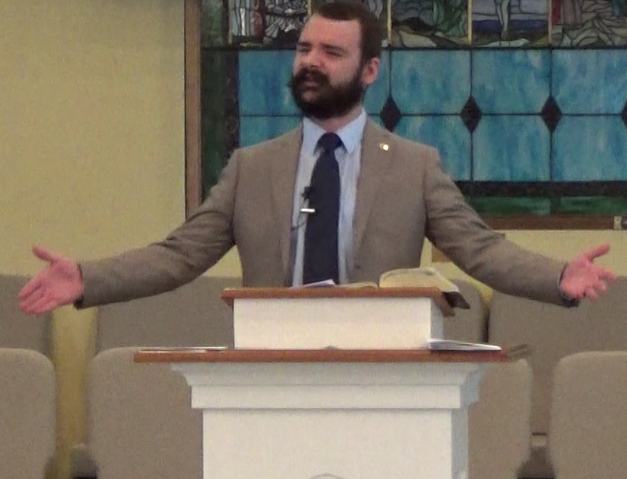 Brandon is the founder and main contributor to Brandon’s Desk, the blog with biblical resources from his ministry. He is proud to be the pastor of the family of believers at Locust Grove Baptist Church in Murray, Kentucky. He and his wife Dakota live there with their three dogs, Susie, Aries, and Dot.

 Brandon's Desk