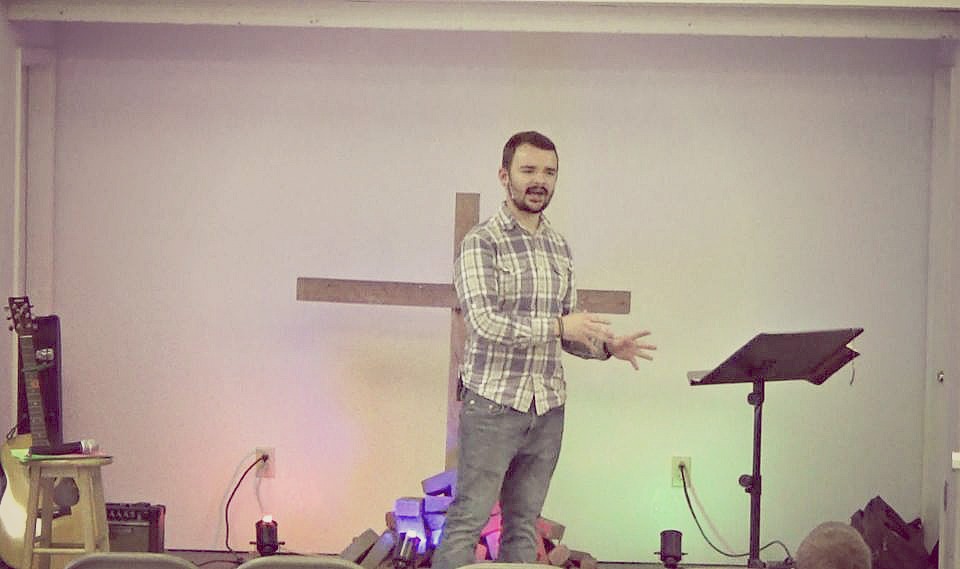
Tag Archives: preaching

The Destructive Repercussions of Avoiding Theological Terms

Back a few months ago, I sat among hundreds of students at a summer camp while listening to a widely-known speaker teaching theology. You could tell this guy had been doing this for quite some time – he had us on the edge of our seats as we were gripped by his stories, illustrations, and hand gestures. He was the full package, even using diagrams and object lessons in an attempt to teach us deep theological truths. I leaned in to listen and grow in my faith just like everyone else in the room. Eventually however, I was leaning in with one eyebrow raised. Most of what he was saying was helpful and biblically sound, but as he continued to speak I began to notice a pattern in his teaching – and it made me sick to my stomach.

Once he would come to a five-syllable theological term in the Scriptures such as justification or sanctification, he would immediately diminish its significance by describing the term as such: “This is a term that theologians use – oh ho ho ho (with a French accent).” Everyone laughed as you’d expect. He would then replace the word with something “simpler” and “easier to understand,” without giving a definition of the word or explaining its meaning. When it came to justification, he referred to it as something that only theologians talk about and then said what he preferred to call it. In an attempt to make the truth “easier” to understand, he avoided the use of the term altogether and sidestepped from defining and explaining the term.

There were students in this room that had never heard of justification or sanctification before, and now they will go back to their churches, schools, and families with the impression that big theological terms really amount to nothing. And sometimes, it is near impossible to undo first impressions.

This practice of avoiding the use of theological terms in preaching and teaching is theologically destructive. When this practice is followed, whether by speakers, Bible teachers, or even pastors, it is done so in hopes that their audiences will not be confused. But when they do this, it completely backfires and it creates a ticking time bomb ready to explode at the next hearing or reading of that theological term.

Those who do this really have good intentions, I truly believe that. They don’t want people to be frightened or confused by big terms. But avoiding the use and explanation of theological terms is fundamentally avoiding explanation of the Bible. Any person who teaches the Bible should use and explain theological terms because the Bible uses these terms. When we fail to do so, it’s a ticking spiritual bomb, waiting to explode within the Christian’s mind when he comes to the term the next time he reads it in the Bible. If we don’t use and explain the theological terms that the Bible uses, Christians will not know what they mean when they read them in the Scriptures. They will regard the terms as unimportant, run over them, and turn the page. It’s never a good thing when people consider terms in Scripture to be unimportant. This leaves them with a poor and unbiblical view of the Scriptures.

Bible teachers and expositors should use and explain terms such as justification, sanctification, glorification, propitiation, salvation, preeminence, redemption, substitution and a host of others because the Bible uses these terms. With that I want to encourage you, whether you are a parent, Sunday school teacher, youth pastor, lead pastor, Bible teacher, or a widely known speaker – labor much in the use and explanation of the theological terms replete in the Scriptures. We need to know what they mean, and our people need to know what they mean. We need resources like Bible dictionaries to help us understand and grasp the meaning of these terms. We need to labor much to explain the meaning of theological terms to our people. If we want to be faithful teachers of the Scriptures, we must explain all the Scriptures – every term included.

Why I Love Expository Preaching (Pt. 2)

The Meaning of the Law

Rightly interpreting the law is the chief responsibility of those who serve as judges in our district courts, circuit courts, and the Supreme Court. Every judge in every court evaluates evidence presented, they control how the hearings and trials unravel in their courtrooms, and most of all they are the “impartial decision-makers” who pursue justice according to the law. This means that their fundamental obligation is to rightly interpret and apply the law to every particular case. Judges of any kind are not above the law, but instead, the law stands above them as the authority in all cases. The job of the judge is crucial – they are to correctly interpret what the law means and so they can also correctly apply it to the particular case they are dealing with. On the other hand, misinterpretation of the law will always lead to a misapplication of the law. Any judge would tell you, understanding the meaning of a law is imperative for making judgments to ensure justice is served in every case. It’s what they have to know in order to make right judgments about cases today and tomorrow.

On a much higher level than state, federal, and constitutional laws, there is a supreme Law that deserves and demands the same treatment. I’m referring of course to the Book of the Law (Josh. 1:8), the guarding commandments (Psalm 119:9-10), the sacred writings (2 Tim. 3:15), the word of God (2 Thess. 2:13). The word of God is the “Scripture [that is] is breathed out by God and profitable for teaching, for reproof, for correction, and for training in righteousness” (2 Tim. 3:16). And in order to live a godly life informed and instructed by the word of God, it is necessary to understand its meaning in order to correctly apply it to our daily lives.

It is this exigent task that the expository sermon seeks to accomplish. Expository preaching is preaching expositionally (as we’ve seen already), and this means that the expository preacher wants to explain the meaning of a text verse by verse, and then apply its meaning to the 21st century. What did Paul mean when he said, “Blessed be the God and Father of our Lord Jesus Christ” (Eph. 1:3)? What did Jesus mean when He said, “Blessed are the poor in spirit” (Matt. 5:3)? What did David mean when he said that the “Lord is my shepherd, I shall not want” (Psalm 23:1)? The expository preacher seeks to travel to the churches of Ephesus, the disciples of Jesus, and the Israelites under David’s rule and discover the original intended meaning of an author and bring it back with him to today’s contemporary world. And this is another reason why I love it.

Reason #2: I Love Expository Preaching Because It Properly Interprets and Applies Scripture

The goal of the expository sermon is to preach the original meaning of a passage. If that’s the case, it follows that the expository sermon would also properly interpret and apply that passage of Scripture under consideration. The expository sermon is seeking to find out what the author meant by what he has written and then apply it to the 21st century world. This is discovered through careful exegesis of every word, every sentence, every chapter, and every book of the Bible.

The topical approach to preaching is different than this, rendering it ineffective at communicating the author’s original intended meaning in a text. Topical preaching begins with a topic, not with the Scripture. If the topic is the starting place, it will also be the finish line in a sermon. The topical preacher will likely only consider the topic that he wants to preach on, and there is the automatic tendency to disregard the author’s meaning by what he has written in a text. This tendency is already present from the outset – because the structure, form, and shape of the sermon has already been determined by the chosen topic. If the frame of the sermon and its goals are determined by the topic, then what is really being preached? The topic is what is being preached instead of the Bible.

In the expository sermon, the text of Scripture determines the structure, form, and shape of the sermon. And because the expository sermon does this, it is the only approach to preaching that ensures that the Bible will be preached as it is. This will lead to a proper interpretation and application of the original meaning of a text because the sermon is derived completely from Scripture.

Additionally, the topical preacher may want to preach on a certain topic and choose a passage of Scripture that doesn’t even speak to that topic—or he may simply focus on the “felt needs” of the congregation or current issues of the day. That said, there are times when this is appropriate—when tragedy strikes or maybe when there is a special holiday—but even then we must be extremely careful to draw the meaning out from a text through careful exegesis and then preach it expositionally.

Two Pastors: Joshua and William

Joshua and William are both pastors in a rural community. Both of them believe the Bible is inerrant and they both agree that God’s word is what God’s people truly need. They meet for lunch every Tuesday and discuss how things are going in their churches. One day they discuss what they preached on last Sunday:

Joshua says, “I’ve been preaching expositionally through Titus. We started Sunday looking at the first four verses, and discussed Paul’s principles for ministry.”

William looks up at Joshua with one eyebrow raised and says, “You know, that’s funny – I’ve never noticed that in the text before. I’ve been preaching topically on the attributes of God, and last Sunday we looked at Titus 1:2 where it states that God never lies.”

Joshua replies, “Well Titus 1:2 does say that – it’s definitely true that God never lies. But what about the entire passage? What do you think it’s about?”

“Well, I haven’t looked at it in depth. We just used that one verse to support the fact that God is perfect and sinless,” says William.

Now, let’s evaluate their different approaches to preaching. What’s the starting point for the expository sermon preached by Joshua? The text of Titus 1:1-4. What’s the starting point for the topical sermon preached by William? The topic of God’s attributes. What was the content of their sermons? For Joshua, it was the principles for ministry as explained by Paul in each of the four verses of Titus 1. For William, it was one of God’s many attributes – perfection, and he sought support for this topic from v. 2 of Titus 1. Now, which sermon was more faithful to what Paul was saying in the text of Titus 1? Perhaps a look at the text itself may answer that question:

“Paul, a servant of God and an apostle of Jesus Christ, for the sake of the faith of God’s elect and their knowledge of the truth, which accords with godliness, 2 in hope of eternal life, which God, who never lies, promised before the ages began 3 and at the proper time manifested in his word through the preaching with which I have been entrusted by the command of God our Savior;

4 To Titus, my true child in a common faith:

Grace and peace from God the Father and Christ Jesus our Savior” (Titus 1:1-4, ESV).

It seems that this entire passage is about much more than simply God’s attributes. Verse 2 does mention that God never lies, and we would imply from this that God is perfect if He cannot lie. But notice that there are about 86 other words in this passage – and Paul isn’t describing God’s character in whole of this passage. Now, we also do not want to say that William’s sermon was heretical. Of course it wasn’t – it is biblical and true that God is perfect and cannot lie. But in preaching, we’re not just trying to avoid being heretical, we want to be faithful. And which sermon do you think was more faithful to the biblical text? And which congregation was exposed to the full meaning of the text?

They used the same Bible, believed the same things, but had different approaches to preaching. And the failure of William’s sermon is that he missed the main point of the text, because he failed to allow the text to form and shape his sermon. He already knew he was going to preach on God’s attributes – consequently, because he didn’t discover the meaning of the text, it was impossible to rightly interpret and apply the entire passage.

Clearly, Paul is describing principles in his own ministry in this passage. By simply preaching on one part of one verse in support of a predetermined topic, the main overall point is missed. And if the main point of the text is missed, then you’re not doing justice to the text or the God who inspired the text. When the meaning is ignored, you cannot faithfully interpret and apply the passage.

Expository preachers want to know what the biblical authors meant by what they said and then preach it to their hungry congregations today. The expository sermon does this most faithfully – and this is another reason why I love it.


Why I Love Expository Preaching (Pt. 1)

Delivering a Life-Saving Message

Suppose you were told to deliver an urgent message to someone, and this message was so crucial that their own life depended on it. Perhaps this person needed to know the location of a life-saving medicine, and they needed to know how to use it and apply it. This person is suffering from a debilitating disease, causing him to be very weak. And without this medicine to restore his strength, not only does it prevent him from performing simple tasks, but he will eventually die without it. The doctor has left you in charge, and he’s depending on you to be his ambassador and deliver to the patient the information that he needs. So he gives you a message to deliver. He tells you the location of the medicine, and walks through every step of the careful application of the medicine.

You scramble for your cellphone to call the patient. You’re running out of time. Adrenaline is pumping. A human life is at stake. The patient answers the phone with his last ounce of strength, and you bring him encouragement by saying that you have the answer, you have the cure. And because you know the message the doctor gave you to tell him, you can offer this dying patient exactly what he needs. He can have his strength restored and live a full life—but it is dependent on your full delivery of the message to him.

But instead of telling him the full message that the doctor gave you about the location of the medicine, and how to use and apply it, let’s say you choose only to tell one part of that message. Though you have the full message, you thought it would be sufficient enough to only tell the patient where to find the medicine. You thought that the location of the medicine was the most important part of the message you were given to deliver, so you left out how to apply the medicine because you thought it was less important.

Could the patient get the help he needs by only knowing one part of the message? Would you be doing justice to the doctor who gave you the message to deliver? The answer to those questions is an obvious and emphatic no.

minister-clipart-Preachers005Unfortunately, this is the lamentable practice that happens more in the local church than it does in a hospital or doctor’s office. Behind worn pulpits in the local church, many preachers and pastors with good intentions often fail to preach the whole message of Scripture. What’s worse, matters of supremely greater worth are at stake in the local church, than in the practice of medicine. As a result, the church becomes weak and may eventually die for lack of medicine (and nourishment) as prescribed in Scripture that is necessary for their sanctification. All people in the local church are patients in God’s hospital, and they all need the whole Bible (not just parts of it here and there) in order to live a healthy Christian life.

Some pastors and preachers often fail to preach the whole Bible because of their approach to preaching. Because of the approach to preaching that they choose, often only one part of the Bible is taught, and it leaves the people of God only partially equipped to live a life that glorifies God.

Failing to preach the whole Bible doesn’t do justice to the God who gave us the Bible to preach, if we choose only to preach one part of it. We would quickly consider telling one part of a crucial message to a dying person as inhumane and unthinkable—but yet in some churches today, pastors and preachers thumb through topical indexes looking for “something to preach,” instead of just preaching the Bible as it is.

So how do pastors and preachers teach and preach the whole Bible? What does this look like? Is there a method of preaching that even exists that ensures pastors and preachers will preach the whole Bible?

Yes there is, and it’s called expository preaching. Now, we will define further what expository preaching is and isn’t as we continue our look at it today, but for now I will give you a very appropriate definition for expository preaching. Borrowing David Helm’s definition,

“Expositional (or expository) preaching is empowered preaching that rightfully submits the shape and emphasis of the sermon to the shape and emphasis of a biblical text. In that way it brings out of the text what the Holy Spirit put there, and does not put into the text what the preacher thinks might be there.”¹

Expository preaching is faithful, biblical, and effective preaching—because it is faithful to the Bible, to God, and to His people who are in need of a word from Him.

If you’re reading this, it’s likely that you’re a member of a local church close to where you live. You are probably actively involved in your local church as well. And opportunities will arise where you will teach or preach the Bible – especially if God has called you to pastoral ministry, or worship and music ministry, youth ministry, women’s ministry, or missional life. But have you ever considered the importance of how you preach and teach the Bible? Have you ever considered the most biblical and effective approach to teaching and preaching the Bible? Let’s consider it today as we examine expository preaching as the most beneficial and faithful form of preaching for the local church.

Reason #1: I Love Expository Preaching Because It Is Thoroughly Derived from Scripture

Expository preaching has the Bible as its sole source. Because this method of preaching is expository, the goal of the sermon is to exposit the passage under consideration. By definition, expository preaching is preaching expositionally. It is preaching that explicates the meaning of a passage, verse by verse. Expository preaching seeks to preach the text and to preach the Bible, not just topics. Expository preaching seeks to excavate the true meaning of a passage as communicated by its author, and then verse by verse explain and apply that to God’s people today. A pastor or preacher exposits the meaning of a chapter, passage, or verse of Scripture and applies it to the 21st century based completely on what the original meaning was to the original hearers.

Now, this approach to preaching is altogether different from the other mainstream approach to preaching—topical preaching. There are other forms of preaching, but this is perhaps the most mainstream along with expository. In topical preaching, you typically have a topic in mind that you want to preach on.² And you search the Bible for passages or verses that support that topic. On the surface, this sounds like an effective approach. But without taking the time to point out everything that is flawed with that approach, let me just focus on one fundamental problem with preaching this way: If you already have the topic in mind that you want to preach on, and you’re simply searching for verses to support that topic, then who is really speaking when you get behind the pulpit?

Because when you choose a topic to preach on, you have already set the agenda, shape, and tone of your message. You already know what you’re going to say. If you’ve already set the agenda and shape of the message by your chosen topic, and you’re squeezing verses and passages into your preset agenda, then are you speaking or is the Bible speaking? If the Bible isn’t speaking, then God isn’t speaking. If God isn’t speaking, then your sermon is nothing more than an predetermined oration with the Bible as a footnote.

Expository preaching doesn’t do this, however. In expository preaching, the entire message is thoroughly derived from Scripture. This means that you don’t set the agenda or shape or tone of your own message—the Bible does. It is letting the Bible set the agenda for what you’re preaching. It is having the passage under consideration in authority over you—as you explain what the passage means. Expository preaching shows verse by verse what a particular passage means, not what you want it to mean.

If Deuteronomy 6:4-9 is about loving God and loving your family, then you will preach on loving God and loving your family as presented by that text. If Romans 10:14-17 is about the sovereignty of God in ordaining evangelism to reach the unsaved, then you will preach about the sovereignty of God in ordaining evangelism to reach the unsaved. The passage of Scripture you’re studying shapes and forms the message. In expository preaching, you don’t shape and mold a passage of Scripture to fit your topic.

This approach to preaching, then, also magnifies the infallibility and the authority of God’s word. This is because the expository sermon seeks to preach what God has said, and not merely what we want or think we should say. It takes the original meaning of Scripture and proclaims it now to the present world. Preaching expositionally is saying that what the Bible says is more crucial and more important than a topic I might choose. It is saying that God’s word has authority over you and the sermon. It is saying that “I will preach whatever this text means,” not what I want it to mean, or what I want to preach on.

treasure-hunt-memorial-service-ideasLet’s bring out the kid in you once again. Perhaps you embark upon a treasure hunt. You’ve found a map that reveals the location of buried treasure. You take your gloves and shovel and go where it says to go, then when you arrive, you dig where it says to dig. But what you uncover is sorely disappointing to you. It’s just a little piece of silver. You walk away from your makeshift excavation site, discouraged with the well-intended treasure hunt you took on. But you read in the paper next week that an archaeologist firm found an entire ship full of treasure at the exact same location where you were digging.They describe their findings this way: “We found only little pieces of silver and gold at first, but with more excavation we unearthed this ancient trade ship, loaded with gems and treasures that are worth more than a million dollars each.” That would be disappointing!

But with proper excavation, you would have discovered this great treasure. Because you failed to excavate it completely, and look into its contents, you made the wrong assumption about the treasure. This is what has happened with much preaching—many well-intended people who believe that the Bible is God’s word, are not excavating its contents. They are picking topics and verses here and there just like little pieces of silver. They are not preaching the intended meaning of Scripture. But the expository sermon doesn’t do this, instead, it presents the whole ship with careful detail to every gem and every treasure.

Expository preaching presents Scripture as it is, and not just one piece of silver. It presents the text as it is—of immeasurable worth to the Christian. It brings out the treasures of God’s word because expository preaching is derived and excavated from Scripture. It is preaching and excavating what is in the text, not what we think, hope or wish was in the text.

This is one of the major reasons why I love expository preaching. Week after week, I’m not sitting in my office worrying about finding something to preach. I’m not praying to the Lord, “God, give me something to preach.” I don’t have to despair in my study, thinking that I have to create and form some sermon to preach the following Sunday – because my sermon is derived thoroughly from Scripture. The passage of Scripture I’m studying creates and forms the message I preach – I don’t.


  1. Helm, David. Expositional Preaching, (Wheaton, IL: Crossway, 2014), p. 13.
  2. Admittedly, there are times when topically preaching can be appropriate. For instance, when tragedy strikes (like recently in Orlando) or maybe when there is a special holiday. But even then there are a few things to keep in mind. First, we must remain extremely careful to draw out the meaning from a text through careful exegesis, and then preach it expositionally. Not even for a holiday or calamity should we ever mold and shape a passage of Scripture to address the needs of our hearers. God’s word already addresses their needs, and it will do this if it is presented as it is. Second, in today’s world it is impossible to address every tragedy or calamity. We have to use our wisdom when and if we want to take precious time behind the pulpit to preach on what the Bible says about a recent world event. If you attempted to preach like this every time something culturally shaking occurred, it’s all you’d ever preach on. Last Sunday you would’ve preached on the tragedy in the Orlando nightclub, the threat of ISIS, the assisted suicide bill, and the U.S. Senate’s vote to have women register for the draft. Additionally, still I think there is a faithful way to plan sermon or teaching series based on topics. Take the passage (or passages) you want to preach on and study them in-depth through exegesis, and let the passages determine the theme, direction, and goals of the sermon or teaching series. Still, sermon and teaching series are done better through whole chapters or books of the Bible. Usually a chapter or book of the Bible is about one major theological theme anyway.

From the Desk Podcast #5 with Guest Bro. Michael Chadwick

February 20, 2016

Can you be gay and Christian? Will God send me to hell if I’m gay? Can you have friends who are gay? What if I struggle with homosexuality? Get answers to these questions and more on today’s episode of the From the Desk podcast, with guest Michael Chadwick joining us today.

Missions Panel Discussion With Bro. Nicholas J. Rafael and Bro. Brandon Bramlett

Following Bro. Nicholas’ message on missions emphasis, we had a panel discussion on missions. Several questions were submitted to us that we attempted to answer on this panel, that you can listen to below:

  1. What is/are missions?
  2. Does God call all Christians to missions?
  3. How do I know if I’m called to missions?
  4. Why are missions so expensive?
  5. How can I be mission-minded?

WATCH THE PANEL DISCUSSION HERE:

I invite you to listen to his message that was preached that night also. You can hear it by clicking here: Missions Emphasis Message.

Missions Emphasis Message by Bro. Nicholas J. Rafael

“As His followers, we are His hands, we are His feet, we are His mouthpiece. And it is our duty to make His word known.”

Recently at our church, we had a missions emphasis night with our students. We focused on unreached peoples, we prayed, and we heard a great message from Bro. Nicholas J. Rafael from Murphysboro, IL. This was a great message on missions, and I invite you to take a few minutes out of your day to listen/download his message below:

Be sure to check him out on Facebook, and to listen to our panel discussion that also took place that night by clicking here.

WATCH THE MESSAGE BELOW:

War of the Soul: The Battle Within (1 Peter 2:11)

Introduction: Christian Fights Himself

Have you ever read The Pilgrim’s Progress? It’s an old book from 1678 written by John Bunyan about a man named Christian. He’s on his way to the Celestial City and Bunyan documents all the troubles and victories he encounters along his pilgrimage. It is a wonderful work that represents theological truths through allegory.  It’s a story that represents the believer’s real pilgrimage through this sinful world, as we are on our way to eternity with Christ. For example, Christian encounters Mr. Worldly Wiseman who attempts to sway him from his narrow path, clearly representative of the “wisdom” this world offers to deter us from walking with the Lord. Another example in this story is a man named Evangelist who points Christian on to the right path to the Celestial City, which represents the duty of all believers – pointing others to the right and only path to God.

There are dozens of other characters and events that represent biblical truths through allegory, and I would encourage you to read it. Recently I was reading it and there was a particular encounter that attracted my interest – and it was Christian’s encounter with a monster. Along Christian’s journey, he meets a beast named Apollyon. They fight against each other, and as Apollyon seeks to take Christian’s life, he throws “a flaming dart at his breast . . . [and] he had almost pressed him to death; so that Christian began to despair of life.”¹ Of course, we know that this was an epitome of Satan, powerful Satan, that Christian had fought against. But here’s what is interesting: Christian only fought with Satan for “above half a day.” The battle was brief and momentary – it was deadly, but it was quite pithy when you consider that Christian fought with himself all the way   to the Celestial City. He only battled Satan for a short time, but he battled a war within himself all the way through the rest of his journey. Throughout the rest of Christian’s pilgrimage, he is tempted to give up; he is tempted to go astray; he is full of doubt; he continued to battle within himself.

And this exemplifies a profound but painful truth: no enemy can be as powerful as ourselves. The influence of the world, and the fiery darts of Satan may come and go, but they cannot cause us to sin – we make choices to sin and fall short of God’s glory. And the reason we make those choices are because of desires. So while it is true that we face many other enemies in the Christian life,² none of them can control our actions. Satan cannot force you to sin, because he cannot control your desires – he can only use your sinful desires against you. Neither can the world force you to sin, even with its sinful influences. Only you have the ability (a weakness, really) to act on your desires. Our sinful desires are far more deadly than our adversary Satan, and the world – because sinful desires lead to sinful choices and acts. Scripture states that the source of our temptations are our desires (James 1:14), and that we should overcome them through the power of the Spirit (Gal. 5:16). The 90’s rock band Lit had it right when they sang, “It’s no surprise to me that I am my own worst enemy.”

This doesn’t mean we should subject ourselves to nihilism (the belief that life is meaningless), and it doesn’t mean that we should be pessimistic about ourselves. But evidently, the warnings of Scripture about our own sin nature appear to be very serious and urgent. In James’ letter where we are warned that our desires are the source of our temptations, it is because those desires lure and entice us (James 1:14). In Galatians, we are exhorted to walk by the Spirit because there is a war taking place between our desire to sin, and the Spirit’s desire to glorify God (Gal. 5:16-18). In Romans, we are strongly exhorted not to supply our flesh with the weapons that it needs to defeat us in temptation: “But put on the Lord Jesus Christ, and make no provision for the flesh, to gratify its desires” (Rom 13:14).

Among these warnings about our flesh and sinful desires, one of them is found in 1 Peter 2:11. This is perhaps the most imperative of all the warnings regarding our desires and sinful nature. In this verse, Peter the apostle admonishes his readers: “Beloved, I urge you as sojourners and exiles to abstain from the passions of the flesh, which wage war against your soul.”

Peter has been calling his readers to holy living all throughout this letter – he is genuinely concerned about their sanctification. And one of the noticeable patterns that emerges as you read this letter is that imperatives follow realities. Peter will state what has happened to the Christian, or Peter will state who the Christian is, and he will follow this with a command or exhortation. For instance, Peter states that the believers have been born again (1:3-5), and because of this they are called to set their hope fully on God’s grace (1:13). Or you could look at 1:22-2:3, where Peter exhorts his readers to live sanctified lives because they have been born again. 

This pattern is also found in the verse we just read. This verse follows a statement about a certain Christian reality, and it’s only one verse above it: “Once you were not a people, but now you are God’s people; once you had not received mercy, but now you have received mercy” (2:10). Christians are God’s people, who have received God’s mercy. And it is on this basis that Peter admonishes his readers to abstain from their sinful desires. Because they are Christians, they have battle to fight – and just like Christian on his pilgrimage, it is a battle within with ourselves.

It is warfare, conflict, and combat. What is true of war is true of the war with our own passions and desires. For Christians, there is a war going on. It is real, it is deadly, and it is costly. It is with this in mind that we now look at this verse together. And as we unpack this passage, we are going to see why we are in this war, what we are fighting, why we are fighting, and how to fight this war.

The Text: 1 Peter 2:11, ESV

Beloved, I urge you as sojourners and exiles to abstain from the passions of the flesh, which wage war against your soul.”

I. Who We Are (v. 11a)

Peter first describes who we are – we are citizens of God’s kingdom and His holy nation. He says in the first part of v. 11 that it is because of who we are (or better, whose we are) that a war is going on. He says that believers are sojourners and exiles, as he addresses his readers, “Beloved, I urge you as sojourners and exiles” (v. 11a).

Because we are God’s people, there’s a war going on. There wouldn’t be any battle with sin if we still lived under the dominion and tyranny of sin. But because we are “set free from sin” (Rom. 6:7), and because we are those called “out of darkness into his marvelous light” (1 Pet. 2:9), we are in a war against sin. That’s what Peter just finished talking about. He told them, “Once you were not a people, but now you are God’s people; once you had not received mercy, but now you have received mercy” (v. 10). Since we have received God’s mercy, we are His people, now in an ongoing conflict with the sin inside us.

He addressed them as those whom he loves, as those “Beloved,” and then urges and exhorts them as sojourners and exiles. Those are terms used to describe outsiders, foreigners, a group or individual that doesn’t belong or fit in. Peter is saying that we as Christians are citizens of God’s holy nation, not primarily citizens of the society that we live in. As the old song says, “This world is not my home, I’m just-a passing through.” So this is who we are: citizens of God’s kingdom and rule. This echoes Paul, “But our citizenship is in heaven, and from it we await a Savior, the Lord Jesus Christ” (Phil. 3:20).

We are citizens of God’s kingdom because He has saved us through faith in Jesus Christ and has given us that privilege. Now this says a lot about the way we should live our lives. Citizens of a particular country conduct themselves in accordance with what is required of their citizenship. A Chinese man does things as a citizen of China that we wouldn’t do as a citizen of the United States. A citizen of an indigenous tribe on the coast of Vietnam has different requirements for citizenship than would a Hispanic living in Mexico.

We are citizens of God’s kingdom and world, so we are outsiders in our own society. This doesn’t mean we should completely abandon our social responsibilities, but it does mean that we should live as citizens of God’s world. Are you living like a citizen of God’s kingdom? Can people see a difference in you?

II. What We Fight (v. 11b)

We’ve seen who we are, and that answers why we are in a conflict. But what are we fighting in this war? What is our enemy? Peter answers by telling us that we are fighting the passions of our flesh, our own sin nature: “abstain from the passions of the flesh.” As one enlisted in battle, we have objectives to carry out. We have a task to be done if we are going to come out of this battle as victors, and that is to refrain from engaging in anything related to our sinful passions. The sinful passions that Peter is referring to here basically means our sinful impulses and desires to sin against God. Even though we are saved, it doesn’t make us immune to experiencing temptations to sin. And Peter calls us to abstain from the desires that cause our temptations.

In many schools today, students are taught about the importance of abstinence from sex before marriage. It’s an important program that I believe every student should go through. Sex is an irreplaceable gift that God has given to a man and woman within the boundaries of marriage, and misusing that gift is like opening a Christmas present that was meant for somebody else. What schools seek to do through teaching abstinence is to help students refrain from engaging in sexual intercourse before marriage. It’s a struggle to fight those impulses, but if we want to be safe and prevent ourselves from seriously damaging our bodies, we should abstain from sexual activity before marriage. Peter has a similar idea in mind. He is telling us to do the same thing with passions of our flesh. He is telling us to refrain and stay away from the  passions of our flesh, because indulging in them can bring great harm upon us, even our own souls (v. 11c).

Abstaining from these passions and desires to sin against God is to be obedient to one of the greatest commands in Scripture: “But as he who called you is holy, you also be holy in all your conduct, since it is written, “You shall be holy, for I am holy” (1 Peter 1:15-17). We must abstain from the passions of our flesh if we are truly members of God’s kingdom and society (we will see at the end how we can do this). This is our chief objective as soldiers against sin in this deadly war.

III. Why We Fight (v. 11c)

Now that we know who we are, and what we are fighting (the passions of our flesh), then why are we fighting? Why go through all the trouble to fight the sin in our lives? It shouldn’t hurt to indulge in a little sin should it? Peter tells us why it is urgent to abstain from the passions of our flesh and fight with all our might: “abstain from the passions of the flesh [because they] wage war against your soul” (v. 11c).

Our sinful desires wage war, and they do so upon our own souls. Our sinful desires have declared war upon us the moment we crossed over from death to life (John 5:24). The army of sinful desires have encamped around us, ready to ambush at any time – and like any army, sin has great strength. One person cannot wage war against an army, but war consists of armies against armies. So it is with our sin – it wars against us with an entire camp of evil desires.

Peter is also says here that the passions of our flesh target our own souls. They are aiming at our souls, they are shooting at our souls, they are fortifying their equipment against our own souls to wage a deadly war. And this is imperative to realize because our souls are the most valuable thing about us, and if our souls are lost, then everything is lost. 

These passions don’t wage war against our physical bodies, but they seek to destroy our own souls. Everyone has a soul, and our souls are our innermost beings. God gave us all a soul, and it is what gives us life. We are not just fleshy beings with emotions and desires, as today’s evolutionists teach. We actually have souls, and these sinful desires, even though they may seem harmless, “wage war” against our souls. If they are not fought, they can do the most serious damage to us. This is why it is urgent to abstain from the passions of our flesh.

IV. How to Fight (Rom. 8:13; Prov. 6:27; Psa. 51:10; 119:11; 1:1-3)

We’ve seen who we are, which explains why we are in this war. We looked at what we are fighting, and why we are fighting. But we would not do justice to this passage of Scripture without knowing how to fight those passions of our flesh. So how can we fight those desires within? How can we abstain from the passions of the flesh?

1. Depend on the Holy Spirit to overcome the passions of the flesh (Rom. 8:13). The Holy Spirit indwells believers, enabling them to live a victorious Christian life. Galatians 5:16-18 teaches us that if we will depend on the Holy Spirit, submitting to Him consistently, we will overcome our sinful desires. He will give us the power we need to overcome sin. So we must walk daily with Him in order to abstain from the passions of our flesh.

2. Do not allow the occasion for the passions of the flesh (Pro. 6:27). We should not be willingly putting ourselves into situations that we know will light up our sinful desires like a fire. It is meaningless to try and fight our desires if we are putting ourselves in tempting situations that will only supply weapons to our desires. Anyone knows not to park a freshly washed car underneath a tree full of birds – and we should not expect to be clean if we put ourselves into situations that we know will get us dirty. The Proverbs give us practical warnings, and in Proverbs 6:27 we are warned that one cannot expect to remain unharmed or clean if he involves himself in sinful situations.

3. Pray that God would change your desires (Psalm 51:10). If the passions of our flesh are the problem, then they need to be changed. We need to ask God to create within us a clean heart, and continually ask Him to change our desires. When we have a sinful desire present in our lives, we need to combat it with the word of God and with prayer.

4. Get into the word of God, and let the word of God get into you (Psalm 119:11). If there are particular sins you struggle with, memorize particular Scriptures.  We are familiar with Psalm 119:11, “I have stored up your word in my heart, that I might not sin against you.” The psalmist there says that his defense against sinning was that he had stored God’s word in his heart. Scripture memory involves not only getting into the Bible, but allowing the Bible to get into us. It is allowing the word of Christ to dwell in us richly (Colossians 3:16). Scripture memorization involves taking time to memorize the Bible, whether a few verses or a few chapters.
It is very beneficial, for we can call to mind a Scripture that is especially helpful for us in a time of need or when we are dealing with our sinful desires. The Spirit of God can’t call to your memory a Scripture you’ve never read or memorized. If the word of God is in you, then you’ve brought the greatest weapon you have to the very place of battle.

5. Remember the results of godly living (Psalm 1:1-3). Keep it constant in your mind that God doesn’t want you to live a life defeated by sin. God wants you to live godly. Living a godly life is living a prosperous life that God blesses, and He blesses our lives when we abstain from sin and associate ourselves with Him and His word: “Blessed is the man who walks not in the counsel of the wicked, nor stands in the way of sinners, nor sits in the seat of scoffers; but his delight is in the law of the Lord, and on his law he meditates day and night. He is like a tree planted by streams of water that yields its fruit in its season, and its leaf does not wither. In all that he does, he prospers” (Psalm 1:1-3).

There is a war going on inside of us – our sinful desires wage war against our own souls. We must fight through the sustaining and empowering grace of God that He will freely give us.


1. Bunyan, John. The Pilgrim’s Progress, (Chicago, IL: Moody Publishers, 2007), pp. 80-81.
2. For further study, please see War of the Soul: Introduction.

The Work of the Word (2 Timothy 3:16-17)

The following message was delivered at Olivet Baptist Church in Paducah, Kentucky on the 19th day of July, 2015:¹

Introduction

The Bible isn’t like any other book in the whole world, is it? I was reading a story about two college students who shared a dorm together. One was a Christian and the other was a Muslim, and as they became friends, their conversation quickly turned to religion, as you’d expect. The Christian asked the Muslim if he’d ever read the Bible before. He said, “No, but have you ever read the Koran?” The Christian responded, “No, I haven’t but I’m sure it would be interesting. Why don’t we both read together, once a week, alternating books?” The young men agreed to the challenge, and their friendship deepened, and only during the second term the Muslim became a believer in Jesus. One evening, late in the term, he burst into the dorm room and shouted at the Christian, “You deceived me!” “What are you talking about?” the Christian asked. This new believing Muslim opened his Bible and said, “I’ve been reading it through, like you told me, and just read where it says the Word is living and active!” He grinned and said, “You knew all along that the Bible contained God’s power and that the Koran is just a book like any other. I never had a chance!” “Now you’ll hate me for life?” asked the Christian? “No,” he said, “but it was an unfair contest from the start.” The truth is, the Bible is not like any other book. It is not a textbook, it is not like the Koran, the Buddhist scriptures, the book of Mormon, or even Christian literature.

The word of God is breathed out by God, it is useful for the Christian, and it equips us for Christian service. That’s what we’re going to learn tonight. It is also important to know what we believe about the Bible, for all of our beliefs about Christ, God, the church, salvation and last things, come straight from God’s holy word. What we believe about the Bible is without exception our most important belief. For from it flow everything else we believe about . . . everything. We’re going to see tonight that: the Scriptures are inspired, the Scriptures are useful, the Scriptures are equipping, and finally how to use the Scriptures.

The Text: 2 Tim. 3:16-17, ESV

16 All Scripture is breathed out by God and profitable for teaching, for reproof, for correction, and for training in righteousness, 17 that the man of God may be complete, equipped for every good work.

Preliminary: “All Scripture.”

First I have to make an important note here. Paul begins with saying, “All Scripture.” Paul is not beating around the bush here—everything that he is going to say about the Bible is going to apply to all the Bible. Not just a few parts. If the Bible says that all Scripture is breathed out by God, then all Scripture is breathed out by God. If the Bible says that all of it is useful, then all of it is useful. If the Bible says that all of it is equipping, then it is all equipping. There are not levels of importance in the Scriptures—all of it is important, all of it is God’s word. I’ve heard people say before that the historical parts of the Bible are not reliable or true, but the doctrinal parts are true. Folks, if God lied to you in Genesis and other historical accounts in the Bible, then why are you believing Him in John 3:16? If some parts of the Bible are not true, then none of it can be reliable or trustworthy. But because all parts are true, the whole Bible is trustworthy.

I. The Scriptures Are Inspired (v. 16a)

First of all, notice that the Scriptures (all of them) are inspired/breathed out by God. “All Scripture is breathed out by God” (v. 16a). Scripture is God-breathed, it’s inspired by God—it’s not inspired the way a poem or song is—it means its origin is from God. The Greek word for “breathed out” by God is theopneustos, the only occurrence of it in the Bible, meaning that the Bible is divine in its origin—the Bible is literally God’s breath, God’s wind, God’s words. Think about what happens when you speak. Whether you’re lecturing students, talking with your spouse, or verbally disciplining your children, your words are “you-breathed.” Because when you speak, your breath pours forth speech doesn’t it? You breathe out your words, and they are a reflection of your inner self. That’s what Paul means here by the inspiration of the Scriptures. He is saying that God has breathed His character into Scripture so that it is inherently inspired. If the Bible is not inspired by God, then there is nothing inherently special about it. We could say that it is helpful literature, we could say that it is a carefully crafted book of history, poetry, and narrative.

But the Bible is more than that. The Bible is inspired by God meaning that it has power, a divine Source, and is useful for God’s people. It is “the word of God [that is] is living and active, sharper than any two-edged sword, piercing to the division of soul and of spirit, of joints and of marrow, and discerning the thoughts and intentions of the heart” (Heb. 4:12). If Scripture is breathed out by God, this bears obligation on us as Christians. If it’s inspired by God, then it’s the most valuable thing we have. Just if we found the location to some buried treasure, because of what the Scriptures are, we are compelled to value them, pursue them, and study them. Do you realize that the Scriptures are alive because they are inspired by God? Do you treat the Bible as breathed out by God?

II. The Scriptures Are Useful (v. 16b)

We’ve first seen that the Scriptures are inspired by God, and as you would expect, notice secondly that the Scriptures are useful. Paul says in the latter part of v. 16: “[The Scriptures are] profitable for teaching, for reproof, for correction, and for training in righteousness.” Paul says that the Bible is profitable. If the Bible is inspired by God, then it is surely useful—simply because of what Scripture is implies that it is useful in one way or another. Thankfully for us, Paul didn’t leave us wondering why the Scriptures are useful. He spells out four ways in which the Scriptures are useful.

1. For Teaching. Paul first says that the Scriptures are useful “for teaching.” This is one of the most fundamental uses for Scripture. Paul says that Scripture “was written for our instruction” (Rom. 15:4). This is because of what Scripture is. Because it has been breathed out by God, because of its content, it has this fundamental use of instructing us. The word of God teaches us how to live godly lives, and it is our primary and only source of doctrine. In fact, another word for teaching here is doctrine. For example, what we believe about God, ourselves, the world, and eternity is all informed by Scripture. As believers, we need to make sure that we are being informed and taught by the Scriptures. I’m afraid that much of people’s doctrine (or what they consider to be doctrine) is not informed entirely by Scripture—through its use of teaching. Just interview a few people on what they believe God, Christ, salvation, and many other important theological truths, and you are sure to see that misconceptions run rampant. This is because many people think what they believe is sound doctrine, but because of their ignorance of this use of the Scriptures, what they believe often times is just unbiblical.This should drive us to baptism in the Scriptures! If we are not studying the Bible regularly, in our personal lives and in the local assembly, how can we expect to recognize teachings that are unbiblical? And thinking of the historical context here, there were many heresies that were facing Timothy, Paul’s young protégé, and Paul emphasizes here that the source of sound teaching comes from Scripture alone. This is the first use of the Scriptures, and perhaps the most fundamental.

2. For Reproof. Secondly in this list, Paul says that the Scriptures are useful “for reproof.” Reproof is best defined as a criticism for a fault. This too, is one of the fundamental uses for the Scriptures. Paul could be referring to a reproof that exposes the false teaching of the heretics that Timothy was dealing with, or he could be referring to the rebuke that Scripture has on our personal lives. But either way, Scripture does both. Scripture can serve as reproof for doctrinal errors, or it can show sinners like us our many failures, and show us what we need to do about it. In Jesus’ high priestly prayer, He prays for us and says, “Sanctify them in the truth; your word is truth” (John 17:17, ESV). Being sanctified means being set apart. Daily it is a struggle to be set apart from sin in our lives, and that’s how Jesus prays for us—that we would be set apart for God. But how is this accomplished? “. . . in [through] the truth; your word is truth” (emphasis mine). That’s how it happens—through God’s word. And if we’re honest, it’s not very pleasant when God points out what needs to change in our lives. But that is one of the functions of God’s word, and if we ignore reproof we are fools—if we listen to reproof we “gain intelligence” (Prov. 15:32).

3. For Correction. Paul says thirdly that the Scriptures are useful “for correction.” The Scriptures not only rebuke our wrong behavior, but they also point the way back to godly living by correction. Once the Scriptures have convicted us and rebuked our sinful behavior, then they aim at the goal of recovery. After the Bible reveals our sin and the deep things of our heart, then it works to repair us and build us up again. Again, no one likes to be corrected, but praise God that not only are our wrongs revealed to us, but we are shown how to stay on the “way of the righteous” (Psalm 1:5). When you are convicted of sin, do you search the Scriptures for ways to overcome it? Do you search the Scriptures and allow the Scriptures to search you in order to be corrected when you are in the wrong?

4. For Training in Righteousness. Finally in this list, Paul says that the Scriptures are useful, “for training in righteousness.” The Scriptures are designed to train us in godly living. Training involves the action of teaching a person to acquire a particular skill or type of behavior. The idea here is that Scripture, by its teaching, rebuking, and correcting functions, trains us to live “in righteousness.” The Scriptures produce conduct in our lives whereby doctrine is actualized—that is, the Bible makes doctrine come alive in all areas of our lives. All of these uses for Scripture are intermingled and sometimes overlap, but they are all for training us in righteousness—putting us through a spiritual workout program to develop godly muscles for being under pressure from sin, and having the strength we need to carry out the commands of God.

Mobile phones are a great help today aren’t they? With all of their gadgets and applications, they can be hard to use, but once you learn how to work the basics, they are nearly the most useful tool in the 21st century. There are apps, calculators, dictionaries, image-editing software, and much more on today’s phones. In fact, I’ve heard it said that our mobile phones today are really mobile computers with a calling app. Mobile phones are very useful, and because they are so useful, we take them everywhere we go—we value them. They have a lot to offer, but we must simply access its many resources. Listen, the Bible has much to offer us. It is much more useful than a mobile phone—it is useful for teaching us, showing us where we are wrong and making it right, and for training us to be pleasing to God. I wonder what would happen to our Christian lives and communities if we viewed the Bible as valuable as we do our mobile phones? Do we turn to it when we need direction? The Scriptures are useful, but we must use them. Do you use the Scriptures? Do you use the Scriptures to teach you and correct you? Do you justify sin in your life because you think it can’t be corrected or do you turn to the Bible?

Set aside time each day to study the Bible. Get books that will help you understand the Bible. Once you start getting into the word and allowing the word to get into you, you will begin to notice that you are becoming exactly who God wants you to be—more like His Son every day through the ministry of the word of God. If you hope in your own life to overcome error and grow in doctrine, overcome evil and progress in personal holiness, then we must turn to Scripture, because it is profitable for these things.

III. The Scriptures Are Equipping (v. 17)

We’ve seen that the Scriptures are inspired by God, and we’ve looked carefully at the four individual uses for Scripture, so now let’s look at how the Scriptures are equipping. Listen to Paul in v. 17, “that the man of God may be complete, equipped for every good work.” Paul tells Timothy here about the purpose for which God intended the Scriptures to be useful. Paul tells Timothy that all of these uses for Scripture serve one chief purpose, for the spiritual maturity of the man of God. This phrase “man of God” can apply to any Christian in general, or it can refer to a Christian leader. But by implication anyway, it will refer to all of us as believers.

The idea here is that the Bible is able to help us meet the demands that God places on us—to equip us with what we need to be “complete [and] equipped” for God’s purposes. First, Paul says that the Scriptures uses are for the man of God to be complete. This means that the Bible enables us to be capable of doing God’s work. In other words, we have all we need in the Bible to do God’s work in the world, to be obedient to His commands, for the Bible (considering it is used properly) makes us complete as believers. But secondly, Paul says that the uses of Scripture are for the Christian to be “equipped for every good work.” Similar to being complete, this means that the word of God enables us to meet all the demands of godly and righteous living.

Have you ever had problems with your plumbing? I know I have. We’ve just recently redone our entire bathroom plumbing system—it’s really a lot of work and sweat. Many of you have had problems with your plumbing before and have likely hired a plumber to take care of the job. Well, suppose you have a leak under your sink and you hire an experienced plumber to fix it. But there’s a catch: the plumber arrives at your door without any equipment—no wrenches, no clamps, no pipe, no tool belt, or anything. And he says, “Okay, I’m here to do the job!” How confident would you be? Probably not at all. Why? Because this man has no equipment to do the job!

For believers, we have a far more important job to do than fix a sink, and it is living godly lives—but we cannot and will not do this job without our equipment, the word of God. How can we expect to accomplish the job of godly living without our equipment, the Bible? How can we expect to know how to do God’s work without God’s word?

IV. How to Use the Bible (Selected Scriptures)

For many people, the only time their Bible is open is on Sunday—and those same people wonder why their devotion to God has grown cold, well no wonder. If you eat about three times daily to sustain your body’s strength, but you only get one meal of God’s word a week, no wonder you might be so malnourished in your life of faith. Because of what the Bible is and because it has many uses, I want us to look at a couple of ways to use the Bible. If God’s word is inspired, if God’s word is useful, and if God’s word equips us for Christian service, then how can we get the most from our Bibles?

1. Read the Bible. This is the most basic way we can use the Bible. Do you read the Bible every day? Everyone reads and learns at a different pace, so it may take some time to adjust to reading the Bible regularly—but perhaps the best way to read it is by reading a few chapters a day, in the morning and the night. A good Bible reading plan is also very helpful—helps keep you accountable and track your progress. We must take time out of our busy schedules to read God’s word. If you’re too busy to read the Bible, you’re too busy. The good part about it is that the more we read it, the more we will want to read it, and the more we will be equipped with its teachings.

Biblical Math. A while ago, I did a little math to calculate how long it would take someone to read through the entire Bible. The Old Testament, consisting of 929 chapters, would only take you 26.5 weeks to read all the way through if you read 5 chapters a day. That’s reading through the entire Old Testament in about 6 months. The New Testament, consisting of 260 chapters, would only take you 7.4 weeks to read all the way through if you read 5 chapters a day. That’s Matthew through Revelation in under 2 months. If you read 5 chapters of the Bible daily, you could read through the whole Bible once and read half of it over again. . . In a year. In a small 5 year period, you will have read through the entire Bible nearly 8 times.

2. Meditate on the Bible. This is not simply a suggestion, for the Bible implies that we should meditate on the Scriptures (Psalm 119:15, 48, 97). Do you remember the first Psalm about the godly man who was blessed in every way? How did he get blessed? How did he become so prosperous? It was because “his delight [was] in the law of the LORD and on his law he meditates day and night” (Psalm 1:2). Scripture meditation involves pondering and thinking deeply on what we’ve read. We think about what they mean for us, and ponder how to put them into action. Meditation involves allow the Scripture to dictate our thought lives—to let it swim and boil in our hearts and minds throughout our daily commute. Do you have some Scripture that you’ve been meditating on?

3. Pray the Bible. Many people do not realize the benefits of this or see that it’s even necessary, but praying the Bible helps us to align our prayers to God’s will. That’s the only kind of prayers God answers anyway—according to His will:

“And this is the confidence that we have toward him, that if we ask anything according to his will he hears us. And if we know that he hears us in whatever we ask, we know that we have the requests that we have asked of him.” (1 John 5:14-15).

God’s will is revealed in the Bible, so if we want to pray according to God’s will, wouldn’t it make sense to pray the Scriptures? Sometimes we pray for the wrong things, but if we want to pray for the right things, we need to be praying the Scriptures. When you’ve read your Bible each day, let what you read compel you to prayer, and then pray about what you’ve read.

4. Memorize the Bible. This one, like the others, seems to be implied by the Bible itself as a command. We are familiar with Psalm 119:11, “I have stored up your word in my heart, that I might not sin against you.” The psalmist there says that his defense against sinning was that he had stored God’s word in his heart. Scripture memory involves not only getting into the Bible, but allowing the Bible to get into us. It is allowing the word of Christ to dwell in us richly (Colossians 3:16). Scripture memorization involves taking time to memorize the Bible, whether a few verses or a few chapters.

It is very beneficial, for we can call to mind a Scripture that is especially helpful for us in a time of need or for someone else in a time of need. Because the Spirit of God can’t call to your memory a Scripture you’ve never read or memorized. Do you take time to memorize the Bible? You can write it out on paper until you have it memorized, or you can repeat it back to yourself time after time, or you can simply read it over and over again. I’ve put Bible verses on note cards and slipped them in my pocket as I go about my daily tasks. That way, when I get my keys or phone out, I can always look at that verse first.

5. Study the Bible. Studying the Bible is key. It involves the most effort, but yields the best results. Studying the Bible is observing it, interpreting it, and applying it to our daily lives. We might spend a while studying a verse of Scripture, a chapter, or a whole book of Scripture—but studying involves doing much work to excavate the deep truths of Scripture. A good study Bible helps with this, good commentaries, or other helpful books like Bible dictionaries and Bible handbooks. In studying the Bible, we focus on it—think through it intellectually and emotionally. We discover what the particular author is saying about his subject and what it means for us today. Do you study the Bible? How much time a week is spend studying the Bible?

Conclusion: A Man Who Really Valued His Bible

We must value the Bible because of what it is—and if we truly value it, we will take the time to study and read it. I read a story once about a man who really valued his Bible. During King Philip’s War, a war between the Pilgrims and Indians during 1675-1676, there were a group of Indians who launched an attack on the Pilgrims. In March of 1676, a group of nearly 1500 Indians attacked the village of Rehoboth. As the inhabitants of the village watched from their garrisons, 40 houses, 30 barns, and 2 mills went up in flames. But only one person was killed. He was a man that believed that as long as he continued reading his Bible, no harm would come to him. Refusing to abandon his home, he was found shot to death in his chair by Indians—the Bible still in his hands. That’s someone who really valued the Bible. I wonder if we could say the same about ourselves. Do we really value our Bibles? Do you value your Bible like this Pilgrim man?

God grant us that we might pray with the psalmist in Psalm 119:

“With my whole heart I seek you;
let me not wander from your commandments!
I have stored up your word in my heart,
that I might not sin against you.
Blessed are you, O Lord;
teach me your statutes!
With my lips I declare
all the rules of your mouth.
In the way of your testimonies I delight
as much as in all riches.
I will meditate on your precepts
and fix my eyes on your ways.
I will delight in your statutes;
I will not forget your word” (vv. 10-16).


1. This message was also preached at FBC Barlow in Ballard County, KY on the 14th day of June 2015.

The Healthy Church: Principles for True Ministry – Our Hope (Titus 1:2a)

Introduction

We’ve been studying through Paul’s letter to Titus, looking at how we can have a healthy church. I don’t think there’s anyone out there who doesn’t want a healthy church—in fact, there was a survey conducted of the number one question the pastoral search committee asks its possible pastors. When they are interviewed, they are asked, “Can you grow our church?”¹

As Paul writes to Titus, his fellow worker, about church conduct and church order, we glean from this letter principles to have a healthy church—what the church should be doing and what it should look like. Specifically, we’ve been focusing on the first section, verses 1-4, looking at these verses under a microscopic lens, really. We have made it our aim to not miss a single detail of this paramount text of Scripture. We’ve been seeing from this passage principles for true ministry.

If we’re going to have a healthy church, this a crucial part of it—having a healthy ministry. We’ve been looking at several principles involved in having a successful, fruitful, effective, biblical ministry. Again, these principles are straight from Scripture, not a five-step program, or a book on Christian ministry—these principles are scriptural. They were the principles that God gave to Paul for his ministry, and they are the principles that God gives to us for ours. So far we have looked at two principles that God gives to us, and I want to take a moment to remind you of them:

1. Our Character. Out of verse 1, we read that Paul describes himself as an “servant of God, and an apostle of Jesus Christ.” We saw here that if we’re going to be effective in the ministry of our own local church—it begins with this: we must be servants of God like Paul and Jesus—submitting our wills completely and entirely to God. If we want health in our church, we must be servants of God. If we want health in our homes, we must be servants of God. If we want a healthy, bold witness to our world, we must be servants of God.

2. Our Purpose. We saw from v. 1b that Paul’s purpose in ministry was for people’s faith, and then the building up of that faith: “[an apostle] for the sake of the faith of God’s elect and their knowledge of the truth which accords with godliness.” This too is our purpose, to aim at men’s salvation first, then at their sanctification. To get the fish in the boat and then allow Jesus to do the cleaning. We saw that without knowing our purpose, we won’t know what to aim for in our ministries. If ministry is attempted without a clear, defined purpose in mind, it won’t be effective—and most of all, it will not be biblical because in order for it to be biblical and effective, we must follow and fulfill the purposes that God has given us for ministry.

Tonight we will look at the third principle that God gives to us for ministry: our hope (v. 2). Hope is quite interesting—it does something for us that nothing else in this world can do: Hope alters our perspective on reality by informing us about reality. Hope changes the way we see things by informing us about the way things really are.

Hope is something like what General Smith had in mind while he was being tortured. Many of you know the story. He was a great, never-say-die general who was taken captive by enemies and thrown into a deep pit with his soldiers. This pit was wide, deep, long, and filled with a huge pile of horse manure. As he dove into the manure pile, he cried to his men, “Follow me men! There has got to be a horse in here somewhere to take us out!”

Hope functions to change our perspective on things. When the impossible seems to be the only option, our hope in God is that “with God all things are possible” (Matt. 19:26). In this passage, we will see how important it is to have this perspective. In fact, we will see that our hope is the basis for our ministry, as it was Paul’s. It is what motivates us, it is what gives us the right perspective, and it is what gives us confidence that God is able to do what He promised. And the great part about this is that God has given us hope as a principle for our ministries to our workplace, our families, our church, our community, and our world.

And we absolutely need it—ministry is impossible without it. What we do in ministry is unthinkable, really. I know that sounds pessimistic, but think about it. We are pleading and begging dead sinners to receive life in Christ (Eph. 2:1-3). We are trying to get a dead person to take medicine that will give him life. We are trying to get sinners to go against their nature and trust Christ—it’s not natural. Think about all the people you know who aren’t saved. It is discouraging when our message is constantly rejected. We wonder about them, we weep for them. It’s an impossible task, but the unshakable, unwavering confidence and joy that we have is in the grandest truth in all the universe that God saves. We do not save, God saves. “Salvation belongs to the LORD” (Jonah 2:9), and we have confidence in this God who has the power to save according to His sovereign will. That’s the hope we have.

But let’s see deeper what this great hope is that God gives us for ministry. We’re going follow Paul’s order of describing it by seeing first the object of our hope, then the person of our hope (God), and finally the surety of our hope—God’s sovereign will. After this we will look at a few practical ways to put this principle into action.

The Text: Titus 1:1-4, ESV

“Paul, a servant of God and an apostle of Jesus Christ, for the sake of the faith of God’s elect and their knowledge of the truth, which accords with godliness, 2 in hope of eternal life, which God, who never lies, promised before the ages began 3 and at the proper time manifested in his word through the preaching with which I have been entrusted by the command of God our Savior;

4 To Titus, my true child in a common faith:

Grace and peace from God the Father and Christ Jesus our Savior.”

I. The Object of Our Hope (v. 2a)

Notice first the object of our hope: eternal life. Paul says first, “In hope of eternal life.” I think that it is imperative first to notice where this verse is. It really does make a difference. Paul names this principle after he talks about his purposes as an apostle.² Those purposes being, “[to bring about] the faith of God’s elect and their knowledge of the truth.” This means that as he carries out his tasks of ministry that is, aiming first at men’s salvation, then their sanctification, all the while — having this hope, never losing it, but always having it on his mind.

It’s also another thing that belongs to God’s elect. Remember what two things belong to God’s elect that Paul described in v. 1? They are those who possess “the faith,” and “the knowledge of the truth which accords with godliness,” and also here, “the hope of eternal life.”

So we can infer from these two truths to say that Paul is really describing the hope that he shared with God’s elect, as he was one of them. While he carries out his ministry with its hardships, difficulties, and victories, he set his mind on this hope. This was a confident expectation of eternal life that he had for himself and for those he ministered to. In fact, this hope was the reason behind everything he did, it was the motivation he had for his mission. It was his confident, future expectation of endless life that the believer will have as a gift from God through Christ Jesus. It was the “gift of God [that is] eternal life in Christ Jesus our Lord” (Rom. 6:23). He describes this hope in other places in Titus as his eager expectation:

“Waiting for our blessed hope, the appearing of the glory of our great God and Savior Jesus Christ” (Titus 2:13).

“So that being justified by his grace we might become heirs according to the hope of eternal life” (Titus 3:7).

This hope functions in two ways for Paul: for himself, and those he ministers to. First I believe that this hope is what he looks forward to—that’s the way it’s expressed in the text. Second, I believe that his expected goal for those he ministered to was eternal life. He had hope for himself, and hope for those he ministered to.

1. Paul had this hope for himself. When ministry got tough, when people failed him, when people rejected him, he did not despair. Speaking of all the struggles of ministry, being “afflicted in every way,” “persecuted,” “struck down” (2 Cor. 4:8-9), he says in 2 Corinthians:

“So we do not lose heart. Though our outer self is wasting away, our inner self is being renewed day by day. For this light momentary affliction is preparing for us an eternal weight of glory beyond all comparison” (4:17).

Philippians 3:20 expresses Paul’s confident expectation of heaven perhaps more than any other text: “But our citizenship is in heaven, and from it we await a Savior, the Lord Jesus Christ.” He endured more suffering than any of us ever will (lashes, beatings, stonings, etc.). But Paul could sacrifice anything anytime because of this—he knew what awaited him. He could endure any persecution or suffering for ministering to people—he knew what awaited him. What about you? Are your sacrifices joyful because of this expectation of eternal life, or are they drudgery because you have nothing to look forward to? When you are rejected and persecuted for your faith, do you still have this joy? Does this joy determine your response to persecution, or does your sin nature determine your response?

2. Paul had this hope for those he ministered to. We read in Acts 18, that Paul was struggling to share the gospel in Corinth. He was having some great success, but immediately met opposition by some Jews. “they opposed and reviled him” (v. 6), and he likely wondered if he should spend any more time sharing Christ with them. In fact, he said, “From now on I will go to the Gentiles” (v. 6c). But we read a few verses that God said, “Do not be afraid, but go on speaking and do not be silent, for I am with you, and no one will attack you to harm you, for I have many in this city who are my people” (vv. 9-10). God promised Paul that there were still people who needed to be saved—people that God would save in His own time. God had people in that city who were His. Because of this we read that Paul didn’t leave, but stayed “a year and six months, teaching the word of God among them” (v. 11)

God’s sovereign election ensured Paul’s ministry—he continued to share the gospel because God promised him that He would bring about the salvation of souls in His own time. God had people everywhere in that city that He had chosen to save, and because He chose them, they would be saved. Paul was to simply continue his ministry and wait for God to do His work. So Paul also had this hope of eternal life for those he ministered to—he expected men to be receptive to the gospel because salvation belongs to the Lord, it is God’s work and He is sovereign over it, bringing it to fruition in His own time.

When I think of hope, I’m thinking of what the great Puritan Thomas Watson wrote about it. I believe he illustrates it well for us: “Hope is an active grace: it is called a lively hope. Hope is like the spring in the watch: it sets all the wheels of the soul in motion. Hope of a crop makes the farmer sow his seed; hope of a victory makes the soldier fight; and a true hope of glory makes a Christian vigorously pursue glory.”³

Praise the Lord! That’s what hope does for us: God promised eternal life for us, so no sacrifice we make for Him in ministry can be too great, and no persecution or rejection can be so great because we have eternity to look forward to. And another thing hope does for us is give us confidence for ministry to the unsaved, as it did Paul. We plant the seed of the gospel expecting salvation of souls, because God has sovereignly chosen to bring about the salvation of many souls. Our hope causes us to enter our areas of ministry to our families, our workplaces, schools, and communities because we expect people to be saved and respond to the gospel.

Do you have that expectation? Are your sacrifices measured by your confident expectation? That is, how often are your daily sacrifices for God determined by the truth that God will usher you into heaven one day? Do you expect people to be saved when you minister to them?

II. The Person of Our Hope (v. 2b)

We’ve seen the object of our hope, which is eternal life. Notice second that the person of our hope is a trustworthy, faithful God. Paul is moving on to talking about God’s person and actions concerning eternal life to prove that our hope of eternal life is unshakable. See v. 2b, “which God, who never lies.” He is attempting to prove the validity of our hope because it rests in God’s character. Paul is giving a strong, reinforcing argument to support the validity of our hope of eternal life because it is based on and sustained by a trustworthy, faithful God. He’s pointing to God for proof that our hope of eternal life is true and trustworthy.

Saying that God never lies echoes the Old Testament; this great truth that God never lies has its roots in the OT:

“God is not man, that he should lie, or a son of man, that he should change his mind. Has he said, and will he not do it? Or has he spoken, and will he not fulfill it?” (Num. 23:19)

“And also the Glory of Israel will not lie or have regret, for he is not a man, that he should have regret.” (1 Sam. 15:29)

But talking about God this way is also in stark contrast to the culture that Titus ministered in. They were known as a lying culture. Crete was a small island, about the size of Western Kentucky, and the name Crete comes from the phrase: “to play the Cretan,” which in other words meant, “to lie.” So this was a place named because of the prevalence of lying in their culture.But notice also in v. 12 of this chapter, Paul says, “One of the Cretans, a prophet of their own, said, “Cretans are always liars, evil beasts, lazy gluttons.” Even their religious leaders were proud to admit that everyone on the island was a liar, and they were always that way. We live in a culture just like this don’t we?

Falsehood is all around us. A statistic I read said that 60% of people can’t go ten minutes without lying. 40% of people lie on their resumes, 69% of people lie to their spouses, and without surprise 90% of people lie when dating online.Lying is a weakness, and when we discover we’ve been lied to, we feel like we can’t trust that person anymore. We trusted their character enough to believe anything they said. But we don’t have to worry about that with God. When He promises eternal life, He is 100% truthful. He doesn’t lie to us about anything, and He never has to live with the guilt of lying—He never lies; not in the past, not now, and never in the future. He is completely trustworthy. The point that Paul is making here is that our hope is based on God’s trustworthy nature. Our hope is unshakable because it rests in an unchanging, trustworthy, faithful God. Let me tell you a few things this truth about God should do for us: This should encourage us—we’re telling people the truth when we share Christ. This should give us confidence in our hope—it’s a sure thing. This should give us strength and security and rest—our hope rests not on ourselves, not on our good works, not how good we can be, it doesn’t rest on anything but God’s unchanging, immutable, loving, trustworthy, faithful nature. Even when we fail to do our ministry: He cannot fail us: “If we are faithless, he remains faithful—for he cannot deny himself” (2 Tim. 2:13).

God cannot lie because it is against His nature. It is something He cannot do. It doesn’t go against saying that “God can do anything,” or “God is all-powerful.” Some question if we truly believe that God can do anything, if we affirm that He cannot lie. Thomas Aquinas and Anslem, some ancient church theologians argued that God cannot sin or lie because it is a weakness, not a power. God cannot lie because lying isn’t a power—it’s a weakness.Paul’s point is that we can have this hope for ourselves and this hope for those we minister to because it is based on God’s trustworthy character. So when we minister this hope of eternal life to people, we can know that we are telling them the truth, we can know that when God promised to bless our gospel sharing efforts, He meant it. If God never lies He is deserving of our full trust—that is great encouragement for ministry. If you trust God during your ministry efforts, you won’t be discouraged when your efforts aren’t enough.

III. The Surety of Our Hope (v. 2c)

We’ve seen the object of our hope, eternal life, and the person of our hope: an unlying, trustworthy God. Notice third that the surety of our hope is God’s sovereign will. See in this verse finally that Paul describes God’s action concerning the hope of eternal life. What did God do about it? How is it possible? Because “God, who never lies, promised it before the ages began” (v. 2c).

We see here two things: God’s action concerning our eternal life, and the time when those actions took place. That is, eternal life doesn’t come to us abstract, it comes to us graciously through what God has done, and at a cost. We see here that God did something about eternal life, and we see the time when He did something about it. And like our last point, Paul is attempting to build confidence and surety about our hope of eternal life because of God’s trustworthy character first, and second (here) because of God’s action concerning it.

First we see that God promised it. Anytime one makes a promise, it is a personal declaration made to another person that certain conditions will be met. When I asked my fiancée to marry me, it was a promise I was making to her that we would get married. Our relationship is grounded in that promise—we look forward to enjoying union together; all because we promised each other that we would be life partners.

Promises are central to the way God relates to us as well. He has made us so many promises—in fact, the Scriptures function like a promise book God gave to us. But there’s a special promise He made to His people. The promise that He made was that He would save them and be in a relationship with them. It is a covenant God made “before the ages began,” before we were ever born—and not because of anything good in us or foreseen in us, but because of His mercy and free grace. He promised eternal life to His people long ago, in eternity past, “before the foundations of the earth” (Eph. 1:4). This is a hard truth to understand, and theology calls it election.

This is a hard truth to understand, but if we believe that God saves, we must believe it—for He saves according to His plan and will, not ours. This means that our work will always be fruitful—it doesn’t mean that everyone will be saved when they hear our message, but it does mean that we have confidence that God’s word will not return back to Him void (Isaiah 55:11).

Christian conversion takes place because of God’s promise and election. Recall your conversion. Did you plan for that to happen? Did you know and plan to walk up the aisle? Did you know the details of your conversion before it happened? No, because you didn’t plan it. But God did. That’s the beauty of election and God promising eternal life. He is the One who planned it, and He is the one who will finish it and usher us into eternity with Him.

We believe because we were chosen: “For we know, brothers loved by God, that he has chosen you, because our gospel came to you not only in word, but also in power and in the Holy Spirit and with full conviction” (1 Thess. 1:4-5a). Here Paul says that we can confidently be sure that God has chosen us because the gospel has come to us and transformed our lives. And when it comes to our ministry, there are people all around us who might be days away from that moment; weeks away; years away; decades away; but God is using our ministering efforts right now to lead them to that moment, just like He did us. Just like His plan of salvation is His plan in His own time, He has also chosen to use us as His tools to reach people—no other way will they be saved without the preaching of our gospel.

Do you have confidence in God’s promise of eternal life like Paul did in Acts 18? Do you rest in God’s sovereign plan of salvation?

IV. How to Use this Principle in Ministry

We have seen what this principle is, but it is no good to us if we don’t know how to use it. So how can we have this hope of eternal life? How can we develop this kind of perspective for our ministries to our workplace, family, church, community, and world? I offer a few practical suggestions:

1. First, make sure you’re saved. I think this is self-explanatory. You have to have Christ as your Savior and Lord to look forward to eternal life and have this hope, and to share it with the unsaved.

2. Ponder often the truth of eternal life. Read about it in the Scriptures. As Paul says, “Set your minds on things that are above, not on things that are on earth” (Col. 3:2). With this principle and great truth in mind, there is no sacrifice too great that we can make if we know that heaven is our home. There is also no persecution or rejection so great that can remove the place Jesus is preparing for us in eternity. Think about this hope at work, at the home, by your bedside. Let it permeate your being.

3. Examine your motive for Christian service. Do you minister to those around you because you are expecting them to be saved? I think we should expect more people to be saved. God is graciously at work in the lives of people everywhere, there are people on your path that God is just waiting for you to share the gospel with them. Our motive and reason for Christian service should be yes, God’s wonderful grace. But here, Paul says that his reason for ministry was this hope of eternal life—that’s one of the greatest expressions of God’s grace. So our motivation for Christian ministry should be joy and gladness in response to God graciously promising us an eternity with Him.

4. Expect people to be saved. Not everyone will believe our message, but God has promised to bless our gospel sharing efforts. If you never expect anyone to be saved, it will damage your gospel sharing efforts. Think of the farmer who doesn’t expect a crop to grow. Will he water the seed? Will he ensure it has the right amount of sunlight? No, and indeed he will not plant it at all. Neither will you share the gospel with someone you expect to reject it and discard it into the garbage. When you share the gospel, expect people to be saved.


1. I read this a few weeks ago, and now I cannot find the article. Even if it’s not the number one question asked, it is still one that all of us are seeking the answer to by the leaders of our churches.
2. You can listen to my last sermon on Paul’s purposes as an apostle here: The Healthy Church: Principles for True Ministry (Pt. 2)
3. Foster, Elon. 6000 Sermon Illustrations (Grand Rapids, MI: Baker Book House, 1972), 358.
4. Towner, Philip H. The Letters to Timothy and Titus (Grand Rapids, MI: Eerdmans Publishing Co., 2006), 670.

5. Benjamin, Kathy. 60% of People Can’t Go 10 Minutes Without Lying on Mental Floss. May 7, 2012.
6. I expound on this further here: Theological Reflection: God’s Omnipotence and Logical Possibility.